Atmospheric Scientist

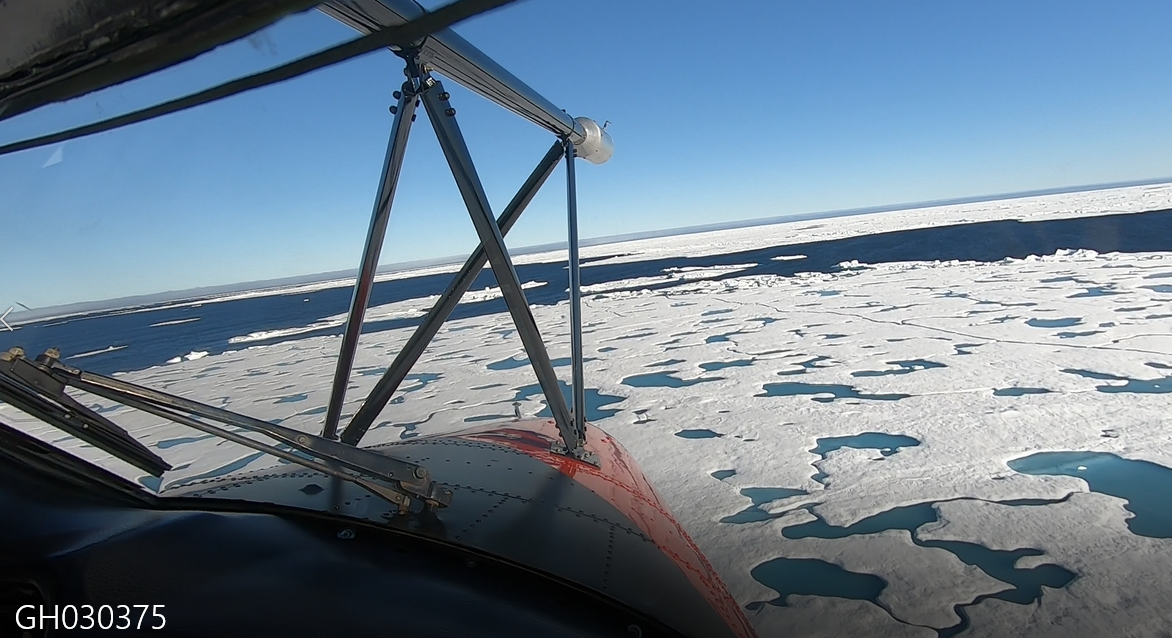
The project’s main goal is to understand the role of sea-ice surface properties in Arctic cyclone dynamics. It also examines how cyclones interact with the summer Arctic environment.
Two key areas are in focus. First, the role of cyclones in transporting sea ice during Very Rapid Ice Loss Events (VRILEs). Second, their influence on atmospheric temperature gradients (baroclinicity) around the ice margins. This affects both weather systems and forecasts of Arctic climate weeks to months ahead.
Arctic cyclones shape the summer sea-ice environment and influence regional and global weather. They transport heat, moisture, and ice, while also driving rapid changes in sea-ice cover.
Understanding these processes is essential for:
predicting sea-ice loss
improving climate forecasts
refining models used for weather prediction
A major legacy of this project will be a unique set of observations to evaluate and improve environmental forecast models. These datasets will remain valuable for decades to come.
The observational focus is on turbulent fluxes, radiation, surface topography, temperature, and albedo. Researchers also measure cloud and aerosol properties inside developing Arctic cyclones.
The project combines:
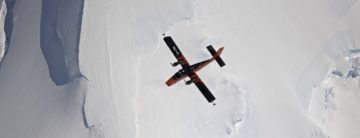
aircraft campaign observations
operational forecasts provided by partners
sensitivity experiments using the Met Office Unified Model
sea-ice modelling and theoretical analysis
The project has eight main questions:
How do Arctic cyclones form and grow? We’ll observe these storms at low altitudes to see how they develop and interact with atmospheric temperature and pressure patterns, as well as moisture gradients.
How does heat move between the ocean, ice, and atmosphere? We’ll measure this energy exchange across three zones: solid sea ice, the boundary where ice meets open water, and ice-free ocean, during Arctic summer.
What does the sea-ice surface actually look like? Using aircraft sensors, we’ll map how much ice covers the surface, how bright or dark it is, how rough it is, and the shape of its terrain.
Where do weather forecasts go wrong? We’ll pinpoint which parts of cyclones are hardest to predict by comparing forecasts from different weather centers with observations.
What drives these storms from top to bottom? We’ll track the physical processes driving cyclone development from the top of the weather layer down to the surface (tropospheric column)
Do sea-ice conditions affect storm behavior? We’ll test how heat and moisture rising from the ice surface change cyclone evolution.
What role do cyclones play in moving sea ice during rapid ice loss events? We’ll find out how storms transport ice and identify the other processes competing to reduce ice volume
How do cyclones, ocean fronts, and ice interact in summer? We’ll measure and quantify how these three elements influence each other and shape the Arctic summer climate.
The Arctic summer-time cyclone project is a collaboration between
British Antarctic Survey
The team brings together expertise in atmospheric dynamics, polar meteorology, sea-ice dynamics, boundary-layer turbulence, and aircraft-based measurements.
The project unites expertise in observations, modelling, and theory. The team applies new approaches to study surface exchange, cyclone growth, and sea-ice physics.
Atmospheric Scientist
Russ Ladkin, BAS engineer
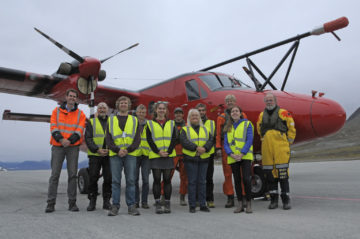
picture by D. Beeden
John Methven, PI (lead proposal), University of Reading Professor of Atmospheric Dynamics, Department of Meteorology
Ian Renfrew, PI, University of East Anglia Professor of Meteorology, School of Environmental Sciences
Andrew Elvidge, University of East Anglia Research Scientist, School of Environmental Sciences
Suzanne Gray, University of Reading Professor of Meteorology, Department of Meteorology
Daniel Feltham, University of Reading Professor, Centre for Polar Observations and Modelling
Ben Harvey, University of Reading Research Scientist, National Centre for Atmospheric Science
Oscar Martínez-Alvarado, University of Reading Research Scientist, National Centre for Atmospheric Science
Daniela Flocco, University of Reading Research Scientist, Centre for Polar Observation and Modelling
Ambrogio Volonté, University of Reading Research Scientist, Department of Meteorology
Hannah Croad, University of Reading PhD Student, Department of Meteorology
Discover the UK’s national capability to support science from the air