
Atmospheric and Glaciochemist DSL

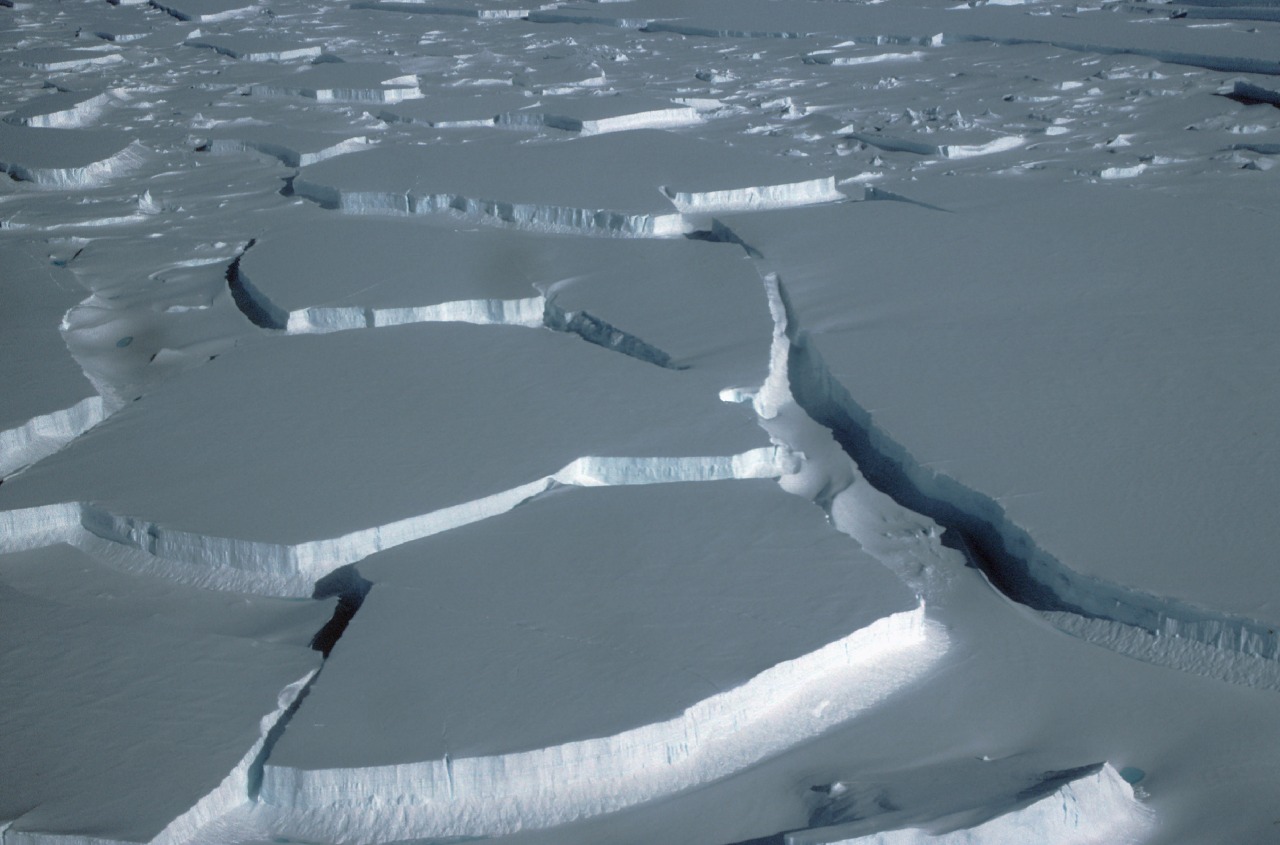
The source of sea-salt aerosols in the Polar Regions appears to be linked to sea ice surfaces, but exact details are unclear. Defining the sources is important given the critical roles that aerosol plays in the atmosphere. For example, they contribute to the partitioning of how much sun light is scattered back to space and how much reaches the Earth surface; they affect the formation of clouds; and they host and enhance important chemical reactions.
When they are deposited on the polar ice sheets they leave a record of past conditions that can be accessed by drilling ice cores, and that holds the potential to enable reconstruction of sea ice extent in the past. It is therefore important to understand the sources of polar sea salt aerosol and to be able to predict how they may vary with, and feedback to, climate.
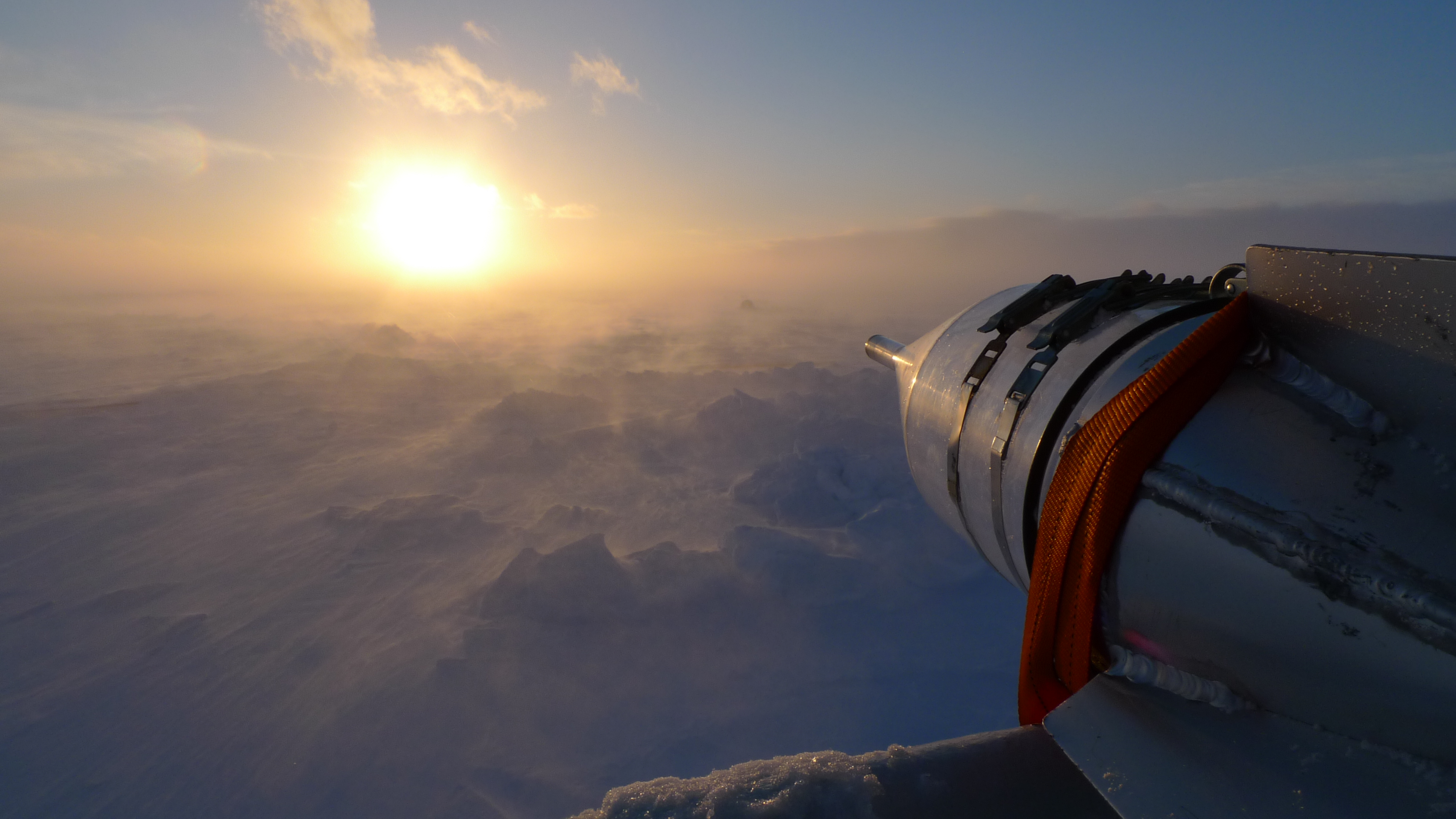
Snow trap in storm: catching blowing snow using a “rocket trap” pointing into the storm (Markus Frey)
It was recently proposed that the main source of this polar sea-salt aerosol was the sublimation of salty blowing snow. To test this idea BAS carried out measurements in the Antarctic during a wintertime cruise in the Weddell Sea (June – August 2013). The Norwegian N-ICE 2015 ice drift expedition provided a unique opportunity to repeat the experiments in the sea ice zone of the high Arctic in winter time, where conditions are quite different compared to the Southern hemisphere. We will use the new data to derive physically-based parameterisations of sea-salt aerosol production, and use them in numerical models to test how important this source is for the Arctic and Antarctic regions.
Atmospheric and Glaciochemist DSL
As the Arctic sea ice minimum approaches this month, we share a blog from Professor Mike Meredith at British Antarctic Survey about how the region is rapidly changing in our […]
Diary entry: Friday 27 March 2015 Time: 2200 hrs UTC Position: 78° 13′ N / 15° 33′ E Air Temperature: +1.5 °C Wind Speed: 8 knots We made it! After 38 days onboard the […]
Diary entry: Friday 20 March 2015 Time: 1200 hrs UTC Position: 81° 44.23′ N / 19° 36.9′ E Air Temperature: −27.4 °C Wind Speed: 14 knots Nature is displaying a magnificent and […]
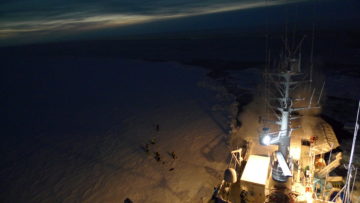
Diary entry: Wednesday 18 March 2015 Time: 2237 hrs UTC Position: 82° 34.7′ N / 22° 43.6′ E Air Temperature: −32.6 °C Wind Speed: 12 knots The storm lasted not even 48 hours, […]
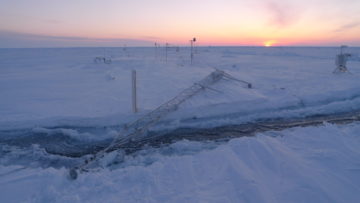
Diary entry: Friday 13 March 2015 Time: 1400 hrs UTC Position: 82° 52.1′ N / 21° 15.1′ E Air Temperature: −25.6 °C Wind Speed: 4.9 knots Since more than two and a half […]
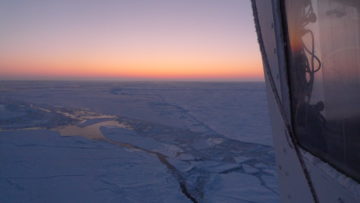
Diary entry: Sunday 22 February 2015 Time: 2220 hrs UTC Position: 82° 35′ N / 29° 24′ E Air Temperature: −26.1 °C Wind Speed: 19.3 knots The Norwegian research vessel, […]
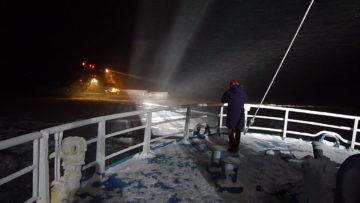
Extreme science in extreme conditions: frozen in to the Arctic winter Dr Markus Frey, a British Antarctic Survey (BAS) ice and atmospheric scientist, is living and working aboard the Norwegian […]