Understanding Greenland’s changing ice
GIANT is a pioneering science project that will test the potential for early warning of a critical climate tipping point.

Oliver Marsh is a glaciologist responsible for the monitoring and assessment of glaciological change on the Brunt Ice Shelf and around Halley VI Research Station. He has participated in eleven field seasons in Antarctica with the US, NZ and British Antarctic Programs.
Employment:
Education:
Pearce, Emma ORCID record for Pearce, Emma. Marsh, Oliver J. ORCID record for Marsh, Oliver J.. Mitchell, Thomas M. Tuhkuri, Jukka. Thomas, Elizabeth R. ORCID record for Thomas, Elizabeth R.. Johnson, Siobhan. (2026) Impact of surface melt and brine infiltration on fracture toughness of ice shelves.
Wild, Christian T. ORCID record for Wild, Christian T.. Drews, Reinhard ORCID record for Drews, Reinhard. Neckel, Niklas ORCID record for Neckel, Niklas. Lee, Joohan ORCID record for Lee, Joohan. Kim, Sihyung. Han, Hyangsun. Lee, Won Sang ORCID record for Lee, Won Sang. Helm, Veit ORCID record for Helm, Veit. Rosier, Sebastian Harry Reid ORCID record for Rosier, Sebastian Harry Reid. Marsh, Oliver J. ORCID record for Marsh, Oliver J.. Rack, Wolfgang ORCID record for Rack, Wolfgang. (2025) Monitoring shear-zone weakening in East Antarctic outlet glaciers through differential InSAR measurements.
Morris, Ashley ORCID record for Morris, Ashley. Lipovsky, Bradley P. ORCID record for Lipovsky, Bradley P.. Walker, Catherine C. ORCID record for Walker, Catherine C.. Marsh, Oliver J. ORCID record for Marsh, Oliver J.. (2025) Ice shelf calving due to shear stresses: observing the response of Brunt Ice Shelf and Halloween Crack to iceberg calving using ICESat-2 laser altimetry, satellite imagery, and ice flow models.
Marsh, O.J. ORCID record for Marsh, O.J.. Arthern, R.J. ORCID record for Arthern, R.J.. De Rydt, J. ORCID record for De Rydt, J.. (2025) Ocean tides trigger ice shelf rift growth and calving.
Price, Daniel. Snodgrass, Joseph. Rack, Wolfgang. Purdie, Heather. Hulbe, Christina. Wild, Christian T. Stevens, Craig. Marsh, Oliver J. ORCID record for Marsh, Oliver J.. Ryan, Michelle. McDonald, Adrian. Gragg, Kelly. Forbes, Martin. (2025) Basal reflectance and melt rates across the Ross Ice Shelf, Antarctica, from grounding line to ice shelf front.
Freer, B.I.D. ORCID record for Freer, B.I.D.. Marsh, O.J. ORCID record for Marsh, O.J.. Fricker, H.A. Hogg, A.E. Siegfried, M.R. Floricioiu, D. Sauthoff, W. Rigby, R. Wilson, S.F. (2024) Coincident Lake Drainage and Grounding Line Retreat at Engelhardt Subglacial Lake, West Antarctica.
Gomez-Fell, Rodrigo. Rack, Wolfgang. Marsh, Oliver J. ORCID record for Marsh, Oliver J.. Purdie, Heather. (2024) Lateral flexure of Erebus Ice Tongue due to ocean current forcing and fast ice coupling.
Marsh, Oliver J. ORCID record for Marsh, Oliver J.. Luckman, Adrian J. Hodgson, Dominic A. ORCID record for Hodgson, Dominic A.. (2024) Brief communication: Rapid acceleration of the Brunt Ice Shelf after calving of iceberg A-81.
Freer, Bryony I.D. ORCID record for Freer, Bryony I.D.. Marsh, Oliver ORCID record for Marsh, Oliver. Hogg, Anna E. Fricker, Helen Amanda. Padman, Laurie. (2023) Modes of Antarctic tidal grounding line migration revealed by Ice, Cloud, and land Elevation Satellite-2 (ICESat-2) laser altimetry.
Gomez-Fell, Rodrigo. Marsh, Oliver J. ORCID record for Marsh, Oliver J.. Rack, Wolfgang. Wild, Christian T. Purdie, Heather. (2023) Basal mass balance and prevalence of ice tongues in the Western ross sea.
Francis, Diana. Fonseca, Ricardo. Mattingly, Kyle S. Marsh, Oliver J. ORCID record for Marsh, Oliver J.. Lhermitte, Stef. Cherif, Charfeddine. (2022) Atmospheric triggers of the Brunt Ice Shelf calving in February 2021.
Gomez-Fell, Rodrigo. Rack, Wolfgang. Purdie, Heather. Marsh, Oliver ORCID record for Marsh, Oliver. (2021) Parker Ice Tongue collapse, Antarctica, triggered by loss of stabilizing land-fast sea ice.
Marsh, O.J. ORCID record for Marsh, O.J.. Price, D. Courville, Z.R. Floricioiu, D. (2021) Crevasse and rift detection in Antarctica from TerraSAR-X satellite imagery.
Drews, Reinhard. Wild, Christian T. Marsh, Oliver J. ORCID record for Marsh, Oliver J.. Rack, Wolfgang. Ehlers, Todd A. Neckel, Nikals. Helm, Veit. (2021) Grounding-zone flow variability of Priestley Glacier, Antarctica, in a diurnal tidal regime.
Purdie, Heather. Bealing, Paul. Gomez, Christopher. Anderson, Brian. Marsh, Oliver J. ORCID record for Marsh, Oliver J.. (2020) Morphological changes to the terminus of a maritime glacier during advance and retreat phases: Fox Glacier/Te Moeka o Tuawe, New Zealand.
Wild, Christian T. Marsh, Oliver J. ORCID record for Marsh, Oliver J.. Rack, Wolfgang. (2019) Differential interferometric synthetic aperture radar for tide modelling in Antarctic ice-shelf grounding zones.
Hibbins, Robert ORCID record for Hibbins, Robert. Marsh, Oliver ORCID record for Marsh, Oliver. mcdonald, Adrian. Jarvis, Martin. (2010) Interannual variability of the S=1 and S=2 components of the semidiurnal tide in the Antarctic MLT.
Pearce, E., Marsh, O., & Thomas, E. (2026). Ice core physical property data from Brunt Ice Shelf close to the site of Halley VI Research Station from 2023/2024 and 2024/2025 (Version 1.0) [Data set]. NERC EDS UK Polar Data Centre. https://doi.org/10.5285/c059bb26-276d-4be6-ae8c-778aee12a3b4
Pearce, E., Marsh, O., Thomas, E., & Baur, D. (2026). Continuous flow analysis chemistry, melt stratigraphy, age scale and line-scan images from firn Core S2, Brunt Ice Shelf, Antarctica, 2024 (Version 1.0) [Data set]. NERC EDS UK Polar Data Centre. https://doi.org/10.5285/db075c2a-0b32-4ea9-a6f6-41e3bc922c24
Marsh, O., & De Rydt, J. (2025). GPS data relating to the growth of Halloween Crack, Brunt Ice Shelf from 2016 to 2023 (Version 1.0) [Data set]. NERC EDS UK Polar Data Centre. https://doi.org/10.5285/6244cca4-8eaa-41a0-a9c1-d89167b02b85
Marsh, O., & De Rydt, J. (2025). GPS and ApRES data relating to the growth of Chasm-1, Brunt Ice Shelf from 2016 to 2023 (Version 1.0) [Data set]. NERC EDS UK Polar Data Centre. https://doi.org/10.5285/3d6fd5ae-e94d-4d0b-a5e9-5779ca84855e
Marsh, O., Floricioiu, D., & Freer, B. (2024). Double-difference TerraSAR-X interferograms and derived grounding lines at the grounding line of the Kamb and Whillans Ice Streams, West Antarctica, 2012-2023 (Version 1.0) [Data set]. NERC EDS UK Polar Data Centre. https://doi.org/10.5285/e1d182b1-6aa6-434e-9390-f7956227cb82
Marsh, O. (2023). GPS data from Brunt Ice Shelf close to the site of Halley VI Research Station from 2013 to August 2023 (Version 1.0) [Data set]. NERC EDS UK Polar Data Centre. https://doi.org/10.5285/76dec018-3ea8-4ecc-9b53-5dd915daf214
GIANT is a pioneering science project that will test the potential for early warning of a critical climate tipping point.
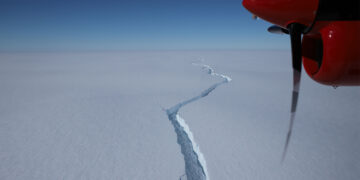
RIFT-TIP is investigating iceberg calving on the Brunt Ice Shelf. It uses field monitoring, lab testing, and modelling to predict when icebergs will form.
Our strategy and work streams to meet Net Zero goals
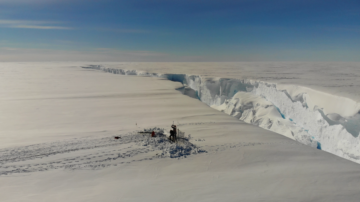
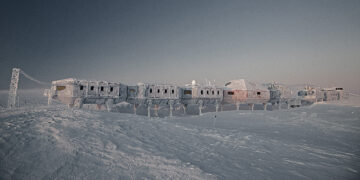
British Antarctic Survey is monitoring glaciological changes on the Brunt Ice Shelf, home to Halley Research Station.
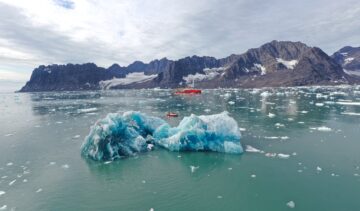
This summer, the UK’s polar icebreaker the RRS Sir David Attenborough carried a team to Greenland for one of the most ambitious polar science expeditions ever attempted, deploying a fleet […]
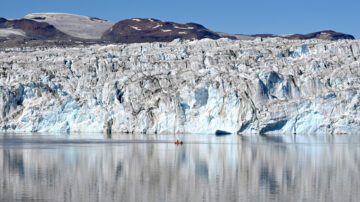
An international team is collecting observations to understand how a melting Greenland is affecting ocean currents, which could cause weather change in UK and Europe
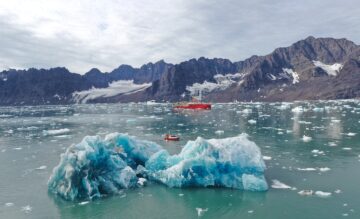
A new study on Antarctica’s Brunt Ice Shelf has revealed that surface melting and seawater infiltration can have dramatically different effects on the structural strength of floating ice shelves.
New iceberg, the size of the Isle of Wight, is expected to be called A-83
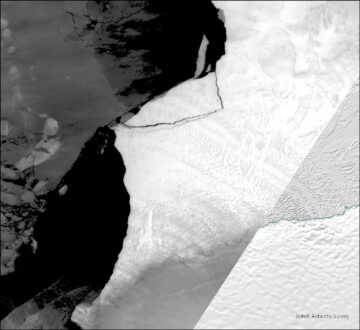
Scientists are a step closer to being able to predict when large icebergs will calve in Antarctica.
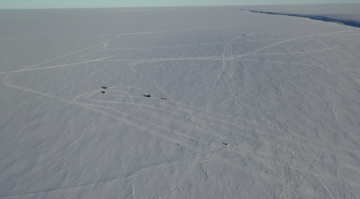
A team of scientists from the British Antarctic Survey (BAS) is gearing up for an expedition to the Brunt Ice Shelf in Antarctica to unravel the mysteries behind the calving processes that result in the formation of colossal icebergs.
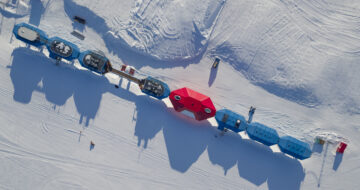
Following the calving of the A-81 iceberg at the end of January 2023, the Brunt Ice Shelf is moving faster than before. It is currently moving approximately 4 metres a day towards the sea, whereas before the calving it moved at an average of between 1-2.5 metres a day.
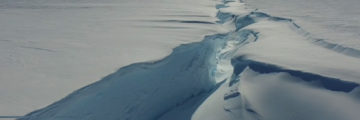
Natural Environment Research Council’s pioneering Pushing the Frontiers scheme has funded four projects led by scientists from British Antarctic Survey (BAS). The projects, which received grants totaling £3.8m, are part […]
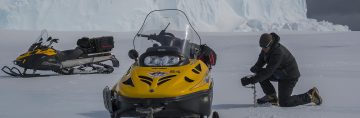
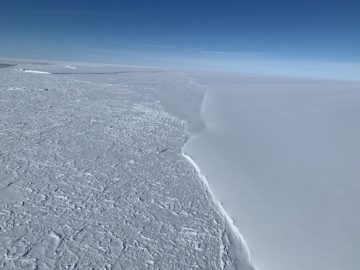
ANTARCTICA – 13 March 2023. British Antarctic Survey (BAS) has released the first aerial pictures of the massive A81 iceberg that calved from the Brunt Ice Shelf in late January. […]
Halley Research Station is globally significant for observing the Earth, its atmosphere, and space weather.
https://www.newscientist.com/video/2490906-scientists-crush-ice-cores-to-predict-antarcticas-next-big-ice-crack/