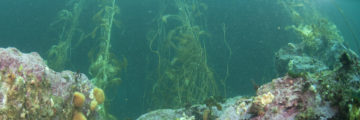
Thermal biology of Antarctic ectotherms
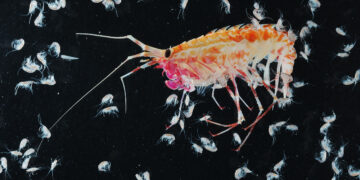
This project studies how Antarctic aquatic ectotherms — animals whose body temperature depends on their environment — survive in freezing waters.

Professor Lloyd Peck is a scientist at the forefront of investigation into animal adaptations in extreme environments. He leads a dedicated, innovative team of polar biologists evaluating how species live in the coldest, driest, windiest, most isolated place on earth. Lloyd has had 20 field visits to Antarctica in his over 30 yrs studying life in polar regions, and over 25 years experience of media presentations and interviews.
Lloyd’s research was recognised by the award of an Individual Merit Promotion level 2, his former role as NERC Biodiversity Theme Leader, election to a Research Fellow in Wolfson College, Cambridge University, being awarded an Erskine Fellowship from the University of Canterbury, New Zealand, a being a PLYMSEF Silver Medal winner, and being awarded the Polar Medal in 2008. He has 25 years’ experience in leadership and successful delivery of major and multi-faceted science programmes. He has supervised 49 PhD students, published over 340 science papers, reviews and book chapters, with a Web of Science H factor of 59. Grant income since 2008 is in excess of £8 M. He was the Royal Institution Christmas Lecturer in 2004, when the lectures were televised on Channel 4 TV, and followed this with televised lecture series in Japan, Korea and Brazil. He has given 46 keynote presentations and departmental seminars since 2005. Research interests focus on whole organism ecology and physiology, encompassing environmental constraints on animal capacities, adaptation to extreme environments and responses to environmental change.
Current positions:
Fellow of the Royal Society of London (2024-present)
Fellow, Royal Society for Biology (2022-present)
Research Fellow, Wolfson College, Cambridge University (2018-present)
Member Wolfson College Council (2019-2023)
Speaker for Schools (2022-present)
Visiting Professor in Marine Biology, University of Portsmouth (2015-present)
Visiting Professor in Ecology, University of Sunderland. (1996-present)
Honorary lecturer, University of Cambridge. (1995-present)
Member Scientific Council of Stazione Zoologica Anton Dohrn (2019-present)
Erskine Fellow, University of Canterbury, New Zealand (2016/2017)
PLYMSEF Silver Medal (2015)
Deputy Chair Cambridge Doctoral Training Partnership (2013-2017)
Evaluator, Institute for Protein Biochemistry, Naples, 2012-present)
Evaluator Chilean Antarctic Research programmes: IDEAL and INACH (2014-present)
Member SCAR Horizon Scanning Steering Group (2013-2015)
Member SCAR AntETR programme steering group (2012-21)
Member of NERC Peer Review College (Chair of assessment panels 2000 – 2006 and 2013-present)
Member BAS Science Leader Team (2015-present)
Member BAS Management Team (2015-2017)
Member NERC Arctic Biogeochemistry and Ecosystems Scoping group (2015)
Polar Medal (2009)
Evaluator, Belgian Antarctic programme (2005, 2008, 2011)
NERC Theme Leader for Biodiversity (2007-2009)
Member of UK Global Biodiversity Sub-Group (2008-2009)
Member of UK Biodiversity Research Advisory Group (2007-2009)
Member of NERC Polar Sciences Working Group (2007)
Member of NERC Strategic Facilities Review (2004-2006)
Member of NERC thematic grant panel (DEMA).
Member of Steering Committee for the National Facility for Scientific Diving. (2004-2008)
Member of Grierson Trust awards committee (2005)
Advisor Dutch Antarctic Programme (2002-3)
BAS Q3 implementation task force (2000-2002)
Member of Marine Life Sciences senior management group (1996-2000)
Member of BAS grade 7 assessment panel (1996-1998)
Member SCAR Coastal Zones EASIZ programme (2000-2006)
Scientific Fellow Zoological Society of London (1997-present)
Honorary life member of Royal Institution (2005 – present)
Governor Meridian School Comberton (Chair Estates Committee). (1999-2003)
Captain Cambs County II squash team 1990-1994
University: Blues in Athletics and Cross Country running (1976-1978).
Teaching and supervising experience:
Evolution and adaptation to extreme environments, especially cold polar systems. Main interests are in the ecological and physiological adaptations of marine organisms to low temperatures, intense seasonality and ocean acidification. I also have interests in how these adaptations affect organisms abilities to resist or respond to environmental change, especially how the slowed physiologies of growth, development and metabolism in polar species impact on life histories and hence responses to change. A special interest is in the effects of the extreme difficulties organisms have making functional proteins at temperatures around °C and why this results in very slow growth and development rates. A third area of interest is in how unique adaptations to extreme environments can be exploited for the benefit of wider society through low temperature products of industrial or biotechnological value.
Occasional contributor
UK House of Commons – All Party Parliamentary Committee on Biodiversity
http://www.publications.parliament.uk/pa/cm/cmallparty/register/biodiversity.htm
De Leij, R., Grange, L.J., Peck, L.S. (2021). Functional thermal limits are determined by rate of warming during simulated marine heatwaves. Marine Ecology Progess Series (in press).
De Leij, R., Peck, L.S., Grange, L.J. (2021). Multiyear trend in reproduction underpins interannual variation in gametogenic development of an Antarctic urchin. Scientific Reports 11, 18868
Vendrami, D.L.J., Peck,L.S., Clark, M.S., Eldon, B., Meredith,M., Hoffman, J.I. (2021). Sweepstake reproductive success and collective dispersal produce chaotic genetic patchiness in a broadcast spawner. Science Advances 7, eabj4713.
Villota-Nieva, L., Peck, L.S., Clark, M.S. (2021). Variable heat shock response in Antarctic biofouling serpulid worms. Cell Stress & Chaperones on line. doi.org/10.1007/s12192-021-01235-z
Zwershke, N., Morley, S.A., Peck, L.S., Barnes, D.K.A. (2021). Can Antarctica’s zoobenthos ‘bounce back’ from iceberg scouring impacts driven by Climate Change? Global Change Biology 27, 3157-3165.
Gray, A., Krolikowski, M., Fretwell, P., Convey, P., Peck, L.S., Mendelova, M., Smith, A.G., Davey, M.P. (2021). Remote sensing phenology of Antarctic green and red snow algae using WorldView satellites. Frontiers in Plant Science in press doi: 10.3389/fpls.2021.671981.
Collins, M., Peck, L.S., Clark, M.S. (2021). Large within, and between, species differences 1 in marine cellular responses: Unpredictability in a changing environment. Science of the Total Environment 794, 148594.
Thyrring, J., Wegeberg, S., Blicher, M., Krause-Jensen, D., Høgslund, S., Olesen, B., Wiktor, J., Mouritsen, K.N., Peck, L., Sejr, M. (2021). Latitudinal patterns in intertidal ecosystem structure in West Greenland suggest resilience to climate change. Ecography 44, 1-13.
Thyrring, J., Peck, L.S. (2021). Global gradients in intertidal species richness and functional diversity. eLife 10:e64541.
Clark, M.S., Peck, L.S., Thyrring, J. (2021). Resilience in Greenland intertidal <em>Mytilus</em>: The hidden stress defense. Science of the Total Environment. 767, 144366.
*Barnes, D.K.A., Ashton, G.V., Morley, S.A., Peck, L.S. (2021). 1 °C warming increases spatial competition frequency and complexity in Antarctic marine macrofauna. Communications Biology 4, 208.
Sutherland, W.J. et al. incl. Peck, L.S. (2021). A 2021 horizon scan of emerging global biological conservation issues. Trends in Ecology & Evolution 36, 87-97.
Ingels, J. et al. incl Peck, L.S. (2021). Antarctic Ecosystem Responses following Ice-Shelf Collapse and Iceberg Calving: Science Review and Future Research. WIRES: Climate Change e682
Gutt et al. incl Peck LS (2021). Antarctic ecosystems in transition – life between stresses and opportunities. Biological Reviews doi: 10.1111/brv.12679.
Telesca, L., Peck, L.S., Backeljau, T., Heinig, M.F., Harper, E.M. (2020). A century of coping with environmental and ecological changes <em>via</em> compensatory biomineralization in mussels. Global Change Biology 27, 624-639.
Clark, M.S., Peck, L.S., Arivalagan, J., Backeljau, T., Berland, S., Cardoso, J.C.R., Caurcel, C., Chapelle, G., De Noia, M., Dupont, S., Gharbi, K., Hoffman, J.I., Last, K.S., Marie, A., Melzner, F., Michalek, K., Morris, J., Power, D.M., Ramesh, K., Sanders, T., Sillanpää, K., Sleight, V.A., Stewart‐Sinclair, P.J., Sundell, K., Telesca, L., Vendrami, D.L.J., Ventura, A., Wilding, T.A., Yarra, T., Harper, E.M. (2020). Deciphering mollusc shell production: the roles of genetic mechanisms through to ecology, aquaculture and biomimetics. Biological Reviews 95, 1812-1837
Krasnobaev, A., ten Dam, G., Boerrigter-Eenling, R., Peng, F., van Leeuwen, S.P.J., Morley, S.A., Peck, L.S., van den Brink, N.W. (2020). Legacy and Emerging Persistent Organic Pollutants in Antarctic Benthic Invertebrates near Rothera Point, Western Antarctic Peninsula. Environmental Science & Technology <em>54</em>, 2763-2771.
Gray, A., Krolikowski, M., Fretwell, P. <em>et al.</em> incl Peck, L.S. (2020). Remote sensing reveals Antarctic green snow algae as important terrestrial carbon sink. Nature Communications 11, 2527.
Cavallo, A., Peck, L.S. (2020). Lipid storage patterns in marine copepods: environmental, ecological and intrinsic drivers. <em>ICES Journal of Marine Sciences</em>, 77, 1589-1601.
Webb, A.L., Hughes, K.A., Grand, M.M., Lohan, M.C., Peck, L.S. (2020). Sources of elevated heavy metal concentrations in sediments and benthic marine invertebrates of the western Antarctic Peninsula. Science of the Total Environment 698, 134268.
Sutherland, W.J. et al. incl. Peck, L.S. (2020). A horizon scan of emerging global biological conservation issues for 2020. Trends in Ecology & Evolution 35, 81-90.
Convey, P., Peck, L.S. (2019). Antarctic environmental change and biological responses. Science Advances 5, eaaz0888.
Kennicutt II, M.C., Bromwich, D., Liggett, D., Njåstad, B., Peck, L.S., Rintoul, S.R., Ritz, C., Siegert, M.J., Aitken, A., Brooks, C.M., Cassano, J., Chaturvedi, S., Chen, D., Dodds, K., Golledge, N.R., Le Bohec, C., Leppe, M., Murray, A., Nath, P.C., Raphael, m.N., Rogan-Finnemore, M., Schroeder, D.M., Talley, L., Travouillon, T., Vaughan, D.G., Weatherwax, A.T., Steven L Chown, S.L. (2019). Sustained Antarctic Research – a 21<sup>st</sup> Century Imperative. One Earth 1, 95-113.
Küpper, F.C., Amsler, C.D., Morley, S., de Reviers, B., Reichardt, A., Peck, L.S., Peters, A. (2019). Juvenile morphology of the large Antarctic canopy-forming brown alga, <em>Desmarestia menziesii</em> J. Agardh. Polar Biology 42, 2097.
Telesca, L., Peck, L.S., Sanders, T., Thyrring, J., Sejr, M.K., Harper, E.M. (2019). Biomineralization plasticity and environmental heterogeneity predict geographical resilience patterns of foundation species to future change. Global Change Biology 12, 4179-4193.
Chadwick, M., Harper, E.M., Lemasson, A., Spicer, J.I., Peck, L.S. (2019). Quantifying susceptibility of marine invertebrate biocomposites to dissolution in reduced pH. Royal Society Open Science 6, 190252.
*Clark, M.S., Villota Nieva, L., Hoffman, J.I., Davies, A.J., Trivedi, U.H., Turner, F., Ashton, G. & Peck, L.S., (2019). Lack of long-term acclimation in Antarctic encrusting species suggests vulnerability to warming. Nature Communications 10, 3383.
Davey, M.P. et al. incl Peck, L.S. (2019). Snow algal communities in Antarctica: metabolic and taxonomic composition. New Phytologist 222, 1242-1255.
Vause, B.J., Morley, S.A., Fonseca, V.G., Jazdzewska, A., Ashton, G.A., Barnes, D.K.A., Giebner, H., Clark, M.S. & Peck, L.S. (2019). Spatial and temporal dynamics of Antarctic shallow soft-bottom benthic communities: ecological drivers under climate change. BMC Ecology 19, 27.
McCarthy, A., Peck, L.S., Hughes, K., Aldridge, D.A. (2019). Antarctica: the final frontier for marine biological invasions. Global Change Biology 2019, 1-21.
Cross, E., Harper, E.M., Peck, L.S. (2019). Thicker shells compensate extensive dissolution in brachiopods under future ocean acidification. Environmental Science, Technology 53, 5016-5026.
Henley, S. et al. incl. Peck, L.S. (2019). Variability and change in the West Antarctic Peninsula marine system: research priorities and opportunities. Progress in Oceanography 173, 208-237.
Sutherland, W.J. et al. incl. Peck, L.S. (2019). Ten years on: a review of the first global conservation horizon scan. Trends in Ecology & Evolution. 34, 139-153.
Clark, M.S., Suckling, C.S., Cavallo, A., MacKenzie, C.L., Thorne, M.A.S., Davies, A.J., Peck, L.S. (2019). Molecular mechanisms underpinning transgenerational plasticity in the green sea urchin <em>Psammechinus miliaris</em>. Scientific Reports 9, 952.
Sutherland, W.J. et al. incl. Peck LS (2019). A horizon scan of emerging issues for global conservation in 2019. Trends in Ecology & Evolution 34, 83-94.
Berthelot, C., Clarke, J., Desvignes, T., Detrich III, H.W., Flicek, P., Peck, L.S., Peters, M., Postlethwait, J.H., Clark, M.S. (2019). Adaptation of proteins to the cold in Antarctic fish: A role for Methionine? Genome Biology & Evolution 11, 220-231.
Krasnobaev, A., ten Dam, G., van Leeuwen, S.P., Peck, L.S., van den Brink, N. (2018). Persistent Organic Pollutants in two species of Antarctic migratory flying predatory birds from the Rothera Point. Marine Pollution Bulletin. 137, 113-118.
*Peck, L.S. (2018). Antarctic marine biodiversity: adaptations, environments and responses to change. Oceanography & Marine Biology. An Annual Review 56, 105-236.
Peck, L.S., Clark, M.S., Dunn, N.I. (2018). Morphological variation in taxonomic characters of the Antarctic starfish <em>Odontaster validus</em>. Polar Biology 41, 2159-2165.
Sleight, V.A., Peck, L.S., Dyrynda, E.A., Smith, V.J., Clark, M.S. (2018). Cellular stress responses to chronic heat shock and shell damage in temperate <em>Mya truncata</em>. Cell Stress & Chaperones. 23, 1003-1017.
Lau, C.Y.S., Grange, L.J., Peck, L.S., Reed, A.J. (2018). The reproductive ecology of the Antarctic bivalve <em>Aequiyoldia eightsi</em> follows neither Antarctic nor taxonomic patterns. Polar Biology 41, 1693-1706.
Clark, M.S., Thorne, M.A.S., King, M., Hipperson, H., Hoffman, J.I., Peck, L.S. (2018). Life in the intertidal: cellular responses, methylation and epigenetics. Functional Ecology 32, 1982-1994.
*Cross, E., Harper, E.M., Peck, L.S. (2018). A 120-year record of resilience to environmental change in Brachiopods. Global Change Biology 24, 2262-2271.
Telesca, L., Michalek, K., Sanders, T., Peck, L.S., Thyrring, J., Harper, E.M. (2018). Blue mussel shell shape plasticity and natural environments: a quantitative approach. Scientific Reports 8, 2865
Souster, T.A., Morley, S.A., Peck, L.S. (2018). Seasonality of oxygen consumption in five common Antarctic benthic marine invertebrates. Polar Biology 41, 897-908.
Sutherland, W.J. et al. incl. Peck, L.S. (2018). A 2018 Horizon Scan of Emerging Issues for Global Conservation and Biological Diversity. Trends in Ecology & Evolution 33, 47-58.
Watson, S.-A., Morley, S.A., Peck, L.S. (2017). Latitudinal trends in shell production cost from the tropics to the poles. Science Advances, 3, e1701362.
Ashton, G., Barnes, D., Morley, S., Peck, L.S. (2017). Response to van der Meer. Current Biology 27, R1303-1304.
Fonseca, V., Sinniger, F., Gaspar, J., Creer, S., Power, D., Peck, L.S., Clark, M.S. (2017). Revealing higher than expected meiofaunal diversity in Antarctic sediments: a metabarcoding approach. Scientific Reports 7, 6094.
*Ashton, G., Morley, S.A., Barnes, D.K.A., Clark, M.S., Peck, L.S. (2017). Warming by 1°C drives species and assemblage level responses in Antarctica’s marine shallows. Current Biology 27, 2698–2705.
Clark, M.S., Sommer, U., Sihra, J.K., Thorne, M.A.S., Morley, S.A., King, M., Viant, M.R., Peck, L.S. (2017). Biodiversity in marine invertebrate responses to acute warming revealed by a comparative multi‐omics approach. Global Change Biology 23, 318-330.
Morley, S.A., Nguyen, K.D., Peck, L.S., Lai, C.H., Tan, K.S. (2017). Can acclimation of thermal tolerance, in adults and across generations, act as a buffer against climate change in tropical marine ectotherms<em>? </em><em>Journal of Thermal Biology</em> 68, 195-199.
Román-González, A., Scourse, J.D., Richardson, C.A., Peck, L.S., Bentley, M.J., Butler, P.G. (2017). A sclerochronological archive for Antarctic coastal waters based on the marine bivalve <em>Yoldia eightsi </em>(Jay, 1839) from the South Orkney Islands. Holocene 27, 271-281.
Román-González, A., Scourse, J.D., Butler, P.G., Reynolds, D.J., Richardson, C.J., Peck, L.S., Brey, T., Hall, I.A. (2017). Analysis of ontogenetic growth trends in two marine Antarctic bivalves <em>Yoldia eightsi</em> and <em>Laternula elliptica</em>: Implications for sclerochronology Palaeogeography, Palaeoclimatology, Palaeoecology 465, 300-306.
Sutherland, W.J. et al. incl. Peck, L.S. (2017) A 2017 Horizon Scan of Emerging Issues for Global Conservation and Biological Diversity. Trends in Ecology & Evolution, 32, 31-40.
Peck, L.S., Heiser, S., Clark, M.S. (2016) Very slow embryonic and larval development in the Antarctic limpet <em>Nacella Polaris.</em> Polar Biology 39, 2273-2280.
Yarra, T., Gharbi, K., Blaxter, M., Peck, L.S., Clark, M.S. (2016). Characterization of the mantle transcriptome in bivalves: Pecten maximus, <em>Mytilus edulis</em> and <em>Crassostrea gigas</em>. Marine Genomics 27, 9-15.
Sleight, V.A., Thorne, M.A.S., Peck, L.S., Arivalagan, J., Berland, S., Marie, A., Clark, M.S. (2016). Characterisation of the mantle transcriptome and biomineralisation genes in the blunt-gaper clam, <em>Mya truncata</em>. Marine Genomics 27, 47-55.
Morley, S.A., Suckling, C.S., Clark, M.S., Cross, E.L., Peck, L.S. (2016). Long term effects of altered pH and temperature on the feeding energetics of the Antarctic sea urchin, <em>Sterechinus neumayeri</em>. Biodiversity 17, 34-45.
Xavier, J.C., Peck, L.S., Fretwell, P., Turner, J. (2016). Climate change and polar range expansions: Could cuttlefish cross the Arctic? Marine Biology 163, 78.
Morley, S.A., Berman, J., Barnes, D.K.A., de Juan Carbonell, D., Downey, R.V., Peck, L.S. (2016). Extreme phenotypic plasticity in metabolic physiology of Antarctic Demosponges. Frontiers in Ecology & Evolution 3, 157.
Morley, S.A., Bates, A., Lamare, M., Richard, J., Nguyen, K., Brown, J., Peck, L.S. (2016). Rates of warming and the global sensitivity of shallow marine invertebrates to elevated temperature. Journal of the Marine Biological Association of the UK 96, 159-165.
Sutherland, W.J. <em>et al.</em> incl. Peck, L.S. (2016). A horizon scan of global conservation issues for 2016. Trends in Ecology & Evolution 31, 44-53.
Harper, E.M., Peck, L.S. (2016). Latitudinal and depth gradients in marine predation pressure. Global Ecology & Biogeography 25, 670-678.
Cross, E.L., Peck, L.S., Lamare, M.D., Harper, E.M. (2016). No ocean acidification effects on shell growth and repair in the New Zealand brachiopod <em>Calloria inconspicua</em> (Sowerby, 1846). – ICES Journal of Marine Science 73, 920-926.
*Peck L.S. (2016). A cold limit to Adaptation in the Sea. Trends in Ecology & Evolution 31 (1), 13-26.
Clark, M.S., Thorne, M.A., Burns, G., Peck, L.S. (2016). Age-related thermal response: the cellular resilience of juveniles. Cell Stress & Chaperones 21, 75-85.
Artigaud, S., Richard, J., Thorne, M.A.S., Lavaud, R., Sainte Marie, J.F., Jean, F., Peck, L.S., Clark, M.S. Pichereau, V. (2015) Deciphering the molecular adaptation of the king scallop (<em>Pecten maximus</em>) to heat stress using transcriptomics and proteomics. BMC Genomics <strong>16</strong>, 988.
*Peck, L.S., Clark, M.S., Power, D., Reis, J., Batista, F.M., Harper, E.M. (2015). Acidification effects on biofouling communities: winners and losers. Global Change Biology 21, 1907-1913.
Peck, L.S., Thorne, M.A.S., Hoffman, J.I., Morley, S.A., Clark, M.S. (2015). Variability among individuals is generated at the gene expression level. Ecology 96, 2004-2014.
Sleight, V.A., Thorne, M.A.S., Peck, L.S., Clark, M.S. (2015). Transcriptomic response to shell damage in the Antarctic clam, <em>Laternula elliptica</em>: Time scales and spatial localization. Marine Genomics 20, 45-55.
Sutherland, W.J. <em>et al</em> incl. Peck, L.S. (2015). A horizon scan of global conservation issues for 2015. Trends in Ecology & Evolution 30, 17-24.
Cross, E.L., Peck, L.S., Harper, E. M. (2015). Ocean acidification does not impact shell growth or repair of the Antarctic brachiopod <em>Liothyrella uva </em>(Broderip, 1833). Journal of Experimental Marine Biology & Ecology 462, 29-35.
Suckling, C., Clark, M.S., Richard, J., Morley, S.A., Thorne, M.A.S., Harper, E.M., Peck, L.S. (2015). Adult acclimation to combined temperature and pH stressors significantly enhances reproductive outcomes compared to short-term exposures. Journal of Animal Ecology 84, 773-784.
Kennicutt II, M.C., et al. incl. Peck, L.S. (2015). Scientific Committee on Antarctic Research 1<sup>st</sup> Antarctic and Southern Ocean Science Horizon Scan: The Process and Outcomes. Antarctic Science 27, 3-18.
Noisette, F., Richard, J., Le Fur, I., Peck, L., Davoult, D., Martin, S. (2015). Metabolic responses to temperature stress under elevated <em>pCO</em><sub>2</sub> in the slipper limpet <em>Crepidula fornicata</em>. Journal of Molluscan Studies 81, 238-246.
Kennicutt II, M.C., et al., incl. Peck, L.S. (2014). Antarctic and Southern Ocean Science in the 21st Century. Nature 512: 23-25.
Morley, S.A. Chien-Hsian, L., Clarke, A., Tan, K.S., Thorne, M.A.S., Peck, L.S. (2014). Limpet feeding rate and the consistency of physiological response to temperature. Journal of Comparative Physiology 184:563–570.
Convey, P., Chown, S.L., Clarke, A., Barnes, D.K.A., Bokhorst, S., Cummings, V., Ducklow, H.W., Frati, F., Green, T.G.A., Gordon, S., Griffiths, H.J., Howard-Williams, C., Huiskes, A.H.L., Laybourn-Parry, J., Berry Lyons, W., McMinn, A., Morley, S.A., Peck, L.S., Quesada, A., Robinson, S.A., Schiaparelli, S., Wall, D.H. (2014) The spatial structure of Antarctic biodiversity. Ecological Monographs 84, 203–244.
Artigaud, S., Thorne, M.A.S., Richerd, J., Lavaud, R., Jean, F., Flye-Sainte-Marie, J., Peck, L.S., Picherau, V., Clark, M.S. (2014). Deep sequencing of the mantle transcriptome of the great scallop <em>Pecten maximus</em>. Marine Genomics 15, 3-4.
Morley, S.A., Belchier, M., Sands, C., Barnes, D.K.A., Peck, L.S. (2014). Geographic isolation and physiological mechanisms underpinning species distributions at the range limit hotspot of South Georgia. Review of Fisheries Biology & Fisheries 24, 485-494.
<strong>Suckling, C.C.</strong>, Clark, M.S., Beveridge, C., Brunner, L., Hughes, A., Cook, E., Davies, A.J., Peck, L.S. (2014). Experimental influence of pH on the early life-stages of sea urchins II: increasing parental exposure gives rise to different responses. Invertebrate Reproduction & Development 58, 161-175.
*Peck, L.S., Morley, S.A., Richard, J., Clark, M.S. (2014). Acclimation and thermal tolerance in Antarctic marine ectotherms. Journal of Experimental Biology 217, 16-22.
Sutherland, W.J. <em>et al. </em>incl. Peck, L.S. (2014). A horizon scan of global conservation issues for 2014. Trends in Ecology & Evolution 29, 15-22.
<strong>Suckling, C.C.</strong>, Clark, M.S., Peck, L.S., Cook, E. (2014). Experimental influence of pH on early life-stages of sea urchins I: different rates of introduction give different responses. Invertebrate Reproduction & Development 58, 148-159.
Clusella-Trullas, S., Boardman, L., Faulkner, K.T., Peck, L.S., Chown, S.L. (2014). Effects of temperature on heat-shock responses and survival of two species of marine invertebrates from sub-Antarctic Marion Island. Antarctic Science 26, 145-152.
Faulkner, K., Clusella Trullas, S., Peck, L.S., Chown, S. (2014). Lack of coherence in the warming responses of marine crustaceans. Functional Ecology 2, 895-903.
Watson, S.A., Peck, L.S., Morley, S.A. (2013). Low global sensitivity of metabolic rate to temperature in calcified marine invertebrates. Oecologia. 175, 47-54.
Peck, L.S., Souster, T, Clark, M.S. (2013). Juveniles are more resistant to warming than adults in 4 species of Antarctic marine invertebrates. PLoS One 8, e66033.
Obermueller, B.E., Truebano, M., Peck, L.S., Eastman, J.T., Morley, S.A. (2013). Reduced seasonality in elemental CHN composition of Antarctic marine benthic predators and scavengers. Journal of Experimental Marine Biology & Ecology 446, 328-333.
Hoffman, J.I., Clarke, A., Clark, M.S., Peck, L.S. (2013). Hierarchical Population Genetic Structure in a Direct Developing Antarctic Marine Invertebrate. PLoS One 8(5): e63954.
Clark, M.S., Husmann, G., Thorne, M.A.S., Burns, G., Truebano, M., Peck, L.S., Abele, D., Phillip, E.E.R. (2013). Hypoxia impacts large adults first: consequences in a warming world. Global Change Biology 19, 2251-2263.
Peck, L.S., Brockington, S.A. (2013). Growth in the Antarctic octocoral <em>Primnoella scotiae </em>and predation by the anemone <em>Dactylanthus Antarcticus</em>. Deep Sea Research II 92, 73-78.
Burns, G., Thorndyke, M.C., Peck, L.S., Clark, M.S. (2013). Transcriptome pyrosequencing of the Antarctic brittle star <em>Ophionotus victoriae. Marine Genomics 9, 9-15.</em>
Sutherland, W.J., et al. incl. Peck, L.S. (2013). A horizon scan of global conservation issues for 2013. Trends in Ecology & Evolution 28, 16-22.
Morley, S.A., Martin, S.M., Day, R.W., Ericson, J., Lai, C.-H., Lamare, M., Tan, K.-S., Thorne, M.A.S., Peck, L.S. (2012). Thermal Reaction Norms and the Scale of Temperature Variation: Latitudinal Vulnerability of Intertidal Nacellid Limpets to Climate Change. PLoS One 7(12): e52818.
Harper, E.M., Clark, M.S., Hoffman, J., Peck, L.S., Phillip, E.E.R., Morley, S.A. (2012). Iceberg Scour and Shell Damage in the Antarctic Bivalve Laternula elliptica. PLoS One 7, e46341
Richard, J., Morley, S.A., Deloffre, J., Peck, L.S. (2012). Acclimation capacity for four Arctic marine benthic species. Journal of Experimental Marine Biology & Ecology 424, 38-43.
Watson, S.A., Peck, L.S., Tyler, P.A., Southgate, P.C., Tan, K.S., Day, R.W., Morley, S.A. (2012). <a name=”_Toc231111028″></a><a name=”_Toc231925826″></a><a name=”_Toc235871185″></a>Marine invertebrate skeleton size varies with latitude, temperature, and carbonate saturation: implications for global change and ocean acidification. Global Change Biology 18, 3026-3038.
Burns, G., Thorndyke, M.C., Peck, L.S., Clark, M.S. (2012). Transcriptome pyrosequencing of the Antarctic brittle star Ophionotus victoriae. Marine Genomics 9, 9-15.
Gutt, J. et al. incl. Peck L.S.(2012). Correlative and dynamic species distribution modelling for ecological predictions in the Antarctic: a cross-disciplinary concept. Polar Research <strong>31</strong>, 11091, 23 pp.
Hoffman, J.I., Clark, M.S., Amos, W., Peck, L.S. (2012). Widespread amplification of amplified fragment length polymorphisms (AFLPs) in marine Antarctic animals. Polar Biology 35, 919-929.
Morley, S.A., Martin, S.M., Bates, A.E., Clark, M.S., Ericson J., Lamare, M., Peck, L.S. (2012). Spatial and temporal variation in the heat tolerance limits of two abundant Southern Ocean invertebrates. Marine Ecology Progress Series 450, 81-92.
Morley, S.A., Hirse, T., Thorne, M.A.S., Pörtner, H.O., Peck, L.S. (2012). Physiological plasticity, long term resistance or acclimation to temperature, in the Antarctic bivalve, <em>Laternula elliptica</em>. Comparative Biochemistry & Physiology Part A 162, 16–21.
Burns, G., Ortega-Martinez, O., Dupont, S., Thorndyke, M.C., Peck, L.S., Clark, M.S. (2012) Intrinsic gene expression during regeneration in arm explants of <em>Amphiura filiformis</em> Journal of Experimental Marine Biology & Ecology 413, 106-112.
Hoffman, J.I., Clarke, A., Clark, M.S., Fretwell, P., Peck, L.S. (2012). Unexpected Fine-Scale Population Structure in a Broadcast-Spawning Antarctic Marine Mollusc. PLoS One 7: e32415.
Sutherland W.J., et al. incl. Peck, L.S. (2012). A horizon scan of global conservation issues for 2012. Trends in Ecology & Evolution 27, 12-18.
Richard, J., Morley, S.A., Peck, L.S. (2012). Estimating Long-Term Survival Temperatures at the Assemblage Level in the Marine Environment: Towards Macrophysiology. PLoS One 7, E34655
Branco, P.C., Pressinotti, L.N., Borges, J.C.S., Iunes, R.S., Kfoury Jr, J.R., Gonzalez, M., dos Santos, M.F., Peck, L.S., Cooper, E.L., da Silva, J.R.M.C. (2012). Cellular biomarkers to elucidate global warming effects on Antarctic sea urchin <em>Sterechinus neumayeri</em>. Polar Biology 35, 221-229.
Obermuller, B., Morley, S.A., Clark, M.S., Barnes, D.K.A., Peck, L.S., (2011). Antarctic intertidal limpet ecophysiology: A winter-summer comparison Journal of Experimental Marine Biology & Ecology 403 39-45.
Nguyen, K.D.T., Morley, S.A., Lai, C.-H., Clark, M.S., Tan, K.S., Bates, A.E., Peck, L.S. (2011) Upper Temperature Limits of Tropical Marine Ectotherms: Global Warming Implications. PloS One 6, e29340.
Burns, G., Clark, M.S., Thorndyke, M., Peck, L.S., Dupont, S., Ortega-Martinez, O. (2011). Dynamic gene expression profiles during arm regeneration in the brittle star <em>Amphiura filiformis</em>. Journal of Experimental Marine Biology & Ecology 417, 315-322.
Lai, C.H., Morley, S.A., Tan, K.S., Peck, L.S. (2011). Thermal niche separation in two sympatric tropical intertidal <em>Laternula</em> (Bivalvia: Anomalodesmata). Journal of Experimental Marine Biology & Ecology 405, 68-72.
*Peck, L.S. (2011). Organism responses to environmental change. Marine Genomics 4, 237-243.
Grange, L., Peck, L.S., Tyler, P.A. (2011). Reproductive ecology of the circumpolar Antarctic nemertean <em>Parborlasia corrugatus</em>: no evidence for inter-annual variation. Journal of Experimental Marine Biology & Ecology 404, 98–107.
Morley, S.A., Lemmon, V., Obermüller, B.E., Spicer, J.I., Clark, M.S., Peck, L.S. (2011). Duration tenacity: A method for assessing acclimatory capacity of the Antarctic limpet, Nacella concinna. Journal of Experimental Marine Biology & Ecology 399: 39-42.
Smale, D.A., Wernberg, T., Peck, L.S., Barnes, D.K.A. (2011). Turning on the Heat: Ecological Response to Simulated Warming in the Sea. PLoS One 6: e16050.
Clark, M.S., Thorne, M.A.S., Toullec, T.-Y., Meng, Y., Guan, L., Peck, L.S., Moore, S. (2011). Krill 454 pyrosequencing reveals chaperone and stress transcriptome. PLoS One 6, E15919.
Hoffman, J.I., Clarke, A., Linse, K., Peck, L.S. (2011). Effects of brooding and broadcasting reproductive modes on the population genetic structure of two Antarctic gastropod molluscs. Marine Biology 158, 287-296.
Sutherland, W.J., et al. incl. Peck, L.S. (2011). A Horizon Scan of Global Conservation Issues for 2011. Trends in Ecology & Evolution 25, 1-7.
Hoffman, J.I., Clarke, A., Linse, K., Peck, L.S. (2011). Strong population genetic structure in a broadcast-spawning Antarctic marine invertebrate. Journal of Heredity 102, 55-66.
Obermuller, B., Peck, L.S., Barnes, D.K.A., Morley, S.A. (2010). Seasonal Physiology of Antarctic Marine benthic Predators and Scavengers. Marine Ecology Progress Series 415, 109–126.
Truebano, M., Burns, G., Thorne, M.A.S., Hillyard, G., Peck, L.S., Skibinski, D.O.F., Clark, M.S. (2010). Transcriptional response to heat stress in the Antarctic bivalve <em>Laternula elliptica</em> Journal of Experimental Marine Biology & Ecology 391, 65-72.
Peck, L.S., Harper, E.M. (2010). Variation in size of living articulated brachiopods with latitude and depth. Marine Biology 157,2205-2213.
Morley, S.A., Clark, M.S., Peck, L.S. (2010)<em>.</em> Depth gradients in shell morphology correlate with thermal limits for activity and ice disturbance in Antarctic limpets Journal of Experimental Marine Biology & Ecology 390, 1-5.
Morley, S.A., Griffiths, H.J., Barnes, D.K.A., Peck, L.S. (2010). South Georgia: a key location for linking physiological capacity to distributional changes in response to climate change. Antarctic Science 22, 774-781.
Peck, L.S., Morley, S.A., Clark, M.S. (2010). Poor acclimation capacities in Antarctic marine ectotherms. Marine Biology 157, 2051–2059.
Lurman, G., Blaser, T., Lamare, M., Tan, K.-S., Pörtner, H.-O., Morley, S.A., Peck, L.S. (2010). Pedal muscle ultrastructure as a function of thermal habitat in marine patellogastropod limpets (<em>Cellana</em> sp. and <em>Nacella concinna</em>). Marine Biology 157, 1705 -1712.
Clark, M.S., Thorne, M.A.S., Vieira, F.A., Cardoso, J.C.R., Power, D.M., Peck, L.S. (2010). Insights into shell deposition in the Antarctic bivalve <em>Laternula elliptica</em>: gene discovery in the mantle transcriptome using 454 pyrosequencing. BMC Genomics 11, 362.
Barnes, D.K..A, Peck, L.S., Morley, S. (2010). Ecological relevance of laboratory determined temperature limits : colonisation potential, biogeography and resilience of Antarctic invertebrates to environmental change. Global Change Biology. 16, 3164-3169.
Hoffman, J.I., Peck, L.S., Hillyard, G., Zieritz, A., Clark, M.S. (2010). No evidence for genetic differentiation between Antarctic limpet <em>Nacella concinna </em>morphotypes Marine Biology 157, 765-778.
Lurman, G., Blaser, T., Lamare, M., Morley, S.A., Peck, L.S., (2010). Mitochondrial plasticity in brachiopod (<em>Liothyrella</em> spp.) smooth adductor muscle as a result of season and latitude. Marine Biology 157, 907-913.
Sutherland, W.J., et al. incl. Peck, L.S. (2010). A Horizon Scan of Global Conservation Issues for (2010). Trends in Ecology & Evolution 25, 1-7.
*Peck, L.S., Barnes, D.K.A., Cook, A.J., Fleming, A.H., Clarke, A. (2010). Negative feedback in the cold: Ice retreat produces new carbon sinks in Antarctica. Global Change Biology 16, 2614-2623.
Gaston, K.J., Chown, S.L., Calosi, P., Bernardo, J., Bilton, D.T. Clarke, A., Clusella-Trullas, S., Ghalambor, C.K., Konarzewski, M., Peck, L.S., Porter, W.P., Pörtner, H.O., Rezende, E.L., Schulte, P.M., Spicer, J.T., Stillman, J., Terblanche, J.S., van Kleunen, M. (2009). Macrophysiology: A Conceptual Re-unification. American Naturalist 174, 595–612.
Clark, M.S., Peck, L.S. (2009). Triggers of the HSP70 stress response: environmental responses and laboratory manipulation in an Antarctic marine invertebrate (<em>Nacella concinna</em>). Cell Stress & Chaperones. 14, 649-660.
Bowden, D.A., Clarke, A., Peck, L.S. (2009). Seasonal variation in the diversity and abundance of pelagic larvae of Antarctic benthic marine invertebrates. Marine Biology 156, 2033–2047
Harper, E.M., Peck, L.S., Hendry, KR (2009). Patterns of shell repair in articulate brachiopods indicate size constitutes a refuge from predation. Marine Biology 156, 1993-2000.
Morley, S.A., Tan, K.S., Day, R.W., Martin, S.M., Pörtner, H.O, Peck, L.S. (2009). Thermal dependency of burrowing in three species within the bivalve genus <em>Laternula</em>: a latitudinal comparison. Marine Biology 156, 1977-1984.
Watson, S.-A.,Southgate, P., Tyler, P.A., Peck, L.S. (2009). Early larval development of the Sydney rock oyster <em>Saccostrea glomerata</em> under near-future predictions of CO<sub>2</sub>-driven ocean acidification. Journal of Shellfish Research 28, 431-437.
Clark, M.S., Peck, L.S. (2009). HSP70 Heat shock proteins and environmental stress in Antarctic marine organisms: a mini-review. Marine Genomics 2, 11-18.
Sutherland, W.J., et al. incl. Peck, L.S. (2009). An assessment of the 100 questions of greatest importance to the conservation of global biological diversity. Conservation Biology 23, 557-567.
*Peck, L.S., Clark, M.S., Morley, S.A., Massey, A., Rossetti, H. (2009). Animal temperature limits and ecological relevance: effects of size, activity and rates of change. Functional Ecology 23, 248-253.
Morley, S.A., Lurman, G.L. Skepper, G.N, Pörtner, H.-O., Peck, L.S. (2009). Thermal plasticity of mitochondria: A latitudinal comparison between Southern Ocean molluscs. Comparative Biochemistry & Physiology Part A 152, 423-430.
Morley, S.A., Hirse, T., Pörtner, H.-O, Peck, L.S. (2009). Geographical variation in thermal tolerance within Southern Ocean marine ectotherms. Comparative Biochemistry & Physiology Part A 153, 154–161.
Peck, L.S, Massey, A, Thorne, M, Clark, M.S. (2009). Lack of acclimation in <em>Ophionotus victoriae</em>: brittle stars are not fish. Polar Biology 3,: 399-402.
Campbell, H.A., Davison, W., Fraser, K.P.P., Peck, L.S., Egginton, S. (2009). Heart rate and ventilation in Antarctic fishes are largely determined by ecotype. Journal of Fish Biology 74, 535-552.
Dupont, S., Havenhand, J., Thorndyke, W., Peck, L.S., Thorndyke M. (2008). CO<sub>2</sub>-driven ocean acidification radically affects larval survival and development in the brittlestar <em>Ophiothrix fragilis</em> Marine Ecology Progress Series 373, 285-294.
Campbell, H.A., Fraser, K.P.P., Bishop, C.M., Peck, L.S., Egginton, S. (2008). Hibernation in an Antarctic Fish: On Ice for Winter. PLoS ONE 3: e1743.
Barnes, D.K.A., Peck, L.S. (2008). Examining vulnerability of Antarctic shelf biodiversity to predicted climate warming. Climate Research 37, 149-163.
Peck, L.S. (2008). Brachiopods and climate change. Philosophical Transactions of the Royal Society of Edinburgh Earth & Environmental Sciences 98, 451-456.
Peck, L.S., Webb, K.E., Clark, M.S., Miller, A., Hill, T. (2008). Temperature limits to activity, feeding and metabolism in the Antarctic starfish <em>Odontaster validus. </em>Marine Ecology Progress Series 381, 181-189.
Clark, M.S, Fraser, K.P.P., Peck, L.S. (2008). Antarctic marine molluscs do have an HSP70 heat shock response. Cell Stress & Chaperones. 13, 39-49
Clark, M.S, Geissler, P., Waller, C., Fraser, K.P.P., Barnes, D.K.A, Peck, L.S. (2008). Low heat shock thresholds in wild Antarctic inter-tidal limpets (<em>Nacella concinna</em>). Cell Stress & Chaperones. 13, 51-58.
Clark, M.S, Fraser, K.P.P., Peck, L.S. (2008). Lack of an HSP70 heat shock response in two Antarctic marine invertebrates. Polar Biology 31, 1059-1065.
Smale, D.A., Barnes, D.K.A., Fraser, K.P.P., Peck, L.S. (2008). Benthic community response to iceberg scouring at an intensely disturbed shallow water site at Adelaide Island, Antarctica. Marine Ecology Progress Series 355, 85-94.
Clark, M.S., Fraser, K.P.P., Burns, G., Peck, L.S. (2008). The HSP70 heat shock response in the Antarctic fish <em>Harpagifer antarcticus</em>. Polar Biology 31, 171-180.
Grange, L., Peck, L. S., Tyler. (2007). Multi-year observations on the gametogenic ecology of the Antarctic seastar <em>Odontaster validus. </em>Marine Biology 153, 15-23
Peck, L.S., Morley, S.A., Portner, H.-O., Clark, M.S. (2007). Small increases in temperature and reductions in oxygen availability limit burrowing capacity in the Antarctic clam <em>Laternula elliptica</em>. Oecologia 154, 479-484.
Aronson, R.B., Thatje, S., Clarke, A., Peck, L.S., Blake, D.B., Wilga, C.D., Seibel, B.A. (2007). Climate change and invisibility of the Antarctic benthos. Annual Review of Ecology Evolution & Systematics 38, 129-154.
Convey, P., Barnes, D.K.A., Clark, M., Hodgson, D., Peck, L.S. (2007). An holistic approach to understanding the biological impacts of climate change: Antarctic as a planetary warning system. Inside Agriculture 2, 16-39.
Campbell, H.A., Fraser, K.P.P., Peck, L.S., Bishop, C., Egginton, S. (2007). Life in the fast lane: The activity, heart rate and metabolism of an Antarctic fish tracked in temperate water. Journal of Experimental Marine Biology & Ecology 349,141-151.
Clark, M.S., DuPont, S., Rosetti, H., Burns, G., Thorndyke, M., Peck, L.S. (2007). Delayed arm regeneration in the Antarctic brittle star (<em>Ophionotus victoriae</em>). Aquatic Biology 1, 45-53.
Pörtner, H.O., Peck L.S., Somero, G.A. (2007). Thermal limits and adaptation in marine Antarctic ectotherms: an integrative view. Philosophical Transactions of the Royal Society 362, 2233-2258.
*Fraser, K.P.P., Clarke, A., Peck, L.S. (2007). Growth in the slow lane: protein metabolism in the Antarctic limpet <em>Nacella concinna</em> (Strebel, 1908) Journal of Experimental Biology 210, 2691-2699.
Morley, S.A., Peck, L.S. Miller, A., Portner, H.O. (2007). Hypoxia tolerance associated with activity reduction is a key adaptation for <em>Laternula elliptica</em> seasonal energetics. Oecologia 153, 29-36.
Bowgen, A., Fraser, K.P., Peck, L.S., Clarke, A. (2007). The energetic cost of synthesizing proteins is not temperature dependent. American Journal of Physiology 292, R2266-R2274.
Morley, S.A., Peck, L.S., Tan, K.S., Martin, S.M., Pörtner, H.O. (2007). Latitudinal insensitivity of burrowing capacity in the bivalve <em>Laternula. </em>Marine Biology 151, 1823-1830.
Brockington, S., Peck, L.S., Tyler, P.A. (2007). Gametogenesis and gonad mass cycles in the common circumpolar Antarctic echinoid <em>Sterechinus neumayeri</em> Marine Ecology Progress Series 330, 139-147.
Clarke, A., Murphy, E.J., Meredith, M.P., King, J.C., Peck, L.S., Barnes, D.K.A. (2007). Climate change and the marine ecosystem of the western Antarctic Peninsula. Philosophical Transactions of the Royal Society 362, 149-166.
Peck, L.S., Powell, D.K., Tyler, P.A. (2007). Very slow development in two Antarctic bivalve molluscs, the infaunal clam, <em>Laternula elliptica</em> and the scallop <em>Adamussium colbecki</em>. Marine Biology 150, 1191-1197.
Young, J.S., Peck, L.S., Matheson, T (2006). The effects of temperature on walking in temperate and Antarctic crustaceans. Polar Biology 29, 978-987.
Bowden, D.A., Clarke, A., Peck, L.S., Barnes, D.K.A. (2006). Antarctic sessile marine benthos: colonization and growth on artificial substrata over 3 years. Marine Ecology Progress Series 316, 1-16.
*Peck, L.S., Clarke, A., Chapman, A.L. (2006). Metabolism and development of pelagic larvae of Antarctic gastropods with mixed reproductive strategies Marine Ecology Progress Series 318, 213-220.
Young, J.S., Peck, L.S., Matheson, T. (2006). The effects of temperature on peripheral neuronal function in eurythermal and stenothermal crustaceans. Journal of Experimental Biology 209, 1976-1987.
Pörtner, H.O., Peck, L.S., Hirse, T. (2006). Hyperoxia alleviates thermal stress in the Antarctic bivalve, <em>Laternula elliptica: </em>evidence for oxygen limited thermal tolerance? Polar Biology 29, 688-693.
Peck, L.S., Convey, P., Barnes, D.K.A. (2006). Environmental constraints on life histories in Antarctic ecosystems: tempos, timings and predictability. Biological Reviews 81, 75-109.
Barnes, D.K.A., Peck, L. (2005). Extremes of metabolic strategy in Antarctic bryozoa. Marine Biology 147, 979-988.
Peck, L.S., Maddrell, S.H.P. (2005). The limitation of size by oxygen in the fruit fly <em>Drosophila melanogaster. </em>Journal of Experimental Zoology 303A, 968-975.
Peck, L.S (2005). Prospects for survival in the Southern ocean: extreme temperature sensitivity of benthic species. Royal Society Special Issue of Antarctic Science 17, 497-507<em>.</em>
Peck, L.S (2005). Prospects for surviving climate change in Antarctic aquatic species. Frontiers in Zoology 2, 9.
Peck, L.S., Barnes, D.K.A., Wilmott, J. (2005). Responses to extreme seasonality in food supply: diet plasticity in Antarctic brachiopods. Marine Biology 147, 453-464.
Bailey, D.M., Johnston, I.A., Peck, L.S. (2005). Invertebrate muscle performance at high latitude: swimming activity in the Antarctic scallop, <em>Adamussium colbecki. </em>Polar Biology 28, 464-469.
Peck, L.S., Clark, M.S. Clarke, A., Cockell, C.S. Convey, P., Detrich III, H.W., Fraser, K.P.P. Johnston, I.A., Methe, B.A., Murray, A.E., Römisch, K., Rogers, A.D. (2005). Prospects for genomic research in Antarctica. Polar Biology 28, 351-365.
Fraser, K.P.P., Peck, L.S., Clarke, A. (2004). Protein synthesis, RNA concentrations, nitrogen excretion and metabolism vary seasonally in the Antarctic holothurian <em>Heterocucumis steineni</em> (Ludwig 1898). Physiology & Biochemical Zoology 77, 556-569.
Peck, L.S (2004). Physiological flexibility: the key to success and survival for Antarctic fairy shrimps in highly fluctuating extreme environments. Freshwater Biology 49, 1195-1205.
Brown, K.M., Fraser, K.P.P., Barnes, D.K.A., Peck, L.S. (2004). Ice scour frequency dictates Antarctic shallow-water community structure. Oecologia, 141, 121-129.
Grange, L., Tyler, P.A., Peck, L.S., Cornelius, N. (2004). Long-Term Interannual Cycles of the Gametogenic Ecology of the Antarctic brittle star <em>Ophionotus victoriae</em>. Marine Ecology Progress Series 278, 141-155.
Peck, L.S., Webb, K.E., Bailey, D. (2004). Extreme sensitivity of biological function to temperature in Antarctic marine species. Functional Ecology 18, 625-630.
Chapelle, G., Peck L., (2004) Amphipod crustacean size spectra: new insights in the relationship between size and oxygen. Oikos 106, 167-175.
Peck, L.S., Ansell, A.D., Webb, Hepburn, L., Burrows, M. (2004). Burrowing in Antarctic bivalve molluscs. Polar Biology 27, 357-367.
Clark, M.S. Clarke, A., Cockell, C.S. Convey, P., Detrich III, H.W., Fraser, K.P.P. Johnston, I.A., Methe, B.A., Murray, A.E., Peck, L.S., Römisch, K., Rogers, A.D. (2004). Antarctic Genomics. Comparative & Functional Genomics 5, 230-238
Peck, L.S., Barnes, D.K.A. (2004). Metabolic flexibility: the key to long-term evolutionary success in bryozoa? Proceedings of the Royal Society London B 271, S18-S21
Tyler, P., Reeves, S., Peck, L.S., Clarke, A., Powell, D. (2003). Seasonal variation in the gametogenic ecology of the Antarctic scallop <em>Adamussium colbecki</em>. Polar Biology 26, 727-733.
Bailey, D., Peck, L.S., Pörtner, H., Bock, C. (2003). High-energy phosphate metabolism during exercise and recovery in temperate and Antarctic scallops – an <em>in vivo</em> <sup>31</sup>Pnmr study<em>. </em>Physiology & Biochemical Zoology 76, 622-633.
*Peck, L.S., Chapelle, G. (2003). Reduced oxygen at high altitude limits maximum size. Proceedings of the Royal Society London B 270, S166-S167.
Johnston, I.A., Vieira, V.L.A., Fernandez, D.A., Abercromby., M, Brodeur, J.C., Peck, L.S., Calvo, J. (2003). Muscle growth in Polar fish: a study of <em>Harpagifer </em>species with sub-Antarctic and Antarctic distributions. Fisheries Science 68, 1023-1028.
Quayle, W.C., Convey, P., Peck, L.S., Ellis-Evans, J.C., Butler, H.G., Peat, H.J. (2003). Ecological responses of maritime Antarctic lakes to regional climate change. Antarctic Research Series 76, 335-347.
Harper, E.M., Peck, L.S. (2003). Predatory behaviour and metabolic costs in the Antarctic muricid gastropod <em>Trophon longstaffi</em>. Polar Biology 26, 208-217.
Fraser, K.P.P., Clarke, A., Peck, L.S. (2002). Feast and famine in Antarctica: seasonal physiology in the limpet, <em>Nacella concinna</em> (Strebel, 1908). Marine Ecology Progress Series 242, 169-177.
*Fraser, K.P.P., Clarke, A., Peck, L.S. (2002). Low temperature protein metabolism: seasonal changes in protein synthesis and RNA dynamics of the Antarctic limpet, <em>Nacella concinna</em> (Strebel, 1908). Journal of Experimental Biology 205, 3077-3086.
Peck, L.S (2002). Coping with Change: Stenothermy, Physiological Flexibility and Environmental Change in Antarctic Seas. In, “Climate Changes:Effects on Plants, Animals and Humans”.Ed. C.L. Bolis, R. Keines, S. Maddrell, M. Elia and E. Weibel. 14th ICCP, September 2000. Troina, Italy. (
Brodeur, J., Peck, L.S., Johnston, I.A. (2002)<em>. </em>Feeding increases MyoD and PCNA expression in myogenic progenitor cells of <em>Notothenia coriiceps</em>. Journal of Fish Biology 60,1475-1485.
Peck, L.S., Portner, H.-O., Hardewig, I. (2002). Metabolic demand, oxygen supply and critical temperatures in the Antarctic bivalve <em>Laternula elliptica</em>. Physiological & Biochemical Zoology 75, 123-133.
Peck, L.S., Prothero-Thomas, E. (2002). Temperature effects on the metabolism of larvae of the Antarctic starfish <em>Odontaster validus</em>, using a novel micro-respirometry method. Marine Biology 141, 271-276.
Quayle, W.C., Peck, L.S., Peat, H.J., Ellis-Evans, J.C., Harrigan, P.R. (2002). Extreme responses to climate change in Antarctic lakes. Science 295, 645.
Peck, L.S. (2002). Ecophysiology of Antarctic marine ectotherms: limits to life. Keynote contribution, Antarctic Treaty Organisation Scientific Committee on Antarctic Research, Ecology of the Antarctic Sea Ice Zone, Bremerhaven, June 1999, Polar Biology 25, 31-40.
Peck, L.S., Meidlinger, K., Tyler, P.A. (2001). Developmental and settlement characteristics of the Antarctic brachiopod <em>Liothyrella uva</em> (Broderip 1833). In, Brunton, C.H.C, Cocks, L.R & Long, S.L. (eds) Brachiopods Past and Present, <em>Proc. 4<sup>th</sup> Int. Congr. on Brachiopods</em>, London, July 1999, pp. 80-90.
Lee, H.J., Vanhove, S., Peck, L.S., Vincx, M. (2001). Responses of meiofauna to catastrophic physical disturbance: I. Recolonisation of a nematode community after iceberg scouring at Signy Island, Antarctica. Proceedings of the SCAR Ecology of the Antarctic Sea Ice Zone symposium, Bremerhaven. Polar Biology 24, 918-925.
Lohan, M.C., Statham, J., Peck, L.S. (2001). Trace metals in the Antarctic soft-shelled clam <em>Laternula elliptica</em>: implications for metal pollution from Antarctic research stations. Polar Biology 24, 808-817.
Garnacho, E., Peck, L.S., Tyler, P.A. (2001). Effects of copper toxicity on the metabolism of the mysid <em>Praunus flexuosus</em>. Journal of Experimental Marine Biology & Ecology 265, 181-201.
Robertson, R.F., El-Haj, A.J., Clarke, A., Peck, L.S., Taylor, E.W. (2001). The effects of temperature on metabolic rate and protein synthesis following a meal in the isopod<em> Glyptonotus antarcticus,</em> Eights (1852). Polar Biology 24, 677-686.
Brockington, S., Peck, L.S. (2001). Seasonality of respiration and ammonia excretion in the Antarctic echinoid <em>Sterechinus neumayeri. </em>Marine Ecology Progress Series 259, 159-168.
Garnacho, E., Peck, L.S., Tyler, P.A. (2001). Reproduction, seasonality and copper toxicity in the coastal mysid <em>Praunus flexuosus. </em>Journal of the Marine Biological Association of the UK 81, 433-440
Powell, D.K., Tyler, P.A., Peck, L.S. (2001). Effect of sperm concentration and ageing on fertilization success in the Antarctic clam <em>Laternula elliptica</em> and the Antarctic limpet <em>Nacella concinna</em>. Marine Ecology Progress Series 215, 191-200<em>.</em>
Peck, L.S., Veal R. (2001). Feeding, metabolism and growth in the Antarctic limpet <em>Nacella concinna</em> (Strebel 1908). Marine Biology 138, 553-560.
Garnacho, E., Peck, L.S., Tyler, P.A. (2000). Variations in the toxicity of copper between winter and summer populations of the mysid <em>Praunus flexuosus. </em>Mar. Biol. 137, 631-636.
Boyce, S.J., Murray, A.W.A., Peck, L.S. (2000). digestion rate, gut passage time and absorption efficiency in the Antarctic spiny plunderfish <em>Harpagifer antarcticus. </em>Journal of Fish Biology 57, 908-929.
Ansell, A.D., Peck, L.S. (2000). Burrowing in the Antarctic anemone <em>Halcampoides sp.</em> from Signy Island, Antarctica<em>. </em>Journal of Experimental Marine Biology & Ecology <em> </em>252, 45-55.
Peck, L.S., Conway, L.Z. (2000). The myth of metabolic cold adaptation: oxygen consumption in stenothermal Antarctic bivalves. In, Harper, E.M., Taylor, J.D. & Crame, J.A. (eds), <em>The Evolutionary Biology of the Bivalvia</em>. Geological Society, London, Special Publications, 177: 441-45.
Peck, L.S., Colman, J.G., Murray, A.W.A. (2000). Growth and tissue mass cycles in the infaunal bivalve <em>Yoldia eightsi</em> at Signy Island, Antarctica. Polar Biology 23, 420‑428.
Silva, J.R.M.C., Peck, L.S. (2000). Induced <em>in vitro</em> phagocytosis of the Antarctic starfish <em>Odontaster validus</em> (Koehler, 1906) at 0°C. Polar Biology 23, 225-230.
Daly, H., Peck, L.S. (2000). Metabolism and temperature in the Antarctic octopus <em>Pareledone charcoti</em> (Joubin). Journal of Experimental Marine Biology & Ecology 245, 197-214
Pörtner, H.-O., Hardewig, I., Peck, L.S. (1999). Mitochondrial correlates of critical temperature in <em>Laternula elliptica. </em>Journal of Comparative Physiology 124: 179-189.
Hardewig, I., Peck, L.S., Pörtner, H.O. (1999). Thermal sensitivity of mitochondrial function in the Antarctic Notothenioid <em>Lepidonotothen nudifrons</em>. Comparative Biochemistry & Physiology A, 124, 179-189.
*Peck, L.S., Brockington, S., VanHove, S., Beghyn, M. (1999). Community recovery following catastrophic iceberg impacts in Antarctica.<em> </em>Marine Ecology Progress Series 186, 1-8
Peck, L., Chapelle, G. (1999). Amphipod gigantism dictated by oxygen availability? Ecology Letters 2, 401-403.
*Chapelle, G., Peck, L.S. (1999). Polar gigantism dictated by oxygen availability. Nature 399, 114-115.
Pörtner, H.-O., Peck, L. Zielinski, S., Conway, L. (1999). Temperature and metabolism in the highly stenothermal bivalve mollusc <em>Limopsis marionensis</em> from the Weddell Sea, Antarctica. Polar Biology 22, 17-30
*Stanwell-Smith, D.P., Peck, L.S., Clarke, A., Murray, A., Todd, C. (1999). Distribution, abundance and seasonality of pelagic marine invertebrate larvae in the maritime Antarctic. Philosophical Transactions of the Royal Society 354, 471-484.
Meidlinger, K., Tyler, P.A., Peck, L.S. (1998). Reproductive patterns in the Antarctic brachiopod <em>Liothyrella uva</em>. Marine Biology 132, 153-162.
Stanwell-Smith, D.P., Peck, L.S. (1998). Temperature and embryonic development in relation to spawning and field occurrence of larvae of 3 Antarctic echinoderms. Biological Bulletin of Woods Hole. 194, 44-52.
Rogers, A., Clarke, A., Peck, L.S. (1998). Population genetics of the Antarctic heteronemertean <em>Parborlasia corrugatus</em> (McIntosh 1876) from the South Orkney Islands. Marine Biology 131, 1-14.
Ward, J.P. & Peck, L.S. (1997). The cold-water marine aquarium at the British Antarctic Survey. Aquarium Sciences and Conservation 1, 53-63.
Barnes, D.K.A., Peck, L.S. (1997). An Antarctic shelf population of the deep sea, Pacific brachiopod <em>Neorhynchia strebeli</em> (Dall). Journal of the Marine Biological Association of the UK. 77, 399-407.
*Peck, L.S., Brockington, S., Brey, T. (1997). Growth and metabolism in the Antarctic brachiopod <em>Liothyrella uva. </em>Philosophical Transactions of the Royal Society 352, 851-858.
Peck, L.S., Brey, T. (1996). Radiocarbon bomb signals verify biennial growth bands in the shells of 50 year old brachiopods from Antarctica. Nature. London 380, 206-207.
Peck, L.S. (1996). Feeding and metabolism in the Antarctic brachiopod <em>Liothyrella uva</em>: a low energy lifestyle species with restricted metabolic scope. Proceedings of the Royal Society London B 263, 223-228.
Peck, L.S., Baker, A., Conway, L.Z. (1996). Strontium labelling of the shell of the Antarctic limpet <em>Nacella concinna. </em>Journal of Molluscan Studies 62, 315-325.
Barnes, D.K.A., Peck, L.S. (1996). Epibiota and attachment substrata of deep-water brachiopods from Antarctica and New Zealand. Philosophical Transactions of the Royal Society London B 351, 677-687.
Peck, L.S., Edwards, T.M. (1996). The organic contents and elemental composition of brachiopod shell and mantle tissues. Proc. 3rd Int. Congr. On. Brachiopods, Sudbury, Canada.
Chapelle, G., Peck, L.S. (1995). Acclimation and substratum effects on metabolism of the Antarctic amphipods <em>Waldeckia obesa</em> (Chevreux, 1905) and <em>Bovallia gigantea</em> (Pfeffer, 1888). Polar Biology 15, 225-232.
Shreeve, R., Peck, L.S. (1995). Distribution of pelagic larvae of benthic marine invertebrates in the Bellingshausen Sea. Polar Biology 15, 369-374.
Peck, L.S., Hayward, P., Spencer-Jones, M. (1995). A pelagic bryozoan from Antarctica. Marine Biology 123, 757-762.
Brey, T., Peck, L.S., Gutt, J., Hain, S., Arntz, W. (1995). Population dynamics of <em>Magellania fragilis, </em>a brachiopod dominating a mixed-bottom macrobenthic assemblage on the Antarctic shelf. Journal of the Marine Biological Association of the UK 75, 857-870.
Chapelle, G., Peck, L.S., Clarke, A. (1994). Feeding and starvation effects on metabolism in the necrophagous Antarctic amphipod <em>Waldeckia obesa</em> (Chevreux, 1905). Journal of Experimental Marine Biology & Ecology 183, 63-76.
Peck, L.S., Robinson, K. (1994). Pelagic larval development in the brooding Antarctic brachiopod <em>Liothyrella uva</em>. Marine Biology 120, 279-286.
Peck, L.S. (1993). The tissues of articulate brachiopods and their value to predators. Philosophical Transactions of the Royal Society London B 339, 17-32.
Peck, L.S. (1993). Larval development in the Antarctic nemertean <em>Parborlasia corrugatus</em> (Heteronemertea, Lineidae). Marine Biology 116, 301-310.
Peck, L.S., Bullough, L.W. (1993). Growth and population structure in the infaunal bivalve <em>Yoldia eightsi</em> in relation to iceberg activity at Signy Island, Antarctica. Marine Biology 117, 235-241.
Peck, L.S., Prothero-Thomas, E., Hough, N. (1993). Pedal mucus production by the Antarctic limpet <em>Nacella</em> <em>concinna</em> (Strebel 1908). Journal of Experimental Marine Biology & Ecology 174, 177-192.
Peck, L.S., Whitehouse, M.J. (1992). An improved desorber for couloximetry. Journal of Experimental Marine Biology & Ecology 163, 163-167.
Peck, L.S. (1992). Body volume and internal space constraints in brachiopods. Lethaia 25, 383-390
Clarke, A., Peck, L.S. (1991). The physiology of polar marine zooplankton. In Proc. Pro Mare Symp. on Polar Ecology, Trondheim, (eds. E. Sakshaug, C. Hopkins & N. Oritsland. Polar Research 10, 355-369.
Peck, L.S., Culley, M.B. (1990). Structures and density of <em>Haliotis tuberculata</em> L. populations around the coasts of Jersey, Channel Isles. Journal of the Marine Biological Association of the UK 70, 67-75.
Peck, L.S., Uglow, R. (1990). Two methods for assessing the oxygen content of small volumes of sea water. Journal of Experimental Marine Biology & Ecology<em> J Exp Mar Biol Ecol</em>, 141: 53-62.
Peck, L.S. (1989). Feeding, growth and temperature in the ormer <em>Haliotis tuberculata</em>. Prog Underwat Science 14, 95-107
Peck, L.S., Curry, G.B., Ansell, A.D., James, M. (1989). Some effects of temperature and starvation on the metabolism of the brachiopod <em>Terebratulina retusa</em> (L.). Histology & Biology 2, 101‑110.
Curry, G.B., Peck, L.S., Ansell, A.D., James, M. (1989). Physiological constraints in fossil and recent brachiopods. <em> </em>Transactions of the Royal Society of Edinburgh: Earth Sciences 80, 255-262.
*Peck, L.S. (1989). Temperature and basal metabolism in Antarctic marine herbivores. Journal of Experimental Marine Biology & Ecology 127, 1-12.
Peck, L.S., Holmes, L.J. (1989). Scaling patterns in the Recent Antarctic brachiopod<em> Liothyrella uva. </em>Journal of Experimental Marine Biology & Ecology 133, 141-150.
Peck, L.S., Holmes, L.J. (1989). Seasonal and ontogenetic changes in tissue size in the Antarctic brachiopod <em>Liothyrella uva</em> (Broderip, 1983). Journal of Experimental Marine Biology & Ecology<em>.</em> 134, 25-36.
Buchan, P., Peck, L.S., Tublitz, N. (1988). A light, portable apparatus for the assessment of invertebrate heartbeat rate. Journal of Experimental Biology 136, 495‑498.
Peck, L.S., Culley, M.B., Helm, M.M. (1987). A laboratory energy budget for the ormer <em>Haliotis tuberculata</em> L. Journal of Experimental Marine Biology & Ecology 106, 103‑123.
Peck, L.S., Clarke, A., Holmes, L.J. (1987). Size, shape and the distribution of organic matter in the Antarctic brachiopod <em>Liothyrella uva</em>. Lethaia 20, 33‑40.
Peck, L.S., Clarke, A., Holmes, L. (1987). Summer metabolism and seasonal biochemical changes in the brachiopod <em>Liothyrella uva</em> (Jackson, 1912). Journal of Experimental Marine Biology & Ecology 114, 85‑97.
Peck, L.S., Morris, D.J., Clarke, A. (1986). Oxygen consumption and the role of Caeca in the recent Antarctic brachiopod <em>Liothyrella uva</em> <em>notorcadensis</em> (Jackson, 1912). Biostratigraphie du Paleozoique 5, 349‑356.
Peck, L.S., Morris, D.J., Clarke, A. (1986). The caeca of punctate brachiopods: a respiring tissue not a respiratory organ. Lethaia 19, 232.
Peck, L.S., Morris, D.J., Clarke, A., Holmes, L.J. (1986). Oxygen consumption and nitrogen excretion in the Antarctic brachiopod <em>Liothyrella uva</em> (Jackson, 1912) under simulated winter conditions. Journal of Experimental Marine Biology & Ecology 104 203‑213.
<h3>Books, book chapters, reviews, advice papers, commentaries etc.</h3>
<h1></h1>
Gutt, J. et al. incl Peck, L.S. (2021). Ten messages on life in the Antarctic between stresses and opportunities. Antarctic Environments Portal. 10 pp.
Gutt, J. et al. incl. Peck, L.S. (2020). Antarctic Thresholds – Ecosystem Resilience and Adaptation (AnT-ERA) Final report (2013-2020). Programme report to SCAR Delegates Meeting 2020. 11pp.
Clark, M.S., Verde, C., Fineschi, S., Loreto, F., Peck, L.S., di Prisco, G. (2020). Life in the extreme environments of our planet under pressure: climate-induced threats and exploitation opportunities. Chapter 7 in: Life in Extreme Environments: Insights in Biological Capability (G. di Prisco, H.G.M. Edwards, J. Elster, A.H.L. Huiskes, eds), British Ecological Society and Cambridge University Press.
<h1>Peck, L.S. (2020). The ecophysiology of responding to change in polar marine benthos. Chapter 8 in: Life in Extreme Environments: Insights in Biological Capability (G. di Prisco, H.G.M. Edwards, J. Elster, A.H.L. Huiskes, eds), British Ecological Society and Cambridge University Press.</h1>
Hughes, K., McCarthy, A., Convey, P., Capper, L., Peck, LS (2019). Advice to government on alien invasive species. http://data.parliament.uk/writtenevidence/committeeevidence.svc/evidencedocument/environmental-audit-committee/invasive-species/written/101297.html.
Clarke, A., Peck, L.S., Oliver, H. (2019). Polar Ecosystems. In: Encyclopedia of Ocean Sciences, Vol 1: Marine Biogeochemistry, 3rd Edition (Cochran, JK ; Bokuniewicz, HJ ; Yager, PL eds), pp 771-777.
<h4>Gutt, J., et al incl. Peck, L.S. (2016). Vulnerability of Southern Ocean biota to climate change. Antarctic environments Portal, Antarctica New Zealand.</h4>
<h4>Peck, L.S. (2015). DeVries: the Art of not freezing fish. Classics series. J. Exp. Biol. 218, 2146-2147.</h4>
<h4>Xavier, J.C., Peck, L.S. (2015). Life beyond the ice. In: Exploring the Last Continent, Liggett, D., Storey, B., Cook, Y., Meduna, V. (ed), Springer International Publishing, Switzerland: 229-252 ISBN 978-3-319-18947-5.</h4>
<h4>Verde, C., di Prisco, G., Clark, M., Peck, L., Lauro, F.M. (2015). Stresses on polar marine ecosystems: impact on key ecosystem functions and services. Chapter 3, in: Sailing Through Changing Oceans: Ocean and polar life and environmental sciences on a warming planet, ESF Science Position Paper, pp 67-72, ESF, Strasbourg.</h4>
<h4>Clarke, A., Peck, L.S. (2013). Polar Oceans, reference module in Earth systems and environmental sciences, Elsevier.</h4>
<h4>Gutt, J. <em>Et al.</em> incl Peck, L.S. (2013). Antarctic Thresholds – Ecosystem Resilience and Adaptation: a new SCAR-Biology Programme. Polarforschung 82, 147-150.</h4>
<h4>Peck, L.S., Clark MS (2012). Understanding adaptations and responses to change in Antarctica: recent physiological and genomic advances in marine environments. Chapter 9 in, Adaptation and Evolution in Marine Environments, vol. 1 (G. di Prisco & C. Verde (eds)). Springer-Verlag, Berlin pp 157-182.</h4>
<h4>Pörtner, H.-O., Somero, G.A., Peck, L.S. (2012). Thermal limits and adaptation in marine Antarctic ectotherms: an integrative view. Chapter 7 In, Antarctic Ecology, From Genes to Ecosystems. Rogers, A. et al. (eds) Wiley Interscience.</h4>
<h4>Xavier, J.C., Peck, L.S. (2011). Antarctic Marine ecosystems. In, “ANTARCTICA: A multi-dsciplinary textbook for students of Antarctic Studies.” Gateway Antarctica, University of Canterbury Press, New Zealand, 190pp.</h4>
Clarke, A., Murphy, E.J., Meredith, M.P., King, J.C., Bracegirdle, T.J., Peck, L.S., Barnes, D.K.A., Ducklow, H.W. (2010). The impact of regional climate change on the marine ecosystem of the western Antarctic Peninsula. Chapter 4 In, Rogers et al. Antarctic ecology: from genes to ecosystems. Wiley interscience.
Abram, N., et al. incl Peck, L.S. (2009). Antarctic climate and environment history in the pre-instrument period. In Antarctic Climate Change and the Environment (Turner, J., et al. eds). Pub. Scientific Committee on Antarctic Research. Cambridge, pp. 115-182.
Adams, B. et al. incl. Peck, L.S. (2009). The instrumental period. In Antarctic Climate Change and the Environment (Turner, J., et al. eds). Pub. Scientific Committee on Antarctic Research. Cambridge, pp.183-298.
Barnes, D.K.A. et al. incl. Peck, L.S, (2009). The next 100 years. In Antarctic Climate Change and the Environment (Turner, J. et al. eds). Pub. Scientific Committee on Antarctic Research. Cambridge, pp. 299-388.
Peck, L.S. (2008). Biodiversity for Planet Earth. Bulletin of the British Ecological Society 39, 39-42.
Peck, L.S. (2006). Terra Antarctica: Looking into the emptiest continent. Nature 440, 281-281
Peck, L.S., Chapelle, G. (2006) Growth in Antarctic marine species. In, The Encyclopedia of the Antarctic (ed, Riffenburgh, B). Routledge. pp. 475-477.
Chapelle, G., Peck, L.S. (2006). Gigantism. In, Encyclopedia of Antarctica (ed, Riffenburgh, B). Routledge pp 460-462.
Peck, L.S. (2004). Under Antarctic Ice: the photographs of Norbert Wu. Nature 432, 675-676
Peck, L.S. (2004). Frozen Oceans. Nature 432, 675-676.
UNEP. (2002). Global Environmental Outlook 3. Earthscan, London, 446 pp. Contributor.
Peck, L.S. (2001). Physiology. Chapter 7, Short Course on Brachiopods (eds S. Carlson & M Sandy).<em> </em>Geol. Soc of the USA & Univ. Kansas, pp. 89-104.
Peck, L.S. (2001). Ecology of articulates. Chapter 11, Short Course on Brachiopods (eds S. Carlson & M Sandy). Geol. Soc of the USA & Univ. Kansas, pp.171-184.
Peck, L.S. (1998). Feeding, metabolism and metabolic scope in Antarctic ectotherms. Society for Experimental Biology Seminar Serie<em>s </em>66, 365-389.
Peck, L.S., Ansell, A.D., Curry, G., Rhodes, M. (1997). Physiology and metabolism. Chapter III, Treatise on Invertebrate Palaeontology Part (H) Brachiopoda pp. 213-242. U.S. Geol. Soc. and Univ of Kansas.
Stanwell-Smith, D.P., Hood, A., Peck, L.S. (1997). A field guide to the pelagic invertebrate larvae of the maritime Antarctic. British Antarctic Survey, Cambridge, UK. 152 pp.
Peck, L.S. (1997). Brachiopoda. McGraw-Hill Yearbook of Science 1998, pp. 36-48.
James, M.A., Ansell, A.D., Collins, M.J., Curry, G.B., Peck, L.S., Rhodes, M.C. (1992). Recent advances in the study of living brachiopods. Advances in Marine Biology Review, 28, 175-387.
Peck, L.S., Culley, M.B. (1984). The distribution of the ormer, <em>Haliotis tuberculata</em> around the coasts of Jersey. Report to Jersey States 1-28.
Culley, M.B., Peck, L.S. (1981). The feeding preferences of the ormer <em>H. tuberculata</em> (L.). Kieler Meeresforsch Sonderh. 5, 570‑572.
<strong>PhD Thesis</strong>
<strong> </strong>
Peck, L.S. (1983). An investigation into the growth and early development of the ormer, <em>Haliotis tuberculata</em> (L.). PhD thesis, CNAA, Portsmouth Polytechnic, 396 pp.
nbsp;
<strong>Conference contributions, reports and non-refereed publications</strong>: In excess of 220 conference abstracts, Internal and commissioned reports and non-refereed publications have not been cited.
nbsp;
Spicer, John I. ORCID record for Spicer, John I.. Morley, Simon A. ORCID record for Morley, Simon A.. Thiessen, Katie N.G. ORCID record for Thiessen, Katie N.G.. Peck, Lloyd ORCID record for Peck, Lloyd. (2026) The giant Antarctic amphipod Paraceradocus miersi will not fare well if freshening continues in the Southern Ocean.
Stanwell-Smith, Damon. Hood, Alison. Peck, Lloyd ORCID record for Peck, Lloyd. (2026) A field guide to the pelagic invertebrate larvae of the maritime Antarctic.
Marty, Anne-Pia Myriam ORCID record for Marty, Anne-Pia Myriam. Rahmani, Amir. van Tartwijk, Francesca Wilhelmina ORCID record for van Tartwijk, Francesca Wilhelmina. Peck, Lloyd ORCID record for Peck, Lloyd. Clark, Melody Susan ORCID record for Clark, Melody Susan. Kaminski, Clemens F. ORCID record for Kaminski, Clemens F.. (2026) Challenges and limitations for live cell imaging in extreme cold.
Moffitt, Jessica. Massué, Tom. Jeunen, Gert-Jan. Fraser, Ceridwen. Gemmell, Neil. Peck, Lloyd ORCID record for Peck, Lloyd. Lamare, Miles. (2026) Mild in situ warming altered community structure, increased growth and decreased survival in New Zealand subtidal encrusting ascidian and bryozoan assemblage.
Frontier, Nadia ORCID record for Frontier, Nadia. Stowasser, Gabriele ORCID record for Stowasser, Gabriele. Harrod, Chris. Peck, Lloyd S. ORCID record for Peck, Lloyd S.. Barnes, David K.A. ORCID record for Barnes, David K.A.. Rosenfeld, Sebastián. Jażdżewska, Anna M. Spatharis, Sofie. Campbell, Helen ORCID record for Campbell, Helen. Dos Santos Pereira, Gloria ORCID record for Dos Santos Pereira, Gloria. Morley, Simon A. ORCID record for Morley, Simon A.. (2026) A stable isotope approach to assess the ecological role and fate of macroalgal decomposition in the Antarctic benthos.
Zwerschke, Nadescha ORCID record for Zwerschke, Nadescha. Cobain, Matthew R.D. Morley, Simon A. ORCID record for Morley, Simon A.. Peck, Lloyd S. ORCID record for Peck, Lloyd S.. Newton, Jason. Barnes, David K.A. ORCID record for Barnes, David K.A.. Hill, Simeon L. ORCID record for Hill, Simeon L.. (2026) Shallow benthic Antarctic food webs recover complexity after disturbance.
Massué, Tom ORCID record for Massué, Tom. Moffitt, Jessica B. Jowett, Timothy. Thomas, Leighton J. Peck, Lloyd S. ORCID record for Peck, Lloyd S.. Lamare, Miles D. (2026) Projected warming disrupts temperate serpulid communities, key engineers of benthic ecosystems: evidence from in situ thermal experiments.
King, Bethany F. ORCID record for King, Bethany F.. Peck, Lloyd S. ORCID record for Peck, Lloyd S.. Harper, Elizabeth M. ORCID record for Harper, Elizabeth M.. (2026) Human disturbance is a primary discriminator of coastal lagoon typology in sedimentary barrier lagoons located in southern UK and France.
Hwengwere, Kudzai ORCID record for Hwengwere, Kudzai. Gregson, Benjamin H. Salter, Susannah J. Bolton, Emma. Alqahtani, Lama. Rofael, Sylvia. Teixeira, Vitor H. McHugh, Timothy D. January, Grant G. Peck, Lloyd S. ORCID record for Peck, Lloyd S.. Upton, Mathew. Clark, Melody S. ORCID record for Clark, Melody S.. (2026) The effects of feeding guild, seasonality, and warming on the gut microbiomes of Antarctic echinoderms.
Mathews, Ryan J.W. ORCID record for Mathews, Ryan J.W.. Barnes, David K.A. ORCID record for Barnes, David K.A.. Morley, Simon A. ORCID record for Morley, Simon A.. Flint, Gareth ORCID record for Flint, Gareth. Peck, Lloyd S. ORCID record for Peck, Lloyd S.. (2026) A novel approach for in situ benthic habitat characterization.
King, Bethany F. ORCID record for King, Bethany F.. Peck, Lloyd S. ORCID record for Peck, Lloyd S.. Sokołowski, Adam ORCID record for Sokołowski, Adam. Harper, Elizabeth M. ORCID record for Harper, Elizabeth M.. (2026) Low salinity is associated with reduced size and altered shell thickness and shape in the lagoon cockle, Cerastoderma glaucum, in the Baltic Sea.
Ullmann, Clemens V. Harper, Elizabeth M. Osbon, Noah. Peck, Lloyd S. ORCID record for Peck, Lloyd S.. (2026) Chemical fingerprints of five modern brachiopod species and their application to support fossil geochemical studies.
Peck, Lloyd S. ORCID record for Peck, Lloyd S.. Mance, Hannah E. Ellis, Miles B. Matok, Daniel. Grange, Laura J. (2026) Population characteristics and predation rates of the dominant soft bodied and durophagous predators on temperate intertidal shores.
Collins, M.A. ORCID record for Collins, M.A.. Belchier, M. ORCID record for Belchier, M.. Brickle, P. Cleeland, J.B. ORCID record for Cleeland, J.B.. Everson, I. Hill, S.L. ORCID record for Hill, S.L.. Hollyman, P. Hughes, K.A. ORCID record for Hughes, K.A.. James, H.J. Jones, C.D. Jones, T. ORCID record for Jones, T.. Morley, S.A. ORCID record for Morley, S.A.. Parker, S.J. Peck, L.S. ORCID record for Peck, L.S.. Queirós, J.P. ORCID record for Queirós, J.P.. Reid, W.D.K. Cavanagh, R.D. ORCID record for Cavanagh, R.D.. (2026) Recent IUCN Red List assessments of two species of icefish (Channichthyidae) reveal concerns about the Red List process and opportunities for improvement.
Clement, Alice ORCID record for Clement, Alice. Morley, Simon ORCID record for Morley, Simon. Peck, Lloyd ORCID record for Peck, Lloyd. (2026) Seasonal variation in zooplankton assemblages in Ryder Bay, Adelaide Island, Antarctic Peninsula.
King, Bethany F. ORCID record for King, Bethany F.. Peck, Lloyd S. ORCID record for Peck, Lloyd S.. Harper, Elizabeth M. ORCID record for Harper, Elizabeth M.. (2026) Mineralogy and organic content are major predictors of shell loss in bivalves under reduced salinity, ocean freshening conditions.
Sutherland, William J. Butchart, Stuart H.M. Clarke, Stewart J. Doar, Nigel R. Doran, Helen. Douglas, Imogen C. Field, Daniel J. Fleishman, Erica. Gaston, Kevin J. Herbert-Read, James E. Hughes, Alice C. Kaartokallio, Hermanni. Maggs, Luke. Palardy, James E. Pearce-Higgins, James W. Peck, Lloyd S. ORCID record for Peck, Lloyd S.. Pettorelli, Nathalie. Schloss, Irene R. Spalding, Mark D. Timoshyna, Anastasiya. Tubbs, Nicolas. Uehara, Thiago. Watson, James E.M. Wentworth, Jonathan. Wilson, Jeremy D. Thornton, Ann. (2025) A horizon scan of biological conservation issues for 2026.
Jessop, Aaron. Steyaert, Margaux. Daraghmeh, Nauras. Pagnier, Justine. Clark, Melody S. ORCID record for Clark, Melody S.. Peck, Lloyd S. ORCID record for Peck, Lloyd S.. Fraser, Keiron P.P. (2025) A review of autonomous reef monitoring structures (ARMS) for monitoring hard-bottom benthic biodiversity.
Moreno, Bernabé ORCID record for Moreno, Bernabé. Peck, Lloyd ORCID record for Peck, Lloyd. Clark, Melody ORCID record for Clark, Melody. Dunlop, Katherine. Barnes, David ORCID record for Barnes, David. Bluhm, Bodil. Molis, Markus. Ziegler, Amanda. Longsden, Jack. Hatt, Ainsley. Jordà Molina, Èric. Souster, Terri. (2025) Heated settlement plates (HSPl) in global experimentation: Experiences, research questions, future applications and collaborations.
Bailes, Imogen R. Phillips, Richard A. ORCID record for Phillips, Richard A.. Barber, Jonathan L. Losada, Sara. Peck, Lloyd S. ORCID record for Peck, Lloyd S.. Green, Christopher. Sweetman, Andrew J. (2025) Per- and Polyfluoroalkyl Substances (PFAS) in Sub-Antarctic Seabirds: Insights into Long-Range Transport and Bioaccumulation of Legacy and Replacement Chemicals.
Gray, Andrew Møller. Thomson, Alex Innes. Colesie, Claudia. Convey, Peter ORCID record for Convey, Peter. Fretwell, Peter ORCID record for Fretwell, Peter. Smith, Alison G. Peck, Lloyd ORCID record for Peck, Lloyd. Davey, Matthew P. (2025) Modelling snow algal habitat suitability and ecology under extreme weather events on the Antarctic Peninsula.
Barrett, Nicholas J. ORCID record for Barrett, Nicholas J.. Burke, Adam. Goodacre, Royston. Peck, Lloyd S. ORCID record for Peck, Lloyd S.. (2025) Micromolecular Adaptations in Antarctic Echinoderms: Overlapping Roles of Organic Osmolytes in Osmoregulation and Protein Stability Under Low Temperature.
Mathews, Ryan ORCID record for Mathews, Ryan. Peck, Lloyd ORCID record for Peck, Lloyd. Barnes, David ORCID record for Barnes, David. Morley, Simon ORCID record for Morley, Simon. Clark, Melody ORCID record for Clark, Melody. Cleary, Alison ORCID record for Cleary, Alison. (2025) Rothera Runway Extension Biodiversity Survey Report 2023-2024.
Reynolds, Sam A. ORCID record for Reynolds, Sam A.. Beery, Sara. Burgess, Neil. Burgman, Mark. Butchart, Stuart H.M. Cooke, Steven J. Coomes, David. Danielsen, Finn. Di Minin, Enrico. Durán, América Paz. Hinsley, Amy. Jaffer, Sadiq. Jones, Julia P.G. Li, Binbin V. Madhavapeddy, Anil. Peck, Lloyd ORCID record for Peck, Lloyd. Pettorelli, Nathalie. Rodríguez, Jon Paul. Sutherland, William J. (2025) Conservation changed but not divided [Letter].
Hwengwere, Kudzai. January, Grant G. Howell, Kerry L. Peck, Lloyd S. ORCID record for Peck, Lloyd S.. Upton, Mathew. Clark, Melody S. ORCID record for Clark, Melody S.. (2025) Psychrotrophic Antarctic marine bacteria as potential reservoirs for novel antimicrobial genes.
Innes Thomson, Alex. Gray, Andrew. Colesie, Claudia. Thomas, Naomi. Moulton, Hannah. Convey, Peter ORCID record for Convey, Peter. Smith, Alison G. Fretwell, Peter ORCID record for Fretwell, Peter. Peck, Lloyd ORCID record for Peck, Lloyd. Davey, Matthew P. (2025) Surface darkening by abundant and diverse algae on an Antarctic ice cap.
Barrett, Nicholas J. ORCID record for Barrett, Nicholas J.. Harper, Elizabeth M. Peck, Lloyd S. ORCID record for Peck, Lloyd S.. (2025) Evaluating the acclimation capacity of two keystone Antarctic echinoderms to coastal freshening.
Pertierra, L.R. Convey, P. ORCID record for Convey, P.. Barbosa, A. Biersma, E.M. Cowan, D. Diniz-Filho, J.A.F. De los Rios, A. Escribano-Álvarez, P. Fraser, C.I. Fontaneto, D. Greve, M. Griffiths, H.J. ORCID record for Griffiths, H.J.. Harris, M. Hughes, K.A. ORCID record for Hughes, K.A.. Lynch, H.J. Ladle, R.J. Liu, X.P. le Roux, P.C. Majewska, R. Molina-Montenegro, M.A. Peck, L. ORCID record for Peck, L.. Quesada, A. Ronquillo, C. Ropert-Coudert, Y. Sancho, L. Terauds, A. Varliero, G. Vianna, J.A. Wilmotte, A. Chown, S.L. Olalla-Tárraga, M.Á. Hortal, J. (2025) Advances and shortfalls in knowledge of Antarctic terrestrial and freshwater biodiversity.
Pretty, Jules. Garrity, Dennis. Badola, Hemant Kumar. Barrett, Mike. Flora, Cornelia Butler. Cameron, Catherine. Grist, Natasha. Hepburn, Leanne. Hilburn, Heather. Isham, Amy. Jakobi, Erik. Lal, Rattan. Lyster, Simon. Magnason, Andri Snaer. McGlade, Jacquie. Middendorf, B. Jan. Milner-Gulland, E.J. Orr, David W. Peck, Lloyd ORCID record for Peck, Lloyd. Reij, Chris. Rockström, Johan. Ronesh, Yarema. Saito, Osamu. Smith, Jo. Smith, Pete. Thorne, Peter. Watabe, Atsushi. Waters, Steve. Wells, Geoff. (2025) How the Concept of “Regenerative Good Growth” Could Help Increase Public and Policy Engagement and Speed Transitions to Net Zero and Nature Recovery.
Clark, Melody S ORCID record for Clark, Melody S. Gregson, Benjamin H. Greco, Carla. Nair, Harisree Paramel. Clark, Marlon. Evans, Claire ORCID record for Evans, Claire. Hughes, Kevin A ORCID record for Hughes, Kevin A. Hwengwere, Kudzai. Leung, Marcus. Peck, Lloyd S ORCID record for Peck, Lloyd S. Walker, Caray A. Chow, William. (2025) Assessing the impact of sewage and wastewater on antimicrobial resistance in nearshore Antarctic biofilms and sediments.
Reynolds, Sam A. Beery, Sara. Burgess, Neil. Burgman, Mark. Butchart, Stuart H.M. Cooke, Steven J. Coomes, David. Danielsen, Finn. Di Minin, Enrico. Durán, América Paz. Gassert, Francis. Hinsley, Amy. Jaffer, Sadiq. Jones, Julia P.G. Li, Binbin V. Mac Aodha, Oisin. Madhavapeddy, Anil. O’Donnell, Stephanie A.L. Oxbury, William M. Peck, Lloyd ORCID record for Peck, Lloyd. Pettorelli, Nathalie. Rodriguez, Jon Paul. Shuckburgh, Emily. Strassburg, Bernardo. Yamashita, Hiromi. Miao, Zhongqi. Sutherland, William J. (2024) The potential for AI to revolutionize conservation: a horizon scan.
Marty, Anne‐Pia M. ORCID record for Marty, Anne‐Pia M.. Ward, Edward N. ORCID record for Ward, Edward N.. Lamb, Jacob R. ORCID record for Lamb, Jacob R.. van Tartwijk, Francesca W. ORCID record for van Tartwijk, Francesca W.. Peck, Lloyd S. ORCID record for Peck, Lloyd S.. Clark, Melody S. ORCID record for Clark, Melody S.. Kaminski, Clemens F. ORCID record for Kaminski, Clemens F.. (2024) A High-Resolution Microscopy System for Biological Studies of Cold-Adapted Species Under Physiological Conditions.
Sutherland, William J. Brotherton, Peter N.M. Butterworth, Holly M. Clarke, Stewart J. Davies, Tammy E. Doar, Nigel. Esmail, Nafeesa. Fleishman, Erica. Gaston, Kevin J. Herbert-Read, James E. Hughes, Alice C. Hughes, Jonathan. Kaartokallio, Hermanni. Koh, Lian Pin. Kumar, Ritesh. Lickorish, Fiona A. Littler, Hannah. Palardy, James E. Pearce-Higgins, James W. Peck, Lloyd S. ORCID record for Peck, Lloyd S.. Pettorelli, Nathalie. Pretty, Jules. Schloss, Irene R. Spalding, Mark D. ten Brink, Dirk. Tew, Eleanor. Timoshyna, Anastasiya. Tubbs, Nicolas. Watson, James E.M. Wentworth, Jonathan. Wilson, Jeremy D. Thornton, Ann. (2024) A horizon scan of biological conservation issues for 2025.
Peck, Lloyd S. ORCID record for Peck, Lloyd S.. Colman, Jeremy G. Clarke, Andrew ORCID record for Clarke, Andrew. (2024) Development observed in the field of the Antarctic bivalve mollusc Aequiyoldia eightsii at Signy Island, South Orkney Islands.
Barrett, Nicholas J. ORCID record for Barrett, Nicholas J.. Harper, Elizabeth M. Peck, Lloyd S. ORCID record for Peck, Lloyd S.. (2024) The impact of acute low salinity stress on Antarctic echinoderms.
Thyrring, Jakob ORCID record for Thyrring, Jakob. Peck, Lloyd S. ORCID record for Peck, Lloyd S.. Sejr, Mikael K. Węsławski, Jan Marcin. Harley, Christopher D.G. Menegotto, André. (2024) Shallow coverage in shallow waters: the incompleteness of intertidal species inventories in biodiversity database records.
Frontier, Nadia ORCID record for Frontier, Nadia. Marlow, Joseph. Giles, Adriana. Morley, Simon A. ORCID record for Morley, Simon A.. Clark, Melody S. ORCID record for Clark, Melody S.. Peck, Lloyd S. ORCID record for Peck, Lloyd S.. (2024) Growth and ecophysiology of two Antarctic benthic predators; Isotealia antarctica and Urticinopsis antarctica.
Williams, Thomas J. Reed, Adam J. Peck, Lloyd S. ORCID record for Peck, Lloyd S.. Godbold, Jasmin A. Solan, Martin. (2024) Ocean warming and acidification adjust inter- and intra-specific variability in the functional trait expression of polar invertebrates.
Barnes, David K.A. ORCID record for Barnes, David K.A.. Morley, Simon A. ORCID record for Morley, Simon A.. Mathews, Ryan ORCID record for Mathews, Ryan. Clement, Alice ORCID record for Clement, Alice. Peck, Lloyd S. ORCID record for Peck, Lloyd S.. (2024) Trajectory of increased iceberg kill-off in West Antarctica’s shallows [Correspondence].
Fraser, Keiron P.P. ORCID record for Fraser, Keiron P.P.. Peck, Lloyd S. ORCID record for Peck, Lloyd S.. Clark, Melody S. ORCID record for Clark, Melody S.. Clarke, Andrew ORCID record for Clarke, Andrew. (2024) A comparative study of tissue protein synthesis rates in an Antarctic, Harpagifer antarcticus and a temperate, Lipophrys pholis teleost.
Morley, Simon A. ORCID record for Morley, Simon A.. Bates, Amanda E. Clark, Melody S. ORCID record for Clark, Melody S.. Fitzcharles, Elaine. Smith, Rebecca. Stainthorp, Rose E. Peck, Lloyd ORCID record for Peck, Lloyd. (2024) Testing the resilience, physiological plasticity and mechanisms underlying upper temperature limits of Antarctic marine ecto-therms.
Harper, Elizabeth M. Peck, Lloyd S. ORCID record for Peck, Lloyd S.. (2024) The demise of large tropical brachiopods and the Mesozoic Marine Revolution.
Pertierra, Luis R. Varliero, Gilda. Barbosa, Andrés. Biersma, Elisabeth M. Convey, Peter ORCID record for Convey, Peter. Chown, Steven L. Cowan, Don. De Los Rios, Asunción. Escribano-Alvarez, Pablo. Fontaneto, Diego Fontaneto. Fraser, Ceridwen. Harris, Mathew. Hughes, Kevin ORCID record for Hughes, Kevin. Griffiths, Huw ORCID record for Griffiths, Huw. le Roux, Peter. Liu, Xiaoyue P. Lynch, Heather. Majewska, Roksana. Martinez, Pablo A. Molina-Montenegro, Marco. Olalla-Tarraga, Miguel A. Peck, Lloyd ORCID record for Peck, Lloyd. Quesada, Antonio. Ronquillo, Cristina. Ropert-Coudert, Yan. Sancho, Leopoldo. Terauds, Aleks. Vianna, Juliana. Wilmotte, Annick. Hortal, Joaquín. Greve, Michelle. (2024) TerrANTALife 1.0 Biodiversity data checklist of known Antarctic terrestrial and freshwater life forms.
Sutherland, William J. Bennett, Craig. Brotherton, Peter N.M. Butchart, Stuart H.M. Butterworth, Holly M. Clarke, Stewart J. Esmail, Nafeesa. Fleishman, Erica. Gaston, Kevin J. Herbert-Read, James E. Hughes, Alice C. James, Jennifer. Kaartokallio, Hermanni. Le Roux, Xavier. Lickorish, Fiona A. Newport, Sarah. Palardy, James E. Pearce-Higgins, James W. Peck, Lloyd S. ORCID record for Peck, Lloyd S.. Pettorelli, Nathalie. Primack, Richard B. Primack, Willow E. Schloss, Irene R. Spalding, Mark D. ten Brink, Dirk. Tew, Eleanor. Timoshyna, Anastasiya. Tubbs, Nicolas. Watson, James E.M. Wentworth, Jonathan. Wilson, Jeremy D. Thornton, Ann. (2023) A horizon scan of global biological conservation issues for 2024.
Barrett, Nicholas J. ORCID record for Barrett, Nicholas J.. Harper, Elizabeth M. Last, Kim S. Reinardy, Helena C. Peck, Lloyd S. ORCID record for Peck, Lloyd S.. (2023) Behavioural and physiological impacts of low salinity on the sea urchin Echinus esculentus.
González-Herrero, Sergi. Navarro, Francisco. Pertierra, Luis R. Oliva, Marc. Dadic, Ruzica. Peck, Lloyd ORCID record for Peck, Lloyd. Lehning, Michael. (2023) Southward migration of the zero-degree isotherm latitude over the Southern Ocean and the Antarctic Peninsula: cryospheric, biotic and societal implications.
Clark, M.S. ORCID record for Clark, M.S.. Hoffman, J.I. Peck, L.S. ORCID record for Peck, L.S.. Bargelloni, L. Gande, D. Havermans, C. Meyer, B. Patarnello, T. Phillips, T. ORCID record for Phillips, T.. Stoof-Leichsenring, K.R. Vendrami, D.L.J. Beck, A. Collins, G. Friedrich, M.W. Halanych, K.M. Masello, J.F. Nagel, R. Norén, K. Printzen, C. Ruiz, M.B. Wohlrab, S. Becker, B. Dumack, K. Ghaderiardakani, F. Glaser, K. Heesch, S. Held, C. John, U. Karsten, U. Kempf, S. Lucassen, M. Paijmans, A. Schimani, K. Wallberg, A. Wunder, L.C. Mock, T. (2023) Multi-omics for studying and understanding polar life.
Sutherland, William J. Bennett, Craig. Brotherton, Peter N.M. Butterworth, Holly M. Clout, Mick N. Côté, Isabelle M. Dinsdale, Jason. Esmail, Nafeesa. Fleishman, Erica. Gaston, Kevin J. Herbert-Read, James E. Hughes, Alice. Kaartokallio, Hermanni. Le Roux, Xavier. Lickorish, Fiona A. Matcham, Wendy. Noor, Noor. Palardy, James E. Pearce-Higgins, James W. Peck, Lloyd S. ORCID record for Peck, Lloyd S.. Pettorelli, Nathalie. Pretty, Jules. Scobey, Richard. Spalding, Mark D. Tonneijck, Femke H. Tubbs, Nicolas. Watson, James E.M. Wentworth, Jonathan E. Wilson, Jeremy D. Thornton, Ann. (2023) A global biological conservation horizon scan of issues for 2023.
Morley, Simon A. ORCID record for Morley, Simon A.. Chu, Jackson W. Peck, Lloyd S. ORCID record for Peck, Lloyd S.. Bates, Amanda E. (2022) Temperatures leading to heat escape responses in Antarctic marine ectotherms match acute thermal limits.
Cavallo, Alessandro ORCID record for Cavallo, Alessandro. Clark, Melody S. ORCID record for Clark, Melody S.. Peck, Lloyd S. ORCID record for Peck, Lloyd S.. Harper, Elizabeth M. Sleight, Victoria ORCID record for Sleight, Victoria. (2022) Evolutionary conservation and divergence of the transcriptional regulation of bivalve shell secretion across life history stages.
Mayk, Dennis ORCID record for Mayk, Dennis. Harper, Elizabeth. Backeljau, Thierry. Peck, Lloyd ORCID record for Peck, Lloyd. Fietzke, Jan. (2022) 130 years of heavy metal pollution archived in the shell of the intertidal dog whelk, Nucella lapillus (Gastropoda, Muricidae).
Peck, Lloyd Samuel ORCID record for Peck, Lloyd Samuel. (2022) Responding to warming in polar oceans: A commentary on Molina et al. (2022).
Mayk, Dennis ORCID record for Mayk, Dennis. Peck, Lloyd S. ORCID record for Peck, Lloyd S.. Backeljau, Thierry. Harper, Elizabeth M. (2022) Shell thickness of Nucella lapillus in the North Sea increased over the last 130 years despite ocean acidification.
Herbert-Read, James E. Thornton, Ann. Amon, Diva J. Birchenough, Silvana N.R. Côté, Isabelle M. Dias, Maria P. Godley, Brendan J. Keith, Sally A. McKinley, Emma. Peck, Lloyd S. ORCID record for Peck, Lloyd S.. Calado, Ricardo. Defeo, Omar. Degraer, Steven. Johnston, Emma L. Kaartokallio, Hermanni. Macreadie, Peter I. Metaxas, Anna. Muthumbi, Agnes W.N. Obura, David O. Paterson, David M. Piola, Alberto R. Richardson, Anthony J. Schloss, Irene R. Snelgrove, Paul V.R. Stewart, Bryce D. Thompson, Paul M. Watson, Gordon J. Worthington, Thomas A. Yasuhara, Moriaki. Sutherland, William J. (2022) A global horizon scan of issues impacting marine and coastal biodiversity conservation.
Mayk, Dennis ORCID record for Mayk, Dennis. Peck, Lloyd S. ORCID record for Peck, Lloyd S.. Harper, Elizabeth M. (2022) Evidence for carbonate system mediated shape shift in an intertidal predatory gastropod.
Hwengwere, K. ORCID record for Hwengwere, K.. Paramel Nair, H. Hughes, K.A. ORCID record for Hughes, K.A.. Peck, L.S. ORCID record for Peck, L.S.. Clark, M.S. ORCID record for Clark, M.S.. Walker, C.A. (2022) Antimicrobial resistance in Antarctica: is it still a pristine environment?.
Fonseca, V.G. Giebner, H. Kirse, A. Vause, B.J. Drago, T. Power, D.M. Peck, L.S. ORCID record for Peck, L.S.. Clark, M.S. ORCID record for Clark, M.S.. (2022) Metabarcoding the Antarctic Peninsula biodiversity using a multi-gene approach.
De Leij, Rebecca. Grange, Laura J. Peck, Lloyd S. ORCID record for Peck, Lloyd S.. (2022) Functional thermal limits are determined by rate of warming during simulated marine heatwaves.
Fraser, Keiron P.P. Peck, Lloyd S. ORCID record for Peck, Lloyd S.. Clark, Melody S. ORCID record for Clark, Melody S.. Clarke, Andrew ORCID record for Clarke, Andrew. Hill, Simeon L. ORCID record for Hill, Simeon L.. (2022) Life in the freezer: Protein metabolism in Antarctic fish.
Morley, Simon A. ORCID record for Morley, Simon A.. Souster, Terri A. ORCID record for Souster, Terri A.. Vause, Belinda J. Gerrish, Laura ORCID record for Gerrish, Laura. Peck, Lloyd S. ORCID record for Peck, Lloyd S.. Barnes, David K.A. ORCID record for Barnes, David K.A.. (2022) Benthic biodiversity, carbon storage and the potential for increasing negative feedbacks on climate change in shallow waters of the Antarctic Peninsula.
Barrett, Nicholas J. ORCID record for Barrett, Nicholas J.. Thyrring, Jakob. Harper, Elizabeth M. Sejr, Mikael K. Sørensen, Jesper G. Peck, Lloyd S. ORCID record for Peck, Lloyd S.. Clark, Melody S. ORCID record for Clark, Melody S.. (2022) Molecular responses to thermal and osmotic stress in Arctic intertidal mussels (Mytilus edulis): The limits of resilience.
McCarthy, Arlie H. ORCID record for McCarthy, Arlie H.. Peck, Lloyd S. ORCID record for Peck, Lloyd S.. Aldridge, David C. (2022) Ship traffic connects Antarctica’s fragile coasts to worldwide ecosystems.
Sutherland, William J. Atkinson, Philip W. Butchart, Stuart H. M. Capaja, M. Dicks, Lynn V. Fleishman, Erica. Gaston, Kevin J. Hails, Rosemary S. Hughes, Alice C. Le Anstey, Becky. Le Roux, Xavier. Lickorish, Fiona A. Maggs, Luke. Noor, Noor. Oldfield, Thomasina E. E. Palardy, James E. Peck, Lloyd S. ORCID record for Peck, Lloyd S.. Pettorelli, Nathalie. Pretty, Jules. Spalding, Mark D. Tonneijck, Femke H. Truelove, Gemma. Wentworth, Jonathan. Watson, James E.M. Wilson, Jeremy D. Thornton, Ann. (2022) A horizon scan of global biological conservation issues for 2022.
Nieva, Leyre Villota. Peck, Lloyd S. ORCID record for Peck, Lloyd S.. Clark, Melody S. ORCID record for Clark, Melody S.. (2021) Variable heat shock response in Antarctic biofouling serpulid worms.
De Leij, Rebecca. Peck, Lloyd S. ORCID record for Peck, Lloyd S.. Grange, Laura J. (2021) Multiyear trend in reproduction underpins interannual variation in gametogenic development of an Antarctic urchin.
Vendrami, David L.J. Peck, Lloyd S. ORCID record for Peck, Lloyd S.. Clark, Melody S. ORCID record for Clark, Melody S.. Eldon, Bjarki. Meredith, Michael ORCID record for Meredith, Michael. Hoffman, Joseph I. ORCID record for Hoffman, Joseph I.. (2021) Sweepstake reproductive success and collective dispersal produce chaotic genetic patchiness in a broadcast spawner.
Gray, Andrew. Krolikowski, Monika. Fretwell, Peter ORCID record for Fretwell, Peter. Convey, Peter ORCID record for Convey, Peter. Peck, Lloyd S. ORCID record for Peck, Lloyd S.. Mendelova, Monika. Smith, Alison G. Davey, Matthew P. (2021) Remote sensing phenology of Antarctic green and red snow algae using WorldView satellites..
Collins, Michael ORCID record for Collins, Michael. Peck, Lloyd S. ORCID record for Peck, Lloyd S.. Clark, Melody S. ORCID record for Clark, Melody S.. (2021) Large within, and between, species differences in marine cellular responses: Unpredictability in a changing environment.
Thyrring, Jakob ORCID record for Thyrring, Jakob. Wegeberg, Susse. Blicher, Martin E. Krause-Jensen, Dorte. Høgslund, Signe. Olesen, Birgit. Wiktor Jr, Jozef. Mouritsen, Kim N. Peck, Lloyd S. ORCID record for Peck, Lloyd S.. Sejr, Mikael K. (2021) Latitudinal patterns in intertidal ecosystem structure in West Greenland suggest resilience to climate change.
Zwerschke, Nadescha ORCID record for Zwerschke, Nadescha. Morley, Simon A. ORCID record for Morley, Simon A.. Peck, Lloyd S. ORCID record for Peck, Lloyd S.. Barnes, David K.A. ORCID record for Barnes, David K.A.. (2021) Can Antarctica’s shallow zoobenthos ‘bounce back’ from iceberg scouring impacts driven by climate change?.
Thyrring, Jakob ORCID record for Thyrring, Jakob. Peck, Lloyd S. ORCID record for Peck, Lloyd S.. (2021) Global gradients in intertidal species richness and functional groups.
Barnes, D.K.A. ORCID record for Barnes, D.K.A.. Ashton, G.V. Morley, S.A. ORCID record for Morley, S.A.. Peck, L.S. ORCID record for Peck, L.S.. (2021) 1°C warming increases spatial competition frequency and complexity in Antarctic marine macrofauna.
Clark, Melody S. ORCID record for Clark, Melody S.. Peck, Lloyd S. ORCID record for Peck, Lloyd S.. Thyrring, Jakob ORCID record for Thyrring, Jakob. (2021) Resilience in Greenland intertidal Mytilus: The hidden stress defense.
Gutt, Julian. Isla, Enrique. Xavier, Jose C. ORCID record for Xavier, Jose C.. Adams, Byron. Ahn, In-Young. Cheng, C.-H. Christina. Colesi, Claudia. Cummings, Vonda. di Prisco, Guido. Griffiths, Huw ORCID record for Griffiths, Huw. Hawes, Ian. Hogg, Ian. McIntyre, Trevor. Meiners, Klaus. Pearce, David. Peck, Lloyd S. ORCID record for Peck, Lloyd S.. Piepenburg, Dieter. Reisinger, Ryan. Saba, Grace. Schloss, Irene R. Signori, Camila N. Smith, Craig R. Vacchi, Marino. Verde, Cinzia. Wall, Diana. (2020) Antarctic ecosystems in transition – life between stresses and opportunities.
Sutherland, William J. Atkinson, Philip W. Broad, Steven. Brown, Sam. Clout, Mick. Dias, Maria P. Dicks, Lynn V. Doran, Helen. Fleishman, Erica. Garratt, Elizabeth L. Gaston, Kevin J. Hughes, Alice C. Le Roux, Xavier. Lickorish, Fiona A. Maggs, Luke. Palardy, James E. Peck, Lloyd S. ORCID record for Peck, Lloyd S.. Pettorelli, Nathalie. Pretty, Jules. Spalding, Mark D. Tonneijck, Femke H. Walpole, Matt. Watson, James E.M. Wentworth, Jonathan. Thornton, Ann. (2020) A 2021 horizon scan of emerging global biological conservation issues.
Telesca, Luca ORCID record for Telesca, Luca. Peck, Lloyd S. ORCID record for Peck, Lloyd S.. Backeljau, Thierry. Heinig, Mario F. Harper, Elizabeth M. (2020) A century of coping with environmental and ecological changes via compensatory biomineralization in mussels.
Ingels, Jeroen. Aronson, Richard B. Smith, Craig R. Baco, Amy. Bik, Holly M. Blake, James A. Brandt, Angelika. Cape, Mattias. Demaster, David. Dolan, Emily. Domack, Eugene. Fire, Spencer. Geisz, Heidi. Gigliotti, Michael. Griffiths, Huw ORCID record for Griffiths, Huw. Halanych, Kenneth M. Havermans, Charlotte. Huettmann, Falk. Ishman, Scott. Kranz, Sven. Leventer, Amy. Mahon, Andrew R. McClintock, James. McCormick, Michael L. Mitchell, B. Greg. Murray, Alison. Peck, Lloyd ORCID record for Peck, Lloyd. Rogers, Alex. Shoplock, Barbara. Smith, Kathryn E. Steffel, Brittan. Stukel, Michael R. Sweetman, Andrew. Taylor, Michelle. Thurber, Andrew R. Truffer, Martin. Van de Putte, Anton. Vanreusel, Ann. Zamora-Duran, M. Angelica. (2020) Antarctic ecosystem responses following ice‐shelf collapse and iceberg calving: Science review and future research.
Peck, Lloyd S. ORCID record for Peck, Lloyd S.. Editors: di Prisco, Guido. Edwards, Howell G.M. Elster, Josef. Huiskes, A.H.L (2020) The ecophysiology of responding to change in polar marine benthos.
Clark, Melody S. ORCID record for Clark, Melody S.. Verde, Cinzia. Fineschi, Silvia. Loreto, Francesco. Peck, Lloyd S. ORCID record for Peck, Lloyd S.. di Prisco, Guido. Editors: di Prisco, Guido. Edwards, Howell G.M. Elster, Josef. Huiskes, Ad H.L (2020) Life in the extreme environments of our planet under pressure: Climate-induced threats and exploitation opportunities.
Clark, Melody S. ORCID record for Clark, Melody S.. Peck, Lloyd S. ORCID record for Peck, Lloyd S.. Arivalagan, Jaison. Backeljau, Thierry. Berland, Sophie. Cardoso, Joao C.R. Caurcel, Carlos. Chapelle, Gauthier. De Noia, Michele. Dupont, Sam. Gharbi, Karim. Hoffman, Joseph I. Last, Kim S. Marie, Arul. Melzner, Frank. Michalek, Kati. Morris, James. Power, Deborah M. Ramesh, Kirti. Sanders, Trystan. Sillanpää, Kirsikka. Sleight, Victoria A. Stewart-Sinclair, Phoebe J. Sundell, Kristina. Telesca, Luca. Vendrami, David L.J. Ventura, Alexander. Wilding, Thomas A. Yarra, Tejaswi. Harper, Elizabeth M. (2020) Deciphering mollusc shell production: The roles of genetic mechanisms through to ecology, aquaculture and biomimetics.
Gray, Andrew. Krolikowski, Monika. Fretwell, Peter ORCID record for Fretwell, Peter. Convey, Peter ORCID record for Convey, Peter. Peck, Lloyd S. ORCID record for Peck, Lloyd S.. Mendelova, Monika. Smith, Alison G. Davey, Matthew P. (2020) Remote sensing reveals Antarctic green snow algae as important terrestrial carbon sink.
Cavallo, Alessandro ORCID record for Cavallo, Alessandro. Peck, Lloyd S. ORCID record for Peck, Lloyd S.. (2020) Lipid storage patterns in marine copepods: environmental, ecological.
Krasnobaev, Artem. ten Dam, Guillaume. Boerrigter-Eenling, Rita. Peng, Fengjiao. van Leeuwen, Stefan. Morley, Simon ORCID record for Morley, Simon. Peck, Lloyd ORCID record for Peck, Lloyd. Van Den Brink, Nico W. (2020) Legacy and Emerging Persistent Organic Pollutants in Antarctic Benthic Invertebrates near Rothera Point, Western Antarctic Peninsula.
Sutherland, William J. Dias, Maria P. Dicks, Lynn V. Doran, Helen. Entwistle, Abigail C. Fleishman, Erica. Gibbons, David W. Hails, Rosie. Hughes, Alice C. Hughes, Jonathan. Kelman, Ruth. Le Roux, Xavier. LeAnstey, Becky. Lickorish, Fiona A. Maggs, Luke. Pearce-Higgins, James W. Peck, Lloyd S. ORCID record for Peck, Lloyd S.. Pettorelli, Nathalie. Pretty, Jules. Spalding, Mark D. Tonneijck, Femke H. Wentworth, Jonathan. Thornton, Ann. (2020) A Horizon Scan of Emerging Global Biological Conservation Issues for 2020..
Convey, Peter ORCID record for Convey, Peter. Peck, Lloyd S. ORCID record for Peck, Lloyd S.. (2019) Antarctic environmental change and biological responses.
Küpper, Frithjof C. Amsler, Charles D. Morley, Simon ORCID record for Morley, Simon. de Reviers, Bruno. Reichardt, Aurelia. Peck, Lloyd S. ORCID record for Peck, Lloyd S.. Peters, Akira F. (2019) Juvenile morphology of the large Antarctic canopy-forming brown alga, Desmarestia menziesii J. Agardh.
Kennicutt, Mahlon C. Bromwich, David. Liggett, Daniela. Njåstad, Birgit. Peck, Lloyd ORCID record for Peck, Lloyd. Rintoul, Stephen R. Ritz, Catherine. Siegert, Martin J. Aitken, Alan. Brooks, Cassandra M. Cassano, John. Chaturvedi, Sanjay. Chen, Dake. Dodds, Klaus. Golledge, Nicholas R. Le Bohec, Céline. Leppe, Marcelo. Murray, Alison. Nath, P. Chandrika. Raphael, Marilyn N. Rogan-Finnemore, Michelle. Schroeder, Dustin M. Talley, Lynne. Travouillon, Tony. Vaughan, David G. ORCID record for Vaughan, David G.. Wang, Lifan. Weatherwax, Allan T. Yang, Huigen. Chown, Steven L. (2019) Sustained Antarctic Research: A 21st Century Imperative.
Webb, A.L. Hughes, K.A. ORCID record for Hughes, K.A.. Grand, M.M. Lohan, M.C. Peck, L.S. ORCID record for Peck, L.S.. (2019) Sources of elevated heavy metal concentrations in sediments and benthic marine invertebrates of the western Antarctic Peninsula.
Telesca, Luca ORCID record for Telesca, Luca. Peck, Lloyd S. ORCID record for Peck, Lloyd S.. Sanders, Trystan. Thyrring, Jakob ORCID record for Thyrring, Jakob. Sejr, Mikael K. Harper, Elizabeth. (2019) Biomineralization plasticity and environmental heterogeneity predict geographical resilience patterns of foundation species to future change.
McCarthy, Arlie ORCID record for McCarthy, Arlie. Peck, Lloyd ORCID record for Peck, Lloyd. Hughes, Kevin ORCID record for Hughes, Kevin. Aldridge, David C. (2019) Antarctica: the final frontier for marine biological invasions.
Clark, Melody S. ORCID record for Clark, Melody S.. Villota Nieva, Leyre. Hoffman, Joseph I. Davies, Andrew J. Trivedi, Urmi H. Turner, Frances. Ashton, Gail V. Peck, Lloyd S. ORCID record for Peck, Lloyd S.. (2019) Lack of long-term acclimation in Antarctic encrusting species suggests vulnerability to warming.
Vause, Belinda J. Morley, Simon A. ORCID record for Morley, Simon A.. Fonseca, Vera. Jażdżewska, Anna. Ashton, Gail V. Barnes, David K.A. ORCID record for Barnes, David K.A.. Giebner, Hendrik. Clark, Melody S. ORCID record for Clark, Melody S.. Peck, Lloyd S. ORCID record for Peck, Lloyd S.. (2019) Spatial and temporal dynamics of Antarctic shallow soft-bottom benthic communities: ecological drivers under climate change.
Chadwick, Matthew. Harper, Elizabeth M. Lemasson, Anaelle. Spicer, John I. Peck, Lloyd S. ORCID record for Peck, Lloyd S.. (2019) Quantifying susceptibility of marine invertebrate biocomposites to dissolution in reduced pH.
Peck, Lloyd S. ORCID record for Peck, Lloyd S.. Morris, David J. Clarke, Andrew ORCID record for Clarke, Andrew. Holmes, Lesley J. (2019) Oxygen consumption and nitrogen excretion in the Antarctic brachiopod Liothyrella uva (Jackson, 1912) under simulated winter conditions.
Peck, Lloyd S. ORCID record for Peck, Lloyd S.. Morris, David J. Clarke, Andrew ORCID record for Clarke, Andrew. (2019) The caeca of punctate brachiopods: a respiring tissue not a respiratory organ.
Peck, Lloyd S. ORCID record for Peck, Lloyd S.. Morris, D.J. Clarke, Andrew ORCID record for Clarke, Andrew. Editors: Racheboeuf, P.R. Emig, C (2019) Oxygen consumption and the role of caeca in the Recent Antarctic brachiopod Liothyrella uva notorcadensis (Jackson, 1912).
Morley, S.A. ORCID record for Morley, S.A.. Peck, L.S. ORCID record for Peck, L.S.. Sunday, J. Heiser, S. Bates, A.E. (2019) Physiological acclimation and persistence of ecothermic species under extreme heat events.
Peck, Lloyd S. ORCID record for Peck, Lloyd S.. Clarke, Andrew ORCID record for Clarke, Andrew. Holmes, Lesley J. (2019) Summer metabolism and seasonal changes in biochemical composition of the Antarctic brachiopod Liothyrella uva (Broderip, 1833).
Peck, Lloyd S. ORCID record for Peck, Lloyd S.. Clarke, Andrew ORCID record for Clarke, Andrew. Holmes, Lesley J. (2019) Size, shape and the distribution of organic matter in the Recent Antarctic brachiopod Liothyrella uva.
Cross, Emma ORCID record for Cross, Emma. Harper, Elizabeth M. Peck, Lloyd S. ORCID record for Peck, Lloyd S.. (2019) Thicker shells compensate extensive dissolution in brachiopods under future ocean acidification.
Henley, Sian F. Schofield, Oscar M. Hendry, Katharine R. Schloss, Irene R. Steinberg, Deborah K. Moffat, Carlos. Peck, Lloyd S. ORCID record for Peck, Lloyd S.. Costa, Daniel P. Bakker, Dorothee C.E. Hughes, Claire. Rozema, Patrick D. Ducklow, Hugh W. Abele, Doris. Stefels, Jacqueline. van Leeuwe, Maria A. Brussaard, Corina P.D. Buma, Anita G.J. Kohut, Josh. Sahade, Ricardo. Friedlander, Ari S. Venables, Hugh J. ORCID record for Venables, Hugh J.. Meredith, Michael P. ORCID record for Meredith, Michael P.. (2019) Variability and change in the west Antarctic Peninsula marine system: research priorities and opportunities.
Berthelot, Camille. Clarke, Jane. Desvignes, Thomas. Detrich III, H William. Flicek, Paul. Peck, Lloyd ORCID record for Peck, Lloyd. Peters, Michael. Postlethwait, John H. Clark, Melody ORCID record for Clark, Melody. (2019) Adaptation of proteins to the cold in Antarctic fish: A role for Methionine?.
Sutherland, William J. Fleishman, Erica. Clout, Mick. Gibbons, David W. Lickorish, Fiona. Peck, Lloyd S. ORCID record for Peck, Lloyd S.. Pretty, Jules. Spalding, Mark. Ockendon, Nancy. (2019) Ten years on: A review of the first global conservation horizon scan.
Clark, Melody S. ORCID record for Clark, Melody S.. Suckling, Coleen C. ORCID record for Suckling, Coleen C.. Cavallo, Alessandro ORCID record for Cavallo, Alessandro. Mackenzie, Clara L. Thorne, Michael A.S. ORCID record for Thorne, Michael A.S.. Davies, Andrew J. Peck, Lloyd S. ORCID record for Peck, Lloyd S.. (2019) Molecular mechanisms underpinning transgenerational plasticity in the green sea urchin Psammechinus miliaris.
Davey, Matthew P. Norman, Louisa. Sterk, Peter. Huerte-Ortega, Maria. Bunbury, Freddy. Loh, Bradford. Stockton, Sian. Peck, Lloyd S. ORCID record for Peck, Lloyd S.. Convey, Peter ORCID record for Convey, Peter. Newsham, Kevin K. ORCID record for Newsham, Kevin K.. Smith, Alison G. (2019) Snow algae communities in Antarctica – metabolic and taxonomic composition.
Sutherland, William J. Broad, Steven. Butchart, Stuart H.M. Clarke, Stewart J. Collins, Alexandra M. Dicks, Lynn V. Doran, Helen. Esmail, Nafeesa. Fleishman, Erica. Frost, Nicola. Gaston, Kevin J. Gibbons, David W. Hughes, Alice C. Jiang, Zhigang. Kelman, Ruth. LeAnstey, Becky. le Roux, Xavier. Lickorish, Fiona A. Monk, Kathryn A. Mortimer, Diana. Pearce-Higgins, James W. Peck, Lloyd S. ORCID record for Peck, Lloyd S.. Pettorelli, Nathalie. Pretty, Jules. Seymour, Colleen L. Spalding, Mark D. Wentworth, Jonathan. Ockendon, Nancy. (2019) A horizon scan of emerging issues for global conservation in 2019.
Buchan, Peter. Peck, Lloyd ORCID record for Peck, Lloyd. Tublitz, Nathan. (2018) A light, portable apparatus for the assessment of invertebrate heartbeat rate.
Peck, Lloyd ORCID record for Peck, Lloyd. Editors: Hawkins, S.J. Evans, A.J. Dale, A.C. Firth, L.B. Smith, I.P (2018) Antarctic marine biodiversity: adaptations, environments and responses to change.
Krasnobaev, A. ten Dam, G. van Leeuwen, S.P.J. Peck, Lloyd S. ORCID record for Peck, Lloyd S.. van den Brink, N.W. (2018) Persistent Organic Pollutants in two species of migratory birds from Rothera Point, Adelaide Island, Antarctica.
Peck, Lloyd S. ORCID record for Peck, Lloyd S.. Curry, G.B. Ansell, A.D. James, M. (2018) Temperature and starvation effects on the metabolism of the brachiopod,Terebratulina retusa(L.).
Peck, Lloyd S. ORCID record for Peck, Lloyd S.. Holmes, Lesley J. (2018) Seasonal and ontogenetic changes in tissue size in the Antarctic brachiopod Liothyrella uva (Broderip, 1833).
Peck, Lloyd S. ORCID record for Peck, Lloyd S.. Holmes, Lesley J. (2018) Scaling patterns in the Antarctic brachiopod Liothyrella uva (Broderip, 1833).
Peck, Lloyd S. ORCID record for Peck, Lloyd S.. (2018) Temperature and basal metabolism in two Antarctic marine herbivores.
Curry, Gordon B. Ansell, A.D. James, M. Peck, Lloyd ORCID record for Peck, Lloyd. (2018) Physiological constraints on living and fossil brachiopods.
Peck, Lloyd S. ORCID record for Peck, Lloyd S.. Uglow, Roger F. (2018) Two methods for the assessment of the oxygen content of small volumes of seawater.
Cross, Emma L. ORCID record for Cross, Emma L.. Harper, Elizabeth M. Peck, Lloyd S. ORCID record for Peck, Lloyd S.. (2018) A 120-year record of resilience to environmental change in brachiopods.
Peck, Lloyd S. ORCID record for Peck, Lloyd S.. Clark, Melody S. ORCID record for Clark, Melody S.. Dunn, Nicholas I. (2018) Morphological variation in taxonomic characters of the Antarctic starfish Odontaster validus.
Sleight, Victoria A. ORCID record for Sleight, Victoria A.. Peck, Lloyd S. ORCID record for Peck, Lloyd S.. Dyrynda, Elisabeth A. Smith, Valerie J. Clark, Melody S. ORCID record for Clark, Melody S.. (2018) Cellular stress responses to chronic heat shock and shell damage in temperate Mya truncata.
Lau, Sally C.Y. Grange, Laura J. Peck, Lloyd S. ORCID record for Peck, Lloyd S.. Reed, Adam J. (2018) The reproductive ecology of the Antarctic bivalve Aequiyoldia eightsii (Protobranchia: Sareptidae) follows neither Antarctic nor taxonomic patterns.
Clarke, Andrew ORCID record for Clarke, Andrew. Peck, Lloyd S. ORCID record for Peck, Lloyd S.. (2018) The physiology of polar marine zooplankton.
Clark, Melody S. ORCID record for Clark, Melody S.. Thorne, Michael A.S. ORCID record for Thorne, Michael A.S.. King, Michelle. Hipperson, Helen. Hoffman, Joseph I. Peck, Lloyd S. ORCID record for Peck, Lloyd S.. (2018) Life in the intertidal: cellular responses, methylation and epigenetics.
Telesca, Luca ORCID record for Telesca, Luca. Michalek, Kati. Sanders, Trystan. Peck, Lloyd S. ORCID record for Peck, Lloyd S.. Thyrring, Jakob. Harper, Elizabeth M. (2018) Blue mussel shell shape plasticity and natural environments: a quantitative approach.
Sutherland, William J. Butchart, Stuart H.M. Connor, Ben. Culshaw, Caroline. Dicks, Lynn V. Dinsdale, Jason. Doran, Helen. Entwistle, Abigail C. Fleishman, Erica. Gibbons, David W. Jiang, Zhigang. Keim, Brandon. Roux, Xavier Le. Lickorish, Fiona A. Markillie, Paul. Monk, Kathryn A. Mortimer, Diana. Pearce-Higgins, James W. Peck, Lloyd S. ORCID record for Peck, Lloyd S.. Pretty, Jules. Seymour, Colleen L. Spalding, Mark D. Tonneijck, Femke H. Gleave, Rosalind A. (2018) A 2018 Horizon Scan of Emerging Issues for Global Conservation and Biological Diversity.
Souster, Terri A. ORCID record for Souster, Terri A.. Morley, Simon A. ORCID record for Morley, Simon A.. Peck, Lloyd S. ORCID record for Peck, Lloyd S.. (2018) Seasonality of oxygen consumption in five common Antarctic benthic marine invertebrates.
Peck, Lloyd S. ORCID record for Peck, Lloyd S.. Whitehouse, Michael J. (2018) An improved desorber design for use in couloximetry.
Peck, Lloyd S. ORCID record for Peck, Lloyd S.. Ward, J. (2018) The British Antarctic Survey’s marine aquarium.
Peck, Lloyd S. ORCID record for Peck, Lloyd S.. (2018) Body volumes and internal space constraints in articulate brachiopods.
Ashton, Gail V. Barnes, David K.A. ORCID record for Barnes, David K.A.. Morley, Simon A. ORCID record for Morley, Simon A.. Peck, Lloyd S. ORCID record for Peck, Lloyd S.. (2018) Response to van der Meer.
James, M.A. Ansell, A.D. Collins, M.J. Curry, G.B. Peck, L.S. ORCID record for Peck, L.S.. Rhodes, M.C. Editors: Blaxter, J.H.S. Southward, A.J (2017) Biology of living brachiopods.
Peck, Lloyd S. ORCID record for Peck, Lloyd S.. Prothero-Thomas, Elizabeth. Hough, Nicholas. (2017) Pedal mucus production by the Antarctic limpet Nacella concinna (Strebel, 1908).
Peck, Lloyd S. ORCID record for Peck, Lloyd S.. Bullough, L.W. (2017) Growth and population structure in the infaunal bivalve Yoldia eightsi in relation to iceberg activity at Signy Island, Antarctica.
Peck, Lloyd S. ORCID record for Peck, Lloyd S.. (2017) Larval development in the Antarctic nemertean Parborlasia corrugatus (Heteronemertea: Lineidae).
Peck, Lloyd S. ORCID record for Peck, Lloyd S.. (2017) The tissues of articulate brachiopods and their value to predators.
Watson, Sue-Ann. Morley, Simon A. ORCID record for Morley, Simon A.. Peck, Lloyd S. ORCID record for Peck, Lloyd S.. (2017) Latitudinal trends in shell production cost from the tropics to the poles.
Ashton, Gail V. Morley, Simon A. ORCID record for Morley, Simon A.. Barnes, David K.A. ORCID record for Barnes, David K.A.. Clark, Melody S. ORCID record for Clark, Melody S.. Peck, Lloyd S. ORCID record for Peck, Lloyd S.. (2017) Warming by 1°C drives species and assemblage level responses in Antarctica’s marine shallows.
Fonseca, V.G. Sinniger, F. Gaspar, J.M. Quince, C. Creer, S. Power, D.M. Peck, L.S. ORCID record for Peck, L.S.. Clark, M.S. ORCID record for Clark, M.S.. (2017) Revealing higher than expected meiofaunal diversity in Antarctic sediments: a metabarcoding approach.
Peck, L.S. ORCID record for Peck, L.S.. Robinson, K. (2017) Pelagic larval development in the brooding Antarctic brachiopod Liothyrella uva.
Morley, S.A. ORCID record for Morley, S.A.. Nguyen, K.D. Peck, L.S. ORCID record for Peck, L.S.. Lai, C.H. Tan, K.S. (2017) Can acclimation of thermal tolerance, in adults and across generations, act as a buffer against climate change in tropical marine ectotherms?.
Chapelle, Gauthier. Peck, Lloyd S. ORCID record for Peck, Lloyd S.. Clarke, Andrew ORCID record for Clarke, Andrew. (2017) Effects of feeding and starvation on the metabolic rate of the necrophagous Antarctic amphipod Waldeckia obesa (Chevreux, 1905).
Shreeve, Rachael S. Peck, Lloyd S. ORCID record for Peck, Lloyd S.. (2017) Distribution of pelagic larvae of benthic marine invertebrates in the Bellingshausen Sea.
Peck, Lloyd ORCID record for Peck, Lloyd. Morgan, Geoff. Shanklin, Jonathan. (2017) A new type of Bryozoan from Antarctica.
Peck, L. S. ORCID record for Peck, L. S.. Hayward, P. J. Spencer-Jones, M. E. (2017) A pelagic bryozoan from Antarctica.
Sutherland, William J. Barnard, Phoebe. Broad, Steven. Clout, Mick. Connor, Ben. Côté, Isabelle M. Dicks, Lynn V. Doran, Helen. Entwistle, Abigail C. Fleishman, Erica. Fox, Marie. Gaston, Kevin J. Gibbons, David W. Jiang, Zhigang. Keim, Brandon. Lickorish, Fiona A. Markillie, Paul. Monk, Kathryn A. Pearce-Higgins, James W. Peck, Lloyd S. ORCID record for Peck, Lloyd S.. Pretty, Jules. Spalding, Mark D. Tonneijck, Femke H. Wintle, Bonnie C. Ockendon, Nancy. (2016) A 2017 Horizon Scan of Emerging Issues for Global Conservation and Biological Diversity.
Chapelle, Gauthier. Peck, Lloyd S. ORCID record for Peck, Lloyd S.. (2016) The influence of acclimation and substratum on the metabolism of the Antarctic amphipods Waldeckia obesa (Chevreux 1905) and Bovallia gigantea (Pfeffer 1888).
Brey, T. Peck, L.S. ORCID record for Peck, L.S.. Gutt, J. Hain, S. Arntz, W.E. (2016) Population dynamics of Magellania fragilis, a brachiopod dominating a mixed-bottom macrobenthic assemblage on the Antarctic shelf.
Peck, Lloyd S. ORCID record for Peck, Lloyd S.. Baker, Andrew C. Conway, Lucy Z. (2016) Strontium labelling of the shell of the Antarctic limpet Nacella concinna (Strebel, 1908).
Peck, Lloyd S. ORCID record for Peck, Lloyd S.. Edwards, Tracy M. Editors: Cooper, P. Jin, J (2016) Organic contents and elemental composition of brachiopod shell and mantle tissues.
Peck, Lloyd S. ORCID record for Peck, Lloyd S.. Brey, Thomas. (2016) Bomb signals in old Antarctic brachiopods.
Peck, Lloyd S. ORCID record for Peck, Lloyd S.. (2016) Metabolism and feeding in the Antarctic brachiopod Liothyrella uva: A low energy lifestyle species with restricted metabolic scope.
Barnes, D.K.A. ORCID record for Barnes, D.K.A.. Peck, L.S. ORCID record for Peck, L.S.. (2016) Epibiota and attachment substrata of deep-water brachiopods from Antarctica and New Zealand.
Ward, J.P. Peck, L.S. ORCID record for Peck, L.S.. (2016) The coldwater marine aquarium at the British Antarctic Survey.
Peck, Lloyd S. ORCID record for Peck, Lloyd S.. Rhodes, Melissa C. Curry, Gordon B. Ansell, Alan D. Editors: Williams, A. Brunton, C.H.C. Carlson, S.J (2016) Physiology.
Peck, Lloyd S. ORCID record for Peck, Lloyd S.. Brockington, Simon. Brey, Thomas. (2016) Growth and metabolism in the Antarctic brachiopod Liothyrella uva.
Peck, L.S. ORCID record for Peck, L.S.. (2016) Brachiopoda.
Clark, Melody S. ORCID record for Clark, Melody S.. Sommer, Ulf. Sihra, Jaspreet K. Thorne, Michael A.S. ORCID record for Thorne, Michael A.S.. Morley, Simon A. ORCID record for Morley, Simon A.. King, Michelle. Viant, Mark R. Peck, Lloyd S. ORCID record for Peck, Lloyd S.. (2016) Biodiversity in marine invertebrate responses to acute warming revealed by a comparative multi-omics approach.
Roman-Gonzalez, Alejandro. Scourse, James D. Richardson, Christopher A. Peck, Lloyd S. ORCID record for Peck, Lloyd S.. Bentley, Michael J. Butler, Paul G. (2016) A sclerochronological archive for Antarctic coastal waters based on the marine bivalve Yoldia eightsi (Jay, 1839) from the South Orkney Islands.
Gutt, Julian. Constable, Andrew. Cummings, Vonda. Hosie, Graham. McIntyre, Trevor. Mintenbeck, Katja. Murray, Alison. Peck, Lloyd ORCID record for Peck, Lloyd. Ropert-Coudert, Yan. Saba, Grace K. Schofield, Oscar. Schloss, Irene. Stefels, Jacqueline. Takahashi, Kunio. (2016) Vulnerability of Southern Ocean biota to climate change.
Roman-Gonzalez, Alejandro. Scourse, James D. Butler, Paul G. Reynolds, David J. Richardson, Christopher A. Peck, Lloyd S. ORCID record for Peck, Lloyd S.. Brey, Thomas. Hall, Ian R. (2016) Analysis of ontogenetic growth trends in two marine Antarctic bivalves Yoldia eightsi and Laternula elliptica: implications for sclerochronology.
Yarra, Tejaswi. Gharbi, Karim. Blaxter, Mark. Peck, Lloyd S. ORCID record for Peck, Lloyd S.. Clark, Melody S. ORCID record for Clark, Melody S.. (2016) Characterization of the mantle transcriptome in bivalves: Pecten maximus, Mytilus edulis and Crassostrea gigas.
Morley, Simon A. ORCID record for Morley, Simon A.. Suckling, Coleen C. ORCID record for Suckling, Coleen C.. Clark, Melody S. ORCID record for Clark, Melody S.. Cross, Emma L. ORCID record for Cross, Emma L.. Peck, Lloyd S. ORCID record for Peck, Lloyd S.. (2016) Long-term effects of altered PH and temperature on the feeding energetics of the Antarctic sea urchin, Sterechinus neumayeri.
Harper, Elizabeth M. Peck, Lloyd S. ORCID record for Peck, Lloyd S.. (2016) Latitudinal and depth gradients in marine predation pressure.
Xavier, Jose C. ORCID record for Xavier, Jose C.. Peck, Lloyd S. ORCID record for Peck, Lloyd S.. Fretwell, Peter ORCID record for Fretwell, Peter. Turner, John ORCID record for Turner, John. (2016) Climate change and polar range expansions: Could cuttlefish cross the Arctic?.
Peck, Lloyd S ORCID record for Peck, Lloyd S. Heiser, Sabrina. Clark, Melody S ORCID record for Clark, Melody S. (2016) Very slow embryonic and larval development in the Antarctic limpet Nacella polaris.
Morley, Simon A. ORCID record for Morley, Simon A.. Berman, Jade. Barnes, David K. A. ORCID record for Barnes, David K. A.. de Juan Carbonell, Carlos. Downey, Rachel V. Peck, Lloyd S. ORCID record for Peck, Lloyd S.. (2016) Extreme phenotypic plasticity in metabolic physiology of Antarctic demosponges.
Sleight, Victoria A. ORCID record for Sleight, Victoria A.. Thorne, Michael A.S. ORCID record for Thorne, Michael A.S.. Peck, Lloyd S. ORCID record for Peck, Lloyd S.. Arivalagan, Jaison. Berland, Sophie. Marie, Arul. Clark, Melody S. ORCID record for Clark, Melody S.. (2016) Characterisation of the mantle transcriptome and biomineralisation genes in the blunt-gaper clam, Mya truncata.
Sutherland, William J. Broad, Steven. Caine, Jacqueline. Clout, Mick. Dicks, Lynn V. Doran, Helen. Entwistle, Abigail C. Fleishman, Erica. Gibbons, David W. Keim, Brandon. LeAnstey, Becky. Lickorish, Fiona A. Markillie, Paul. Monk, Kathryn A. Mortimer, Diana. Ockendon, Nancy. Pearce-Higgins, James W. Peck, Lloyd S. ORCID record for Peck, Lloyd S.. Pretty, Jules. Rockstrom, Johan. Spalding, Mark D. Tonneijck, Femke H. Wintle, Bonnie C. Wright, Katherine E. (2015) A horizon scan of global conservation issues for 2016.
Artigaud, Sébastien. Richard, Joëlle. Thorne, Michael A.S. ORCID record for Thorne, Michael A.S.. Lavaud, Romain. Flye-Sainte-Marie, Jonathan. Jean, Fred. Peck, Lloyd S. ORCID record for Peck, Lloyd S.. Clark, Melody S. ORCID record for Clark, Melody S.. Pichereau, Vianney. (2015) Deciphering the molecular adaptation of the king scallop (Pecten maximus) to heat stress using transcriptomics and proteomics.
Peck, Lloyd S. ORCID record for Peck, Lloyd S.. (2015) A cold limit to adaptation in the sea.
Xavier, Jose C. ORCID record for Xavier, Jose C.. Peck, Lloyd S. ORCID record for Peck, Lloyd S.. Editors: Liggett, Daniela. Storey, Bryan. Cook, Yvonne. Meduna, Veronika (2015) Life beyond the ice.
Clark, M.S. ORCID record for Clark, M.S.. Thorne, M.A.S. ORCID record for Thorne, M.A.S.. Burns, G. Peck, L.S. ORCID record for Peck, L.S.. (2015) Age-related thermal response: the cellular resilience of juveniles.
Peck, Lloyd ORCID record for Peck, Lloyd. (2015) DeVries: the Art of not freezing fish.
Verde, Cinzia. di Prisco, Guido. Clark, Melody S. ORCID record for Clark, Melody S.. Peck, Lloyd S. ORCID record for Peck, Lloyd S.. Lauro, Federico M. Editors: Henriet, Jean-Pierre. De Santis, Laura. Ramirez-Llodra, Eva. Campus, Paola. Azzolini, Roberto (2015) Stresses on polar marine ecosystems: impact on key ecosystem functions and services.
Cross, E. L. ORCID record for Cross, E. L.. Peck, L. S. ORCID record for Peck, L. S.. Lamare, M. D. Harper, E. M. (2015) No ocean acidification effects on shell growth and repair in the New Zealand brachiopod Calloria inconspicua (Sowerby, 1846).
Sleight, Victoria ORCID record for Sleight, Victoria. Thorne, Michael ORCID record for Thorne, Michael. Peck, Lloyd ORCID record for Peck, Lloyd. Clark, Melody ORCID record for Clark, Melody. (2015) Transcriptomic response to shell damage in the Antarctic clam, Laternula elliptica: time scales and spatial localisation.
Peck, Lloyd S. ORCID record for Peck, Lloyd S.. Thorne, Michael A.S. ORCID record for Thorne, Michael A.S.. Hoffman, Joseph I. Morley, Simon A. ORCID record for Morley, Simon A.. Clark, Melody S. ORCID record for Clark, Melody S.. (2015) Variability among individuals is generated at the gene expression level.
Peck, Lloyd S. ORCID record for Peck, Lloyd S.. Clark, Melody S. ORCID record for Clark, Melody S.. Power, Deborah. Reis, Joao. Batista, Frederico M. Harper, Elizabeth M. (2015) Acidification effects on biofouling communities: winners and losers.
Noisette, Fanny. Richard, Joelle. Le Fur, Ines. Peck, Lloyd S. ORCID record for Peck, Lloyd S.. Davoult, Dominique. Martin, Sophie. (2015) Metabolic responses to temperature stress under elevated pCO2 in the slipper limpet Crepidula fornicata.
Suckling, Coleen C. ORCID record for Suckling, Coleen C.. Clark, Melody S. ORCID record for Clark, Melody S.. Richard, Joelle. Morley, Simon A. ORCID record for Morley, Simon A.. Thorne, Michael A.S. ORCID record for Thorne, Michael A.S.. Harper, Elizabeth M. Peck, Lloyd S. ORCID record for Peck, Lloyd S.. (2014) Adult acclimation to combined temperature and pH stressors significantly enhances reproductive outcomes compared to short-term exposures.
Sutherland, William J. Clout, Mick. Depledge, Michael. Dicks, Lynn V. Dinsdale, Jason. Entwistle, Abigail C. Fleishman, Erica. Gibbons, David W. Keim, Brandon. Lickorish, Fiona A. Monk, Kathryn A. Ockendon, Nancy. Peck, Lloyd S. ORCID record for Peck, Lloyd S.. Pretty, Jules. Rockström, Johan. Spalding, Mark D. Tonneijck, Femke H. Wintle, Bonnie C. (2014) A horizon scan of global conservation issues for 2015.
Cross, Emma L. ORCID record for Cross, Emma L.. Peck, Lloyd S. ORCID record for Peck, Lloyd S.. Harper, Elizabeth M. (2014) Ocean acidification does not impact shell growth or repair of the Antarctic brachiopod Liothyrella uva (Broderip, 1833).
Kennicutt, M.C. Chown, S.L. Cassano, J.J. Liggett, D. Peck, L.S. ORCID record for Peck, L.S.. Massom, R. Rintoul, S.R. Storey, J. Vaughan, D.G. ORCID record for Vaughan, D.G.. Wilson, T.J. Allison, I. Ayton, J. Badhe, R. Baeseman, J. Barrett, P.J. Bell, R.E. Bertler, N. Bo, S. Brandt, A. Bromwich, D. Cary, S.C. Clark, M.S. ORCID record for Clark, M.S.. Convey, P. ORCID record for Convey, P.. Costa, E.S. Cowan, D. Deconto, R. Dunbar, R. Elfring, C. Escutia, C. Francis, J. Fricker, H.A. Fukuchi, M. Gilbert, N. Gutt, J. Havermans, C. Hik, D. Hosie, G. Jones, C. Kim, Y.D. Le Maho, Y. Lee, S.H. Leppe, M. Leitchenkov, G. Li, X. Lipenkov, V. Lochte, K. López-Martínez, J. Lüdecke, C. Lyons, W. Marenssi, S. Miller, H. Morozova, P. Naish, T. Nayak, S. Ravindra, R. Retamales, J. Ricci, C.A. Rogan-Finnemore, M. Ropert-Coudert, Y. Samah, A.A. Sanson, L. Scambos, T. Schloss, I.R. Shiraishi, K. Siegert, M.J. Simões, J.C. Storey, B. Sparrow, M.D. Wall, D.H. Walsh, J.C. Wilson, G. Winther, J.G. Xavier, J.C. Yang, H. Sutherland, W.J. (2014) A roadmap for Antarctic and Southern Ocean science for the next two decades and beyond.
Barnes, David K.A. ORCID record for Barnes, David K.A.. Peck, Lloyd S. ORCID record for Peck, Lloyd S.. (2014) An Antarctic shelf population of the deep-sea, Pacific brachiopod Neorhynchia strebeli.
Gutt, Julian. Adams, Byron. Bracegirdle, Thomas ORCID record for Bracegirdle, Thomas. Cowan, Don. Cummings, Vonda. di Prisco, Guido. Gradinger, Rolf. Isla, Enrique. McIntyre, Trevor. Murphy, Eugene ORCID record for Murphy, Eugene. Peck, Lloyd ORCID record for Peck, Lloyd. Schloss, Irene. Smith, Craig. Suckling, Coleen ORCID record for Suckling, Coleen. Takahashi, Akinori. Verde, Cinza. Wall, Diana H. Xavier, José ORCID record for Xavier, José. (2014) Antarctic Thresholds – Ecosystem Resilience and Adaptation” (AnT-ERA), a new SCAR-biology programme.
Morley, S. A. ORCID record for Morley, S. A.. Belchier, M. ORCID record for Belchier, M.. Sands, C. ORCID record for Sands, C.. Barnes, D. K. A. ORCID record for Barnes, D. K. A.. Peck, L. S. ORCID record for Peck, L. S.. (2014) Geographic isolation and physiological mechanisms underpinning species distributions at the range limit hotspot of South Georgia.
Convey, Peter ORCID record for Convey, Peter. Chown, Steven L. Clarke, Andrew ORCID record for Clarke, Andrew. Barnes, David K.A. ORCID record for Barnes, David K.A.. Bokhorst, Stef. Cummings, Vonda. Ducklow, Hugh W. Frati, Francesco. Green, T. G. Allan. Gordon, Shulamit. Griffiths, Huw J. ORCID record for Griffiths, Huw J.. Howard-Williams, Clive. Huiskes, Ad H. L. Laybourn-Parry, Johanna. Lyons Berry, W. McMinn, Andrew. Morley, Simon A. ORCID record for Morley, Simon A.. Peck, Lloyd S. ORCID record for Peck, Lloyd S.. Quesada, Antonio. Robinson, Sharon A. Schiaparelli, Stefano. Wall, Diana H. (2014) The spatial structure of Antarctic biodiversity.
Artigaud, Sebastien. Thorne, Michael A.S. ORCID record for Thorne, Michael A.S.. Richard, Joelle. Lavaud, Romain. Jean, Fred. Flyte-Sainte-Marie, Jonathan. Peck, Lloyd S. ORCID record for Peck, Lloyd S.. Picherau, Vianney. Clark, Melody S. ORCID record for Clark, Melody S.. (2014) Deep sequencing of the mantle transcriptome of the great scallop Pecten maximus.
Morley, Simon A. ORCID record for Morley, Simon A.. Lai, Chien-Hsiang. Clarke, Andrew ORCID record for Clarke, Andrew. Tan, Koh Siang. Thorne, Michael A. S. ORCID record for Thorne, Michael A. S.. Peck, Lloyd S. ORCID record for Peck, Lloyd S.. (2014) Limpet feeding rate and the consistency of physiological response to temperature.
Morley, S.A. ORCID record for Morley, S.A.. Bates, A.E. Lamare, M. Richard, J. Nguyen, K.D. Brown, J. Peck, L.S. ORCID record for Peck, L.S.. (2014) Rates of warming and the global sensitivity of shallow water marine invertebrates to elevated temperature.
Suckling, Coleen C. ORCID record for Suckling, Coleen C.. Clark, Melody S. ORCID record for Clark, Melody S.. Beveridge, Christine. Brunner, Lars. Hughes, Adam D. Harper, Elizabeth M. Cook, Elizabeth J. Davies, Andrew J. Peck, Lloyd S. ORCID record for Peck, Lloyd S.. (2014) Experimental influence of pH on the early life-stages of sea urchins II: increasing parental exposure times gives rise to different responses.
Stanwell-Smith, D. Peck, L.S. ORCID record for Peck, L.S.. (2014) Temperature and embryonic development in relation to spawning and field occurrence of larvae of three Antarctic echinoderms.
Peck, L. S. ORCID record for Peck, L. S.. Morley, S. A. ORCID record for Morley, S. A.. Richard, J. Clark, M. S. ORCID record for Clark, M. S.. (2014) Acclimation and thermal tolerance in Antarctic marine ectotherms.
Suckling, C.C. ORCID record for Suckling, C.C.. Clark, M.S. ORCID record for Clark, M.S.. Peck, L.S. ORCID record for Peck, L.S.. Cook, E.J. (2014) Experimental influence of pH on the early life-stages of sea urchins I: different rates of introduction give rise to different responses.
Sutherland, William J. Aveling, Rosalind. Brooks, Thomas M. Clout, Mick. Dicks, Lynn V. Fellman, Liz. Fleishman, Erica. Gibbons, David W. Keim, Brandon. Lickorish, Fiona. Monk, Kathryn A. Mortimer, Diana. Peck, Lloyd S. ORCID record for Peck, Lloyd S.. Pretty, Jules. Rockström, Johan. Rodríguez, Jon Paul. Smith, Rebecca K. Spalding, Mark D. Tonneijck, Femke H. Watkinson, Andrew R. (2013) A horizon scan of global conservation issues for 2014.
Peck, L.S. ORCID record for Peck, L.S.. Editors: Pörtner, Hans O. Playle, Richard C (2013) Feeding, metabolism and metabolic scope in Antarctic marine ectotherms.
Meidlinger, K. Tyler, P. A. Peck, L. S. ORCID record for Peck, L. S.. (2013) Reproductive patterns in the Antarctic brachiopod Liothyrella uva.
Faulkner, Katelyn T. Clusella-Trullas, Susana. Peck, Lloyd S. ORCID record for Peck, Lloyd S.. Chown, Steven L. (2013) Lack of coherence in the warming responses of marine crustaceans.
Stanwell-Smith, Damon. Peck, Lloyd S. ORCID record for Peck, Lloyd S.. Clarke, Andrew ORCID record for Clarke, Andrew. Murray, Alistair W. A. Todd, Christopher D. (2013) The distribution, abundance and seasonality of pelagic marine invertebrate larvae in the maritime Antarctic.
Pörtner, H.O. Peck, L. ORCID record for Peck, L.. Zielinski, S. Conway, L.Z. (2013) Intracellular pH and energy metabolism in the highly stenothermal Antarctic bivalve Limopsis marionensis as a function of ambient temperature.
Clarke, A. ORCID record for Clarke, A.. Peck, L.S. ORCID record for Peck, L.S.. Oliver, H. (2013) Polar Ecosystems.
Pörtner, Hans O. Hardewig, Iris. Peck, Lloyd S. ORCID record for Peck, Lloyd S.. (2013) Mitochondrial function and critical temperature in the Antarctic bivalve, Laternula elliptica.
Peck, Lloyd S. ORCID record for Peck, Lloyd S.. Brockington, Simon. Vanhove, Sandra. Beghyn, Myriam. (2013) Community recovery following catastrophic iceberg impacts in a soft-sediment shallow-water site at Signy Island, Antarctica.
Peck, L.S. ORCID record for Peck, L.S.. Chapelle, G. (2013) Amphipod gigantism dictated by oxygen availability? Reply.
Peck, Lloyd ORCID record for Peck, Lloyd. (2013) Cutting edge.
Watson, Sue-Ann. Morley, Simon A. ORCID record for Morley, Simon A.. Bates, Amanda E. Clark, Melody S. ORCID record for Clark, Melody S.. Day, Robert W. Lamare, Miles. Martin, Stephanie M. Southgate, Paul C. Tan, Koh Siang. Tyler, Paul A. Peck, Lloyd S. ORCID record for Peck, Lloyd S.. (2013) Low global sensitivity of metabolic rate to temperature in calcified marine invertebrates.
Chapelle, Gauthier. Peck, Lloyd S. ORCID record for Peck, Lloyd S.. (2013) Polar gigantism dictated by oxygen availability.
Clusella-Trullas, S. Boardman, L. Faulkner, K.T. Peck, L.S. ORCID record for Peck, L.S.. Chown, S.L. (2013) Effects of temperature on heat-shock responses and survival of two species of marine invertebrates from sub-Antarctic Marion Island.
Clark, Melody S. ORCID record for Clark, Melody S.. Husmann, Gunnar. Thorne, Michael A.S. ORCID record for Thorne, Michael A.S.. Burns, Gavin. Truebano Garcia, Manuela ORCID record for Truebano Garcia, Manuela. Peck, Lloyd S. ORCID record for Peck, Lloyd S.. Abele, Doris. Philipp, Eva E.R. (2013) Hypoxia impacts large adults first: consequences in a warming world.
Peck, Lloyd S. ORCID record for Peck, Lloyd S.. Souster, Terri ORCID record for Souster, Terri. Clark, Melody S. ORCID record for Clark, Melody S.. (2013) Juveniles are more resistant to warming than adults in 4 species of Antarctic marine invertebrates.
Silva, Jose R.M.C. Peck, Lloyd ORCID record for Peck, Lloyd. (2013) Induced in vitro phagocytosis of the Antarctic starfish Odontaster validus (Koehler 1906) at 0°C.
Obermüller, Birgit E. Truebano, Manuela ORCID record for Truebano, Manuela. Peck, Lloyd S. ORCID record for Peck, Lloyd S.. Eastman, Joseph T. Morley, Simon A. ORCID record for Morley, Simon A.. (2013) Reduced seasonality in elemental CHN composition of Antarctic marine benthic predators and scavengers.
Burns, Gavin. Thorndyke, Michael C. Peck, Lloyd S. ORCID record for Peck, Lloyd S.. Clark, Melody S. ORCID record for Clark, Melody S.. (2013) Transcriptome pyrosequencing of the Antarctic brittle star Ophionotus victoriae.
Sutherland, William J. Bardsley, Sarah. Clout, Mick. Depledge, Michael H. Dicks, Lynn V. Fellman, Liz. Fleishman, Erica. Gibbons, David W. Keim, Brandon. Lickorish, Fiona. Margerison, Ceri. Monk, Kathryn A. Norris, Kenneth. Peck, Lloyd S. ORCID record for Peck, Lloyd S.. Prior, Stephanie V. Scharlemann, Jörn P.W. Spalding, Mark D. Watkinson, Andrew R. (2013) A horizon scan of global conservation issues for 2013.
Peck, Lloyd S. ORCID record for Peck, Lloyd S.. Clark, Melody S. ORCID record for Clark, Melody S.. Editors: Verde, Cinzia. di Prisco, Guido (2013) Understanding adaptations and responses to change in Antarctica: recent physiological and genomic advances in marine environments.
Peck, L.S. ORCID record for Peck, L.S.. Colman, J.G. Murray, A.W.A. (2013) Growth and tissue mass cycles in the infaunal bivalve Yoldia eightsi at Signy Island, Antarctica.
Peck, L.S. ORCID record for Peck, L.S.. Conway, L.Z. Editors: Harper, E.M. Taylor, J.D. Crame, J.A. ORCID record for Crame, J.A. (2013) The myth of metabolic cold adaptation: oxygen consumption in stenothermal Antarctic bivalves.
Hoffman, J.I. Clarke, A. ORCID record for Clarke, A.. Clark, M.S. ORCID record for Clark, M.S.. Peck, L.S. ORCID record for Peck, L.S.. (2012) Hierarchical population genetic structure in a direct developing Antarctic marine invertebrate.
Harper, Elizabeth M. Clark, Melody S. ORCID record for Clark, Melody S.. Hoffman, Joseph I. Philipp, Eva E. R. Peck, Lloyd S. ORCID record for Peck, Lloyd S.. Morley, Simon A. ORCID record for Morley, Simon A.. (2012) Iceberg Scour and Shell Damage in the Antarctic Bivalve Laternula elliptica.
Garnacho, E. Peck, L.S. ORCID record for Peck, L.S.. Tyler, P.A. (2012) Variations between winter and summer in the toxicity of copper to a population of the mysid Praunus flexuosus.
Daly, H.I. Peck, L.S. ORCID record for Peck, L.S.. (2012) Energy balance and cold adaptation in the octopus Pareledone charcoti.
Ansell, Alan D. Peck, Lloyd S. ORCID record for Peck, Lloyd S.. (2012) Burrowing in the Antarctic anemone, Halcampoides sp., from Signy Island, Antarctica.
Robertson, R.F. El-Haj, A.J. Clarke, A. ORCID record for Clarke, A.. Peck, L.S. ORCID record for Peck, L.S.. Taylor, E.W. (2012) The effects of temperature on metabolic rate and protein synthesis following a meal in the isopod Glyptonotus antarcticus, Eights (1852).
Powell, Dawn K. Tyler, Paul A. Peck, Lloyd S. ORCID record for Peck, Lloyd S.. (2012) Effect of sperm concentration and sperm ageing on fertilisation success in the Antarctic soft-shelled clam Laternula elliptica and the Antarctic limpet Nacella concinna.
Peck, Lloyd S. ORCID record for Peck, Lloyd S.. Meidlinger, Karen. Tyler, Paul A. Editors: Brunton, C. Howard C. Cocks, L. Robin M. Long, Sarah L (2012) Developmental and settlement characteristics of the Antarctic brachiopod Liothyrella uva (Broderip 1833).
Peck, Lloyd S. ORCID record for Peck, Lloyd S.. Veal, Rachel. (2012) Feeding, metabolism and growth in the Antarctic limpet, Nacella concinna (Strebel 1908).
Peck, Lloyd S. ORCID record for Peck, Lloyd S.. Editors: Carlson, Sandra J. Sandy, Michael R (2012) Physiology.
Peck, Lloyd S. ORCID record for Peck, Lloyd S.. Editors: Carlson, Sandra J. Sandy, Michael R (2012) Ecology of articulated brachiopods.
Lohan, Maeve C. Statham, Peter J. Peck, Lloyd ORCID record for Peck, Lloyd. (2012) Trace metals in the Antarctic soft-shelled clam Laternula elliptica: implications for metal pollution from Antarctic research stations.
Lee, Hee Joong. Vanhove, Sandra. Peck, Lloyd S. ORCID record for Peck, Lloyd S.. Vincx, Magda. (2012) Recolonisation of meiofauna after catastrophic iceberg scouring in shallow Antarctic sediments.
Peck, Lloyd S. ORCID record for Peck, Lloyd S.. Brockington, Simon. (2012) Growth of the Antarctic octocoral Primnoella scotiae and predation by the anemone Dactylanthus antarcticus.
Watson, Sue-Ann. Peck, Lloyd S. ORCID record for Peck, Lloyd S.. Tyler, Paul A. Southgate, Paul C. Tan, Koh Siang. Day, Robert W. Morley, Simon ORCID record for Morley, Simon. (2012) Marine invertebrate skeleton size varies with latitude, temperature and carbonate saturation: implications for global change and ocean acidification.
Richard, Joëlle. Morley, Simon Anthony ORCID record for Morley, Simon Anthony. Thorne, Michael A.S. ORCID record for Thorne, Michael A.S.. Peck, Lloyd Samuel ORCID record for Peck, Lloyd Samuel. (2012) Estimating long-term survival temperatures at the assemblage Level in the marine environment: Towards macrophysiology.
Garnacho, E. Tyler, P.A. Peck, L.S. ORCID record for Peck, L.S.. (2012) Reproduction, seasonality, and copper toxicity in the coastal mysid Praunus flexuosus.
Garnacho, E. Peck, L.S. ORCID record for Peck, L.S.. Tyler, P.A. (2012) Effects of copper exposure on the metabolism of the mysid Praunus flexuosus.
Brockington, Simon. Peck, Lloyd S. ORCID record for Peck, Lloyd S.. (2012) Seasonality of respiration and ammonium excretion in the Antarctic echinoid Sterechinus neumayeri.
Richard, Joelle. Morley, Simon Anthony ORCID record for Morley, Simon Anthony. Deloffre, Julien. Peck, Lloyd Samuel ORCID record for Peck, Lloyd Samuel. (2012) Thermal acclimation capacity for four Arctic marine benthic species.
Pörtner, Hans O. Peck, Lloyd S. ORCID record for Peck, Lloyd S.. Somero, George N. Editors: Rogers, Alex D. Johnston, Nadine M. ORCID record for Johnston, Nadine M.. Murphy, Eugene J. ORCID record for Murphy, Eugene J.. Clarke, Andrew ORCID record for Clarke, Andrew (2012) Mechanisms Defining Thermal Limits and Adaptation in Marine Ectotherms: An Integrative View.
Clarke, Andrew ORCID record for Clarke, Andrew. Barnes, David K. A. ORCID record for Barnes, David K. A.. Bracegirdle, Thomas J. ORCID record for Bracegirdle, Thomas J.. Ducklow, Hugh. W. King, John C. ORCID record for King, John C.. Meredith, Michael P. ORCID record for Meredith, Michael P.. Murphy, Eugene J. ORCID record for Murphy, Eugene J.. Peck, Lloyd S. ORCID record for Peck, Lloyd S.. Editors: Rogers, Alex D. Johnston, Nadine M. ORCID record for Johnston, Nadine M.. Murphy, Eugene J. ORCID record for Murphy, Eugene J.. Clarke, Andrew ORCID record for Clarke, Andrew (2012) The impact of regional climate change on the marine ecosystem of the western Antarctic Peninsula.
Hoffman, Joseph I. Clarke, Andy ORCID record for Clarke, Andy. Clark, Melody S. ORCID record for Clark, Melody S.. Fretwell, Peter ORCID record for Fretwell, Peter. Peck, Lloyd S. ORCID record for Peck, Lloyd S.. (2012) Unexpected Fine-Scale Population Structure in a Broadcast-Spawning Antarctic Marine Mollusc.
Gutt, Julian. Zurell, Damaris. Bracegirdle, Thomas J. ORCID record for Bracegirdle, Thomas J.. Cheung, William. Clark, Melody S. ORCID record for Clark, Melody S.. Convey, Peter ORCID record for Convey, Peter. Danis, Bruno. David, Bruno. De Broyer, Claude. Di Prisco, Guido. Griffiths, Huw ORCID record for Griffiths, Huw. Laffont, Rémi. Peck, Lloyd S. ORCID record for Peck, Lloyd S.. Pierrat, Benjamin. Riddle, Martin J. Saucède, Thomas. Turner, John ORCID record for Turner, John. Verde, Cinzia. Wang, Zhaomin ORCID record for Wang, Zhaomin. Grimm, Volker. (2012) Correlative and dynamic species distribution modelling for ecological predictions in the Antarctic: a cross-disciplinary concept.
Young, John S. Peck, Lloyd S. ORCID record for Peck, Lloyd S.. Matheson, Thomas. (2012) The effects of temperature on walking and righting in temperate and Antarctic crustaceans.
Peck, Lloyd S. ORCID record for Peck, Lloyd S.. (2012) Journey to the end of the Earth. Review of Terra Antarctica: looking into the emptiest continent by W. Fox. Trinity University Press, 2005.
Hoffman, J.I. Clark, M.S. ORCID record for Clark, M.S.. Amos, W. Peck, L.S. ORCID record for Peck, L.S.. (2012) Widespread amplification of amplified fragment length polymorphisms (AFLPs) in marine Antarctic animals.
Harper, E.M. Peck, L. ORCID record for Peck, L.. (2012) Predatory behaviour and metabolic costs in the Antarctic muricid gastropod Trophon longstaffi.
Morley, Simon ORCID record for Morley, Simon. Martin, S.M. Bates, A.E. Clark, Melody ORCID record for Clark, Melody. Ericson, J. Lamare, M. Peck, Lloyd ORCID record for Peck, Lloyd. (2012) Spatial and temporal variation in the heat tolerance limits of two abundant Southern Ocean invertebrates.
Burns, Gavin. Ortega-Martinez, Olga. Dupont, Samuel. Thorndyke, Michael C. Peck, Lloyd ORCID record for Peck, Lloyd. Clark, Melody ORCID record for Clark, Melody. (2012) Intrinsic gene expression during regeneration in arm explants of Amphiura filiformis.
Morley, Simon ORCID record for Morley, Simon. Hirse, Timo. Thorne, Michael ORCID record for Thorne, Michael. Pörtner, Hans O. Peck, Lloyd ORCID record for Peck, Lloyd. (2012) Physiological plasticity, long term resistance or acclimation to temperature, in the Antarctic bivalve, Laternula elliptica.
Quayle, Wendy C. Peck, Lloyd S. ORCID record for Peck, Lloyd S.. Peat, Helen ORCID record for Peat, Helen. Ellis-Evans, J.C. Harrigan, P. Richard. (2012) Extreme responses to climate change in Antarctic lakes.
Peck, Lloyd S. ORCID record for Peck, Lloyd S.. Pörtner, Hans O. Hardewig, Iris. (2012) Metabolic demand, oxygen supply, and critical temperatures in the Antarctic bivalve Laternula elliptica.
Peck, Lloyd S. ORCID record for Peck, Lloyd S.. (2012) Ecophysiology of antarctic marine ectotherms: limits to life.
Peck, L.S. ORCID record for Peck, L.S.. Prothero-Thomas, E. (2012) Temperature effects on the metabolism of larvae of the Antarctic starfish Odontaster validus, using a novel micro-respirometry method.
Sutherland, William J. Aveling, Ros. Bennun, Leon. Chapman, Eleanor. Clout, Mick. Côte, Isabelle M. Depledge, Michael H. Dicks, Lynn V. Dobson, Andrew P. Fellman, Liz. Fleishman, Erica. Gibbons, David W. Keim, Brandon. Lickorish, Fiona. Lindenmayer, David B. Monk, Kathryn A. Norris, Kenneth. Peck, Lloyd ORCID record for Peck, Lloyd. Prior, Stephanie V. Scharlemann, Jörn P.W. Spalding, Mark. Watkinson, Andrew R. (2012) A horizon scan of global conservation issues for 2012.
Branco, Paola. Cristina. Pressinotti, Leandro Nogueira. Borges, João Carlos Shimada. Iunes, Renata Stecca. Kfoury Jr, José Roberto. da Silva, Marcos Oliveira. Gonzalez, Marcelo. dos Santos, Marinilce Fagundes. Peck, Lloyd ORCID record for Peck, Lloyd. Cooper, Edwin L. da Silva, José Roberto Machado. (2012) Cellular biomarkers to elucidate global warming effects on Antarctic sea urchin Sterechinus neumayeri.
Peck, Lloyd ORCID record for Peck, Lloyd. (2012) Organisms and responses to environmental change.
Peck, L.S. ORCID record for Peck, L.S.. Chapelle, G. (2012) Reduced oxygen at high altitude limits maximum size.
Bailey, David M. Peck, Lloyd S. ORCID record for Peck, Lloyd S.. Bock, Christian. Pörtner, Hans-Otto. (2012) High-energy phosphate metabolism during exercise and recovery in temperate and Antarctic scallops – an in vivo 31P-NMR study.
Tyler, Paul A. Reeves, Shauna. Peck, Lloyd ORCID record for Peck, Lloyd. Clarke, Andrew ORCID record for Clarke, Andrew. Powell, Dawn. (2012) Seasonal variation in the gametogenic ecology of the Antarctic scallop Adamussium colbecki.
Quayle, Wendy C. Convey, Peter ORCID record for Convey, Peter. Peck, Lloyd S. ORCID record for Peck, Lloyd S.. Ellis-Evans, Cynan J. Butler, Helen G. Peat, Helen J. ORCID record for Peat, Helen J.. (2012) Ecological responses of maritime Antarctic lakes to regional climate change.
Hoffman, J.I. Clarke, A. ORCID record for Clarke, A.. Linse, K. ORCID record for Linse, K.. Peck, L.S. ORCID record for Peck, L.S.. (2012) Effects of brooding and broadcasting reproductive modes on the population genetic structure of two Antarctic gastropod molluscs.
Peck, Lloyd S. ORCID record for Peck, Lloyd S.. Ansell, Alan D. Webb, Karen E. Hepburn, Leanne. Burrows, Michael. (2012) Movements and burrowing activity in the Antarctic bivalve molluscs Laternula elliptica and Yoldia eightsi.
Peck, Lloyd S. ORCID record for Peck, Lloyd S.. Barnes, David K.A. ORCID record for Barnes, David K.A.. (2012) Metabolic flexibility: the key to long-term evolutionary success in Bryozoa?.
Peck, L.S. ORCID record for Peck, L.S.. (2012) Swimming beneath solid seas. [Review of] Under Antarctic ice: the photographs of Norbert Wu, by N. Wu and J. Mastro, University of California Press, 2004 [and] Frozen oceans, by D. Thomas, Natural History Museum Publishing, 2004.
Peck, Lloyd S. ORCID record for Peck, Lloyd S.. (2012) Physiological flexibility: the key to success and survival for Antarctic fairy shrimps in highly fluctuating extreme environments.
Peck, Lloyd S. ORCID record for Peck, Lloyd S.. Webb, Karen E. Bailey, David M. (2012) Extreme sensitivity of biological function to temperature in Antarctic marine species.
Grange, Laura J. Tyler, Paul A. Peck, Lloyd S. ORCID record for Peck, Lloyd S.. Cornelius, Nils. (2012) Long-term interannual cycles of the gametogenic ecology of the Antarctic brittle star Ophionutus victoriae.
Fraser, Keiron P.P. ORCID record for Fraser, Keiron P.P.. Peck, Lloyd S. ORCID record for Peck, Lloyd S.. Clarke, Andrew ORCID record for Clarke, Andrew. (2012) Protein synthesis, RNA concentrations, nitrogen excretion, and metabolism vary seasonally in the Antarctic holothurian Heterocucumis steineni (Ludwig, 1898).
Chapelle, Gauthier. Peck, Lloyd S. ORCID record for Peck, Lloyd S.. (2012) Amphipod crustacean size spectra: new insights in the relationship between size and oxygen.
Brown, Kirsty M. Fraser, Keiron P.P. ORCID record for Fraser, Keiron P.P.. Barnes, David K.A. ORCID record for Barnes, David K.A.. Peck, Lloyd S. ORCID record for Peck, Lloyd S.. (2012) Links between the structure of an Antarctic shallow-water community and ice-scour frequency.
Grange, Laura J. Tyler, Paul A. Peck, Lloyd S. ORCID record for Peck, Lloyd S.. Editors: Pollock, Neal W (2012) Fertilization success of the circumpolar Antarctic seastar Odontaster validus (Koehler, 1906): a diver-collected study.
Johnston, Ian A. Vieira, Vera L.A. Fernandez, Daniel A. Abercromby, Marguerite. Brodeur, Julie C. Peck, Lloyd ORCID record for Peck, Lloyd. Calvo, Jorge. (2011) Muscle growth in polar fish: a study of Harpagifer species with sub-Antarctic and Antarctic distributions.
Fraser, Keiron P.P. Clarke, Andrew ORCID record for Clarke, Andrew. Peck, Lloyd S. ORCID record for Peck, Lloyd S.. (2011) Low-temperature protein metabolism: seasonal changes in protein synthesis and RNA dynamics in the Antarctic limpet Nacella concinna Strebel 1908.
Fraser, Keiron P.P. ORCID record for Fraser, Keiron P.P.. Clarke, Andrew ORCID record for Clarke, Andrew. Peck, Lloyd S. ORCID record for Peck, Lloyd S.. (2011) Feast and famine in Antarctica: seasonal physiology in the limpet Nacella concinna.
Burns, Gavin. Ortega-Martinez, Olga. Thorndyke, Michael C. Peck, Lloyd ORCID record for Peck, Lloyd. Dupont, Samuel. Clark, Melody ORCID record for Clark, Melody. (2011) Dynamic gene expression profiles during arm regeneration in the brittle star Amphiura filiformis.
Pörtner, Hans O. Peck, Lloyd S. ORCID record for Peck, Lloyd S.. Somero, George. (2011) Thermal limits and adaptation in marine Antarctic ectotherms: an integrative view.
Peck, Lloyd S. ORCID record for Peck, Lloyd S.. Powell, Dawn K. Tyler, Paul A. (2011) Very slow development in two Antarctic bivalve molluscs, the infaunal clam Laternula elliptica and the scallop Adamussium colbecki.
Peck, Lloyd Samuel ORCID record for Peck, Lloyd Samuel. Morley, Simon Anthony ORCID record for Morley, Simon Anthony. Pörtner, Hans-Otto. Clark, Melody Susan ORCID record for Clark, Melody Susan. (2011) Thermal limits of burrowing capacity are linked to oxygen availability and size in the Antarctic clam Laternula elliptica.
Peck, Lloyd S. ORCID record for Peck, Lloyd S.. Chapelle, G. Editors: Riffenburg, B (2011) Growth.
Chapelle, G. Peck, Lloyd S. ORCID record for Peck, Lloyd S.. Editors: Riffenburgh, B (2011) Gigantism.
Brodeur, J.C. Peck, Lloyd S. ORCID record for Peck, Lloyd S.. Johnston, I.A. (2011) Feeding increases MyoD and PCNA expression in myogenic progenitor cells of Notothenia coriiceps.
Lai, C.H. Morley, Simon A. ORCID record for Morley, Simon A.. Tan, K.S. Peck, Lloyd S. ORCID record for Peck, Lloyd S.. (2011) Thermal niche separation in two sympatric tropical intertidal Laternula (Bivalvia: Anomalodesmata).
Grange, Laura J. Peck, Lloyd S. ORCID record for Peck, Lloyd S.. Tyler, Paul A. (2011) Reproductive ecology of the circumpolar Antarctic nemertean Parborlasia corrugatus: No evidence for inter-annual variation.
Morley, Simon A. ORCID record for Morley, Simon A.. Griffiths, Huw J. ORCID record for Griffiths, Huw J.. Barnes, David K.A. ORCID record for Barnes, David K.A.. Peck, Lloyd S. ORCID record for Peck, Lloyd S.. (2011) South Georgia: a key location for linking physiological capacity to distributional changes in response to climate change.
Obermüller, Birgit E. Morley, Simon A. ORCID record for Morley, Simon A.. Clark, Melody S. ORCID record for Clark, Melody S.. Barnes, David K.A. ORCID record for Barnes, David K.A.. Peck, Lloyd S. ORCID record for Peck, Lloyd S.. (2011) Antarctic intertidal limpet ecophysiology: a winter-summer comparison.
Hoffman, Joseph I. Peck, Lloyd S. ORCID record for Peck, Lloyd S.. Linse, Katrin ORCID record for Linse, Katrin. Clarke, Andrew ORCID record for Clarke, Andrew. (2011) Strong population genetic structure in a broadcast-spawning Antarctic marine invertebrate.
Smale, Dan A. Wernberg, Thomas. Peck, Lloyd S. ORCID record for Peck, Lloyd S.. Barnes, David K.A. ORCID record for Barnes, David K.A.. (2011) Turning on the heat: ecological response to simulated warming in the sea.
Sutherland, William J. Bardsley, Sarah. Bennun, Leon. Clout, Mick. Côté, Isabelle M. Depledge, Michael H. Dicks, Lynn V. Dobson, Andrew P. Fellman, Liz. Fleishman, Erica. Gibbons, David W. Impey, Andrew J. Lawton, John H. Lickorish, Fiona. Lindenmayer, David B. Lovejoy, Thomas E. Mac Nally, Ralph. Madgwick, Jane. Peck, Lloyd S. ORCID record for Peck, Lloyd S.. Pretty, Jules. Prior, Stephanie V. Redford, Kent H. Scharlemann, Jörn P.W. Spalding, Mark. Watkinson, Andrew R. (2011) A horizon scan of global conservation issues for 2011.
Morley, S.A. ORCID record for Morley, S.A.. Lemmon, V. Obermüller, Birgit E. Spicer, J.I. Clark, Melody S. ORCID record for Clark, Melody S.. Peck, Lloyd S. ORCID record for Peck, Lloyd S.. (2011) Duration tenacity: a method for assessing acclimatory capacity of the Antarctic limpet, Nacella concinna.
Clark, Melody S. ORCID record for Clark, Melody S.. Thorne, Michael A.S. ORCID record for Thorne, Michael A.S.. Toullec, Jean-Yves. Meng, Yan. Guan, Le Luo. Peck, Lloyd S. ORCID record for Peck, Lloyd S.. Moore, Stephen. (2011) Antarctic krill 454 pyrosequencing reveals chaperone and stress transcriptome.
Obermüller, Birgit E. Morley, Simon A. ORCID record for Morley, Simon A.. Barnes, David K.A. ORCID record for Barnes, David K.A.. Peck, Lloyd S. ORCID record for Peck, Lloyd S.. (2011) Seasonal physiology and ecology of Antarctic marine benthos predators and scavengers.
Peck, Lloyd S. ORCID record for Peck, Lloyd S.. Harper, E.M. (2011) Variation in size of living articulated brachiopods with latitude and depth.
Barnes, David K.A. ORCID record for Barnes, David K.A.. Peck, Lloyd S. ORCID record for Peck, Lloyd S.. Morley, Simon A. ORCID record for Morley, Simon A.. (2011) Ecological relevance of laboratory determined temperature limits: colonization potential, biogeography and resilience of Antarctic invertebrates to environmental change.
Peck, Lloyd S. ORCID record for Peck, Lloyd S.. Morley, Simon A. ORCID record for Morley, Simon A.. Clark, Melody S. ORCID record for Clark, Melody S.. (2011) Poor acclimation capacities in Antarctic marine ectotherms.
Grange, Laura J. Tyler, Paul A. Peck, Lloyd S. ORCID record for Peck, Lloyd S.. (2011) Multi-year observations on the gametogenic ecology of the Antarctic seastar Odontaster validus.
Convey, Peter ORCID record for Convey, Peter. Barnes, David K.A. ORCID record for Barnes, David K.A.. Clark, Melody S. ORCID record for Clark, Melody S.. Hodgson, Dominic A. ORCID record for Hodgson, Dominic A.. Peck, Lloyd S. ORCID record for Peck, Lloyd S.. (2011) A holistic approach to understanding the biological impacts of climate change: Antarctica as a planetary warning system.
Aronson, Richard B. Thatje, Sven. Clarke, Andrew ORCID record for Clarke, Andrew. Peck, Lloyd S. ORCID record for Peck, Lloyd S.. Blake, Daniel B. Wilga, Cheryl D. Seibel, Brad A. (2011) Climate change and invasibility of the Antarctic benthos.
Smale, Dan A. Barnes, David K.A. ORCID record for Barnes, David K.A.. Fraser, Keiron P.P. Peck, Lloyd S. ORCID record for Peck, Lloyd S.. (2011) Benthic community response to iceberg scouring at an intensely disturbed shallow water site at Adelaide Island, Antarctica.
Peck, Lloyd S. ORCID record for Peck, Lloyd S.. Webb, Karen E. Miller, Andrew. Clark, Melody S. ORCID record for Clark, Melody S.. Hill, Tim. (2011) Temperature limits to activity, feeding and metabolism in the Antarctic starfish Odontaster validus.
Peck, Lloyd S. ORCID record for Peck, Lloyd S.. (2011) Brachiopods and climate change.
Dupont, Sam. Havenhand, Jon. Thorndyke, William. Peck, Lloyd S. ORCID record for Peck, Lloyd S.. Thorndyke, Michael. (2011) Near-future level of CO2-driven ocean acidification radically affects larval survival and development in the brittlestar Ophiothrix fragilis.
Morley, Simon Anthony ORCID record for Morley, Simon Anthony. Tan, Koh Siang. Day, Robert W. Martin, Stephanie M. Pörtner, Hans-O. Peck, Lloyd S. ORCID record for Peck, Lloyd S.. (2010) Thermal dependency of burrowing in three species within the bivalve genus Laternula: a latitudinal comparison.
Campbell, Hamish A. Fraser, Keiron P.P. ORCID record for Fraser, Keiron P.P.. Bishop, Charles M. Peck, Lloyd S. ORCID record for Peck, Lloyd S.. Egginton, Stuart. (2010) Hibernation in an Antarctic fish: on ice for winter.
Barnes, David K.A. ORCID record for Barnes, David K.A.. Peck, Lloyd S. ORCID record for Peck, Lloyd S.. (2010) Vulnerability of Antarctic shelf biodiversity to predicted regional warming.
Sutherland, W.J. Adams, W.M. Aronson, R.B. Aveling, R. Blackburn, T.M. Broad, S. Ceballos, G. Côté, I.M. Cowling, R.M. Da Fonseca, G.A.B. Dinerstein, E. Ferraro, P.J. Fleishman, E. Gascon, C. Hunter, M. Hutton, J. Kareiva, P. Kuria, A. Macdonald, D.W. Mackinnon, K. Madgwick, F.J. Mascia, M.B. McNeely, J. Milner-Gulland, E.J. Moon, S. Morley, C.G. Nelson, S. Osborn, Daniel. Pai, M. Parsons, E.C.M. Peck, Lloyd S. ORCID record for Peck, Lloyd S.. Possingham, H. Prior, S.V. Pullin, A.S. Rands, M.R.W. Ranganathan, J. Redford, K.H. Rodriquez, J.P. Seymour, F. Sobel, J. Sodhi, N.S. Stott, A. Vance-Borland, K. Watkinson, A.R. (2010) One hundred questions of importance to the conservation of global biological diversity.
Peck, Lloyd S. ORCID record for Peck, Lloyd S.. Massey, Alison. Thorne, Michael A.S. ORCID record for Thorne, Michael A.S.. Clark, Melody S. ORCID record for Clark, Melody S.. (2010) Lack of acclimation in Ophionotus victoriae: brittle stars are not fish.
Peck, Lloyd S. ORCID record for Peck, Lloyd S.. Clark, Melody S. ORCID record for Clark, Melody S.. Morley, Simon A. ORCID record for Morley, Simon A.. Massey, Alison. Rossetti, Helen. (2010) Animal temperature limits and ecological relevance: effects of size, activity and rates of change.
Harper, Elizabeth M. Peck, Lloyd S. ORCID record for Peck, Lloyd S.. Hendry, Katharine R. (2010) Patterns of shell repair in articulate brachiopods indicate size constitutes a refuge from predation.
Gaston, Kevin J. Chown, Steven L. Calosi, Piero. Bernardo, Joseph. Bilton, David T. Clarke, Andrew ORCID record for Clarke, Andrew. Clusella-Trullas, Susana. Ghalambor, Cameron K. Konarzewski, Marek. Peck, Lloyd S. ORCID record for Peck, Lloyd S.. Porter, Warren P. Pörtner, Hans O. Rezende, Enrico L. Schulte, Patricia M. Spicer, John I. Stillman, Jonathon H. Terblanche, John S. van Kleunen, Mark. (2010) Macrophysiology: a conceptual reunification.
Clark, Melody S. ORCID record for Clark, Melody S.. Peck, Lloyd S. ORCID record for Peck, Lloyd S.. (2010) Triggers of the HSP70 stress response: environmental responses and laboratory manipulation in an Antarctic marine invertebrate (Nacella concinna).
Campbell, H. Davison, W. Fraser, K.P.P. ORCID record for Fraser, K.P.P.. Peck, L.S. ORCID record for Peck, L.S.. Egginton, S. (2010) Heart rate and ventilation in Antarctic fishes are largely determined by ecotype.
Peck, Lloyd S. ORCID record for Peck, Lloyd S.. Barnes, David K.A. ORCID record for Barnes, David K.A.. Cook, Alison J. Fleming, Andrew H. ORCID record for Fleming, Andrew H.. Clarke, Andrew ORCID record for Clarke, Andrew. (2010) Negative feedback in the cold: ice retreat produces new carbon sinks in Antarctica.
Bowden, David A. Clarke, Andrew ORCID record for Clarke, Andrew. Peck, Lloyd S. ORCID record for Peck, Lloyd S.. (2010) Seasonal variation in the diversity and abundance of pelagic larvae of Antarctic marine invertebrates.
Clark, Melody S. ORCID record for Clark, Melody S.. Peck, Lloyd S. ORCID record for Peck, Lloyd S.. (2010) HSP70 heat shock proteins and environmental stress in Antarctic marine organisms: A mini-review.
Truebano, Manuela ORCID record for Truebano, Manuela. Burns, Gavin. Thorne, Michael A.S. ORCID record for Thorne, Michael A.S.. Hillyard, Guy. Peck, Lloyd S. ORCID record for Peck, Lloyd S.. Skibinski, David O.F. Clark, Melody S. ORCID record for Clark, Melody S.. (2010) Transcriptional response to heat stress in the Antarctic bivalve Laternula elliptica.
Watson, Sue-Ann. Southgate, Paul C. Tyler, Paul. A. Peck, Lloyd S. ORCID record for Peck, Lloyd S.. (2010) Early larval development of the Sydney rock oyster Saccostrea glomerata under near-future predictions of CO2-driven ocean acidification.
Sutherland, William J. Clout, Mick. Côté, Isabelle M. Daszak, Peter. Depledge, Michael H. Fellman, Liz. Fleishman, Erica. Garthwaite, Rachel. Gibbons, David W. De Lurio, Jennifer. Impey, Andrew J. Lickorish, Fiona. Lindenmayer, David. Madgwick, Jane. Margerison, Ceri. Maynard, Trevor. Peck, Lloyd S. ORCID record for Peck, Lloyd S.. Pretty, Jules. Prior, Stephanie. Redford, Kent H. Scharlemann, Jörn P.W. Spalding, Mark. Watkinson, Andrew R. (2010) A horizon scan of global conservation issues for 2010.
Morley, S. A. ORCID record for Morley, S. A.. Clark, M.S. ORCID record for Clark, M.S.. Peck, L.S. ORCID record for Peck, L.S.. (2010) Depth gradients in shell morphology correlate with thermal limits for activity and ice disturbance in Antarctic limpets.
Lurman, Glenn. Blaser, Till. Lamare, Miles. Tan, Koh-Siang. Poertner, Hans. Peck, Lloyd S. ORCID record for Peck, Lloyd S.. Morley, Simon A. ORCID record for Morley, Simon A.. (2010) Ultrastructure of pedal muscle as a function of temperature in nacellid limpets.
Clark, Melody S ORCID record for Clark, Melody S. Thorne, Michael A.S. ORCID record for Thorne, Michael A.S.. Vieira, Florbela A. Cardoso, Joao C.R. Power, Deborah M. Peck, Lloyd S. ORCID record for Peck, Lloyd S.. (2010) Insights into shell deposition in the Antarctic bivalve Laternula elliptica: gene discovery in the mantle transcriptome using 454 pyrosequencing.
Hoffman, J.I. Peck, L.S. ORCID record for Peck, L.S.. Hillyard, G. Zieritz, A. Clark, M.S. ORCID record for Clark, M.S.. (2010) No evidence for genetic differentiation between Antarctic limpet Nacella concinna morphotypes.
Morley, S.A. ORCID record for Morley, S.A.. Peck, L.S. ORCID record for Peck, L.S.. Tan, K.S. Martin, S.M. Portner, H-O. (2010) Slowest of the slow: latitudinal insensitivity of burrowing capacity in the bivalve Laternula.
Lurman, G.J. Blaser, T. Lamare, M. Peck, Lloyd ORCID record for Peck, Lloyd. Morley, Simon Anthony ORCID record for Morley, Simon Anthony. (2010) Mitochondrial plasticity in brachiopod (Liothyrella spp.) smooth adductor muscle as a result of season and latitude.
Morley, S.A. ORCID record for Morley, S.A.. Lurman, G.L. Skepper, J.N. Portner, H-O. Peck, L.S. ORCID record for Peck, L.S.. (2010) Thermal plasticity of mitochondria:a latitudinal comparison between Southern Ocean molluscs.
Morley, Simon Anthony ORCID record for Morley, Simon Anthony. hirse, timo. poertner, hans-otto. Peck, Lloyd ORCID record for Peck, Lloyd. (2010) Geographical variation in thermal tolerance within Southern Ocean marine ectotherms.
Morley, Simon A. ORCID record for Morley, Simon A.. Peck, Lloyd S. ORCID record for Peck, Lloyd S.. Miller, Andrew J. Pörtner, H.O. (2009) Hypoxia tolerance associated with activity reduction is a key adaptation for Laternula elliptica seasonal energetics.
Fraser, Keiron P.P. ORCID record for Fraser, Keiron P.P.. Clarke, Andrew ORCID record for Clarke, Andrew. Peck, Lloyd S. ORCID record for Peck, Lloyd S.. (2009) Growth in the slow lane: protein metabolism in the Antarctic limpet Nacella concinna (Strebel 1908).
Clark, Melody S. ORCID record for Clark, Melody S.. Fraser, Keiron P.P. ORCID record for Fraser, Keiron P.P.. Peck, Lloyd S. ORCID record for Peck, Lloyd S.. (2008) Antarctic marine molluscs do have an HSP70 heat shock response.
Clark, Melody S. ORCID record for Clark, Melody S.. Dupont, Samuel. Rossetti, Helen. Burns, Gavin. Thorndyke, Michael C. Peck, Lloyd S. ORCID record for Peck, Lloyd S.. (2008) Delayed arm regeneration in the Antarctic brittlestar Ophionotus victoriae.
Clark, Melody S. ORCID record for Clark, Melody S.. Geissler, Paul. Waller, Catherine. Fraser, Keiron P.P. ORCID record for Fraser, Keiron P.P.. Barnes, David K.A. ORCID record for Barnes, David K.A.. Peck, Lloyd S. ORCID record for Peck, Lloyd S.. (2008) Low heat shock thresholds in wild Antarctic intertidal limpets (Nacella concinna)..
Clark, Melody S. ORCID record for Clark, Melody S.. Clarke, Andrew ORCID record for Clarke, Andrew. Cockell, Charles S. Convey, Peter ORCID record for Convey, Peter. Detrich, H. William. Fraser, Keiron P.P. ORCID record for Fraser, Keiron P.P.. Johnston, Ian A. Methe, Barbara A. Peck, Lloyd S. ORCID record for Peck, Lloyd S.. Romisch, Karin. Rogers, Alex D. (2008) Antarctic genomics.
Clark, Melody S. ORCID record for Clark, Melody S.. Fraser, Keiron P.P. ORCID record for Fraser, Keiron P.P.. Burns, Gavin. Peck, Lloyd S. ORCID record for Peck, Lloyd S.. (2008) The HSP70 heat shock response in the Antarctic fish Harpagifer antarcticus..
Clark, Melody S. ORCID record for Clark, Melody S.. Fraser, Keiron P.P. ORCID record for Fraser, Keiron P.P.. Peck, Lloyd S. ORCID record for Peck, Lloyd S.. (2008) Lack of an HSP70 heat shock response in two Antarctic marine invertebrates.
Bowgen, Andrew G. Fraser, Keiron P.P. ORCID record for Fraser, Keiron P.P.. Peck, Lloyd S. ORCID record for Peck, Lloyd S.. Clarke, Andrew ORCID record for Clarke, Andrew. (2008) Energetic cost of synthesizing proteins in Antarctic limpet, Nacella concinna (Strebel, 1908), is not temperature dependent.
Peck, L.S. ORCID record for Peck, L.S.. (2008) Prospects for survival in the Southern Ocean: vulnerability of benthic species to temperature change.
Peck, L.S. ORCID record for Peck, L.S.. (2008) Prospects for surviving climate change in Antarctic aquatic species.
Peck, Lloyd S. ORCID record for Peck, Lloyd S.. Maddrell, Simon H.P. (2008) Limitation of size by hypoxia in the fruit fly Drosophila melanogaster.
Peck, Lloyd S. ORCID record for Peck, Lloyd S.. Barnes, David K.A. ORCID record for Barnes, David K.A.. Willmott, Joanne. (2008) Responses to extreme seasonality in food supply: diet plasticity in Antarctic brachiopods.
Peck, Lloyd S. ORCID record for Peck, Lloyd S.. Clark, Melody S. ORCID record for Clark, Melody S.. Clarke, Andrew ORCID record for Clarke, Andrew. Cockell, Charles S. Convey, Peter ORCID record for Convey, Peter. Detrich, H. William. Fraser, Keiron P.P. ORCID record for Fraser, Keiron P.P.. Johnston, Ian A. Methe, Barbara A. Murray, Alison E. Romisch, Karin. Rogers, Alex D. (2008) Genomics: applications to Antarctic ecosystems.
Barnes, D.K.A. ORCID record for Barnes, D.K.A.. Peck, L.S. ORCID record for Peck, L.S.. (2007) Extremes of metabolic strategy in Antarctic Bryozoa.
Bailey, David M. Johnston, Ian A. Peck, Lloyd S. ORCID record for Peck, Lloyd S.. (2007) Invertebrate muscle performance at high latitude: swimming activity in the Antarctic scallop, Adamussium colbecki.
Clarke, Andrew ORCID record for Clarke, Andrew. Murphy, Eugene J. ORCID record for Murphy, Eugene J.. Meredith, Michael P. ORCID record for Meredith, Michael P.. King, John C. ORCID record for King, John C.. Peck, Lloyd S. ORCID record for Peck, Lloyd S.. Barnes, David K.A. ORCID record for Barnes, David K.A.. Smith, Raymond C. (2007) Climate change and the marine ecosystem of the western Antarctic Peninsula.
Brockington, S. Peck, L.S. ORCID record for Peck, L.S.. Tyler, P.A. (2007) Gametogenesis and gonad mass cycles in the common circumpolar Antarctic echinoid Sterechinus neumayeri.
Campbell, Hamish A. Fraser, Keiron P.P. ORCID record for Fraser, Keiron P.P.. Peck, Lloyd S. ORCID record for Peck, Lloyd S.. Bishop, Charles M. Egginton, Stuart. (2007) Life in the fast lane: The free-ranging activity, heart rate and metabolism of an Antarctic fish tracked in temperate waters.
Bowden, David A. Clarke, Andrew ORCID record for Clarke, Andrew. Peck, Lloyd S. ORCID record for Peck, Lloyd S.. Barnes, David K.A. ORCID record for Barnes, David K.A.. (2007) Antarctic sessile marine benthos: colonisation and growth on artificial substrata over three years.
Peck, Lloyd S. ORCID record for Peck, Lloyd S.. Convey, Peter ORCID record for Convey, Peter. Barnes, David K.A. ORCID record for Barnes, David K.A.. (2007) Environmental constraints on life histories in Antarctic ecosystems: tempos, timings and predictability.
Peck, Lloyd S. ORCID record for Peck, Lloyd S.. Clarke, Andrew ORCID record for Clarke, Andrew. Chapman, Alice L. (2007) Metabolism and development in pelagic larvae of Antarctic gastropods with mixed reproductive strategies.
Pörtner, Hans O. Peck, Lloyd S. ORCID record for Peck, Lloyd S.. Hirse, Timo. (2007) Hyperoxia alleviates thermal stress in the Antarctic bivalve, Laternula elliptica: evidence for oxygen limited thermal tolerance.
Young, John S. Peck, Lloyd S. ORCID record for Peck, Lloyd S.. Matheson, Thomas. (2007) The effects of temperature on peripheral neuronal function in eurythermal and stenothermal crustaceans.
Marlow, J., Frontier, N., Rad-Menendez, C., Peck, L., & Morley, S. (2026). Seasonal activity including physiology and biochemistry of Cucumaria georgiana and Heterocucumis steineni at Rothera Research Station, 2020-2022 (Version 1.0) [Data set]. NERC EDS UK Polar Data Centre. https://doi.org/10.5285/bef78e96-bc7e-40c3-b614-2f125fe41893
Jessop, A., Clark, M., Cometti, V., Daraghmeh, N., Jeunen, G., Peck, L., & Fraser, K. (2026). Encrusting and motile benthic taxa associated with Autonomous Reef Monitoring Structures in Antarctica, 2019-2022 (Version 1.0) [Data set]. NERC EDS UK Polar Data Centre. https://doi.org/10.5285/ead7e8e2-8208-4e88-bcf2-2e24d5370aad
Frontier, N., Stowasser, G., Peck, L., Barnes, D., Rosenfeld, S., Jazdzewska, A., & Morley, S. (2026). A stable isotope approach to assess the ecological role and fate of macroalgal decomposition in the Antarctic benthos at Rothera Research Station, 2021- 2022 (Version 1.0) [Data set]. NERC EDS UK Polar Data Centre. https://doi.org/10.5285/c01e2345-4406-404c-bbf2-f1a733077751
Glaz, P., Morley, S., Barnes, D., Peck, L., & Souster, T. (2026). Abundance and biomass of hard-rock sea floor species around Cheshire Island, Rothera Research Station at various depths (6m, 12m, 20m) in 1998, 2010, 2015, and 2025 (Version 1.0) [Data set]. NERC EDS UK Polar Data Centre. https://doi.org/10.5285/6d88eded-196a-44d6-8d84-5a623ef69656
Mathews, R., Peck, L., Barnes, D., Morley, S., & Flint, G. (2025). Marine benthic biodiversity survey comprising seabed video and imagery from Rothera Point, November 2023 to February 2024 (Version 1.0) [Data set]. NERC EDS UK Polar Data Centre. https://doi.org/10.5285/2c313c0b-7cf4-4206-8cd1-adc8d0530794
Davey, M., Thomson, A., Thomas, N., Gray, A., Smith, A., Colesie, C., Walshaw, C., Fretwell, P., Peck, L., Moulton, H., & Convey, P. (2025). Locations, descriptors, cell observations and model output for snow algae samples, Robert Island, South shetland islands, 2023 (Version 1.0) [Data set]. NERC EDS UK Polar Data Centre. https://doi.org/10.5285/afd8a811-6e5e-4441-a409-0e6924c36fc4
Gray, A., Davey, M., Thomson, A., Colesie, C., Convey, P., Fretwell, P., & Peck, L. (2025). Habitable area model output for green and red snow algae on the Antarctic peninsula with current and future climatic conditions, 2021 and 2100 (Version 1.0) [Data set]. NERC EDS UK Polar Data Centre. https://doi.org/10.5285/3c636579-0389-4ba1-bf3d-d53f32892079
Mathews, R., Peck, L., Barnes, D., Morley, S., & Flint, G. (2025). Conductivity, temperature, depth (CTD) data from Rothera Point, Antarctica, November 2023 to February 2024 (Version 1.0) [Data set]. NERC EDS UK Polar Data Centre. https://doi.org/10.5285/454dc5c6-0375-4497-bb76-6664620f708f
Villota Nieva, L., Clark, M., Davies, A., & Peck, L. (2024). Species community analysis of heated panels deployed in the Menai Strait between summers 2015 and 2016 (Version 1.0) [Data set]. NERC EDS UK Polar Data Centre. https://doi.org/10.5285/b6d32e40-3c71-4bc5-83bf-e3a8c2b050dc
Frontier, N., Marlow, J., Giles, A., Clark, M., Morley, S., & Peck, L. (2024). In situ growth and physiological data from two Antarctic anemone species, Isotealia antarctica and Urticinopsis antarctica at Rothera Research Station (2020-2023) (Version 1.0) [Data set]. NERC EDS UK Polar Data Centre. https://doi.org/10.5285/221909cf-eac3-4a64-b1d0-3c1cdccdfe3c
Frontier, N., Clark, M., & Peck, L. (2024). Development and molecular barcoding of Terebellidae polychaetes from Rothera Research Station, Antarctic Peninsula, Antarctica (Version 1.0) [Data set]. NERC EDS UK Polar Data Centre. https://doi.org/10.5285/b354cde1-8cc6-4b29-a1b2-e21fa3e412e9
Peck, L., Colman, J., & Clarke, A. (2024). Biomass data for larvae of the Antarctic bivalve mollusc Aequiyoldia eightsii collected from Factory Cove, Signy Island in 1990 (Version 1.0) [Data set]. NERC EDS UK Polar Data Centre. https://doi.org/10.5285/2790409c-e8e3-40a9-a189-792c3c853f5b
Morley, S., Bates, A., Clark, M., Fitzcharles, E., Smith, R., Stainthorp, R., & Peck, L. (2024). Acclimation and acclimatisation of marine ectotherms collected at Rothera Research Station and Scott Base in Antarctica between 2004 and 2015 (Version 1.0) [Data set]. NERC EDS UK Polar Data Centre. https://doi.org/10.5285/60b777b4-0bd6-48c3-a301-c700854fbfa1
Williams, T., Reed, A., Peck, L., Godbold, J., & Solan, M. (2023). Measurements for a 92 day climate manipulation experiment on replicate macrofaunal mesocosms collected on the cruise JR18006 in the Western Barents Sea and at Rothera research station in 2019 (Version 1.0) [Data set]. NERC EDS UK Polar Data Centre. https://doi.org/10.5285/7adc7b14-abae-4ab9-b60b-b9b6e0e9f320
Morley, S., Souster, T., Gerrish, L., Vause, B., Peck, L., & Barnes, D. (2022). Blue carbon data for marine invertebrates living on soft substrata (20m South Cove and Hangar Cove) and Rocky substrata (Cheshire Island) around Rothera Point Antarctica (2013-2015). (Version 1.0) [Data set]. NERC EDS UK Polar Data Centre. https://doi.org/10.5285/f3fe6bff-fefd-48d4-8024-dfb3e33a818f
Collins, M., Peck, L., & Clark, M. (2020). Wide diversity in the environmental stress response (Version 1.0) [Data set]. UK Polar Data Centre, Natural Environment Research Council, UK Research & Innovation. https://doi.org/10.5285/19c70cf4-6972-42e6-8474-1322b220104f
Clark, M., Peck, L., & Thyrring, J. (2020). Resilience in Greenland intertidal Mytilus: The hidden stress defense (Version 1.0) [Data set]. UK Polar Data Centre, Natural Environment Research Council, UK Research & Innovation. https://doi.org/10.5285/26ddb511-3050-4d87-9e13-d034262ca566
Clark, M., Villota Nieva, L., & Peck, L. (2019). Upper Thermal Limits (UTL) experiments on the Antarctic spirorbid Romanchella perrieri (Version 1.0) [Data set]. UK Polar Data Centre, Natural Environment Research Council, UK Research & Innovation. https://doi.org/10.5285/93eaaf9e-0624-441b-81f0-0438b844f6bb
Morley, S., Peck, L., Sunday, J., Heiser, S., & Bates, A. (2018). Physiological acclimation and predicted persistence of species across the globe (Version 1.0) [Data set]. Polar Data Centre, Natural Environment Research Council, Cambridge, UK. https://doi.org/10.5285/bb356c9e-b2f2-4364-badf-0ce16fb540d3
Peck, L., Morley, S., Clark, M., Tyler, P., & Grange, L. (2018). Long-term gonad status for Antarctic benthic marine invertebrates – Rothera Station (Version 1) [Data set]. Polar Data Centre; British Antarctic Survey, Natural Environment Research Council; Cambridge, CB3 0ET, UK. https://doi.org/10.5285/d05fb53f-9277-459f-ab85-e260981c643d
Morley, S., Peck, L., Sunday, J., Heiser, S., & Bates, A. (2018). Acclimation potential of global ectothermic species, collated from literature, 1960 to 2015 (Version 1) [Data set]. Polar Data Centre, Natural Environment Research Council, Cambridge, UK. https://doi.org/10.5285/20010bfb-c6d3-430f-b1f7-d16790ab8359
Suckling, C. (2014). Data from long-term study into the effects of temperature and pH stressors on Antarctic sea urchin, Sterechinus neumayeri (Version 1.0) [Data set]. NERC EDS UK Polar Data Centre. https://doi.org/10.5285/677d189b-0251-4785-bfd0-5a26b81c16e1
This project studies how Antarctic aquatic ectotherms — animals whose body temperature depends on their environment — survive in freezing waters.
Dynamic Live Cell Imaging investigated how Antarctic marine organisms, particularly fish, function at temperatures below 0°C
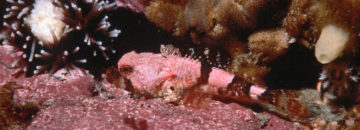
Join British Antarctic Survey researchers at a special webinar to mark Biology Week hosted by the British Biology Society. Our scientists will explore ocean biodiversity and its weird and wonderful adaptations to extreme conditions, and what Antarctica can tell us about our planet’s past, present, and future.
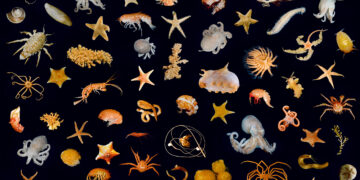
A new study featuring contributions from British Antarctic Survey (BAS) scientists has predicted the top emerging threats to ocean biodiversity over the coming decades.
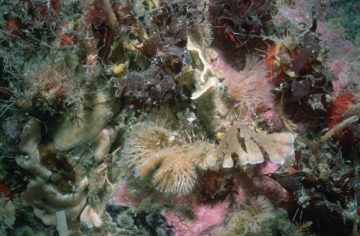
New research shows the slow growth in Antarctic fish is linked to problems making proteins.