Meteorology and Ozone Monitoring
Long-term meteorological and ozone observations and data help determine the causes of climate change in the polar regions.

Jonathan Shanklin joined the British Antarctic Survey in Cambridge in 1976, after graduating from Cambridge University with a BA in Natural Sciences and a PGCE in teaching physics. He retired at the end of March 2012 as head of its Meteorology and Ozone Monitoring Unit and is now an emeritus fellow at BAS. He continues his work in monitoring the Antarctic ozone hole and monitoring climate data for the GCOS Lead Centre for Antarctica. During his time with BAS he made 19 visits to the Antarctic, either to install new equipment, calibrate existing equipment or to make tours of inspection. He was an author of the paper that announced the discovery of what is now known as the Antarctic ozone hole, and the team were jointly awarded the Institute of Physics Charles Chree medal in 2000. He was invested with the Polar Medal by Her Majesty in 2005. He was a chair of the WMO Group on Antarctic Meteorology. At BAS and its parent organisation the NERC, he was the Trades Union vice-chair for Health & Safety.
His other interests are wide ranging: for sports he plays cricket in the summer and ice hockey in the winter, the latter albeit only occasionally these days. He is tower captain at St Benet’s church in Cambridge, which involves leading the bell-ringers in the English style of bell-ringing. He is a Council Member of and Field Meetings Secretary for the Botanical Society of Britain & Ireland and is their botanical co-recorder for the old county of Cambridgeshire. As well as botany he has a particular interest in liverworts. He is a vice-president of the Cambridge Natural History Society. He is Director of the Comet Section of the two leading national UK amateur astronomical societies and has discovered six SOHO comets.
Reminiscences of Halley’s Comet. D W Hughes, C Birkett, H Couper, S F Green, B Harpur, M J Hendrie, J D Shanklin, C Stott, M K Wallis, I P Williams & J C Zarnecki. Vistas in Astronomy, 32, Sep 88, pp 163-180.
The UK Contribution to Observations of Comet Halley. I P Williams, S F Green, P J Andrews, S W H Cowley, M J Hendrie, D W Hughes, A D Johnstone, J A M McDonnell, J D Shanklin, M K Wallis & J C Zarnecki. Quarterly Journal of the Royal Astronomical Society, 30, No 1, Mar 89, pp 3-32.
MERLIN observations of the Wolf-Rayet star AS431 (WR147) – a double radio source. J P Moran, R J Davis, M F Bode, A R Taylor, R E Spencer, A N Argue, M J Irwin & J D Shanklin Nature, 340, No 6233, Aug 89, pp 449-450.
Aluminium hydroxide polymorphs in a waste deposit from Faraday Base, Argentine Islands. K A Rodgers, M R Gregory, S F Courtney & J D Shanklin. N.Jb.Miner.Mh., H.3, Mar 92, pp 127-133.
The BAA comet section. J D Shanklin. Int. Comet Q., 16, No 4, Oct 94, pp149-151.
Estimation of DC. J D Shanklin. Int. Comet Q., 17, No 3, Jul 95, pp85-87.
Comet analyses. J D Shanklin. J. Brit. Astron. Assoc., 105, No 6, Dec 95, pp 291-294
Comet Levy 1990 c. J D Shanklin. J. Brit. Astron. Assoc., 105, No 6, Dec 95, pp 295-300
Comet Shoemaker-Levy 1991 a1. J D Shanklin. J. Brit. Astron. Assoc., 106, No 1, Feb 96, pp 19-21.
The comets of 1990. J D Shanklin. J. Brit. Astron. Assoc., 106, No 2, Apr 96, pp 86-91
The comets of 1991. J D Shanklin. J. Brit. Astron. Assoc., 107, No 4, Aug 97, pp 186-191
Voyages South. J D Shanklin. J. Brit. Astron. Assoc., 107 (6), 307 (1997)
The comets of 1992. J D Shanklin. J. Brit. Astron. Assoc., 108, No 2, Apr 98, pp 90-98
The comets of 1993. J D Shanklin. J. Brit. Astron. Assoc., 108, No 6, Dec 98, pp 305-316
The comets of 1994. J D Shanklin. J. Brit. Astron. Assoc., 109, No 4, Aug 99, pp 191-209
The comets of 1995. J D Shanklin. J. Brit. Astron. Assoc., 110, No 6, Dec 00, pp 311-322
The comets of 1996. J D Shanklin. J. Brit. Astron. Assoc., 111, No 5, Oct 01, pp 247-260
The comets of 1997. J D Shanklin. J. Brit. Astron. Assoc., 112, No 3, Jun 02, pp 130-150
The comets of 1998. J D Shanklin. J. Brit. Astron. Assoc., 112, No 6, Dec 02, pp 325-348
Astronomical diaries from the time of the Great War. J D Shanklin. J. Brit. Astron. Assoc., 113, No 5, Oct 03, pp 262-265
The comets of 1999. J D Shanklin. J. Brit. Astron. Assoc., 119, No 6, Dec 09, pp 317-339
The comets of 2000. J D Shanklin. J. Brit. Astron. Assoc., 120, No 4, Oct 10, pp 223-239
67P/Churyumov-Gerasimenko). J D Shanklin. J. Brit. Astron. Assoc., 123, No 3, Jun 13, pp 163-164
The comets of 2001 (Part 1). J D Shanklin. J. Brit. Astron. Assoc., 123, No 6, Dec 13, pp 338-352
The comets of 2001 (Part 2). J D Shanklin. J. Brit. Astron. Assoc., 124, No 1, Feb 14, pp 29-35
The comets of 2002 (Part 1). J D Shanklin. J. Brit. Astron. Assoc., 124, No 5, Oct 14, pp 254-266
The comets of 2002 (Part 2). J D Shanklin. J. Brit. Astron. Assoc., 124, No 6, Dec 14, pp 322-335
The brighter comets of 2003. J D Shanklin. J. Brit. Astron. Assoc., 125, No 1, Feb 15, pp 38-46
The brighter comets of 2004. J D Shanklin. J. Brit. Astron. Assoc., 125, No 2, Apr 15, pp 105-115
Shanklin, Jonathan. Editors: Herschy, Reginald W. Fairbridge, Rhodes W (2023) The Antarctic ozone hole.
Dawson, Wayne. Peyton, Jodey M. ORCID record for Peyton, Jodey M.. Pescott, Oliver L. ORCID record for Pescott, Oliver L.. Adriaens, Tim. Cottier-Cook, Elizabeth J. Frohlich, Danielle S. Key, Gillian. Malumphy, Chris. Martinou, Angeliki F. Minchin, Dan. Moore, Niall. Rabitsch, Wolfgang. Rorke, Stephanie L. Tricarico, Elena. Turvey, Katharine M.A. Winfield, Ian J. ORCID record for Winfield, Ian J.. Barnes, David K.A. ORCID record for Barnes, David K.A.. Baum, Diane. Bensusan, Keith. Burton, Frederic J. Convey, Peter ORCID record for Convey, Peter. Copeland, Alison I. Fa, Darren A. Fowler, Liza. García-Berthou, Emili. Gonzalez, Albert. González-Moreno, Pablo. Gray, Alan ORCID record for Gray, Alan. Griffiths, Richard W. Guillem, Rhian. Guzman, Antenor N. Haakonsson, Jane. Hughes, Kevin A. ORCID record for Hughes, Kevin A.. James, Ross. Linares, Leslie. Maczey, Norbert. Mailer, Stuart. Manco, Bryan Naqqi. Martin, Stephanie. Monaco, Andrea. Moverley, David G. Rose-Smyth, Christine. Shanklin, Jonathan. Stevens, Natasha. Stewart, Alan J. Vaux, Alexander G.C. Warr, Stephen J. Werenkaut, Victoria. Roy, Helen E. ORCID record for Roy, Helen E.. (2022) Horizon scanning for potential invasive non-native species across the United Kingdom Overseas Territories.
Shanklin, Jonathan. Editors: Foscari, Giulia (2021) Advocating for consistent data sets. The Dobson Spectro-photometer.
Shanklin, Jonathan. Editors: Foscari, Giulia (2021) Atmospheric chemistry. The discovery of the ozone hole.
Klekociuk, Andrew R. Tully, Matthew B. Krummel, Paul B. Evtushevsky, Oleksandr. Kravchenko, Volodymyr. Henderson, Stuart I. Alexander, Simon P. Querel, Richard R. Nichol, Sylvia. Smale, Dan. Milinevsky, Gennadi P. Grytsai, Asen. Fraser, Paul J. Xiangdong, Zheng. Gies, H. Peter. Schofield, Robyn. Shanklin, Jonathan D. (2021) The Antarctic ozone hole during 2017.
Zhang, Lily N. Solomon, Susan. Stone, Kane A. Shanklin, Jonathan D. Eveson, Joshua D. Colwell, Steve. Burrows, John P. Weber, Mark. Levelt, Pieternel F. Kramarova, Natalya A. Haffner, David P. (2021) On the use of satellite observations to fill gaps in the Halley station total ozone record.
Hill, Mark O. Preston, Christopher D. ORCID record for Preston, Christopher D.. Shanklin, Jonathan D. (2020) Geographical patterns in the flora of Cambridgeshire (v.c.29).
Krummel, Paul B. Klekociuk, Andrew R. Tully, Matthew B. Gies, H. Peter. Alexander, Simon P. Fraser, Paul J. Henderson, Stuart I. Schofield, Robyn. Shanklin, Jonathan D. Stone, Kane A. (2020) The Antarctic ozone hole during 2014.
Tully, Matthew B. Klekociuk, Andrew R. Krummel, Paul B. Gies, H. Peter. Alexander, Simon P. Fraser, Paul J. Henderson, Stuart I. Schofield, Robyn. Shanklin, Jonathan D. Stone, Kane A. (2020) The Antarctic ozone hole during 2015 and 2016.
Hughes, Kevin A. ORCID record for Hughes, Kevin A.. Pescott, Oliver L. ORCID record for Pescott, Oliver L.. Peyton, Jodey ORCID record for Peyton, Jodey. Adriaens, Tim. Cottier-Cook, Elizabeth J. Key, Gillian. Rabitsch, Wolfgang. Tricarico, Elena. Barnes, David K.A. ORCID record for Barnes, David K.A.. Baxter, Naomi. Belchier, Mark. Blake, Denise. Convey, Peter ORCID record for Convey, Peter. Dawson, Wayne. Frohlich, Danielle. Gardiner, Lauren M. González-Moreno, Pablo. James, Ross. Malumphy, Christopher. Martin, Stephanie. Martinou, Angeliki F. Minchin, Dan. Monaco, Andrea. Moore, Niall. Morley, Simon A. ORCID record for Morley, Simon A.. Ross, Katherine. Shanklin, Jonathan. Turvey, Katharine. Vaughan, David ORCID record for Vaughan, David. Vaux, Alexander G.C. Werenkraut, Victoria. Winfield, Ian J. ORCID record for Winfield, Ian J.. Roy, Helen E. ORCID record for Roy, Helen E.. (2020) Invasive non‐native species likely to threaten biodiversity and ecosystems in the Antarctic Peninsula region.
Shanklin, Jonathan D. (2019) Measurements of solar and terrestrial radiation at King Edward Point, South Georgia, 1973-81.
Shanklin, Jonathan D. (2019) Balloon-borne ozonesonde flights made from Faraday Station.
Farman, J.C. Gardiner, B.G. Shanklin, Jonathan D. (2019) Large losses of total ozone in Antarctica reveal seasonal ClOx/NOx interaction.
Gardiner, B.G. Shanklin, Jonathan D. (2019) Recent measurements of Antarctic ozone depletion.
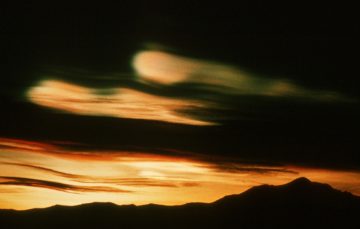
Griffiths, L.A. Shanklin, Jonathan D. (2019) An observation of noctilucent cloud in the Antarctic winter.
Hughes, David W. Birkett, Charon. Couper, Heather. Green, Simon F. Harpur, Brian. Hendrie, Michael J. Shanklin, Jonathan. Stott, Carole. Wallis, Max K. Williams, Iwan P. Zarnecki, John C. (2018) Reminiscences of Halley’s Comet.
Farman, J. C. Gardiner, B. G. Shanklin, Jonathan D. (2018) How deep is an ‘ozone hole’?.
Williams, I.P. Green, S.F. Andrews, P.J. Cowley, S.W.H. Hendrie, M.J. Hughes, D.W. Johnstone, A.D. McDonnell, J.A.M. Shanklin, Jonathan D. Wallis, M.K. Zarnecki, J.C. (2018) The UK contribution to observations of Comet Halley.
Shanklin, Jonathan D. (2018) Antarctic stratospheric temperature and ozone trends.
Shanklin, Jonathan D. Gardiner, B.G. (2018) The Antarctic ozone hole.
Moran, J.P. Davis, R.J. Bode, M.F. Taylor, A.R. Spencer, R.E. Argue, A.N. Irwin, M.J. Shanklin, Jonathan D. (2018) MERLIN observations of the Wolf–Rayet star AS431 (WR147)-a double radio source.
Gardiner, B.G. Shanklin, Jonathan D. (2018) Measurements of solar and terrestrial radiation at Faraday and Halley.
Rodgers, K.A. Gregory, M.R. Courtney, S.F. Shanklin, J.D. (2018) Aluminium hydroxide polymorphs in a waste deposit from Faraday Base, Argentine Islands.
Peck, Lloyd ORCID record for Peck, Lloyd. Morgan, Geoff. Shanklin, Jonathan. (2017) A new type of Bryozoan from Antarctica.
Jones, Anna E. ORCID record for Jones, Anna E.. Roscoe, Howard K. Sarkissian, A. Shanklin, Jonathan S. Wolff, Eric W. (2016) Year-round column ozone observations at 65°S: Validation and polar winter data.
Jones, Anna E. ORCID record for Jones, Anna E.. Shanklin, Jonathan D. (2016) Continued decline of total ozone over Halley, Antarctica, since 1985.
Downey, A. Atkinson, R. Fraser, P. Shanklin, J.D. (2016) The Antarctic ozone hole – 1994.
Shanklin, Jonathan. (2016) Ozone in the Earth’s atmosphere.
Shanklin, Jonathan. (2016) Voyages South.
Shanklin, Jonathan. (2016) Astronomy on ice: a report on astronomy in Antarctica.
Klekociuk, Andrew R. Krummel, Paul B. Tully, Matthew B. Gies, H. Peter. Alexander, Simon P. Fraser, Paul J. Henderson, Stuart I. Javorniczky, John. Shanklin, Jonathon D. Schofield, Robyn. Stone, Kane A. (2016) The Antarctic ozone hole during 2013.
Klekociuk, A.R. Tully, M.B. Krummel, P.B. Gies, H.P. Alexander, S.P. Fraser, P.J. Henderson, S.I. Javorniczky, J. Petelina, S.V. Shanklin, J.D. Schofield, R. Stone, K.A. (2015) The Antarctic ozone hole during 2012.
Klekociuk, A.R. Tully, M.B. Krummel, P.B. Gies, H.P. Petelina, S.V. Alexander, S.P. Deschamps, L.L. Fraser, P.J. Henderson, S.I. Javorniczky, J. Shanklin, J.D. Siddaway, J.M. Stone, K.A. (2015) The Antarctic ozone hole during 2011.
Shanklin, Jonathan. (2015) Dog-gone it.
Meredith, Michael ORCID record for Meredith, Michael. Orr, Andrew ORCID record for Orr, Andrew. Shanklin, Jonathan. Turner, John ORCID record for Turner, John. [and 126 others],. Editors: Ennis, Christine A (2015) Assessment for Decision-Makers: Scientific Assessment of Ozone Depletion: 2014.
Turner, John ORCID record for Turner, John. Barrand, Nicholas E. Bracegirdle, Thomas J. ORCID record for Bracegirdle, Thomas J.. Convey, Peter ORCID record for Convey, Peter. Hodgson, Dominic A. ORCID record for Hodgson, Dominic A.. Jarvis, Martin. Jenkins, Adrian ORCID record for Jenkins, Adrian. Marshall, Gareth ORCID record for Marshall, Gareth. Meredith, Michael P. ORCID record for Meredith, Michael P.. Roscoe, Howard. Shanklin, Jon. French, John. Goosse, Hugues. Guglielmin, Mauro. Gutt, Julian. Jacobs, Stan. Kennicutt, Marlon C. Masson-Delmotte, Valerie. Mayewski, Paul. Navarro, Francisco. Robinson, Sharon. Scambos, Ted. Sparrow, Mike. Summerhayes, Colin. Speer, Kevin. Klepikov, Alexander. (2013) Antarctic climate change and the environment: an update.
Kuttippurath, J. Lefèvre, F. Pommereau, J.-P. Roscoe, H.K. Goutail, F. Pazmiño, A. Shanklin, J.D. (2013) Antarctic ozone loss in 1979-2010: first sign of ozone recovery.
Lambert, J.-C. Van Roozendael, M. Simon, P.C. Pommereau, J.-P. Goutail, F. Gleason, J.F. Andersen, S.B. Arlander, D.W. Bui Van, N.A. Claude, H. de La Noë, J. De Mazière, M. Dorokhov, V. Eriksen, P. Green, A. Karlsen Tørnkvist, K. Kåstad Høiskar, B.A. Kyrö, E. Leveau, J. Merienne, M.-F. Milinevsky, G. Roscoe, H.K. Sarkissian, A. Shanklin, J.D. Stähelin, J. Wahlstrøm Tellefsen, C. Vaughan, G. (2012) Combined characterisation of GOME and TOMS total ozone measurements from space using ground-based observations from the NDSC.
Shanklin, J.D. (2012) Back to basics: The ozone hole.
Shanklin, Jon. Editors: Fox, Adrian ORCID record for Fox, Adrian (2012) Icebergs and sea ice.
Shanklin, Jon. Editors: Fox, Adrian ORCID record for Fox, Adrian (2012) Weather and climate.
Shanklin, Jonathan. (2012) Fixing a hole.
Klekociuk, A.R. Tully, M.B. Alexander, S.P. Dargaville, R.J. Deschamps, L.L. Fraser, P.J. Gies, H.P. Henderson, S.I. Javorniczky, J. Krummel, P.B. Petelina, S.V. Shanklin, J.D. Siddaway, J.M. Stone, K.A. (2012) The Antarctic ozone during 2010.
Campanelli, M. Estelles, V. Smyth, T. Tomasi, C. Martìnez-Lozano, M.P. Claxton, B. Muller, P. Pappalardo, G. Pietruczuk, A. Shanklin, Jonathan. Colwell, Steve. Wrench, C. Lupi, A. Mazzola, M. Lanconelli, C. Vitale, V. Congeduti, F. Dionisi, D. Cardillo, F. Cacciani, M. Casasanta, G. Nakajima, T. (2012) Monitoring of Eyjafjallajokull volcanic aerosol by the new European Skynet Radiometers (ESR) network.
Roscoe, H.K. Colwell, S.R. Shanklin, J.D. (2012) Stratospheric temperatures in Antarctic winter: does the 40-year record confirm mid-latitude trends in stratospheric water vapour?.
Roscoe, H.K. Fowler, C.L. Shanklin, J.D. Hill, J.G.T. (2012) Possible long-term changes in stratospheric circulation: evidence from total ozone measurements at the edge of the Antarctic vortex in early winter.
Shanklin, Jonathan. (2011) The hole in the ozone layer.
Shanklin, Jonathan D. Editors: Riffenburgh, B (2011) Ozone and the polar stratosphere.
Shanklin, Jonathan D. Editors: Riffenburgh, B (2011) Meteorological observing.
Tully, M.B. Klekociuk, A.R. Alexander, S.P. Dargaville, R.J. Deschamps, L.L. Fraser, P.J. Gies, H.P. Henderson, S.I. Javorniczky, J. Krummel, P.B. Petelina, S.V. Shanklin, Jonathan D. Siddaway, J.M. Stone, K.A. (2011) The Antarctic ozone hole during 2008 and 2009.
Tully, M.B. Klekociuk, A.R. Deschamps, L.L. Henderson, S.I. Krummel, P.B. Fraser, P.J. Shanklin, Jonathan. Downey, A.H. Gies, H.P. Javorniczky, J. (2011) The 2007 Antarctic ozone hole.
Shanklin, Jonathan. Moore, Catherine. Colwell, Steve. (2011) Meteorological observing and climate in the British Antarctic Territory and South Georgia: Part 2.
Shanklin, Jonathan. Moore, Catherine. Colwell, Steve. (2011) Meteorological observing and climate in the British Antarctic Territory and South Georgia: Part 1.
Shanklin, Jonathan. (2011) Unlayering the ozone. An Earth sans sunscreen.
Shanklin, Jonathan D. (2010) Super-volcanic eruptions: noctilucent clouds.
Shanklin, Jonathan. (2010) Reflections on the ozone hole.
Roscoe, H.K. Colwell, S.R. Shanklin, J.D. Karhu, J.A. Taalas, P. Gil, M. Yela, M. Rodriguez, S. Rafanelli, C. Cazeneuve, H. Villanueva, C.A. Ginsburg, M. Diaz, S.B. de Zafra, R.L. Muscari, G. Redaelli, G. Dragani, R. (2008) Measurements from ground and balloons during APE-GAIA – A polar ozone library.
Roscoe, H.K. Shanklin, J.D. Colwell, S.R. (2008) Has the Antarctic Vortex Split before 2002?.
Hibbins, R.E. ORCID record for Hibbins, R.E.. Shanklin, J.D. Espy, P.J. Jarvis, M.J. Riggin, D.M. Fritts, D.C. Lubken, F.-J. (2007) Seasonal variations in the horizontal wind structure from 0-100 km above Rothera station, Antarctica (67° S, 68° W).
Long-term meteorological and ozone observations and data help determine the causes of climate change in the polar regions.
It’s been over 30 years since British Antarctic Survey meteorologist Jonathan Shanklin first visited at Halley Research Station. He’s one of few who has spent 20 Antarctic seasons living and […]
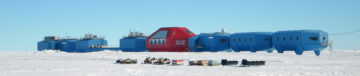
This week (Saturday 16 September), marks the 30th anniversary of the signing of the Montreal Protocol on Substances that Deplete the Ozone Layer. It is one of the most successful […]
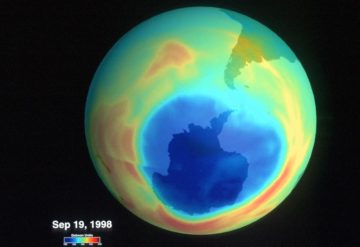
An international team of researchers has identified the “first fingerprints of healing” of the Antarctic ozone layer, published this week (30 June 2016) in the journal Science.
World Ozone Day 2015

30th Anniversary of the Discovery of Ozone Hole This week British Antarctic Survey (BAS) commemorates the 30th anniversary of one of its most important scientific discoveries that affected the world […]
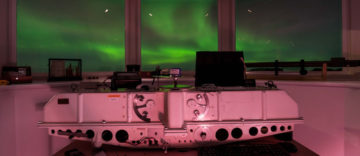
Today, 16 September, is the International Day for the Preservation of the Ozone Layer. The date commemorates the signing of the Montreal Protocol, which sought to reduce atmospheric levels of […]
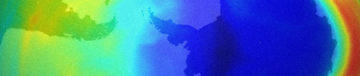
First signs of ozone layer recovery The ozone layer is showing the first signs of future recovery thanks to international action against ozone depleting substances, say the United Nations Environment […]
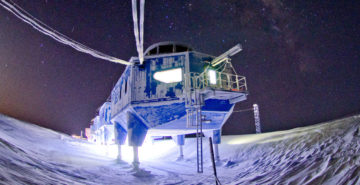
New documentary examines the status of the Ozone Hole on the anniversary of the Montreal Protocol – a global agreement banning ozone depleting substances It’s over 25 years since British […]

This year we almost had an ozone hole over Cambridge. Normally the Arctic ozone layer is about 10° warmer than that over the Antarctic, and this means that polar stratospheric […]

25th Anniversary of the Discovery of Ozone Hole This week British Antarctic Survey (BAS) commemorates the 25th anniversary of one of its most dramatic scientific discoveries — the ozone hole. […]
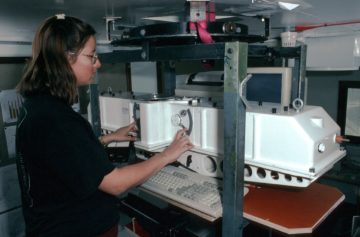
In May 1985 in the journal Nature British Antarctic Survey scientists reported their discovery of an ‘ozone hole’ over Antarctica. The United Nations Environmental Programme proclaims 16 September the International […]
Friday (16 September) is International Day for the Preservation of the Ozone Layer. This year scientists at British Antarctic Survey (BAS) commemorate their discovery of the Antarctic ‘ozone hole’ 20 […]
I was a member of the team that discovered the Antarctic ozone hole.

The Antarctic ozone hole was discovered in 1985 by BAS Scientists, from left: Joe Farman, Brian Gardiner and Jon Shanklin with a Dobson ozone spectrophotometer, used to determine stratospheric ozone concentrations.