Plastic’s hidden cost to our climate
CUPIDO aims to address: what is the role of zooplankton in promoting the transport of plastic in the ocean? And how this plastic transport interferes with zooplankton’s ability to store carbon in the deep ocean?

I am a marine ecologist exploring the impacts of plastic pollution, potential cumulative effects with other anthropogenic stressors and how plastic pollution may impact the blue carbon pathway (carbon stored in marine ecosystems, which is sequestered from the atmosphere and oceans to the deep sea).
Increasing evidence shows that plastic pollution is bordering on a planetary boundary threat, which is a threat beyond which we cannot push the earths systems without putting society at risk. Plastic does not exist as a single stressor, but with a cocktail of other contaminants and climate stressors, such as ocean acidification, another planetary boundary threat. From an ecosystem health perspective, polar marine ecosystems may have higher sensitivity to anthropogenic stressors than other regions owing to the system’s physical and biological characteristics, and previous isolation of the ecosystem over evolutionary timescales.
Whilst potentially most vulnerable, the polar regions are also most critical to regulating our global climate. It is therefore pertinent we begin to understand the possible cumulative effects of these multiple oceanic stressors, which exist in parallel and are on the incline. This is paramount in sensitive and isolated systems, such as those of the Southern Ocean surrounding Antarctica. Consequently, there has never been a more important time to produce scientific data related to the emerging global stressor of plastic pollution, to aid associated polar conservation strategies and environmental policies.
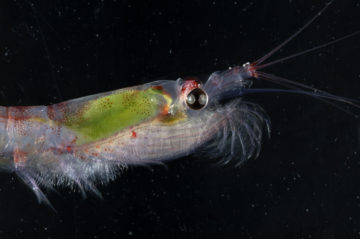
During my PhD, I adopted an ecotoxicological approach, exploring the potential multi-stressor effects of plastic pollution and ocean acidification on a keystone polar zooplankton. Antarctic krill (Euphausia superba) embryos showed significantly reduced development under multi-stress conditions, compared to ambient seawater conditions which was not apparent when looking at nanoplastic or ocean acidification as single stressors. This work is a first step in highlighting the need to account for future climate driven changes to ocean conditions when considering the impact of plastic pollution in the Southern Ocean.
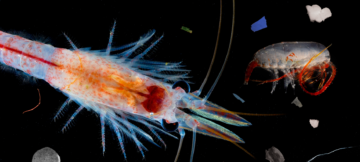
Another avenue of my PhD explored the vertical flux of microplastic which is virtually unknown. Globally, there is a 99% mismatch between plastic estimated to enter the marine environment and that what has been accounted for on the ocean surface. I calculated for the first time a vertical flux of plastic pollution in a high traffic area the Southern Ocean, demonstrating that microplastics are present through the water column, regardless of their buoyancy properties. Vertical plastic fluxes could therefore account for a proportion of ‘missing’ oceanic plastic not found at the surface, could impact carbon sequestration to the deep ocean due to incorporation into zooplankton faeces, moults and carcasses, and may impact zooplankton health. Findings will therefore aid the modelling of plastic pathways around the Antarctic and sub-Antarctic islands.
Following my PhD, I embarked on a postdoctoral position under the wider UKRI funded Future Leader Fellowship programme ‘CalcUlating the strength of the Plastic pump In counteracting the Deep export of Oceanic carbon’. This multi-national project approaches plastic from a novel biogeochemical angle. In short, the project explores how plastic pollution may impact the blue carbon pathway. Zooplankton play a critical role in this activity through the sinking of their faeces, moults and carcasses and through their vertical movement along the water column. Plastic pollution may threaten this carbon pathway by lowering the sinking velocity of zooplankton faeces, moults and carcasses. Ultimately, this could reduce the capability of the ocean to regulate atmospheric CO2 emissions. This is particularly important since the oceans absorb approximately 30% of atmospheric CO2, helping to mitigate the effects of climate change.
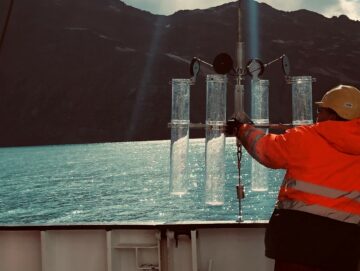
Through further fieldwork and laboratory work with the British Antarctic Survey, the main objectives of my postdoctoral work are to (1) explore the role of zooplankton in promoting the transport of oceanic plastics (2) determine how plastic may interfere with the ability of zooplankton to store carbon in the deep ocean. The cutting-edge multidisciplinary approach includes an extensive field-based research programme, in which novel floating and moored ocean platforms are used and in situ experiments conducted. The extensive dataset created will again inform ecological models.
Sparaventi, Erica ORCID record for Sparaventi, Erica. Rowlands, Emily. Giglio, Federico. Rodríguez-Romero, Araceli. Tovar-Sánchez, Antonio ORCID record for Tovar-Sánchez, Antonio. Manno, Clara ORCID record for Manno, Clara. (2026) From Carbon to Plastics: Partitioning of Biogeochemical and Anthropogenic Particles in Penguin Guano.
Sakovich, Alena ORCID record for Sakovich, Alena. McClymont, Erin L. Rowlands, Emily. Manno, Clara ORCID record for Manno, Clara. (2026) Biofouled microplastics are associated with stronger shifts in late-summer lipid dynamics of juvenile copepod Calanus hyperboreus.
Jones-Williams, Kirstie ORCID record for Jones-Williams, Kirstie. Rowlands, Emily. Primpke, Sebastian. Galloway, Tamara. Cole, Matthew. Waluda, Claire ORCID record for Waluda, Claire. Manno, Clara ORCID record for Manno, Clara. (2025) Microplastics in Antarctica – a Plastic Legacy in the Antarctic Snow?.
Manno, C. ORCID record for Manno, C.. Corsi, I. Rowlands, E. Bergami, E. (2024) Plastics counteract the ability of Antarctic krill to promote the blue carbon pathway in the deep ocean.
Rowlands, Emily. Galloway, Tamara. Jones-Williams, Kirstie. Manno, Clara ORCID record for Manno, Clara. (2024) How Might Plastic Pollution Affect Antarctic Animals?.
Buckingham, Jack W. Peel, Rebecca H. ORCID record for Peel, Rebecca H.. Rowlands, Emily. Wilson, Daniel R. Editors: Horton, Alice A. ORCID record for Horton, Alice A. (2023) Chapter 9: Plastic Pollution in Antarctica and the Southern Ocean.
Rowlands, Emily. Galloway, Tamara. Cole, Matthew. Lewis, Ceri. Hacker, Christian. Peck, Victoria L. ORCID record for Peck, Victoria L.. Thorpe, Sally ORCID record for Thorpe, Sally. Blackbird, Sabena. Wolff, George A. Manno, Clara ORCID record for Manno, Clara. (2023) Scoping intergenerational effects of nanoplastic on the lipid reserves of Antarctic krill embryos.
Rowlands, Emily. Galloway, Tamara. Cole, Matthew. Peck, Victoria L. ORCID record for Peck, Victoria L.. Posacka, Anna. Thorpe, Sally ORCID record for Thorpe, Sally. Manno, Clara ORCID record for Manno, Clara. (2023) Vertical flux of microplastic, a case study in the Southern Ocean, South Georgia.
Wilkie Johnston, Laura. Bergami, Elisa ORCID record for Bergami, Elisa. Rowlands, Emily. Manno, Clara ORCID record for Manno, Clara. (2023) Organic or junk food? Microplastic contamination in Antarctic krill and salps.
Rowlands, Emily. Galloway, Tamara. Cole, Matthew. Lewis, Ceri. Peck, Victoria ORCID record for Peck, Victoria. Thorpe, Sally ORCID record for Thorpe, Sally. Manno, Clara ORCID record for Manno, Clara. (2021) The effects of combined ocean acidification and nanoplastic exposures on the embryonic development of Antarctic krill.
Rowlands, Emily. Galloway, Tamara. Manno, Clara ORCID record for Manno, Clara. (2020) A Polar outlook: Potential interactions of micro-and nano-plastic with other anthropogenic stressors.
Birchenall, P., Rowlands, E., & Manno, C. (2026). Microplastic characteristics within the Scotia Sea water column across differing environmental regimes, austral summer 2022-2023 (Version 1.0) [Data set]. NERC EDS UK Polar Data Centre. https://doi.org/10.5285/00fa6b5a-2b12-4356-950d-272d90378cef
Sakovich, A., McClymont, E., Rowlands, E., & Manno, C. (2026). Lipid mass and free fatty-acid composition of Calanus hyperboreus (CV) exposed to pristine and biofouled microplastics during shipboard incubation experiments (southeastern Greenland, summer 2024) (Version 1.0) [Data set]. NERC EDS UK Polar Data Centre. https://doi.org/10.5285/0298edcf-93b1-4a6c-9a81-d9c785149b39
Sparaventi, E., Rowlands, E., Giglio, F., Rodriguez-Romero, A., Tovar-Sanchez, A., & Manno, C. (2026). Biogeochemical particulate and microplastics analysis in Antarctic penguin guano samples, collected 2021-2022 (Version 1.0) [Data set]. NERC EDS UK Polar Data Centre. https://doi.org/10.5285/88c79a01-d3c0-4fca-835c-481930948a5e
Thorpe-Morgan, C., Rowlands, E., Sanders, R., ten Hoopen, P., & Tarling, G. (2026). AISIT Database of Pan-Arctic stable oxygen isotope (delta18O) and barium measurements from seawater, freshwater, rivers, fjords, and precipitation north of 60 degrees North, 1967-2025 (Version 1.0) [Data set]. NERC EDS UK Polar Data Centre. https://doi.org/10.5285/0dfb14d6-73a9-4273-99ed-b231ca581b1d
Jones-Williams, K., Rowlands, E., Primpke, S., Galloway, T., Cole, M., Waluda, C., & Manno, C. (2025). Microplastic abundance in Antarctic Snow samples (Version 1.0) [Data set]. NERC EDS UK Polar Data Centre. https://doi.org/10.5285/ac6ade29-2815-4938-a93a-d84f0d322bd6
CUPIDO aims to address: what is the role of zooplankton in promoting the transport of plastic in the ocean? And how this plastic transport interferes with zooplankton’s ability to store carbon in the deep ocean?
Where is all the ocean plastic? Eight million tonnes of plastic enter the ocean each year but only a small fraction of this (maybe even as low as 1%!) can […]
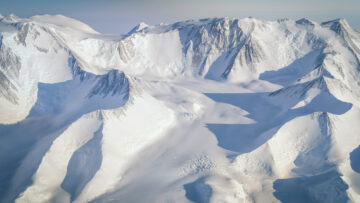
Scientists have discovered microplastics in the snow near some of Antarctica’s deep field camps, revealing how far-reaching plastic pollution has become.
New research shows that increased levels of plastic pollution in the Southern Ocean could reduce the ability of Antarctic krill, a tiny shrimp-like crustacean, to help take CO2 from the atmosphere.
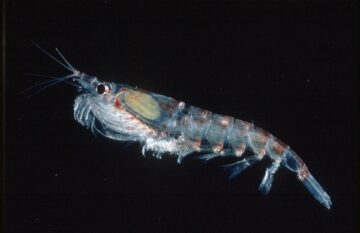
A team of scientists are embarking on an ambitious 30-day scientific expedition on board RRS Sir David Attenborough to investigate how carbon dioxide moves and transforms in the Southern Ocean.
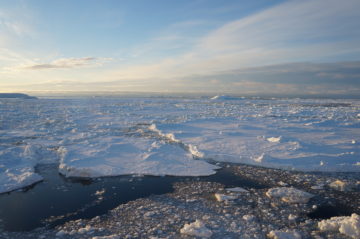
A new study led by researchers at British Antarctic Survey (BAS) discovered microplastics in krill (Euphausia superba), a small shrimp-like crustacean, and salps (Salpa thompsoni), a gelatinous marine invertebrate. The […]
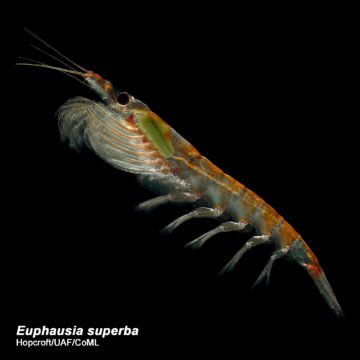
Plastic pollution combined with ocean acidification hinders the development of Antarctic krill in the Southern Ocean, research published today (4 August 2021) in Marine Frontiers reveals. Antarctic krill (Euphausia superba) […]