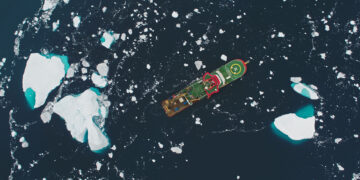
Creating Standards for Climate Experiments
Eco-ICE studies whether making Arctic sea ice thicker could harm ocean life and creates tools to help decision-makers work out if climate projects are safe.
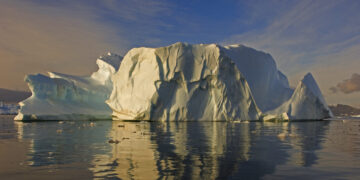

Abrahamsen, P., Tarling, G., Firing, Y., King, B., Marzocchi, A., Burson, A., Hendry, K., Henley, S., Liszka, C., Manno, C., Ward, F., Woodward, M., Wootton, M., Brunetta, M., Song, Y., & Thorpe, S. (2024). Dissolved nutrient and particulate material concentrations and phytoplankton abundance and community composition from cruise JC211 to South Georgia, Southern Ocean, February 2021 (Version 1.0) [Data set]. NERC EDS UK Polar Data Centre. https://doi.org/10.5285/eef71670-f6dc-46f6-9143-7569599854e5
Eco-ICE studies whether making Arctic sea ice thicker could harm ocean life and creates tools to help decision-makers work out if climate projects are safe.
MACS looks at Antarctica’s rapidly changing seasonal sea ice. As the planet warms microalgae growing in ice and water are affected and this, in turn, affects our climate system.
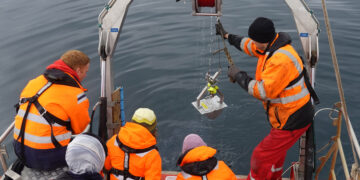
CONSEC explores how climate change and human activity are transforming the Southern Ocean, guiding global science and conservation.
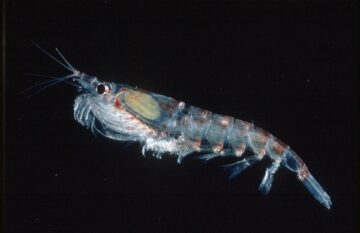
SiCLING studies how silicon cycles in Arctic and Antarctic glacial environments and how these cycles affect marine ecosystems and carbon flow.
BIOPOLE studies how climate change is affecting the release of nutrients from the polar regions, and their redistribution around the world’s oceans.