International Thwaites Glacier Collaboration
The International Thwaites Glacier Collaboration unites global scientists to study Antarctica’s most vulnerable glacier, predict sea-level rise, and inform climate action worldwide.

Our tractor train traverse system is an innovative way to support deep-field science across Antarctica.
By combining vehicles, sledges and living accommodation, it allows our science and support teams to live and work far from our research stations.
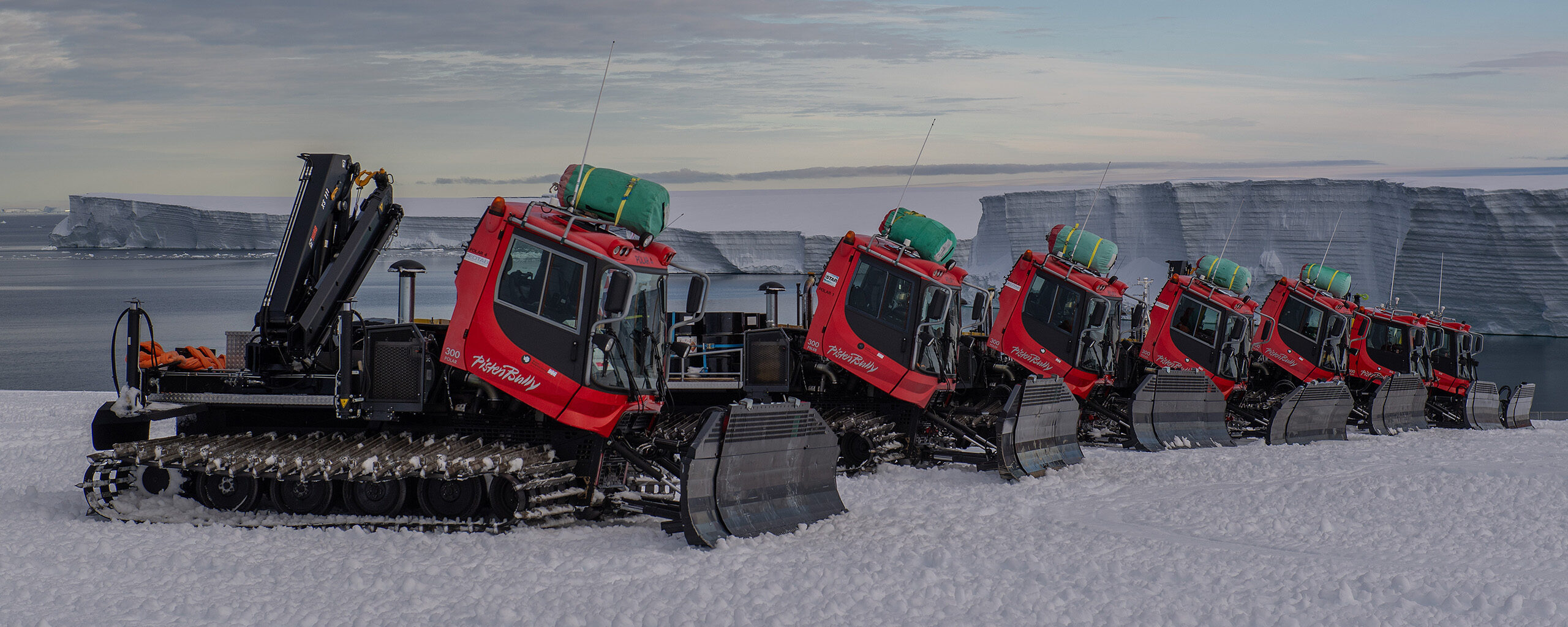
We use the PistenBully 300 Polar, a tracked snow vehicle, to tow supplies and equipment across the ice, a process we call a traverse. In this role, it can:
transport accommodation units
move snow
cross terrain where other vehicles cannot
Its flexible platform can carry a variety of superstructures, from cranes for loading to passenger cabins for working, living or sleeping. Its low ground pressure helps reduce risk when we unload on the sea ice.
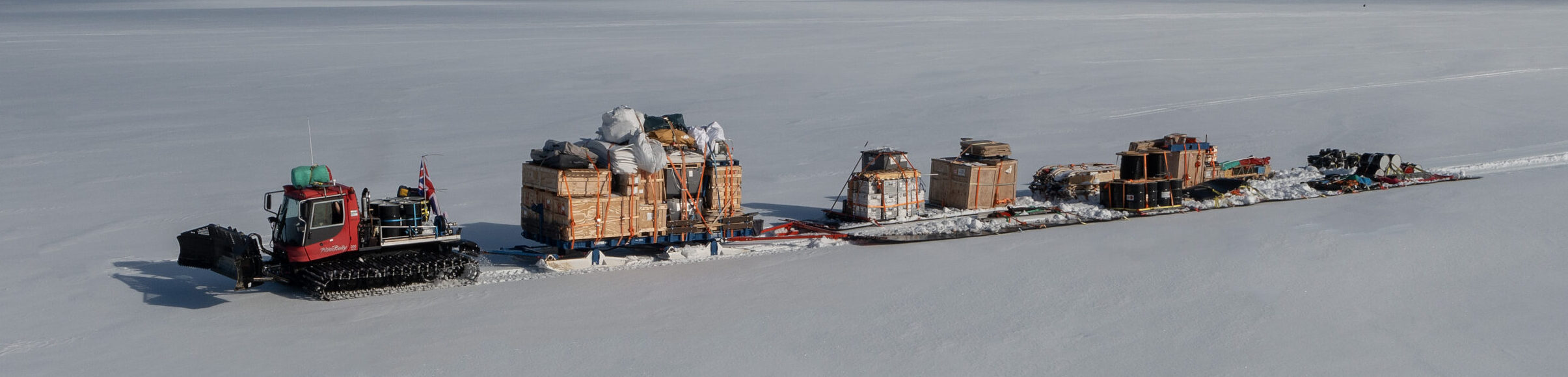
Tractor traverse bring out science cargo and waste from a deep field science drill camp
During a typical science traverse, we use Lehmann Sledge units to carry accommodation units and supplies across the ice. Each double-layer black plastic sledge can transport four 1500 US gallon fuel bladders. A full traverse will usually carry sixteen bladders in total.
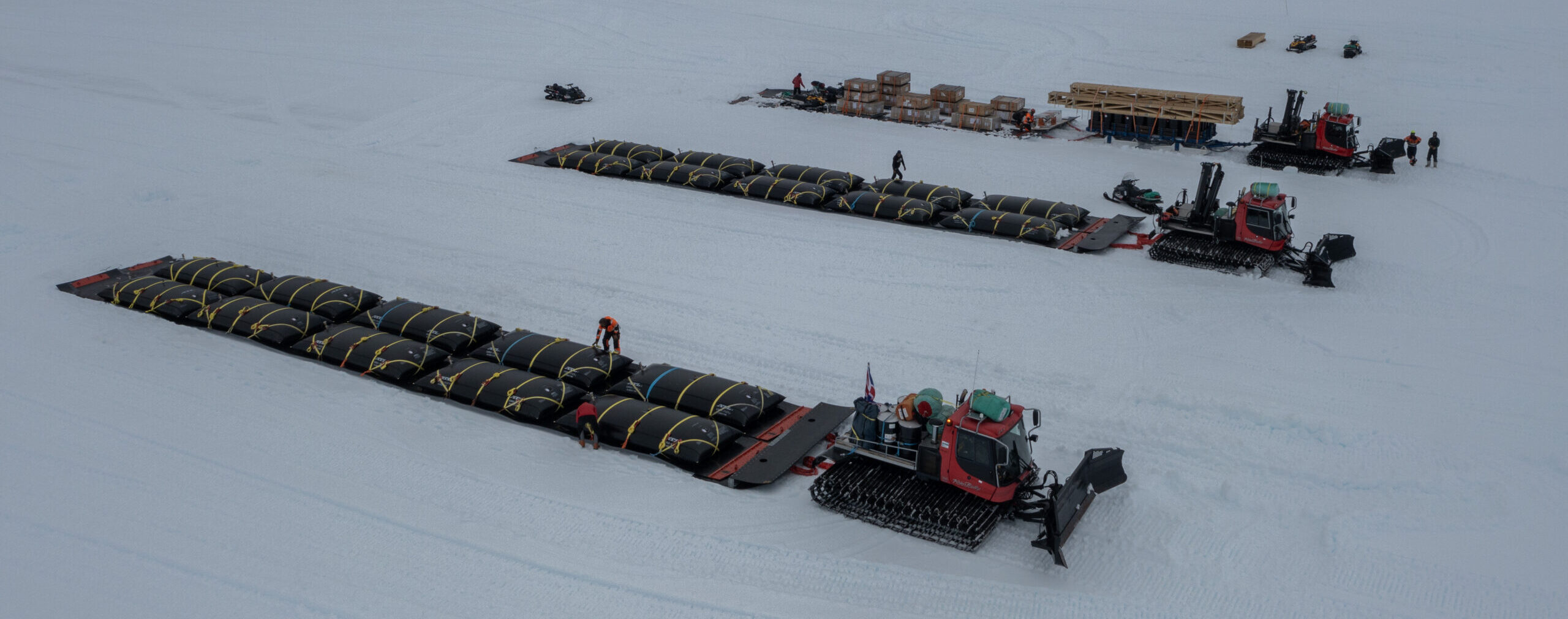
Traverse vehicles use pairs of poli-sledges to deliver bulk cargo and fuel for deep field science
The sledges use a light drawbar system for towing. This helps limit spills while giving us flexibility in how we move cargo.
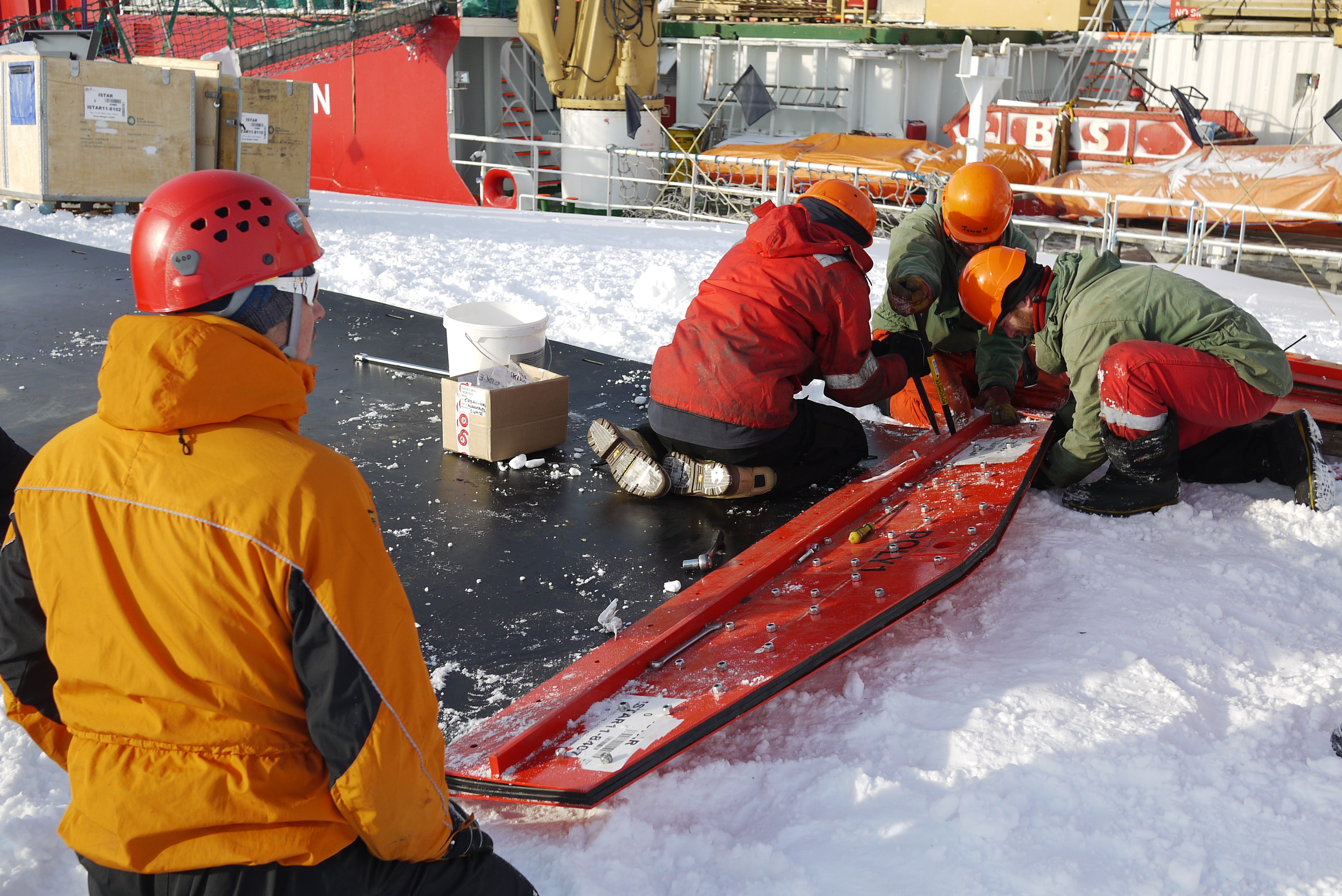
Preparing plastic sledge system for tractor train
Our living accommodation is transported on a Lehmann Sledge. This provides a hub for science work and living facilities during a traverse. These units allow us to stay close to our fieldwork, while remaining safe and supported in some of the harshest environments on Earth.
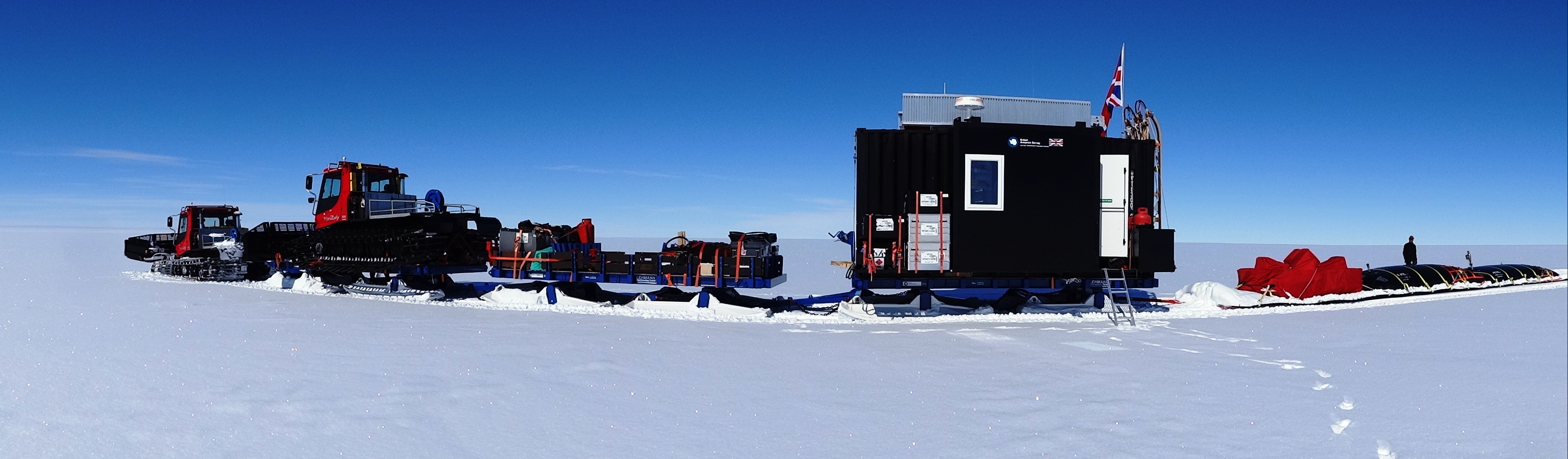
Tractor train traverse system with living accommodation
The International Thwaites Glacier Collaboration unites global scientists to study Antarctica’s most vulnerable glacier, predict sea-level rise, and inform climate action worldwide.
BEAMISH drilled through over 2 km of ice on Rutford Ice Stream to discover when the West Antarctic Ice Sheet last collapsed and how water and soft sediments beneath it help the ice flow towards the sea.
This project investigated the stability of Antarctica’s Filchner Ice Shelf to produce sea-level projections using hot water drilling, ocean measurements beneath the ice shelf, sediment coring, radar surveys and autonomous submersibles.
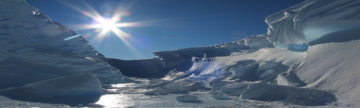
Science on the move – the mission to understand the stability of the West Antarctic Ice Sheet
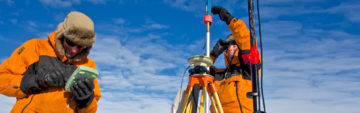
iStar-C – strives to understand the dynamical control and response to change of Pine Island Glacier
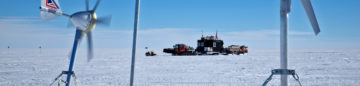
The British Antarctic Survey (BAS) field season has finished for another year. RRS Sir David Attenborough departed Rothera Research Station for the final time earlier in May and is […]
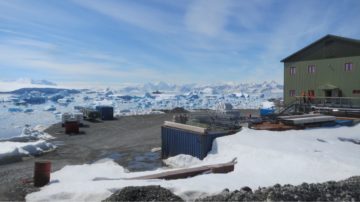
Science and support teams from British Antarctic Survey (BAS) are gearing up for the start of the Antarctic summer field season. All five of our research stations will be open […]
As spring returns to the southern hemisphere British Antarctic Survey (BAS) has started another research season which will take them over land, sea and ice in search of answers to […]
New study reveals when West Antarctica’s largest glacier started retreating Reporting this week (Wednesday 23 November) in the journal Nature an international team led by British Antarctic Survey (BAS) explains […]