
Fossil Bluff Field Station
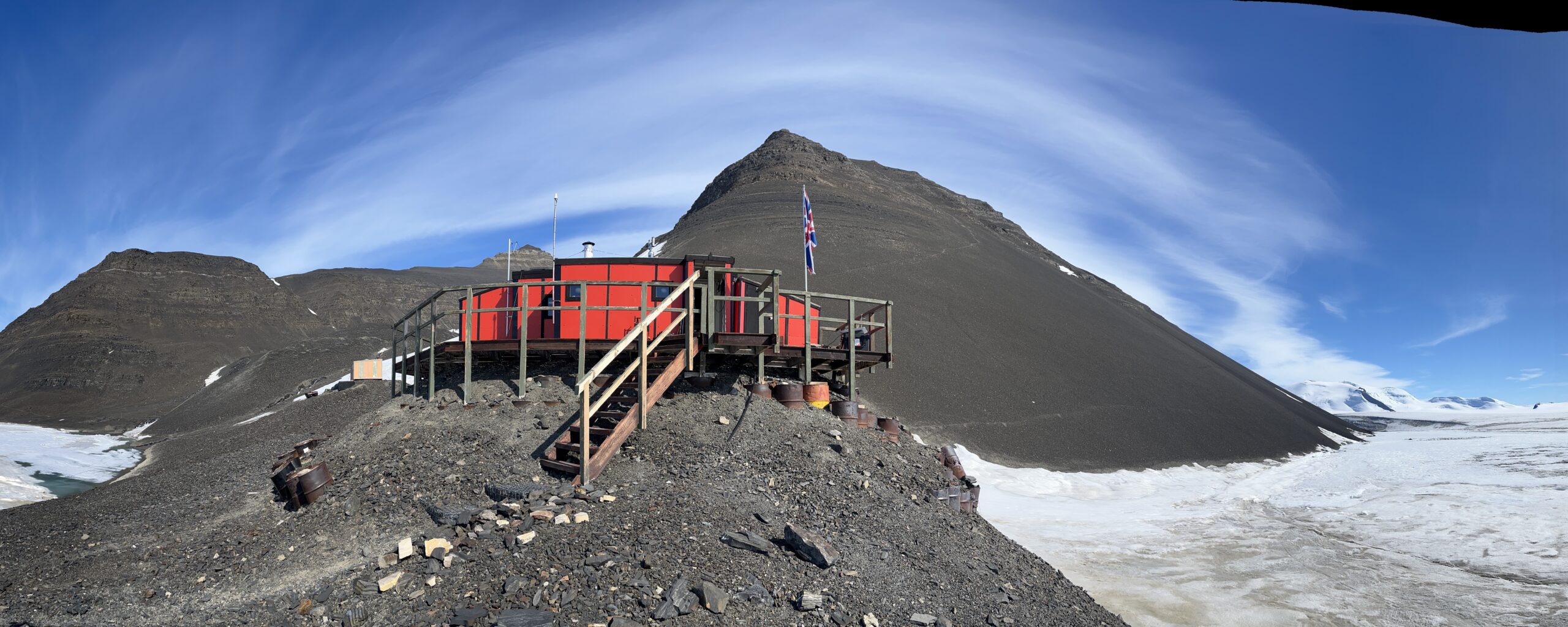
Fossil Bluff Field Station, Fossil Bluff Field Station
- Position
- Lat: -71.3333, Long: -68.2778
- Occupied
- 20 February 1961 to present (Summer-only since 1975)
- Staff
- Summer: 4
Fossil Bluff Field Station is a key forward facility supporting our Antarctic air operations on Alexander Island.
It plays an important role helping us move people and equipment between Rothera Research Station and deep-field science sites during the Antarctic summer.
Air operations and refuelling
Fossil Bluff operates as an aircraft refuelling and transit station for Twin Otter flights during the summer season from October to March.
A 1,200 metre unprepared snow runway/skiway lies approximately one kilometre south of the station. It’s marked by rows of fuel drums. During the summer months, a small team at Fossil Bluff also provides local weather observations to support flight safety and planning.
The station is around 90 minutes flying time from Rothera.
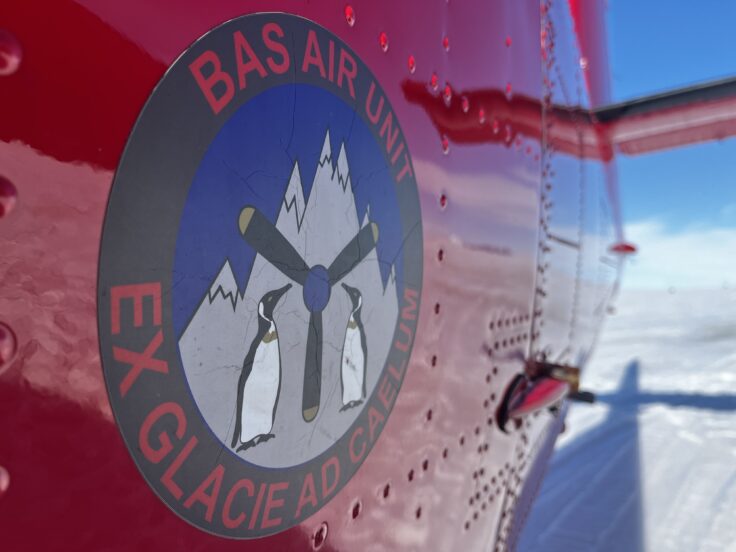
Fossil Bluff is a key refuelling field station and Alexander Island, Antarctica
Location
Fossil Bluff hut sits at the foot of a scree-covered ridge overlooking George VI Sound, which separates Alexander Island from Palmer Land.
To the west and north-west lie the Planet Heights, an extensive mountain range rising to over 1,500 metres.
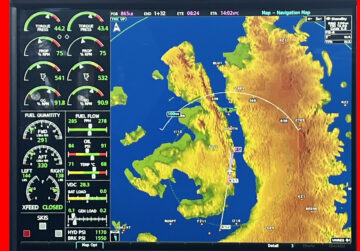
Aircraft chart on route to Fossil Bluff Skiway
The dramatic surrounding landscape makes Fossil Bluff both a practical and striking location for field operations.
Life and operations
The main hut at Fossil Bluff can accommodate up to four people in relative comfort and acts as a transit station for summer field parties. During busy periods, additional staff can be housed in nearby outbuildings.
Facilities include an Aga cooker, a generator, radio communications with Rothera and a simple shower. The interior of the hut has changed very little since it was occupied year round in the 1970s.
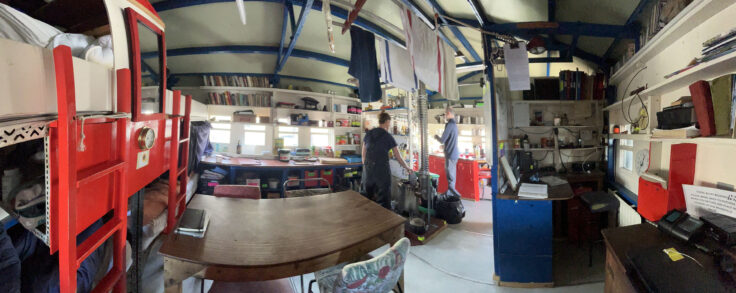
Fossil Bluff Cottage interior
When weather prevents flying, people can become temporarily marooned at the station. These quieter periods are often spent baking, reading, writing or exploring the nearby screes and glaciers when conditions allow.
History
We first established Fossil Bluff on 20 February 1961. It was occupied during the winters of 1961, 1962 and from 1969 to 1975, before becoming a summer-only station from 1975 onwards.
Since then, Fossil Bluff has remained an important part of our operational network.
Supporting Antarctic science
By providing fuel, storage, weather information and a reliable staging point for aircraft, Fossil Bluff underpins a wide range of Antarctic science.
Its role as a forward operating base helps us reach remote study areas and carry out research into geology, glaciology and the changing Antarctic environment.