

Geopolitics grows more unstable, and interest in Earth’s polar regions is growing. Polar science is the forum where international relationships can be forged and strengthened.
In this edition of Beyond the Ice, Oliver Darke, Director of Operations, Engineering and Infrastructure at British Antarctic Survey talks about what international collaboration in Antarctica looks like on the ground, and how this fits into today’s global diplomatic context.
The Antarctic continent has been governed internationally and cooperatively through the Antarctic Treaty since 1959 – an agreement which suspends territorial claims and preserves it for peace and science.
This collaborative spirit is woven through how the Antarctic science community operates, whether that’s fuelling and travel, or supporting other nations with medical evacuations. How does this unique context create opportunity? And how does it deliver value to national innovation strategy, and the taxpayer?
This article is a quick summary of the full discussion on the Beyond the Ice podcast. Listen to the whole episode here:
The discussion, in brief:
A continent governed by cooperation
Antarctica is unlike anywhere else on Earth — not just in its environment, but in how it is governed. Since 1959, the Antarctic Treaty has suspended territorial claims and preserved the continent for ‘peace and science’. But what does that actually look like in practice?
As Director of Operations, Engineering and Infrastructure, Ollie’s role sits at the intersection of the operational and the diplomatic. He represents the UK in two major Antarctic forums: at the Antarctic Treaty Consultative Meeting (ATCM), an intense two-week gathering of nearly 60 national delegations; and he serves as a Vice Chair of Council of Managers of National Antarctic Programs (COMNAP).
The two spaces, he explains, have a strikingly different character.
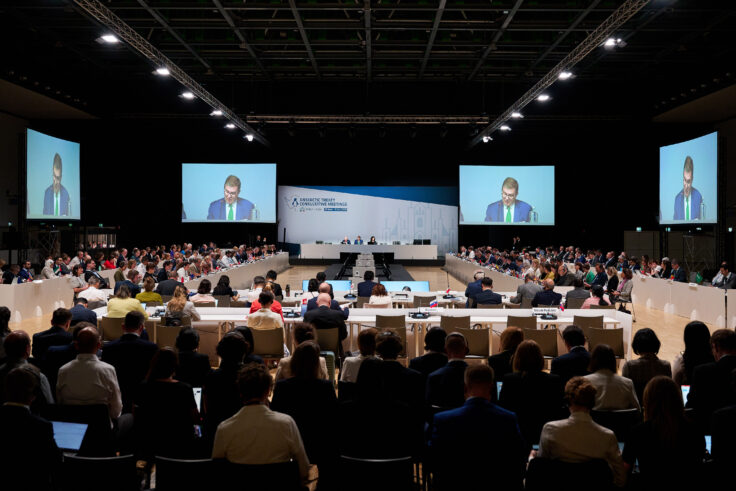
The Antarctic Treaty Consultative Meeting is a formal diplomatic space. The parties of the Antarctic Treaty manage the Antarctic continent by consensus, including considering scientific and environmental evidence. The room is filled with cameras, four official languages, simultaneous translation. But Ollie describes how the culture of the room, once you find your footing, reflects the genuine shared purpose underneath the ceremony:
“At first touchpoint, it’s massively intimidating. But once you get into the rhythm of getting business done, you build confidence quite quickly. And ultimately there were really friendly people behind the ties and behind the stern faces — really experienced people who want to get things done. It’s just a totally different way of going about business.”
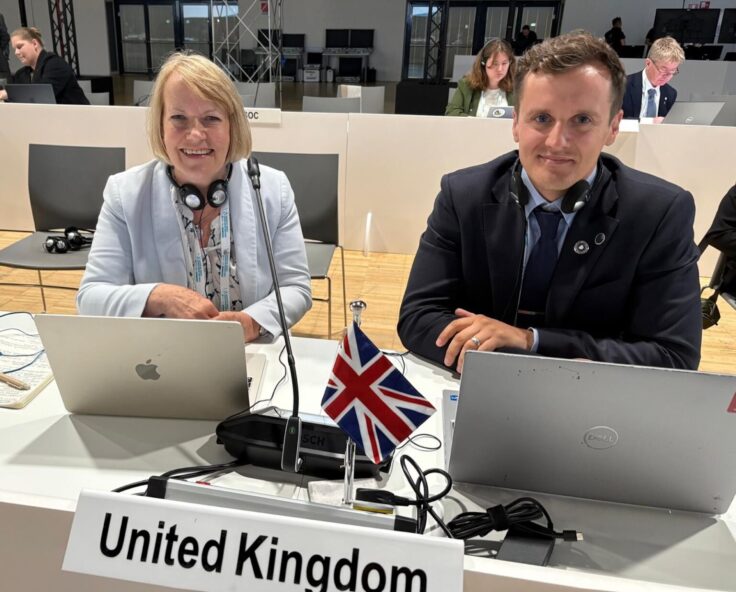
COMNAP is a very different environment with a different purpose – closer to the day to day work of Ollie’s operational leadership role:
“It’s chalk and cheese. You still sit in a big room behind the UK flag, and you still have the kind of pomp and ceremony bit, but the way you go about your business is completely different. The meeting isn’t run by diplomats and lawyers, and it changes the tone of the room.
It’s driven by people that operate facilities and equipment in Antarctica. It’s all about collaboration. It’s absolutely about creating a big, innovative pool of experts that come together to work out, ‘well, the UK solves this problem a bit like this. How does Korea solve this problem? How does Germany solve this problem?'”
From handshakes to shared ships
The relationships built in these rooms have real-world consequences. British Antarctic Survey recently entered a landmark logistics partnership with the Norwegian and German Antarctic programmes, Norsk Polarinstitutt • Norwegian Polar Institute and Alfred Wegener Institute, Helmholtz Centre for Polar and Marine Research, sharing a single vessel to supply their respective stations on the Brunt Ice Shelf.
Ollie traces the origin of that agreement to the kind of informal diplomacy that happens on the margins of formal meetings:
“Sometimes even over a beer, where you can talk about, you know, what’s not working. And you can go and build relationships with people, because all of these partnerships start from a position of high trust.
If you go into the relationship with Norway and Germany on sharing logistics, we’ve effectively pooled the success of three nations’ seasons south into one vessel. So we’re all in this together. And if it fails because of one of us, we’ve let the other two partners down.”
The practical logic is compelling: why send three large cargo ships from Europe to Antarctica each year when one vessel can serve all three programmes? But beyond the economics and the saved carbon, Ollie argues the cascading benefits go much further:
“By us doing something chunky, like being able to share a ship, what that means is for the next ten years, the German, Norwegian and BAS researchers will be sharing berths on a ship. They’ll be sharing breakfast, lunch and dinner together. Whether that’s field guides or engineers or glaciologists, they’ll be in the same place at the same time, always under this umbrella of collaboration.”
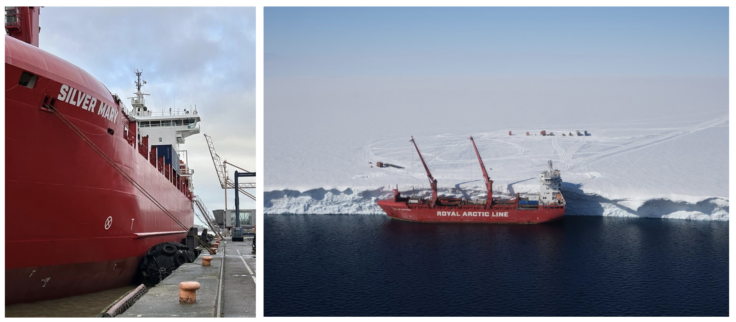
There is also a safety and expertise dimension that is easy to overlook. Supplying Halley Research Station, perched on the flowing Brunt Ice Shelf, requires a highly specific and hazardous set of skills. Sharing that challenge with Norway and Germany means shared learning and sharper capability:
“Without organisations like COMNAP and without working with other nations, you can get into a position where you think you’re so niche, you’re the only one solving this problem in the whole world, when in reality you’ve got neighbours who are also solving this ice shelf relief challenge. And when you only do these things once every two or three years, it’s really hard to keep those skills within a team.
Being able to share — we learn a bit from Norway, we learn a bit from Germany, they learn a bit from us — we can keep our skills really current and be safer as a consequence.”
Science as a tool of diplomacy
The conversation takes a broader turn when considering what Antarctic collaboration means for the wider geopolitical picture. As instability grows elsewhere in the world, the Antarctic Treaty’s record (an entire continent free of military activity and conflict since 1959) becomes more remarkable, not less.
Ollie points to the discovery of the ozone hole by BAS scientists in the 1980s, which ultimately led to the Montreal Protocol, as the most powerful illustration of science translating directly into international agreement (and then action) through consensus:
“Science is a great leveller. If you think about how to create societal change, you’ve got to create a shared language and a shared view of expertise. Science does that for you. Being able to partner on research — when you think about how it rolls into diplomacy — having several nations on the same paper, describing the same problem: that’s not just the UK’s view. It adds real weight.”
And this has direct relevance to the UK’s national interest, and why polar science has a wider benefit to the taxpayer. Ollie links BAS’s collaborative model explicitly to the UK’s innovation strategy and its ambitions as a global trading nation:
“The UK innovation strategy, which is what the current government wants to base our entire economy against, is about being a global leader and building impactful global relationships that will impact trade and our economic performance.
In order to do that, you’ve got to go out there and do really difficult things that have a global impact. For us, some of that will be our scientific expertise in understanding climate — and what happens in Antarctica doesn’t stay in Antarctica. But it’s also about engineering and innovation.
These things will absolutely pay dividends to us in the UK. You might not feel it directly, but it’s absolutely there.”
His final message is an optimistic one, grounded in the culture of mutual reliance that defines life at the bottom of the world:
“Antarctica has been relatively well protected by the Treaty system from geopolitical excitement over the years. But it’s mainly because of the culture that the people who work in the polar regions create for themselves.
They know that one day something really serious might happen and you might be completely reliant on your neighbour. That culture of we’re here to support each other, let’s solve problems together… that is really, really strong. And that’s a reason to be optimistic.”
What topics would you like to see covered by polar science experts on Beyond the Ice? Let us know your thoughts on future editions in the comments.