
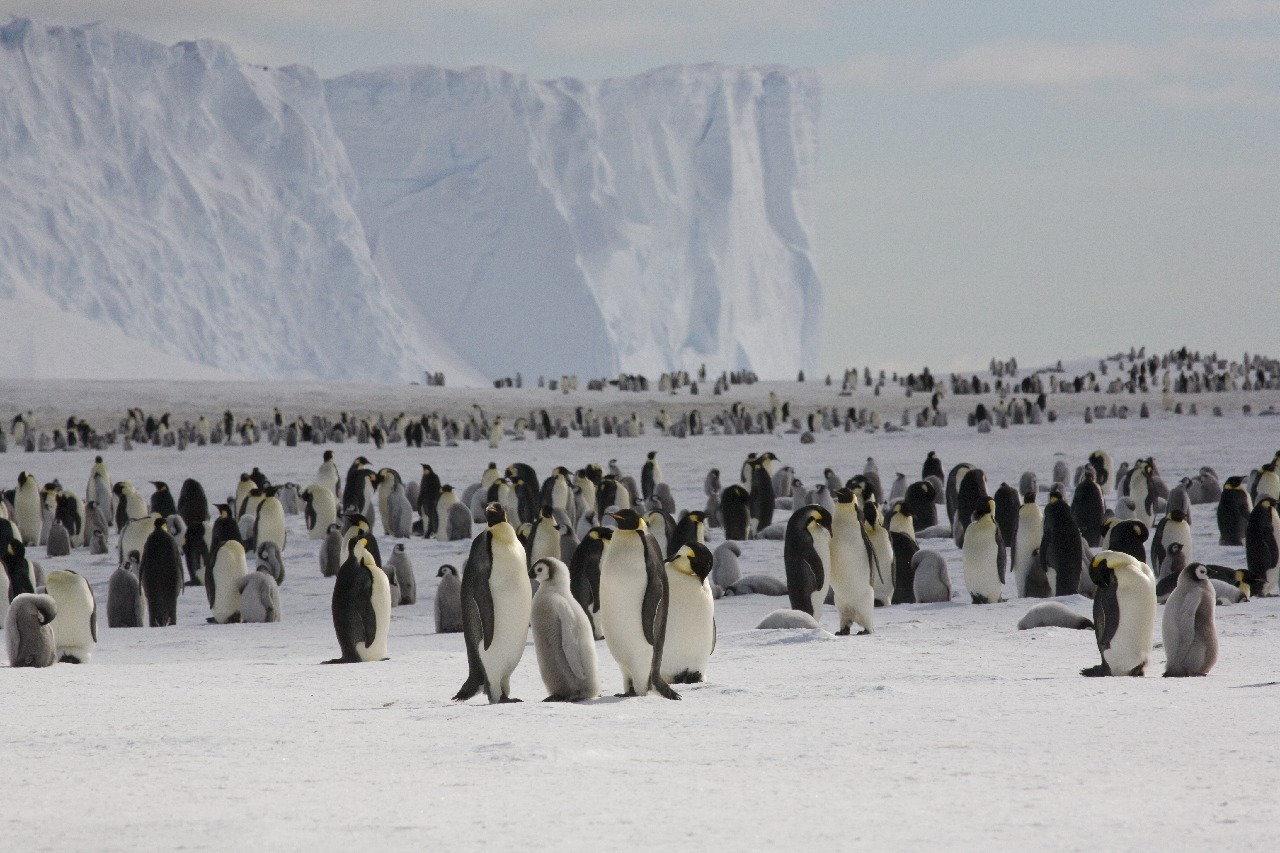
New research suggests there’s been a shocking 22% drop in the Emperor penguin population in a region of Antarctica over just 15 years – more than double previous estimates and outpacing even the most pessimistic projections.
In this edition, remote sensing specialist and penguin expert Dr Pete Fretwell explains his recent findings, and how he uses satellite technology to count Emperor penguin colonies in some of Earth’s most remote and inaccessible locations. Why are Emperor penguins so dependent on sea ice? What complex factors beyond melting ice are threatening their survival? Could they really be facing extinction by 2100?
- Listen to the full discussion with Peter here, or on your preferred podcast app
- Or read our summary of key points below
The discussion, in brief:
A regional study of Emperor penguins shows numbers have declined by 22% over the last 15 years. The new research, led by Dr Peter Fretwell from British Antarctic Survey, was published in Communications Earth & Environment this week.
The research shocked scientists, because previous population estimates for 2009-2018 showed a population decrease of 9.5%, characterised by a continuous decline until 2016, with a slight recovery into 2018.
Crucially, the new estimates bring in the more recent five years, 2019-2023 – where sea ice conditions in Antarctica have notably declined. In particular, the period contains three consecutive years of record low spring sea-ice extent, occurring in 2022, 2023 and 2024.
In a previous edition of Beyond the Ice, Dr Ella Gilbert gave a detailed outline of the science behind the 2023 sea ice lows.
How are Emperor penguins connected to Antarctic sea ice?
Emperor penguins are uniquely dependent on sea ice for their survival, reliant on a stable sea ice platform for 8-9 months of the year for breeding success:
“Emperor penguins, they live on the sea ice. They breed on the sea ice. They hunt for their prey under the sea ice. They molt on the sea ice. The whole life cycle is around the sea ice. And they use the fast ice, the ice which is stuck to the coast, as a stable breeding platform.”
“We’ve monitored several colonies over the last few years that have seen early sea ice break up. And if that happens at the Emperor penguin colonies when the chicks are still young, they go into the water and perish.”
Peter was also the author of research published in April 2024, showing that 14 of the 66 colonies in Antarctica lost some or all of their chicks due to sea ice breakup in 2023.
If sea ice breaks up early, this will often mean disaster for the year’s breeding success of Emperor penguins in that colony. Land access in Antarctica is often physically impossible for the Emperor penguin:
“In most cases, the land in Antarctica is under great big ice shelves and there’s usually an ice cliff. So for most coastlines, you just can’t get up onto the land. There’s a cliff – and it might be 100ft tall – that the penguins can’t get onto. But also, it’s more exposed on the cliffs. There’s often no snow that they need to rehydrate, and it’s further from the sea where they have to eat.”
Peter goes on to explain other factors that could be contributing to the population decline – all still linked to climate change. They include increased rainfall and increased access for predators.
A focused study region
The new research concentrated on a specific section of Antarctica. The means the evidence doesn’t conclusively describe the picture for the whole of Antarctica, but rather an indicative slice:
“This was about a quarter of the Antarctic coastline, including the areas of the Weddell Sea, the Bellingshausen Sea and the Antarctic Peninsula, which encompasses about 30% of the Emperor penguin population.”
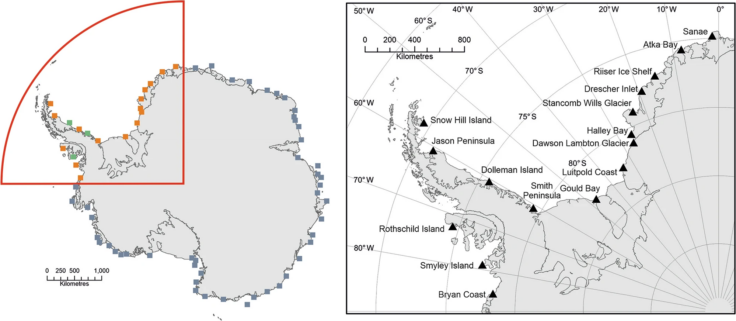
Peter explained why the study area was chosen:
“It’s an area that’s seen climate change – we know that the Antarctic Peninsula is warming, we’ve seen sea ice loss there in both on the Peninsula and the Bellingshausen Sea. But we’ve also seen large areas there that that haven’t experienced sea ice loss like the Weddell Sea and are quite stable. So it’s a really good comparison between those two areas.”
“We are going to acquire imagery of the rest of the coastline and see if this worrying trend is actually happening around the whole of Antarctica.”
How to count penguins without being in Antarctica…
Almost half of the 66 known Emperor penguin colonies in Antarctica have never been visited by humans before. They live in hugely remote places, and it’s both hard and undesirable to go and count the penguins in person.
Peter explains how satellite technology makes spotting Wildlife from Space possible:
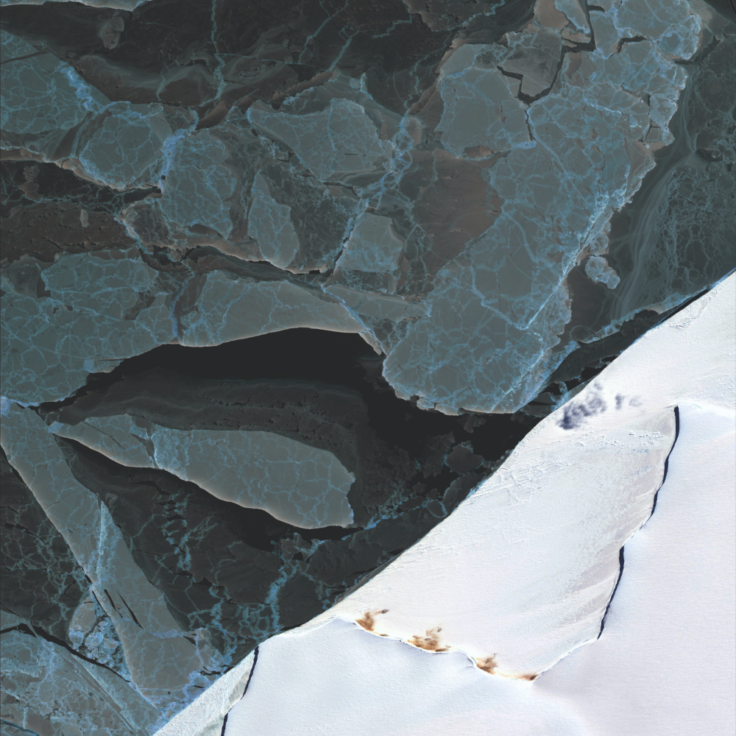
“We use satellites now… We take an image of each colony, then use a machine learning algorithm based on the spectral reflectance of the penguins to classify how much area of penguin exists.”
Although the actual counting is now assisted by technology (based on ground-truthed censuses) the method is still based on the method pioneered by Peter: searching for their brown guano stains in satellite imagery.
“So each year we have to go because they they move around a lot – in some cases that might be 30km. The penguins have to be very dynamic because the sea ice changes. So they have to have it in the locker to be able to move to places where the sea ice is better. So because of that, we have to go in spot them and we do that using coarser resolution imagery and looking for those brown stains on the ice.”
What does the future hold for Emperor penguins?
Peter talked about how he escalates his finding into policy-making spaces. However, he emphasised the need for urgent global climate action:
“It has to be an emissions based solution. There’s nothing else that we can do. We can’t put the ice back. It’s too vast a system to actually change in any meaningful way. There is still time to save the Emperor penguin, as long as we act soon to reduce emissions, and to turn around the trend that we’re on globally with a warming planet.”
Unlike other penguin species, emperor penguins offer an unambiguous climate signal:
“The other penguin species are definitely facing this as well. But the signal with other penguin species is sometimes a little clouded by other pressures, often with fisheries or with previous hunting.
With Emperor penguins, that’s not the case. They’ve never interacted with humans before. So here we have a very clear signal of what’s happening to a species that’s only being affected by climate change.”
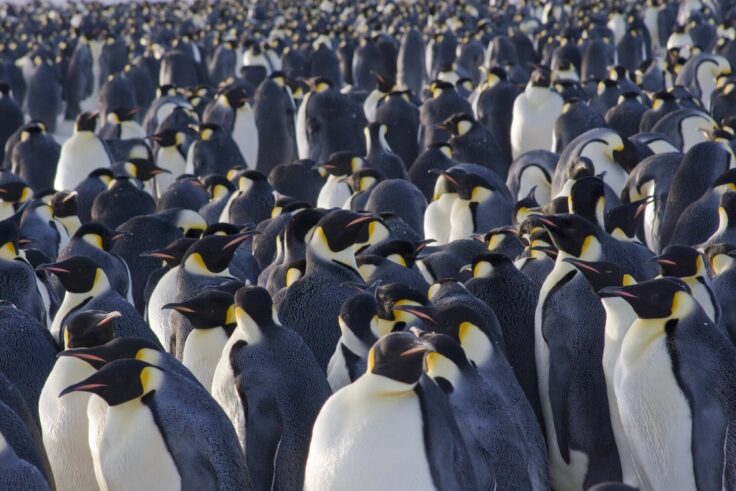
Emperor penguins serve as a clear indicator of climate change impacts:
“It’s not just the Emperor penguins that are really indicative here. This is a sea ice ecosystem, but it’s also a model for what might happen to other ecosystems in the world. Antarctica is changing rapidly, much more rapidly than most places on Earth. But those changes that we’re seeing now in Antarctica at the moment are the changes that the rest of the world will see in a few decades time.”
- Dr Peter Fretwell is a remote sensing specialist and penguin expert at British Antarctic Survey. His book “The Penguin Book of Penguins,” co-authored with his wife, will be published by Penguin Random House in September.