
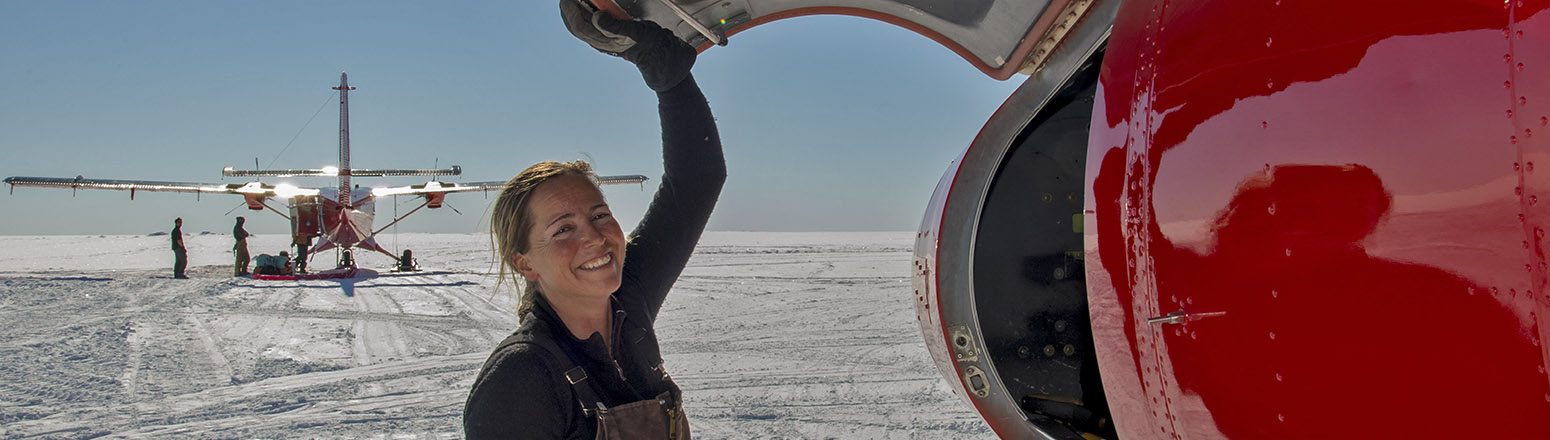
Flying in some the world’s most spectacular locations, as part of a close-knit team conducting scientific research, which makes a tangible difference to our understanding of the world can be immensely rewarding.
About the pilot’s role
As part of our Air Operations team, you’ll support deep-field research across polar regions. Our pilots fly in some of the world’s most striking locations. You’ll work closely with a small team on research that makes a real difference. The role is demanding, but highly rewarding.
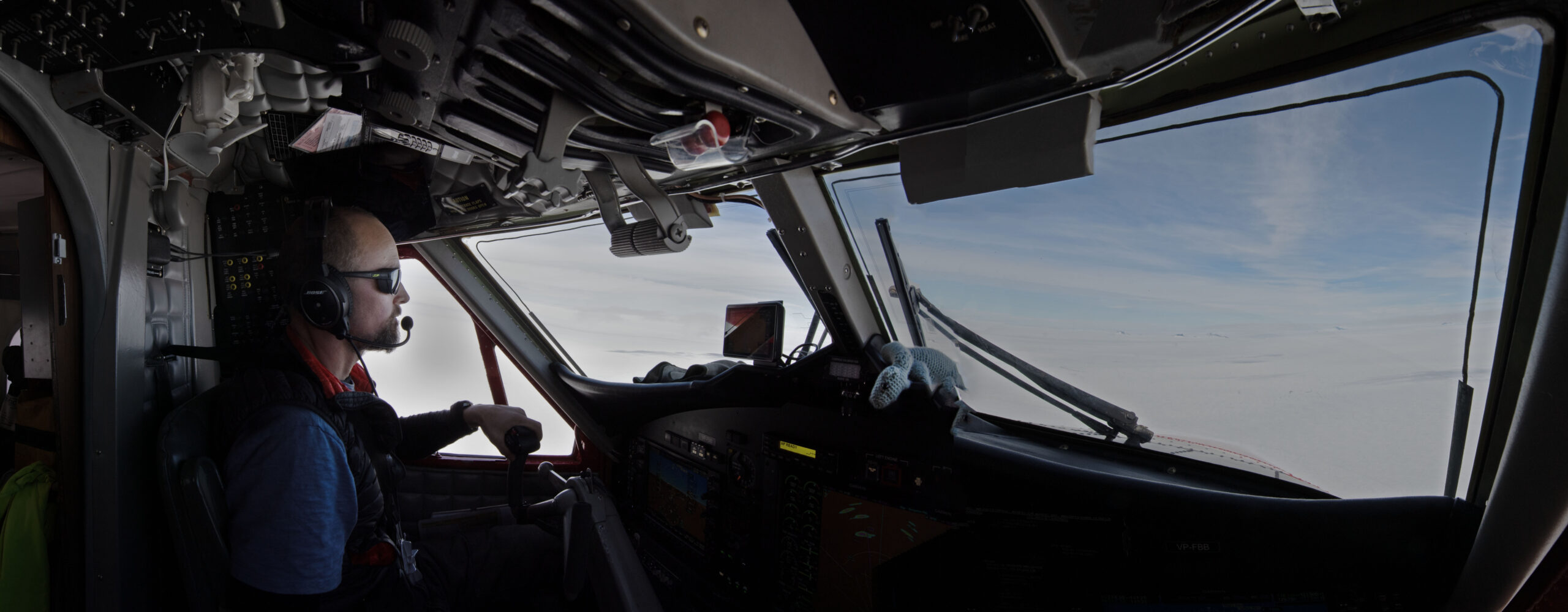
BAS pilot at the controls of a ski equipped Twin Otter Aircraft during a flight to Rothera Research Station
Most BAS pilot roles are open-ended contracts. You’ll have access to a pension scheme, loss of licence insurance, and free food and accommodation while in Antarctica. You must attend training in June.
What the role involves
Our pilots often work away from research stations. You may camp in remote areas with only one other person, in sub-zero conditions. Between October and March, you’ll either ferry aircraft to and from Antarctica or support field research teams.
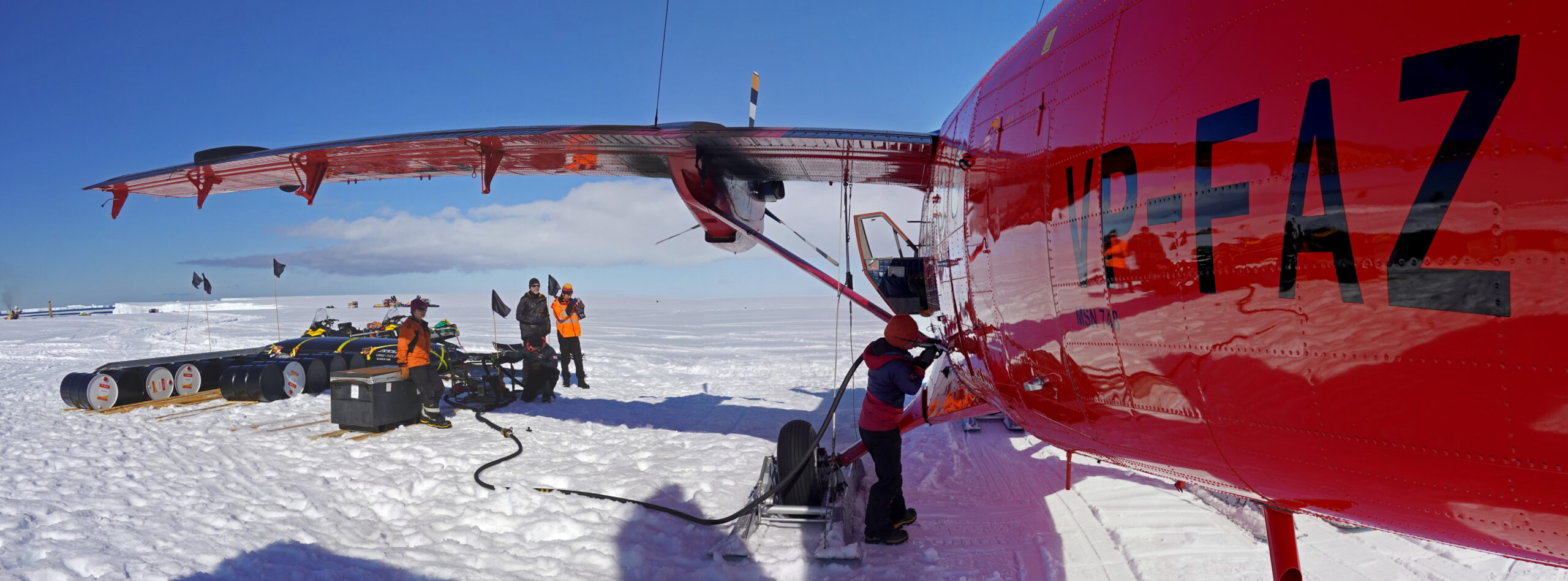
Refuelling a Twin Otter at Sky Blue, blue ice runway in Antarctica
You’ll handle all aspects of aircraft operations except maintenance. Your tasks may include loading, cleaning and refuelling aircraft, as well as general support duties on station.
As a single pilot, you’ll fly Twin Otter aircraft with at least one team member on board. For Dash-7 operations, you’ll fly as part of a two-pilot crew.
Experience you’ll need
You must have at least 2,500 hours of total flying time. Some relevant rotary time can count towards this. You don’t need Twin Otter ratings, ski experience or other specialist flying experience.
Our pilots must hold a UK, JAA/EASA, FAA or Canadian licence. A licence validation is issued after training.
You’ll need strong leadership skills. You should be self-reliant, comfortable working in remote environments, and able to help run field camps safely and efficiently.
Training
You’ll complete annual training during the northern summer, usually in June. Additional training may be required. Training and maintenance are based in Canada.
As a pilot with us, you can expect to spend around 30 weeks a year away from home. This may include post-maintenance flights, trials, Arctic operations and ferry flights.
Type conversion training normally happens in Canada and combines simulator work, aircraft training and ground school. If you already have Twin Otter experience, you’ll take a recurrent course and a company check flight to UK CAA standards.
Once in Antarctica, you’ll start ski training. You’ll then progress gradually, including supervised flights. It usually takes two Antarctic seasons to become fully competent. You’ll also complete first aid, field craft and BAS specialist training.
Life outside work
You’ll be part of a strong community on research stations and in deep-field teams. In your free time, you may have opportunities for skiing or climbing. You’ll have access to a gym, library, bar and music room on the stations.
You can stay in touch with family and friends by email or phone from research stations. Communication from field camps is more limited.
Contact us
To find out more, please email jobs@bas.ac.uk
Our Antarctic-only roles are posted here between December and March each year. To get email updates when jobs go live sign up here.