
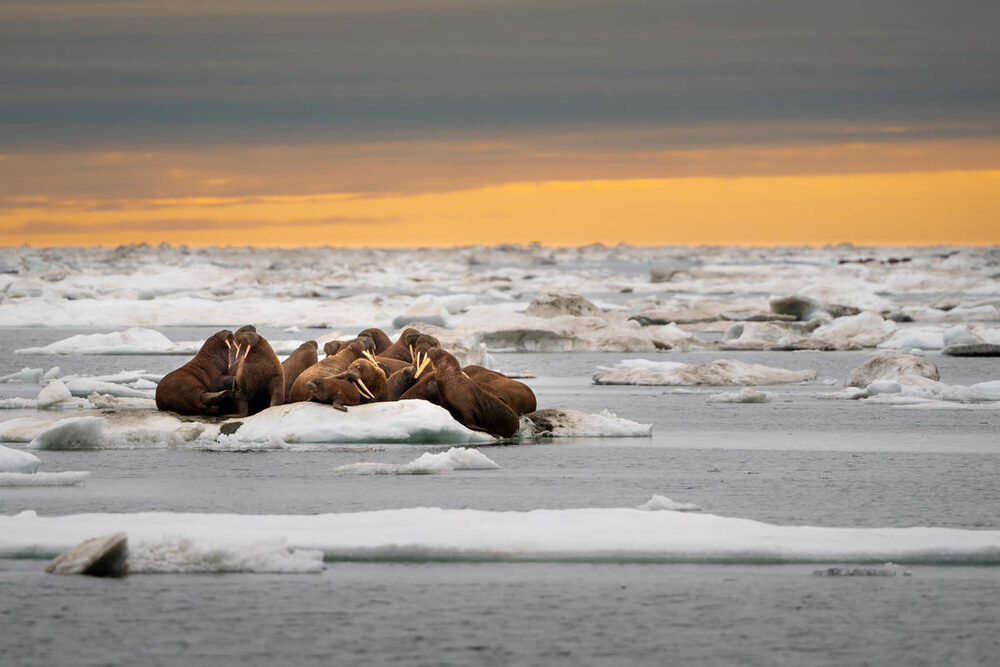
The Arctic is the fastest-warming region on Earth. With temperatures rising nearly four times as fast as the global average and sea ice shrinking dramatically, the Arctic’s changes have far-reaching implications, even for the UK.
As a neighbouring nation to the Arctic, the UK plays a significant role in Arctic affairs, particularly through the UK’s Natural Environment Research Council (NERC) Arctic Office, which is hosted at British Antarctic Survey (BAS).
The UK’s Arctic Policy Framework emphasises offering expertise to tackle long-term challenges, ensuring a sustainable future, and respecting the sovereign rights of Arctic nations and the region’s inhabitants.
UK Arctic Research Station
Britain’s presence in the Arctic is anchored by the UK Arctic Research Station in Ny-Ålesund, Svalbard.
Funded by NERC and operated by BAS since its establishment in 1991, this Station provides crucial logistical support for researchers, serving as the UK’s sole long-term facility in the high Arctic.
Ny-Ålesund, where the station is located, is a hub for international collaboration, enabling diverse scientific studies in a unique environment.
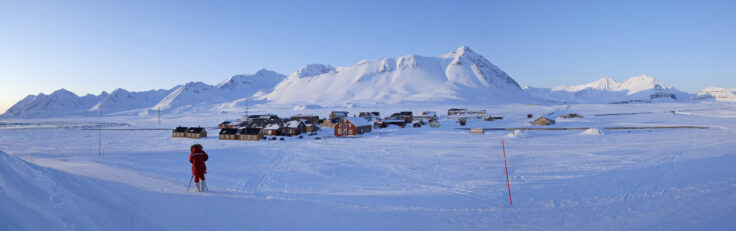
A panorama of the Ny-Ålesund science community (Credit: Pete Bucktrout)
Arctic science
Our primary focus in the Arctic is understanding the impacts of the warming atmosphere and oceans. Changes in the Arctic are linked to a range of major ‘tipping points’ in Earth’s system.
This includes the loss of summer sea ice, thawing of permafrost and melting of major ice sheets. Greenland’s glaciers hold enough ice to raise sea levels by over seven metres. If this fresh water was released into the Atlantic Ocean it would significantly disrupt the global ocean circulation and climate in Europe.
BAS conducts extensive research across various disciplines, including oceanography, atmospheric chemistry, sea-ice dynamics, and terrestrial biology.
We also contribute to and manage large international Arctic programmes, such as the Canada – Inuit Nunangat – United Kingdom – Arctic Research Programme (2021 – 2025), which brings together funders, rights holders and researchers to ensure high quality science, equitable partnerships and shared governance.