
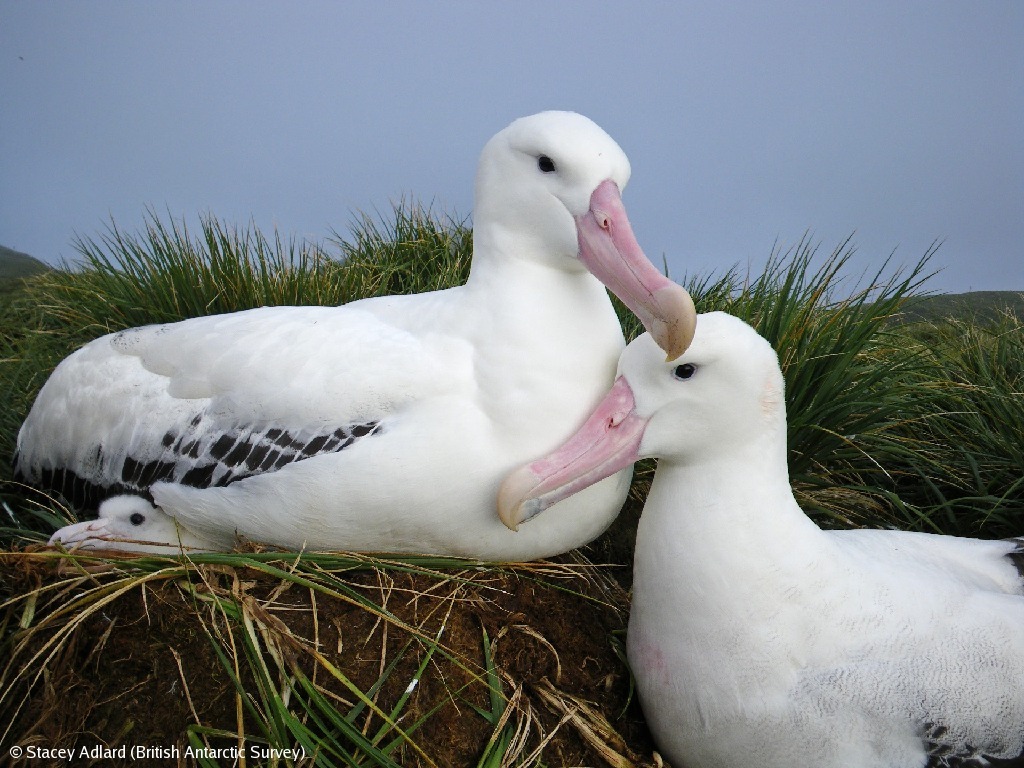
Across South Georgia and the South Orkney Islands, BAS scientists study how wildlife, ecosystems, and oceans are responding to environmental change. Our research at King Edward Point, Bird Island, and Signy Research Station provides vital evidence for conserving biodiversity and managing fisheries across the Southern Ocean.
Protecting ocean ecosystems
At King Edward Point on South Georgia, BAS scientists lead world-class fisheries and marine research. Their work supports the Government of South Georgia and the South Sandwich Islands in managing one of the world’s most sustainable Marine Protected Areas.
Our research on fish, krill, and toothfish helps ensure that commercial fisheries operate responsibly and that marine ecosystems remain healthy. These studies also track how a changing climate is reshaping food webs, from plankton to whales.
Monitoring top predators
On nearby Bird Island, BAS researchers study seals, albatrosses, and penguins to understand how marine predators respond to shifts in climate and prey availability. Electronic tags and automated monitoring systems record foraging behaviour, breeding success, and migration.
Decades of data from Bird Island underpin international conservation policy through the Commission for the Conservation of Antarctic Marine Living Resources (CCAMLR). Strict biosecurity measures protect the island’s rat-free ecosystem.
Understanding life on land
Farther south, Signy Island provides an open-air laboratory for studying simple terrestrial ecosystems and bird populations in a rapidly changing polar environment. BAS scientists monitor penguin colonies and petrels as indicators of environmental change. Long-term weather and microclimate records helps us explain how warming and shifting sea ice affect the Antarctic ecosystem.
Together, our stations form an integrated research network that links ocean, land, and atmosphere. The data they produce guide international policy, safeguard wildlife, and deepen our understanding of how the Southern Ocean is changing.
Conservation and leadership in Southern Ocean ecosystems
CONSEC explores how climate change and human activity are transforming the Southern Ocean, guiding global science and conservation.
