Polar science carbon footprint: our journey to net zero

Polar science is essential for understanding the impact of climate change. But it comes with environmental costs.

The British Antarctic Survey ships, aircraft, and stations that help scientists study climate change, also generate carbon emissions.  

Our net zero commitment 

Our journey to net zero by 2040 continues. BAS is committed to carbon transparency. We don’t purchase carbon offsets. Instead, we focus on reducing emissions. 

We publish our carbon footprint annually. This includes direct emissions, purchased energy and high impact indirect emissions. Based on methodology set by the Greenhouse Gas Protocol.

We also publish our total carbon footprint annually. This measures the wider impact of all our emissions – direct and indirect. 

British Antarctic Survey 2024-25 carbon footprint

Our reportable carbon footprint for April 2024 to March 2025 is 23,847 tonnes of carbon dioxide. That’s roughly the same as the average energy use of 8,250 UK homes for a year. This is up 1.9% from 23,392 tonnes in 2023-24. However, still 13.2% down on our 2017-18 baseline. 

Our total carbon footprint for April 2024 to March 2025 is 50,018 tonnes of carbon dioxide. That’s roughly the same as powering 19,000 average UK homes for a year. This is down 8.3% from 54,549 tonnes in 2023-24.  

This breaks down into three main parts: 

Direct emissions (38%): Fuel burned by equipment we own and control. This includes our research ship, aircraft, polar research stations, and vehicles. 

Purchased energy (0.2%): Electricity bought from the UK grid for our Cambridge headquarters. We use green electricity from solar panels and the grid. 

Indirect emissions (62%): Emissions from activities outside our direct control. This included: 

  • Equipment and supplies manufacturing  
  • Staff travel to conferences and polar research sites  
  • Fuel production and transportation  
  • Shipping supplies to Antarctica  
  • Staff commuting to our Cambridge office  

How polar research creates emissions

Research Ship Operations (63% of direct emissions): Our ship RRS Sir David Attenborough travels thousands of miles to polar regions. It delivers supplies to Antarctic research stations. It enables marine science in remote polar waters. Weather and sea ice conditions each year affect fuel use.  

Antarctic Research Stations: Our five Antarctic research stations work in extreme conditions. They need robust heating and power systems.  

Research Aircraft (8% of direct emissions): Remote polar research sites are reached by Twin Otter aircraft and a Dash 7. 

Construction Projects: Building new research facilities creates emissions. Projects like the Discovery Building at Rothera Research Station improve our long-term capabilities. 

Our progress 

  • 13.2% carbon reduction from our 2017-2018 baseline year 
  • 200+ staff trained in carbon reduction techniques through our carbon literacy programme 

Understanding year-on-year changes in our carbon emissions 

Due to the complex nature of our work, our path to net zero won’t be a straight line.  

Our emissions may go up and down each year: 

Scientific needs change: Supporting world-leading polar science sometimes requires resource-heavy operations. Some years we do bigger research projects. These need more fuel and equipment. 

Safety comes first: We work in remote and dangerous places. We often need extra fuel and equipment to keep our staff safe. This flexibility is essential in extreme conditions. 

We invest in future reductions: Sometimes our emissions may go up in the short term. This can happen when we invest in low-carbon infrastructure to help reduce emissions in the future. 

Future of sustainable polar science

Despite the challenges of working in polar regions. We’re committed to reducing our environmental impact. As well as maintaining world-leading polar research capabilities.  

Our approach to net zero focuses on innovation, efficiency, and collaboration.  

For 2024-25 this has included: 

Sustainable fuels: We used Hydrotreated Vegetable Oil (HVO) for 14% of our ship fuel. This sustainable fuel is made from waste cooking oil and plant materials. It reduces emissions compared to traditional marine fuel. 

Renewable energy: Solar panels now generate 17% of electricity at our Bird Island Research Station. They generate 28% at our Cambridge headquarters. This reduces our dependence on fossil fuels in polar regions and the UK. 

Smart operations: Our AI route planning software helps the RRS Sir David Attenborough choose efficient routes. This reduces fuel consumption. Efficient aircraft use in Antarctica saved 25,000 litres of fuel this year. 

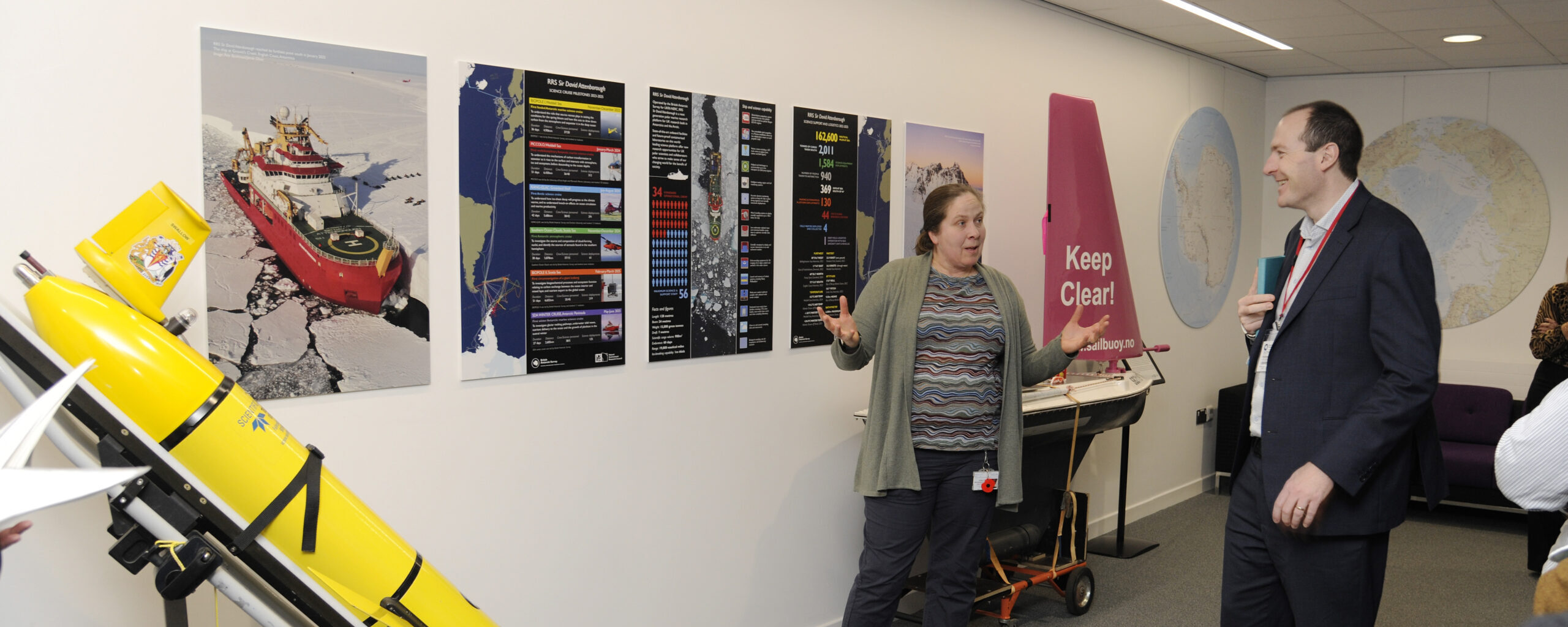
New science facility:  A new glider laboratory on site in Cambridge now allows testing and preparation underwater robotic systems (gliders and Ecosubs) at BAS rather than travelling to the coast saving carbon and personnel time. 

Climate for Change campaign: A new culture change campaign launched included surveys, development of new training material and workshops to drive a cultural shift that would support the net zero transition. Reducing travel emissions by seeking alternatives to flying is one of the areas highly promoted, with many examples of  scientists and wider BAS staff  travelling by train in 24-25. 

Find out more about our net zero journey

Read about our plans to reach net zero across our operations by 2040.

Read our 2023-24 carbon footprint reporting.