Joule Heating
Society is highly dependent on the fleet of satellites that surround our planet. We rely on them for entertainment, communication, navigation, weather forecasting, and more. Many day-to-day activities, such as …
Society is highly dependent on the fleet of satellites that surround our planet. We rely on them for entertainment, communication, navigation, weather forecasting, and more. Many day-to-day activities, such as …
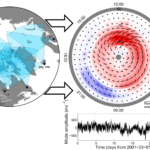
The thermosphere is the uppermost layer of our atmosphere at the edge of space (85 to 1000 km altitude). Within this region orbit thousands of satellites worth billions of pounds …
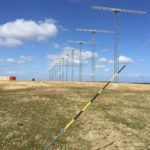
The Super Dual Auroral Radar Network (SuperDARN) has been operating as an international co-operative organisation for over 25 years, and has proved to be one of the most successful tools …
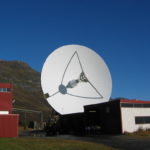
The UK EISCAT support group (UKESG) is a collaboration between the British Antarctic Survey and the Rutherford Appleton Laboratory, funded via the National Centre for Atmospheric Science (NCAS) EISCAT, the …
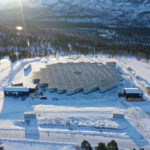
DRIIVE will use the new EISCAT_3D radar to understand multi-scale coupling in the Ionopshere and how it is influenced both by space weather and the lower atmosphere. The impact of …
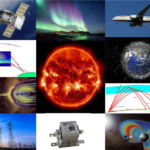
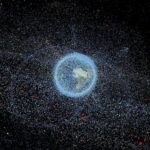
Space debris is emerging as a key problem for humanity with the potential to cause major socio-economic impacts. It is currently estimated that there are over 900,000 pieces of debris …
18 October, 2022
Satellites face greater chances of collision with space debris as a result of reduced density in the upper atmosphere. Increasing levels of CO2 in the Earth’s atmosphere will result in …