
Our starting point
Earth is changing faster than at any time in human history. Ice cores show more greenhouse gases in the atmosphere than in the past 800,000 years. Changes that once took millennia have happened in centuries.
We are still trying to understand how the Earth will respond.
Rapid change may trigger climate tipping points. These include irreversible shifts such as the collapse of ice sheets or the slowing of ocean circulation which keeps northern Europe ice-free.
British Antarctic Survey provides accurate evidence to governments and society on how these changes could play out in coming years and centuries.
Polar extremes
Extreme events already threaten the poles, for example wildfires in the Arctic and heatwaves in the Antarctic.
In March 2022, an east Antarctic heatwave raised temperatures from -55°C to -10°C in just three days. When temperatures reach 0°C, ice melts, destabilising ice shelves and triggering breakup inland.
Marine species like fish, seals, and plankton are particularly vulnerable to heatwaves, with impacts that can be immediate and long-lasting.
Compounded threats
The polar regions are already under stress. Retreating sea ice, warming and acidifying oceans are taking their toll. Extreme events can amplify these issues, creating impacts far more severe than any single factor alone.
Understanding how these threats combine is crucial, as polar regions play key roles in global carbon and nutrient cycles.
Tipping points
Climate tipping points could trigger irreversible changes that cascade globally, such as:
- ice sheet collapse in Greenland or West Antarctica
- abrupt permafrost thaw
- disruption of ocean circulation from freshwater released by melting ice
Countries like Britain on the North Atlantic fringe could be especially vulnerable.
Our science
BAS’s discovery of the Antarctic ozone hole in the 1980s, and the successful international response, shows evidence-led policy works.
We need to understand how polar environments will change and what risks they pose.
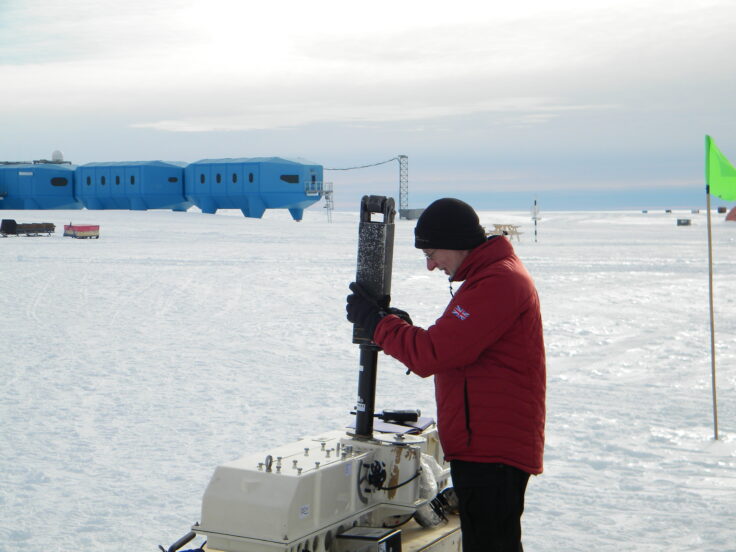
Observing the ozone (Credit: Jonathan Shanklin)
We are developing early warning systems for tipping points. Our data feeds advanced models, helping policymakers reduce and adapt to impacts.
Our research contributions
-
understand what drives polar extremes, their frequency and severity, and future impacts
-
assess the likelihood and impact of compounded events
-
determine Earth’s vulnerability to tipping points and cascading effects across timescales from years to centuries
-
improve predictions of polar events and tipping points