
Our starting point
The polar regions contain a rich variety of animals and plants adapted to their unique environments. Many are critical to the global cycles of carbon and nutrients on which we depend.
But climate change and increasing pollution threatens these species. For example, shrinking sea ice and ocean acidification alter their habitats faster than they can adapt.
British Antarctic Survey’s (BAS) role is to research and monitor biodiversity in the polar regions and to work with organisations working to conserve these species.
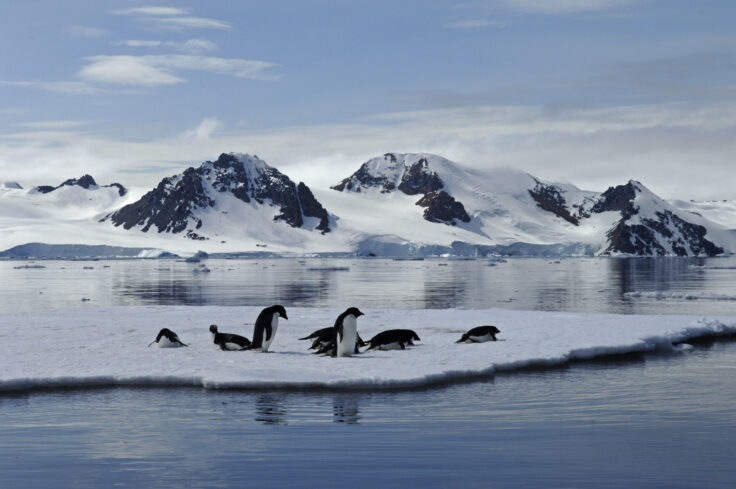
Adelie Penguins on a sea ice floe (Credit: Pete Bucktrout)
Polar species are some of the most threatened on Earth. As well as climate change, they face three big threats:
-
subpolar species of plants and animals displacing polar species, and changing the ecosystem
-
big increases in pollution from heavy metals, plastics, and organic pollutants (such as pesticides)
-
commercial fishing and harvesting of krill, which threatens fish and krill and other creatures that eat them.
Our science
Our science teams work on many aspects of conservation issues, from remote sensing to modelling ecosystems. Many of our monitoring programmes span decades. We keep thousands of physical specimens for other researchers.
We use these resources to identify changes in the environment, and the population size and diversity of species. Ultimately, our ecosystem research is used to inform decisions about conservation.
Our research contributions
-
use advanced tools to study how polar ecosystems respond to climate change and fishing
-
explore polar biodiversity in lesser-known habitats like deep oceans, areas under glaciers, and nunataks
-
demonstrate the global importance of polar biodiversity and influence policy to conserve it