
Long-term monitoring
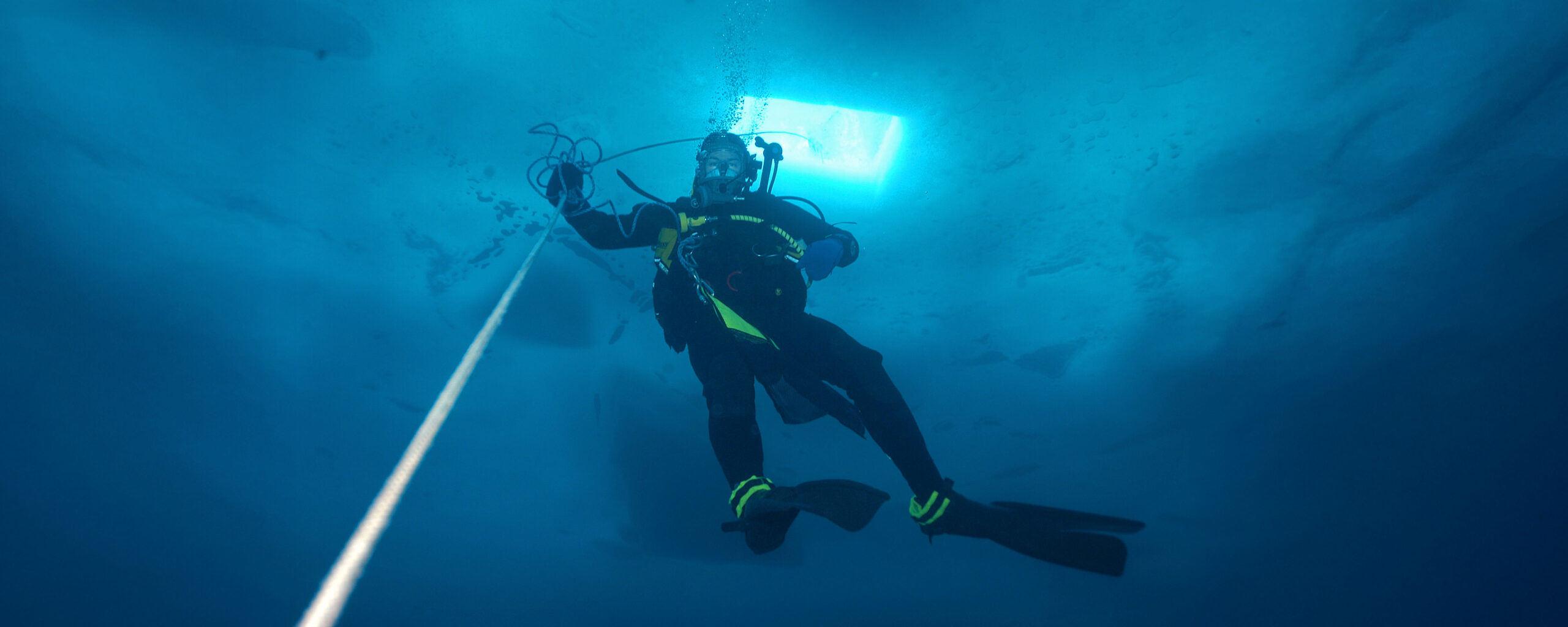
Long-term monitoring sits at the heart of everything we do here at British Antarctic Survey (BAS).
It allows us to build trusted evidence over decades. That evidence helps us understand how polar environments are changing, and why those changes matter to the UK and the wider world.
What is long-term monitoring?
Long-term monitoring means making regular, repeat measurements over many years. Sometimes over generations. This approach lets us separate short-term variability from long-term change. That distinction is crucial.
In the polar regions, conditions are extreme and change can be rapid. Only sustained observation reveals what is truly shifting, and what is part of natural variability.
Climate and meteorology
We maintain one of the longest and most detailed climate records in Antarctica. Year-round observations are collected at our research stations, including Halley and Rothera.
These include temperature, wind, pressure and snowfall. We also launch weather balloons regularly. They measure the atmosphere from the surface to the stratosphere.
Together, these records help us understand how polar weather systems behave. They show how the Antarctic climate is evolving over time. They also feed directly into global weather forecasts and climate models.
Our long-term monitoring of the ozone layer has been especially important. It played a key role in international action to protect it.
Space Science
We collect data all year round at Halley Research Station, Rothera Research Station, and many deep field sites and observatories. This allows us to study Sun-to-Earth processes and assess the impact of severe space weather. We advise governments and policy makers, to reduce space weather impacts.
Biodiversity and ecosystems
We have monitored Antarctic wildlife and ecosystems for decades. This work gives us a rare long-term view of life at the poles.
At Bird Island and Signy Island, we track populations of penguins, seals and seabirds. These species sit at the top of the food web. When their numbers or behaviour change, it often signals wider shifts in the Southern Ocean ecosystem.
We also monitor marine ecosystems through sustained programmes such as the Rothera Antarctic Time Series. These observations follow physical conditions, plankton, invertebrates and higher organisms.
On land, we monitor plants, soils and microbial communities. Together, these datasets establish environmental baselines. They also show how warming, ice loss and ocean change affect Antarctic life.
Our work includes long-term monitoring of pollutants, including plastics. Studies of seabirds and coastal environments reveal a clear message. Even the most remote places on Earth are affected by human activity.
Oceans and ice
The Southern Ocean plays a vital role in regulating Earth’s climate. We run long-term ocean monitoring programmes using moorings, research ships and autonomous instruments. These measure temperature, salinity and circulation.
One key focus is the flow of deep water from the Weddell Sea. Tracking this flow helps us understand how heat and carbon move around the planet. We also maintain long-term observations of sea ice and ice shelves. These records are essential for assessing stability and future change.
Environmental monitoring and stewardship
We monitor our own environmental footprint. We also monitor the areas around our research stations. This includes tracking contaminants, wildlife interactions and habitat change. These data support responsible operations. They also help us meet the UK’s obligations under the Antarctic Treaty System.
Why long-term monitoring matters
For us, long-term monitoring underpins scientific excellence. It allows us to test ideas, validate models and draw robust conclusions. For the wider world, our data inform climate assessments, conservation decisions and environmental policy.
For the UK, this work is a vital national capability. It supports leadership in polar science. It strengthens international influence. And it ensures decisions on global environmental challenges are grounded in evidence.
Looking ahead
Sustained observation is one of our greatest strengths. By continuing long-term monitoring, we invest in the future. We ensure that coming generations have the knowledge they need. Knowledge to understand, protect and manage the polar regions in a rapidly changing world.