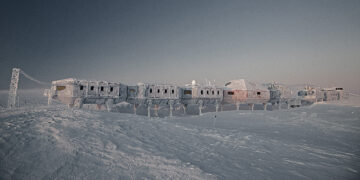
ANTARCTIC BLOG: BBC crew enroute to Halley #1
Antarctica is extraordinary. It is a continent of superlatives – breathtaking, beautiful, hostile, awe-inspiring and life-changing. A trip to the ice always gets under my skin. It somehow puts my […]

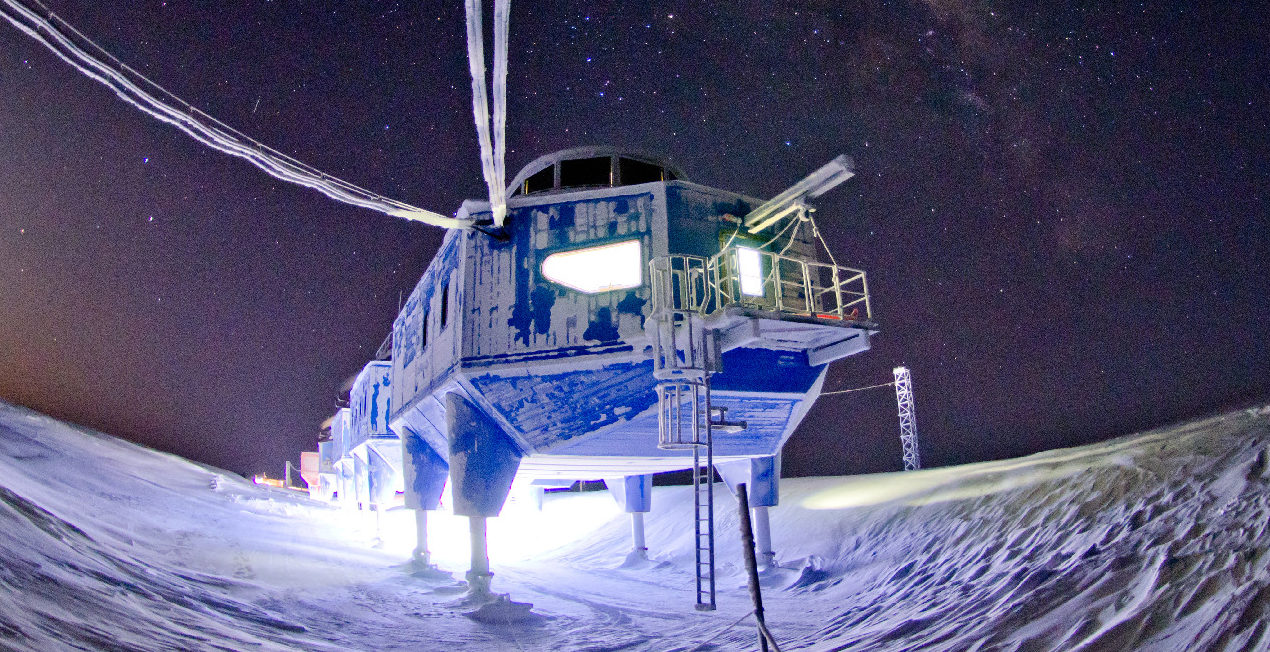
The remoteness and winter isolation of communities working in Antarctica provide an excellent environment for research into human behaviour, performance, health and well being. Many studies of overwintering staff in Antarctica have been carried out at BAS research stations in partnership with the BAS Medical Unit (BASMU) based at Plymouth Hospitals NHS.
Using Antarctica as a ‘platform’ for simulating certain aspects of a manned spaceflight mission, this project, involving BAS, BASMU and the European Space Agency (ESA) will investigate how living in an isolated community during 24-hour winter darkness affects the health of Halley staff and their and ability to perform specific problem-solving functions. The isolation and darkness at Antarctic research stations during winter is similar to what astronauts might experience during a long-term space flight to the moon, Mars and beyond.
The four components of this project are:
This medical research project involves wintering staff at both Halley Research Station and the Concordia Station in East Antarctica, which is run by French and Italian Antarctic organisations.
Teams are using a cockpit simulator – modelled on the Russian spacecraft Soyuz for training astronauts in the virtual docking to the international space station ISS – to test how skills are maintained over long periods of darkness and isolation.
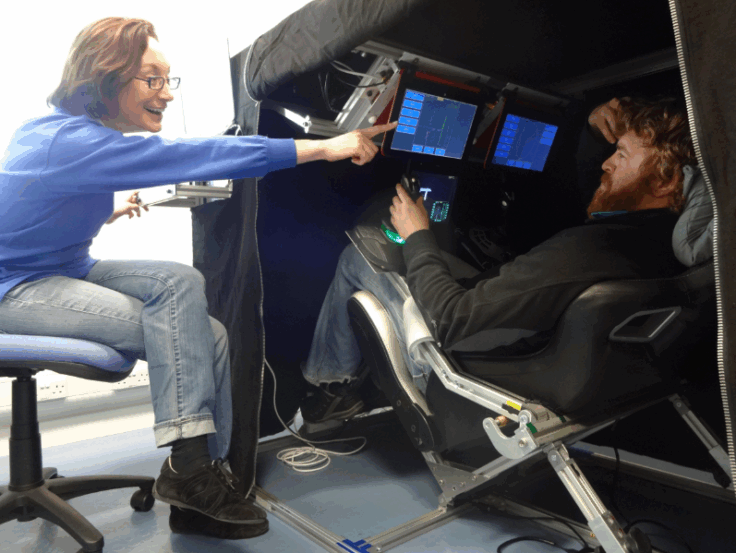
Medical doctor Nathalie Pattyn testing the spaceflight simulator with a Halley winter team member
Astronauts on long missions in space need to pilot their spacecraft and conduct complex operations months or even years after their training on Earth. On the International Space Station, astronauts periodically take refresher courses for critical tasks such as berthing cargo spacecraft. For astronauts returning from Mars, mission designers need to know that they will be able to perform after months of isolation and stressful exploration. The SIMSKILL experiment uses spacecraft simulators in Antarctica to see how the wintering crew copes over the course of their stay.
This element of the research project is investigated the potential changes in eye function and health under influence of either constant light or constant darkness. It exploried if additional light and medicine can influence the body’s natural clock and enable regular sleep/wake patterns. Experiments study how the eye’s pupil reacts to different flashes of light after a prolonged period of light or dark and also monitors how physical activity affects the rest-wake cycle by the wearing of special watches. Read the research paper: Impact of long-term daylight deprivation on retinal light sensitivity, circadian rhythms and sleep during the Antarctic winter
So far, sleep disturbances remain the most common complaints with regard to health and well-being in extreme environments, especially in the polar regions. This research is taking place at a network of Antarctic stations across the continent to look at why the constant light and dark affects sleep patterns so dramatically. Measurements of melatonin, cortisol and an individual’s mood (through questionnaires) can build up a picture of what affects poor sleep patterns and how it can be counteracted.
The study of an individual’s voice can reveal their well-being. Using weekly recorded video-diaries and read-aloud standardized texts, the Halley doctor is undertaking research to determine an individuals’ well-being through the physical characteristics of their voice. This monitoring was developed within the Russian space programme to overcome the issue that cosmonauts/astronauts would never willingly report a reduction in their psychological well-being and performance. The recordings are compared with those from Concordia to quantify the effects of hypoxia.
Professor Dr Ernst Messerschmid, University of Stuttgart. Principle Investigator
Professor Dr Fabio Ferlazzo, University of Rome
Mr Pete Marquis, BAS Medical Unit
Dr Nathalie Pattyn, BAS Medical Unit
Antarctica is extraordinary. It is a continent of superlatives – breathtaking, beautiful, hostile, awe-inspiring and life-changing. A trip to the ice always gets under my skin. It somehow puts my […]
Medical research in Antarctica
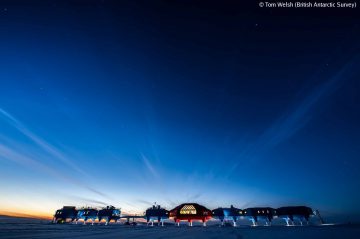
An exhibition showing how the isolation of Antarctica is used as a platform for understanding space opens this week (7-12 June) at The Times Science Festival in Cheltenham.
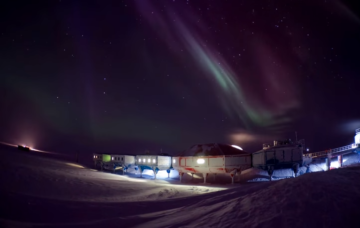
Research for human space flight
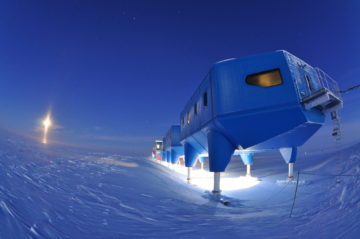
Halley Research Station is globally significant for observing the Earth, its atmosphere, and space weather.