15 January 2025: Postcard from Rothera Research Station
Welcome to our fourth Postcard from Rothera Research Station, giving you an update on the latest progress as we modernise our largest station in Antarctica.

The British Antarctic Survey (BAS) operates in the most remote places on earth including the Antarctic, the Southern Ocean and the Arctic. The challenges around logistics and extreme weather conditions entail many risks associated with energy security, fuel dependency and carbon emissions. Future-proofing BAS against these risks is a high priority.
In order to future-proof BAS’s capacity to continue to deliver world-class environmental science and contribute to the global effort of addressing climate change, BAS has committed to achieve net zero carbon emissions from our directly owned operations before 2040. Committing to climate action and developing an ambitious vision for the future will help BAS remain at the forefront of climate science, influence and drive change within its supply chain and beyond.
As part of the efforts to decarbonise the BAS Estate in Antarctica, the Rothera Renewable Energy Project aims to identify the road map to transition the current energy system on station, to renewable energy technology over the next ten years. The station predominantly relies on fossil fuels to meet the power, space heating and hot water demands. Diesel generators provide power for lighting, kitchen utilities, potable water production and diesel fired boilers for the central heating system and hot water. Solar photovoltaics (PV) and solar thermal panels are also installed on a number of buildings and supply a small amount of heat and power to the station.
The first step of the Rothera Renewable Energy Project is to ensure robust renewable energy technologies are considered through comprehensive feasibility studies, trialling of prototypes where appropriate and enabling works. The results of this preliminary work will feed into and define a sustainable energy strategy for Rothera aligned to the Rothera Decarbonisation Strategy. Initial indications suggest that a multi-faceted technological approach will be required to deliver the new energy strategy. The approach currently being considered is comprised of the following activities:
Inevitably working in such a remote location with extreme weather conditions and sensitive ecology there are a number of challenges to address in order to decarbonise Rothera Research Station in a sustainable way. These challenges need to be considered and fully assessed before a renewable energy strategy can be implemented. These include:
Figure 1 is an illustration of the technologies which are currently being considered to deliver the core energy requirements at Rothera.
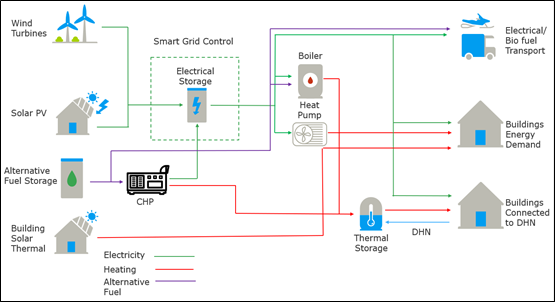
Figure 1. Schematic of the potential energy system at Rothera
All activities in Antarctica are subject to Environmental Impact Assessments (EIA) as per the requirements of the Environmental Protocol to the Antarctic Treaty. Prior to any renewable energy technology being installed on station, an EIA will be submitted to the Foreign Commonwealth and Development Office for consideration and approval.
Welcome to our fourth Postcard from Rothera Research Station, giving you an update on the latest progress as we modernise our largest station in Antarctica.
Construction teams have completed significant stages of the British Antarctic Survey’s (BAS) Antarctic Infrastructure Modernisation Programme and joined the over-wintering staff for the first time as the 2023/24 summer season ended.
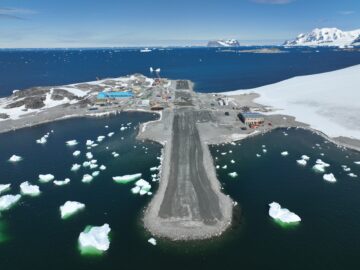
As part of the British Antarctic Survey’s (BAS) Antarctic Infrastructure Modernisation Programme (AIMP), the runway at Rothera Research Station has successfully been resurfaced by construction company BAM and the design completed by Ramboll.
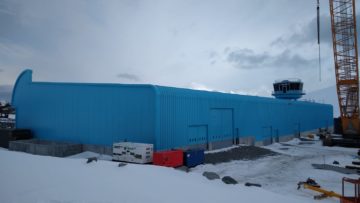
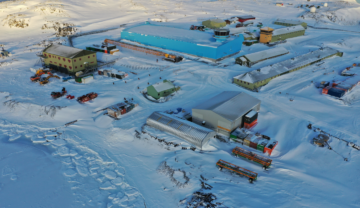
A new scientific and operational support facility at Rothera Research Station for British Antarctic Survey has been made weathertight, with the cladding complete and an operations tower installed.