Head of Meteorology and Ozone monitoring

Long-term meteorological and ozone observations and data help determine the causes of climate change in the polar regions.
The Meteorology and Ozone Monitoring Unit (MOM) collects long-term data on weather and ozone in Antarctica. These records help scientists understand climate change in the polar regions.
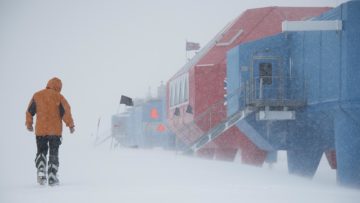
Weather observations are carried out daily at Halley and Rothera research stations. Automated instruments measure surface temperature, humidity, sunshine, air pressure, and wind speed and direction. Human observers when on station still estimate cloud type, height, and visibility, as well as unusual events such as diamond dust, halos, mirages, and the aurora australis.
All observations are turned into numerical codes and sent by satellite to global meteorological centres. The data feed into computer models that forecast the weather. They are also archived and used for climate research.
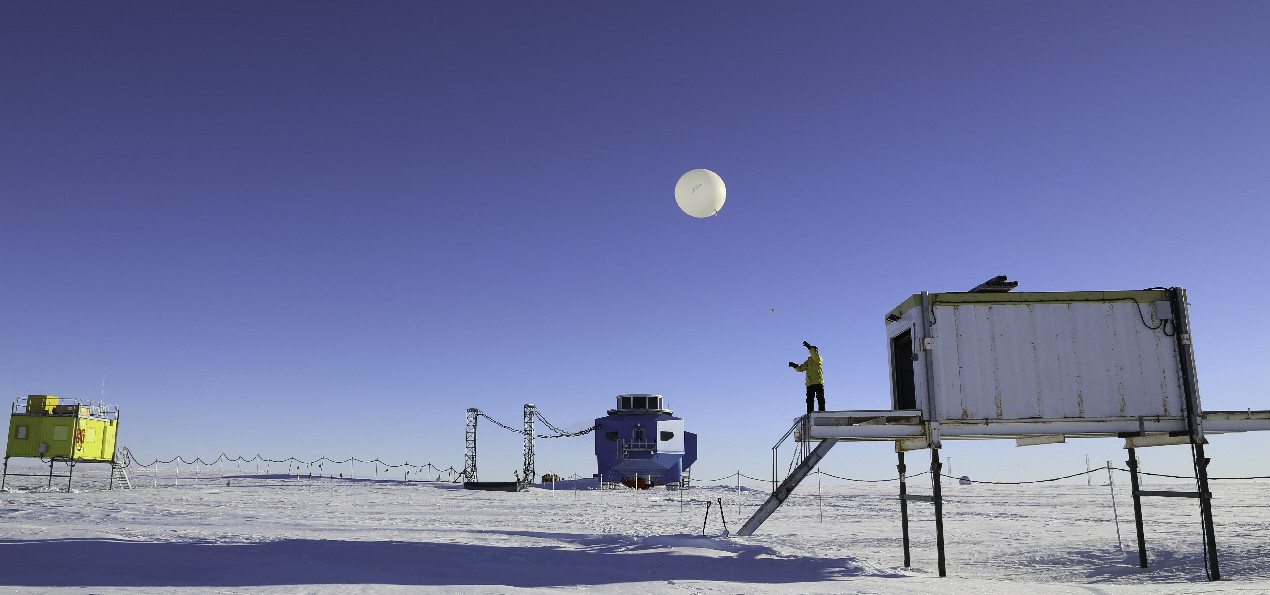
Weather balloons are launched from Halley and Rothera. Each carries a radiosonde, which measures temperature, humidity, and pressure up to 20 km in altitude. Wind speed and direction are tracked with GPS.
Radiosondes provide a snapshot of the atmosphere from the surface through the troposphere (around 10 km) and into the stratosphere (up to 25 km). Data from these launches improve weather forecasts and climate models. Studies show significant winter warming in the mid-troposphere over the past 30 years.
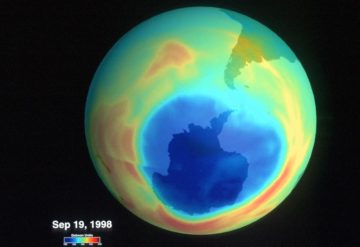
Halley and Rothera stations also measure ozone. Records from Halley began in 1957–58 during the International Geophysical Year. In 1985, BAS scientists used these data to discover the ozone hole.
Stratospheric ozone blocks more than 90% of harmful solar ultraviolet radiation. Monitoring continues to track ozone recovery after the global ban on CFCs.
Ozone depletion begins each spring when sunlight returns after the polar night. It recovers during winter as the atmosphere mixes. Halley’s location makes it ideal for observing these seasonal changes. A new automated spectrometer now allows monitoring to continue even without staff on-site.
The discovery of the ozone hole is one of the clearest examples of why long-term observations are essential.
MOM also collects air and snow samples as part of international monitoring programmes.
Air samples are taken weekly at Halley. These record greenhouse gases in one of the cleanest places on Earth. Data are shared with the U.S. National Oceanic and Atmospheric Administration (NOAA).
Snow samples are melted into water and analysed by the IAEA-WMO Global Network for Isotopes in Precipitation (GNIP), which has been running since the 1960s.
Air sampling shows how rapidly CO₂ levels are rising and provides a clean background reference for global measurements.

Head of Meteorology and Ozone monitoring

E Fellow
The Future of Life Award, which honors those who take exceptional measures to safeguard the collective future of humanity, is announced today (16 September) on the International Day for the […]

The World Meteorological Organization (WMO) has today (1 July 2021) recognised a new record high temperature for the Antarctic continent of 18.3° Celsius on 6 February 2020 at the Esperanza […]
This World Ozone Day, British Antarctic Survey (BAS) celebrates new technology which enables continuous monitoring of the ozone hole over Antarctica. Readings from the Dobson Ozone Spectrophotometer at Halley Research […]
Halley opens for 2018 summer field season
This week (Saturday 16 September), marks the 30th anniversary of the signing of the Montreal Protocol on Substances that Deplete the Ozone Layer. It is one of the most successful […]
An international team of researchers has identified the “first fingerprints of healing” of the Antarctic ozone layer, published this week (30 June 2016) in the journal Science.

Panorama view of South Georgia looking SSW
Automated instruments record daily meteorological observations, including surface temperature, humidity, sunshine, pressure, wind speed and direction. The measurements are supplemented by observations of visibility and clouds information recorded by meteorologists at the stations.
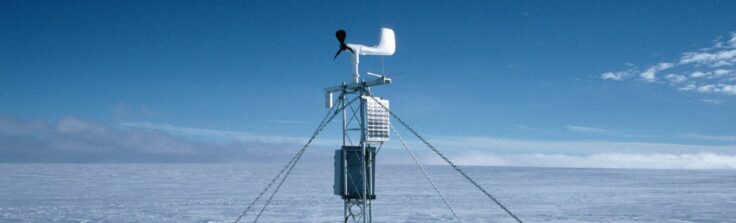
Automatic Weather Station at Atoll Nunataks, Upper Uranus Glacier, Alexander Island.

Halley Research Station is globally significant for observing the Earth, its atmosphere, and space weather.
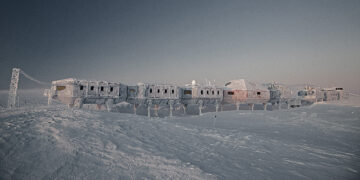
The largest British Antarctic facility is a centre for biological research and a hub for supporting deep-field science.