
Senior Biodiversity Biologist

HEXPLORES searches for active hydrothermal vents in the Red Sea Rift. The Rift contains the world’s largest submarine metalliferous sulphide deposit. Yet no active vent systems have been located there.
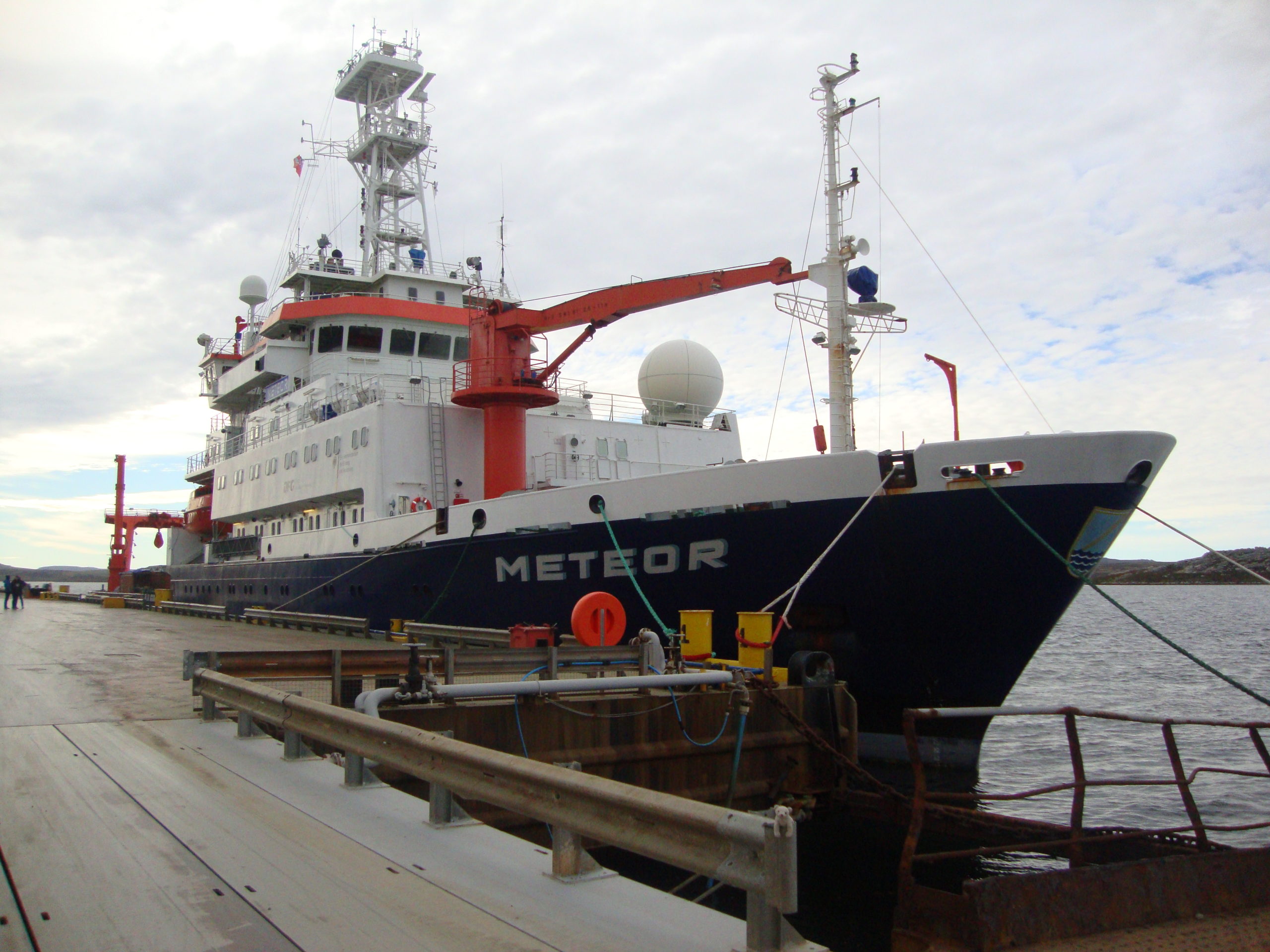
In autumn 2023, an international team led by Dr Nico Augustin (GEOMAR) surveyed parts of the Red Sea Rift inside the Saudi Arabian exclusive economic zone. They worked from the German research vessel RV Meteor during expedition M194. The team used remotely operated vehicles (ROVs) to look for hot venting. They also studied the host rocks, mineral deposits, vent fluids and local ecosystems.
The project focuses on vent fields outside the brine pools. Scientists think the Red Sea’s high heat flow could mean more vents than expected for an ultra-slow spreading ridge. Evidence for hydrothermal activity already exists.
Examples include hot brine pools, basins with metalliferous sediments, and chloride anomalies in basalt. If found, these vent fields could be economically valuable and host unique chemosynthetic ecosystems. Searching for active vents outside brine pools is new for this region.
Finding active vents would fill a big gap in our knowledge of the Red Sea. It would show whether the area supports ongoing hydrothermal activity.
New vent sites could reveal rare or unique animals and microbes. The Red Sea has unusual deep-water conditions — it is much warmer and saltier than most oceans. These conditions may produce species that are different from global deep-sea fauna.
Because the Red Sea connects only narrowly to the Indian Ocean, discoveries here could help explain how vent species spread and evolve. Vent deposits may also have high economic value. Studying vents will improve our understanding of geology, chemistry, biology and resource potential in the region.
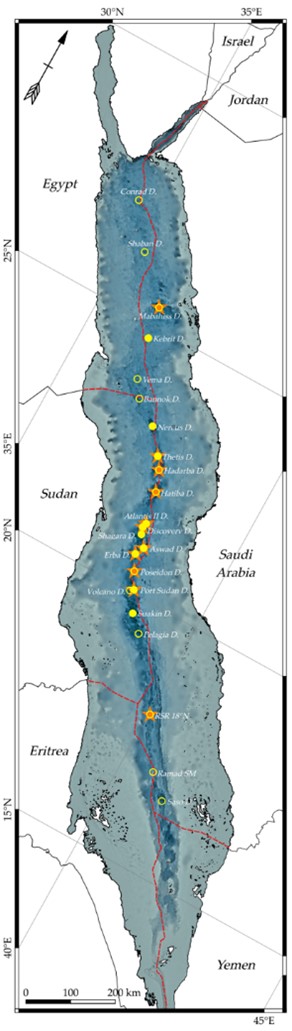
A map of the Red Sea sampling locations
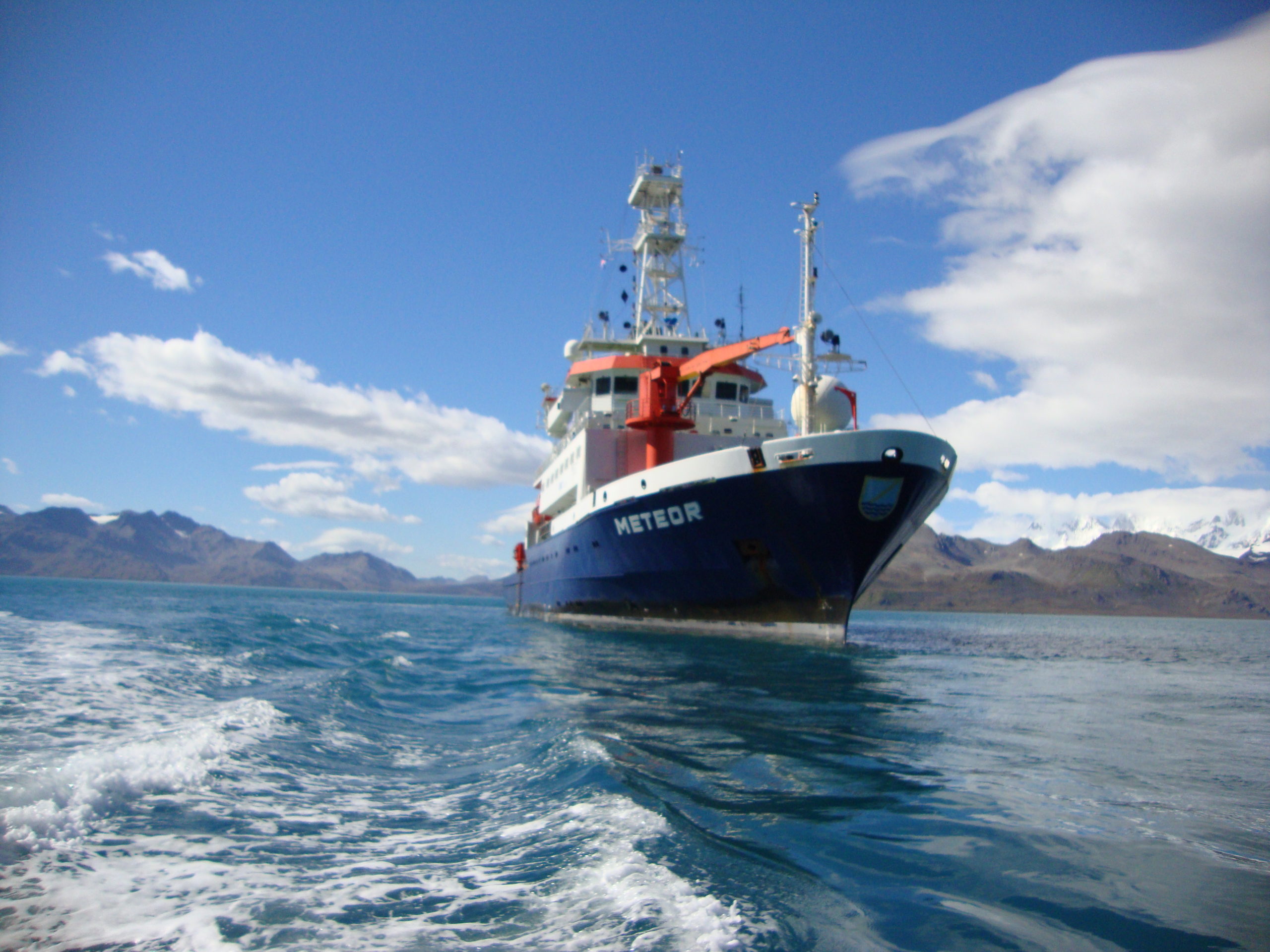
The RV Meteor
The project aims to:
HEXPLORES is an international marine science effort. Dr Nico Augustin (GEOMAR) led the 2023 expedition M194 on RV Meteor. BAS researcher Katrin Linse coordinates studies of macro- and megafauna. She brings expertise in hydrothermal vent biodiversity.
The team includes ROV operators, geologists, geochemists, microbiologists, and taxonomists. They work together to map sites, collect samples, and analyse findings.
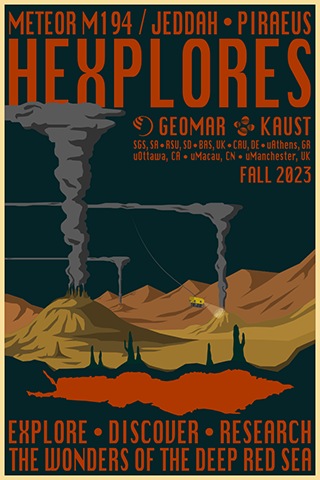
The HEXPLORES logo and flyer
The Exploration and Investigation of New Hydrothermal Vent Sites in Relation to Recent Volcanism in the Red Sea Rift. After the discovery of a hydrothermal vent field(s) we will study this directly by ROV in order to address the following scientific questions and hypotheses:
Senior Biodiversity Biologist