Pelagic Marine Ecologist

The ocean provides a fundamental ecosystem service to our society by absorbing about 30% of atmospheric CO2 which helps mitigate the effects of climate change.
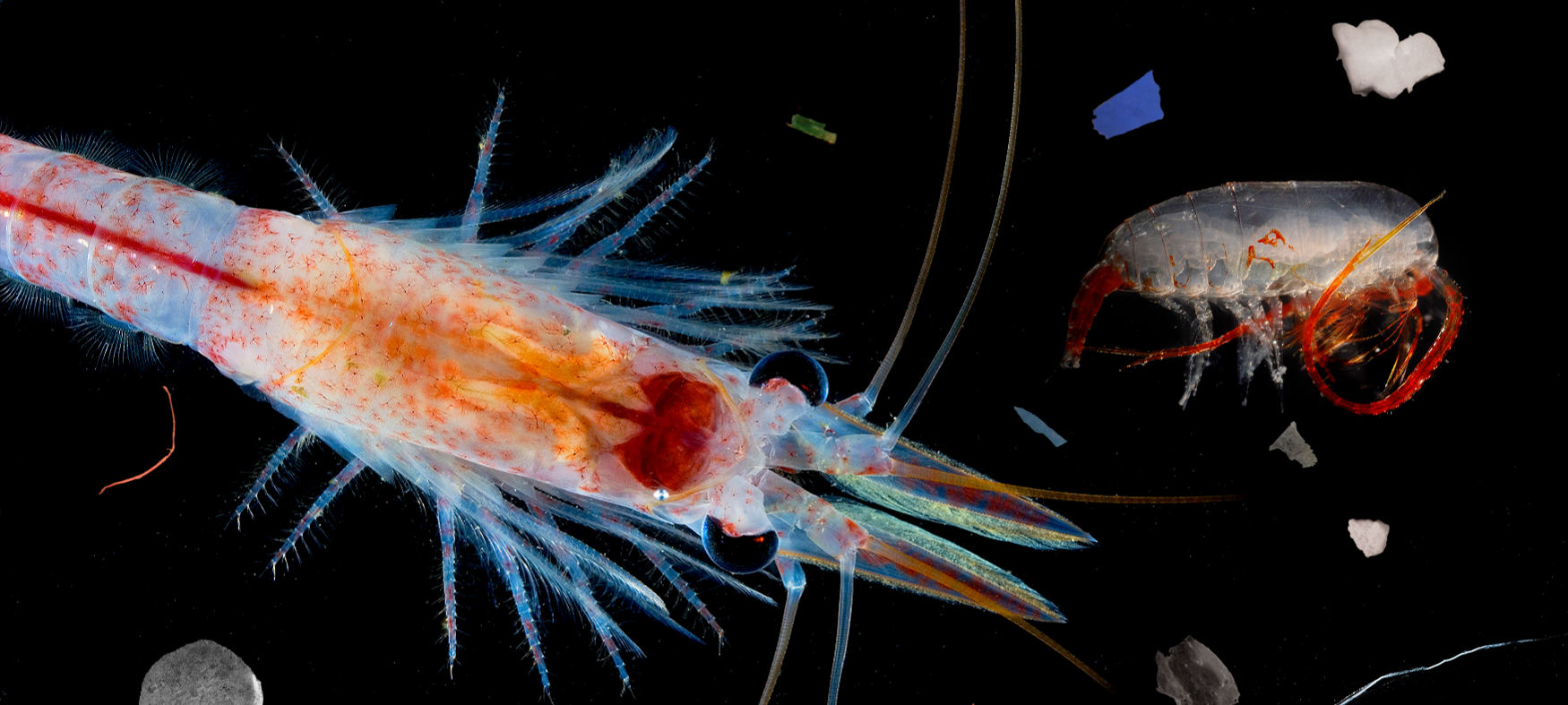
Zooplankton play a pivotal role in this process through the so-called Blue Carbon pathway, promoting the transport and storage of large quantities of Carbon to the deep oceanic sediments through the sinking of their faeces, moults and carcasses and through their vertical movement along the water column. Nowadays the zooplankton Blue Carbon pathway is potentially threatened by a global emerging stressor: plastic pollution.
The amount of plastic entering our oceans is increasing worldwide, with global implications for the health of our planet.
Once in the ocean, plastic litter breaks down into millions of small fragments called microplastics (< 1 mm), which can find their way into zooplankton and lower the sinking velocity of their faeces, moults and carcasses.
CUPIDO addresses two main scientific questions:
The central hypothesis of CUPIDO is that the pathway of plastic from the ocean surface to the depth, when incorporated into zooplankton (named the Zooplankton Plastic Pump), will reduce the capability of the ocean to regulate atmospheric CO2 emissions.
To address this hypothesis, CUPIDO adopts cutting edge multidisciplinary approaches within an extensive field-based research program, carried out in two contrasting regions with relatively low (Southern Ocean) and high (Mediterranean Sea) level of plastic pollution. Through floating and moored ocean platforms and in situ experiments, CUPIDO will generate extensive datasets to feed ecological models to determine the impact of the Zooplankton Plastic Pump on the ecosystem service provided by the oceans in sequestering atmospheric CO2.
The potential loss in Carbon export and storage by the Ocean corresponds to a change in welfare for our society. Overall, CUPIDO outcomes will assess the potential loss in climate mitigation due to the Zooplankton Plastic Pump and the related economic cost to society.
Pelagic Marine Ecologist
Marine Environmental Ecologist
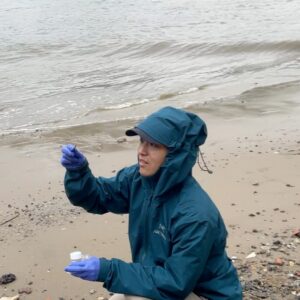
Marine Ecological Modeller

PhD Student
Internal Contributors:
Beth Candish – Student at the University of Cambridge | Do Antarctic Krill Promote the Sequestration of Microplastics in the Deep Ocean?
Aidan Hunter – previous postdoc | Modelling the impact of microplastics to the krill faeces carbon export.
Pip Birchenall – EDI internship student | Sea surface microplastic around South Sandwich Islands
Laura Wilkie Johnston – research placement student | Krill and salp in situ microplastic ingestion
James Reid-Anderson – EDI research placement student | Numerical analysis of microplastic impact on krill faecal pellet flux
International PhD Projects:
University of Coimbra (Portugal) – Joana Fragão, PhD student | Microplastic food web in the Southern Ocean
Internal Advisors (Ecological modelling):
Dr Sally Thorpe
Project Collaborators:
Department of Civil, Environmental, Land, Building Engineering and Chemistry of the Polytechnic University of Bari (Italy) – Prof. of Hydraulics Michele Mossa
Institute of Polar Sciences of the Italian National Council of Research (Italy) – Dr Stefano Miserocchi, Geologist
University of Modena (Italy) Department of Life Sciences – Dr Elisa Bergami
Ocean Diagnostics (Canada) – Dr Anna Posacka
European Multidisciplinary Seafloor and water column Observatory (EMSO)
Project Advisor:
Centre for Environment, Fisheries and Aquaculture Science (UK) – Dr Tiziana Luisetti, Environmental economist
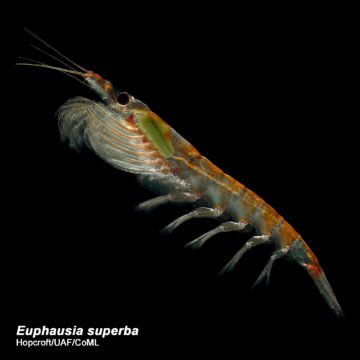
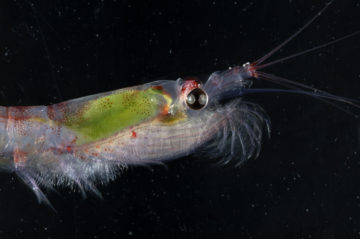
A new study led by researchers at British Antarctic Survey (BAS) discovered microplastics in krill (Euphausia superba), a small shrimp-like crustacean, and salps (Salpa thompsoni), a gelatinous marine invertebrate. The […]
New equipment designed by British Antarctic Survey is helping scientists to study the impact of microplastics in the ocean. The Ocean Plastic Incubator Chamber (OPIC) exposes various types of plastics […]
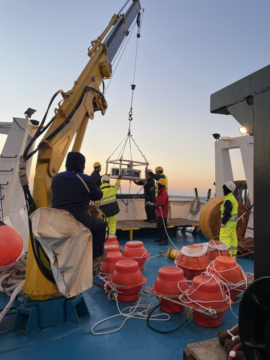
The Innovation Showcase explains how innovative science and technology is helping or, in future, could substantially help the goals of COP26 and of reducing greenhouse gas emissions, enabling adaptation to climate change or informing action related to climate change.
Plastic pollution combined with ocean acidification hinders the development of Antarctic krill in the Southern Ocean, research published today (4 August 2021) in Marine Frontiers reveals. Antarctic krill (Euphausia superba) […]
UK Research and Innovation (UKRI) has announced its latest round of Future Leaders Fellowships today (23 April 2020). Congratulations to Dr Dan Jones and Dr Clara Manno of British Antarctic […]
The data collected within CUPIDO will be made available through the UK Polar Data Centre and used to produce official reports within the SCAR Plastic in Polar Environments Action Group (PLASTIC-AG)
Publications:
Manno, C., Corsi, I., Rowlands, E., & Bergami, E. (2024). Plastics counteract the ability of Antarctic krill to promote the blue carbon pathway in the deep ocean. Marine Pollution Bulletin, 209, 117238.
Johnston, Laura Wilkie, Manno, Clara , Salinas, Carla Ximena. (2024) Assessment of plastic debris and biofouling in a specially protected area of the Antarctic Peninsula region. Marine Pollution Bulletin, 207. 9 pp. 10.1016/j.marpolbul.2024.116844
Rowlands, Emily, Galloway, Tamara, Jones-Williams, Kirstie, Manno, Clara . (2024) How Might Plastic Pollution Affect Antarctic Animals?. Frontiers for Young Minds, 11. 8 pp. 10.3389/frym.2023.1096038
Savoca, Matthew S., Abreo, Neil Angelo, Arias, Andres H., Baes, Laura, Baini, Matteo, Bergami, Elisa, Brander, Susanne, Canals, Miquel, Choy, C. Anela, Corsi, Ilaria, De Witte, Bavo, Domit, Camila, Dudas, Sarah, Duncan, Emily M., Fernández, Claudia E., Fossi, Maria Cristina, Garcés-Ordóñez, Ostin, Godley, Brendan J., González-Paredes, Daniel, González Carman, Victoria, Hamilton, Bonnie M., Hardesty, Britta Denise, Hong, Sang Hee, Kahane-Rapport, Shirel, Kashiwabara, Lauren M., Lacerda, Mariana Baptista, Luna-Jorquera, Guillermo, Manno, Clara, Nelms, Sarah E., Panti, Cristina, Pérez-Venegas, Diego J., Pham, Christopher K., Provencher, Jennifer F., Purca, Sara, Rashid, Harunur, Rodríguez, Yasmina, Sparks, Conrad, Sun, ChengJun, Thiel, Martin, Tsangaris, Catherine, Santos, Robson G.. (2024) Monitoring plastic pollution using bioindicators: a global review and recommendations for marine environments. Environmental Science: Advances. 23 pp. 10.1039/D4VA00174E
Wilkie Johnston, Laura, Bergami, Elisa , Rowlands, Emily, Manno, Clara . (2023) Organic or junk food? Microplastic contamination in Antarctic krill and salps. Royal Society Open Science, 10. 10 pp. 10.1098/rsos.221421 The first study reported the Microplastics in krill and salps.
Rowlands, Emily, Galloway, Tamara, Cole, Matthew, Peck, Victoria L. , Posacka, Anna, Thorpe, Sally , Manno, Clara. (2023) Vertical flux of microplastic, a case study in the Southern Ocean, South Georgia. Marine Pollution Bulletin, 193. 12 pp. 10.1016/j.marpolbul.2023.115117
Rowlands, Emily, Galloway, Tamara, Cole, Matthew, Lewis, Ceri, Hacker, Christian, Peck, Victoria L., Thorpe, Sally , Blackbird, Sabena, Wolff, George A., Manno, Clara . (2023) Scoping intergenerational effects of nanoplastic on the lipid reserves of Antarctic krill embryos. Aquatic Toxicology, 261. 10 pp. 10.1016/j.aquatox.2023.106591
Bergami, Elisa , Apeland, Bjorg, Sharma, Rad, Enderlein, Peter, Manno, Clara . (2022) The Ocean Plastic Incubator Chamber (OPIC) system to monitor in situ plastic degradation at sea. Environmental Pollution, 311. 8 pp. 10.1016/j.envpol.2022.119868
Manno, C. , Peck, V.L. , Corsi, I., Bergami, E. . (2022) Under pressure: Nanoplastics as a further stressor for sub-Antarctic pteropods already tackling ocean acidification [Short communication]. Marine Pollution Bulletin, 174. 5 pp. 10.1016/j.marpolbul.2021.113176
Bergami, Elisa , Apeland, Bjorg, Sharma, Rad, Enderlein, Peter, Manno, Clara. (2022) The Ocean Plastic Incubator Chamber (OPIC) system to monitor in situ plastic degradation at sea. Environmental Pollution, 311. 8 pp. 10.1016/j.envpol.2022.119868
Buckingham, J.W., Manno, C., Waluda, C.M. , Waller, C.L.. (2022) A record of microplastic in the marine nearshore waters of South Georgia. Environmental Pollution, 306. 9 pp. 10.1016/j.envpol.2022.119379
Rowlands, Emily, Galloway, Tamara, Cole, Matthew, Lewis, Ceri, Peck, Victoria , Thorpe, Sally , Manno, Clara . (2021) The effects of combined ocean acidification and nanoplastic exposures on the embryonic development of Antarctic krill. Frontiers in Marine Science, 8. 14 pp. 10.3389/fmars.2021.709763
Rowlands, Emily, Galloway, Tamara, Manno, Clara . (2021) A Polar outlook: Potential interactions of micro-and nano-plastic with other anthropogenic stressors. Science of the Total Environment, 754. 12 pp. 10.1016/j.scitotenv.2020.142379
Jones-Williams, Kirstie , Galloway, Tamara S., Peck, Victoria L. , Manno, Clara . (2021) Remote but not isolated – microplastics and mesoplastics present in the sub-surface waters of the Canadian Arctic Archipelago. Frontiers in Marine Science, 8. 13 pp. 10.3389/fmars.2021.666482
Bergami, E., Manno, C. , Cappello, S., Vannuccini, M.L., Corsi, I.. (2020) Nanoplastics affect moulting and faecal pellet sinking in Antarctic krill (Euphausia superba) juveniles. Environment International, 143. 11 pp. 10.1016/j.envint.2020.105999
Jones-Williams, Kirstie , Galloway, Tamara, Cole, Matthew, Stowasser, Gabriele , Waluda, Claire , Manno, Clara . (2020) Close encounters – microplastic availability to pelagic amphipods in sub-Antarctic and Antarctic surface waters. Environment International, 140. 10.1016/j.envint.2020.105792
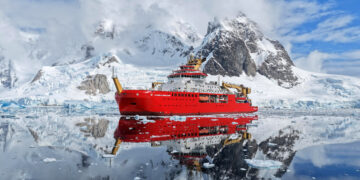
Our state-of-the-art polar science ship provides scientists access to remote and challenging marine environments across the Antarctic and Arctic.