Thriving ecosystem discovered following iceberg calving
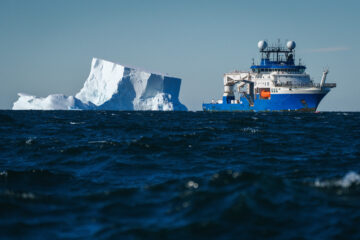
Scientists have discovered vibrant communities of ancient sponges and corals on the newly exposed seafloor following the calving of the giant A-84 iceberg.

I am a postdoctoral research associate in Paleoceanography working as part of THOR team; and a Junior Research Fellow in Quantitative Environmental Sciences at Queens’ College, University of Cambridge, affiliated with the Department of Earth Sciences (link). I use marine sediment cores, and in particular foraminifera geochemistry such as stable isotopes, trace metal analysis and radiocarbon, to investigate climatic variations on 10s- 100,000s years timescales.
I earned my PhD from the Department of Earth Sciences, University of Cambridge. My thesis explored The Role of the Ocean in Climate Changes and Atmospheric CO2 Variability during the last glacial cycle, with a particular emphasis on marine sediment cores retrieved from the North and South Atlantic. More recently, I have been focusing on cores recovered from the Southern Ocean and circum-Antarctic seas. My primary research interests include, but are not limited to, the role of the ocean in controlling and modulating the carbon cycle through changes in ocean circulation and biogeochemistry; ocean- ice sheet interactions and the impact of ocean forcing on past- and future- ice sheet melt, particularly around Antarctica; past hydroclimate variations and their impact on human societies; and geochemical proxy development.
For my work at BAS, I am part of the International Thwaites Glacier Collaboration (ITGC) involved in the THOR project – Thwaites Offshore Research. My main research focus for THOR is to reconstruct bottom water temperature and water mass properties changes in the Amundsen Sea Embayment, West Antarctica, using marine sediment cores, and specifically foraminiferal geochemical proxies including trace metal and stable isotope analyses.
Mawbey, Elaine M. ORCID record for Mawbey, Elaine M.. Smith, James A. ORCID record for Smith, James A.. Hillenbrand, Claus-Dieter ORCID record for Hillenbrand, Claus-Dieter. Hendry, Katharine R. ORCID record for Hendry, Katharine R.. McClymont, Erin L. ORCID record for McClymont, Erin L.. Greaves, Mervyn J. ORCID record for Greaves, Mervyn J.. Klages, Johann P. ORCID record for Klages, Johann P.. Kuhn, Gerhard ORCID record for Kuhn, Gerhard. Radionovskaya, Svetlana ORCID record for Radionovskaya, Svetlana. Spencer-Jones, Charlotte L. Larter, Robert ORCID record for Larter, Robert. Wellner, Julia S. ORCID record for Wellner, Julia S.. Dutrieux, Pierre ORCID record for Dutrieux, Pierre. (2026) Ocean heat forced West Antarctic Ice Sheet retreat after the Last Glacial Maximum.
Lehrmann, Asmara A. Totten, Rebecca L. Wellner, Julia S. ORCID record for Wellner, Julia S.. Hillenbrand, Claus-Dieter ORCID record for Hillenbrand, Claus-Dieter. Radionovskaya, Svetlana. Comas, R. Michael. Larter, Robert D. ORCID record for Larter, Robert D.. Graham, Alastair G. C. Kirkham, James D. ORCID record for Kirkham, James D.. Hogan, Kelly A. ORCID record for Hogan, Kelly A.. Fitzgerald, Victoria. Clark, Rachel W. ORCID record for Clark, Rachel W.. Hopkins, Becky. Lepp, Allison P. ORCID record for Lepp, Allison P.. Mawbey, Elaine ORCID record for Mawbey, Elaine. Smyth, Rosemary V. Miller, Lauren E. Smith, James A. ORCID record for Smith, James A.. Nitsche, Frank O. ORCID record for Nitsche, Frank O.. (2025) Recent benthic foraminifera communities offshore of Thwaites Glacier in the Amundsen Sea, Antarctica: implications for interpretations of fossil assemblages.
Scientists have discovered vibrant communities of ancient sponges and corals on the newly exposed seafloor following the calving of the giant A-84 iceberg.