The evolution and ecology of Antarctic sea floor communities
Antarctic seafloor ecosystems are both unique and fragile. Studying their past and present gives us valuable insights into how climate change may reshape them.

I am an interdisciplinary scientist, with a first class undergraduate masters degree in Geoscience, a postgraduate masters degree in Biological Science and a PhD in Palaeontology.
As a palaeobiologist at the British Antarctic Survey, my recent research has focussed on the evolution of polar ecosystems on several different levels, from tracing the history of individual taxa through time to looking at the interaction of taxa and the community structure as a whole. These studies have also examined the interaction and evolution of biota through changing climatic and tectonic regimes.
Trotter, Cameron ORCID record for Trotter, Cameron. Griffiths, Huw ORCID record for Griffiths, Huw. Whittle, Rowan ORCID record for Whittle, Rowan. Khan, Tasnuva Ming ORCID record for Khan, Tasnuva Ming. (2026) Automated Detection of Antarctic Benthic Organisms in High-Resolution in Situ Imagery to Aid Biodiversity Monitoring.
Khan, Tasnuva Ming ORCID record for Khan, Tasnuva Ming. Whittle, Rowan J. ORCID record for Whittle, Rowan J.. Witts, James D. Griffiths, Huw ORCID record for Griffiths, Huw. Manica, Andrea. Mitchell, Emily G. (2025) Metacommunity structural changes of Antarctic benthic invertebrates over the late Maastrichtian.
Khan, Tasnuva Ming ORCID record for Khan, Tasnuva Ming. Griffiths, Huw J. ORCID record for Griffiths, Huw J.. Stephenson, Nile P. Whittle, Rowan J. ORCID record for Whittle, Rowan J.. Purser, Autun. Manica, Andrea. Mitchell, Emily G. (2025) Competition drives the dispersal dynamics of two cup coral morphs in populations on the Powell Basin slopes, Weddell Sea, Antarctica.
Trotter, Cameron ORCID record for Trotter, Cameron. Griffiths, Huw J. ORCID record for Griffiths, Huw J.. Whittle, Rowan J. ORCID record for Whittle, Rowan J.. (2025) Surveying the deep: A review of computer vision in the benthos.
Griffiths, Huw J. ORCID record for Griffiths, Huw J.. Cummings, Vonda J. Van de Putte, Anton. Whittle, Rowan J. ORCID record for Whittle, Rowan J.. Waller, Catherine L. (2024) Antarctic benthic ecological change.
Khan, Tasnuva Ming ORCID record for Khan, Tasnuva Ming. Griffiths, Huw J. ORCID record for Griffiths, Huw J.. Whittle, Rowan J. ORCID record for Whittle, Rowan J.. Stephenson, Nile P. Delahooke, Katie M. Purser, Autun. Manica, Andrea. Mitchell, Emily G. (2024) Network analyses on photographic surveys reveal that invertebrate predators do not structure epibenthos in the deep (~2000m) rocky Powell Basin, Weddell Sea, Antarctica.
Ineson, Jon R. Bowman, Vanessa C. Crame, J. Alistair ORCID record for Crame, J. Alistair. Francis, Jane E. Whittle, Rowan J. ORCID record for Whittle, Rowan J.. (2023) Sequence stratigraphy of a wave-dominated, tidally influenced delta in the Danian of Seymour Island, Antarctica: An integrated sedimentological–palaeoecological approach.
Foster, William J. Allen, Bethany J. Kitzmann, Niklas H. Münchmeyer, Jannes. Rettelbach, Tabea. Witts, James D. Whittle, Rowan J. ORCID record for Whittle, Rowan J.. Larina, Ekaterina. Clapham, Matthew E. Dunhill, Alexander M. (2023) How predictable are mass extinction events?.
Griffiths, Huw ORCID record for Griffiths, Huw. Whittle, Rowan J. ORCID record for Whittle, Rowan J.. Mitchell, Emily G. (2022) Animal survival strategies in Neoproterozoic ice worlds.
Smellie, John L. McIntosh, William C. Whittle, Rowan ORCID record for Whittle, Rowan. Troedson, Alexa. Hunt, Richard J. (2021) A lithostratigraphical and chronological study of Oligocene-Miocene sequences on eastern King George Island, South Shetland Islands (Antarctica) and correlation of glacial episodes with global isotope events.
Almond, Peter M. Linse, Katrin ORCID record for Linse, Katrin. Dreutter, Simon. Grant, Susie M. Griffiths, Huw J. ORCID record for Griffiths, Huw J.. Whittle, Rowan J. ORCID record for Whittle, Rowan J.. Mackenzie, Melanie. Reid, William D. K. (2021) In-situ image analysis of habitat heterogeneity and benthic biodiversity in the Prince Gustav Channel, Eastern Antarctic Peninsula..
Mitchell, Emily G. Whittle, Rowan J. ORCID record for Whittle, Rowan J.. Griffiths, Huw J. ORCID record for Griffiths, Huw J.. (2020) Benthic ecosystem cascade effects in Antarctica using Bayesian network inference.
Whittle, Rowan J. ORCID record for Whittle, Rowan J.. Witts, James D. Bowman, Vanessa C. Crame, J. Alistair ORCID record for Crame, J. Alistair. Francis, Jane E. Ineson, Jon. (2019) Nature and timing of biotic recovery in Antarctic benthic marine ecosystems following the Cretaceous-Paleogene mass extinction.
Whittle, Rowan ORCID record for Whittle, Rowan. Hunter, AW. Cantrill, DJ. McNamara, KJ. (2018) Globally discordant Isocrinida (Crinoidea) migration confirms asynchronous Marine Mesozoic Revolution.
Gabbott, Sarah E. Browning, Claire. Theron, Johannes N. Whittle, Rowan J. ORCID record for Whittle, Rowan J.. (2016) The late Ordovician Soom Shale Lagerstȁtte: an extraordinary post-glacial fossil and sedimentary record.
Witts, James D. Whittle, Rowan J. ORCID record for Whittle, Rowan J.. Wignall, Paul B. Crame, J. Alistair ORCID record for Crame, J. Alistair. Francis, Jane E. Newton, Robert J. Bowman, Vanessa C. (2016) Macrofossil evidence for a rapid and severe Cretaceous-Paleogene mass extinction in Antarctica.
Bowman, V. Ineson, J. Riding, J. ORCID record for Riding, J.. Crame, J. ORCID record for Crame, J.. Francis, J. Condon, D. Whittle, R. ORCID record for Whittle, R.. Ferraccioli, F. ORCID record for Ferraccioli, F.. (2016) The Paleocene of Antarctica: dinoflagellate cyst biostratigraphy, chronostratigraphy and implications for the palaeo-Pacific margin of Gondwana.
Jackson, Jennifer A. ORCID record for Jackson, Jennifer A.. Linse, Katrin ORCID record for Linse, Katrin. Whittle, Rowan ORCID record for Whittle, Rowan. Griffiths, Huw J. ORCID record for Griffiths, Huw J.. (2015) The evolutionary origins of the Southern Ocean philobryid bivalves: hidden biodiversity, ancient persistence.
Crame, J. Alistair ORCID record for Crame, J. Alistair. Beu, Alain G. Ineson, Jon R. Francis, Jane E. Whittle, Rowan J. ORCID record for Whittle, Rowan J.. Bowman, Vanessa C. (2014) The early origin of the Antarctic Marine Fauna and its evolutionary implications.
Griffiths, Huw J. ORCID record for Griffiths, Huw J.. Whittle, Rowan J. ORCID record for Whittle, Rowan J.. Roberts, Stephen J. ORCID record for Roberts, Stephen J.. Belchier, Mark ORCID record for Belchier, Mark. Linse, Katrin ORCID record for Linse, Katrin. Thatje, Sven. Editors: De Broyer, Claude. Koubbi, Philippe. Griffiths, Huw ORCID record for Griffiths, Huw. Raymond, Ben. d'Udekem d'Acoz, Cedric. Van de Putte, Anton. Danis, Bruno. David, Bruno. Grant, Susie ORCID record for Grant, Susie. Gutt, Julian. Held, Christoph. Hosie, Graham. Huettmann, Falk. Post, Alexandra. Ropert-Coudert, Yan (2014) Decapoda: crabs and lobsters.
Kemp, David B. Robinson, Stuart A. Crame, J. Alistair ORCID record for Crame, J. Alistair. Francis, Jane E. Ineson, Jon. Whittle, Rowan J. ORCID record for Whittle, Rowan J.. Bowman, Vanessa. O'Brien, Charlotte. (2014) A cool temperate climate on the Antarctic Peninsula during the latest Cretaceous and early Paleogene.
Whittle, Rowan ORCID record for Whittle, Rowan. Quaglio, Fernanda. Griffiths, Huw ORCID record for Griffiths, Huw. Linse, Katrin ORCID record for Linse, Katrin. Crame, J. Alistair ORCID record for Crame, J. Alistair. (2014) The Early Miocene Cape Melville Formation fossil assemblage and the evolution of modern Antarctic marine communities.
Griffiths, H.J. ORCID record for Griffiths, H.J.. Whittle, R.J. ORCID record for Whittle, R.J.. Roberts, S.J. ORCID record for Roberts, S.J.. Belchier, M. ORCID record for Belchier, M.. Linse, K. ORCID record for Linse, K.. (2013) Antarctic crabs: invasion or endurance?.
Whittle, Rowan J. ORCID record for Whittle, Rowan J.. Quaglio, Fernanda. Crame, J. Alistair ORCID record for Crame, J. Alistair. Linse, Katrin ORCID record for Linse, Katrin. (2012) Nuculidae (Bivalvia) in the Cape Melville Formation, King George Island, Antarctica, with an overview of the bivalve fauna.
Whittle, Rowan J. ORCID record for Whittle, Rowan J.. Linse, Katrin ORCID record for Linse, Katrin. Griffiths, Huw J. ORCID record for Griffiths, Huw J.. (2011) The fossil record of Limopsis (Bivalvia: Limopsidae) in Antarctica and the southern high latitudes.
Quaglio, Fernanda. Whittle, Rowan Jane ORCID record for Whittle, Rowan Jane. Gaździcki, Andrzej. Simões, Marcello Guimarães. (2011) A new fossil Adamussium (Bivalvia: Pectinidae) from Antarctica.
Whittle, Rowan ORCID record for Whittle, Rowan. Gabbott, Sarah. Aldridge, Richard. Theron, Johannes. (2011) Late Ordovician (Hirnantian) scolecodont clusters from the Soom Shale Lagerstatte, South Africa.
Whittle, Rowan J. ORCID record for Whittle, Rowan J.. Gabbott, Sarah E. Aldridge, Richard J. Theron, Johannes. (2010) An Ordovician lobopodian from the Soom Shale Lagerstatte, South Africa.
Trotter, C., Griffiths, H., Khan, T., Purser, A., & Whittle, R. (2025). The Weddell Sea Benthic Dataset: A computer vision-ready object detection dataset for in situ benthic biodiversity monitoring model development (Version 1.0) [Data set]. NERC EDS UK Polar Data Centre. https://doi.org/10.5285/1ba97e4b-efb7-460b-9f2d-90437e33ce09
Khan, T., Griffiths, H., Whittle, R., Stephenson, N., Delahooke, K., Purser, A., Manica, A., & Mitchell, E. (2025). Organisms identified from OFOBS images from PS118 Profiles 6_9 (Weddell Sea) and 69 (Powell Basin), April – May 2019 (Version 1.0) [Data set]. NERC EDS UK Polar Data Centre. https://doi.org/10.5285/7fb2f0c1-413c-4cd6-84ab-a504bf431290
Khan, T., Whittle, R., Witts, J., Griffiths, H., Manica, A., & Mitchell, E. (2025). Invertebrate fossil occurrences from the Cretaceous Lopez de Bertodano Formation (Maastrichtian), Seymour Island, housed in the Paleontological Research Institution (PRI), Ithaca, NY (Version 1.0) [Data set]. NERC EDS UK Polar Data Centre. https://doi.org/10.5285/c1252fb5-8075-431c-a78b-1c1d8da37c5e
Trotter, C., Griffiths, H., Khan, T., & Whittle, R. (2025). Automated detection of Antarctic benthic organisms in high-resolution in situ imagery to aid biodiversity monitoring: optimal model weights (Version 1.0) [Data set]. NERC EDS UK Polar Data Centre. https://doi.org/10.5285/b2874f3f-285d-4ae6-9bb4-6bfe3eacbfff
Linse, K., Grant, S., Whittle, R., Reid, W., McKenzie, M., Federwisch, L., Polfrey, S., & Apeland, B. (2020). Benthic seafloor images from Prince Gustav Channel and Duse Bay, Eastern Antarctic Peninsula, March 2018 (Version 1.0) [Data set]. UK Polar Data Centre, Natural Environment Research Council, UK Research & Innovation. https://doi.org/10.5285/48dcef16-6719-45e5-a335-3a97f099e451
Antarctic seafloor ecosystems are both unique and fragile. Studying their past and present gives us valuable insights into how climate change may reshape them.
The Larsen-C Benthos project studied benthic biodiversity on the seabed exposed by the 2017 calving of the Larsen-C Ice Shelf.
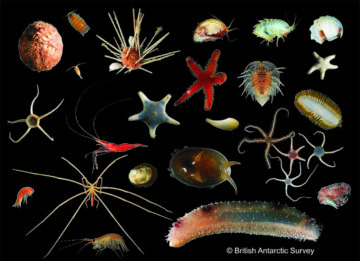
SO-AntEco was a British Antarctic Survey (BAS) led expedition undertaken in conjunction with an international team of scientists from the Scientific Committee for Antarctic Research (SCAR) AntEco research programme.

Why does global biodiversity show such a steep increase just as climates were deteriorating?
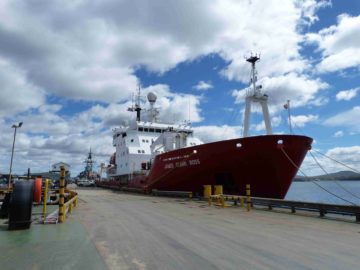
British Antarctic Survey (BAS) palaeobiologist Dr Rowan Whittle is a member of the Larsen C Benthos research cruise onboard the RRS James Clark Ross. Rowan’s primary role is to assist […]
The amazing survival strategies of polar marine creatures might help to explain how the first animals on Earth could have evolved earlier than the oldest fossils suggest according to new […]
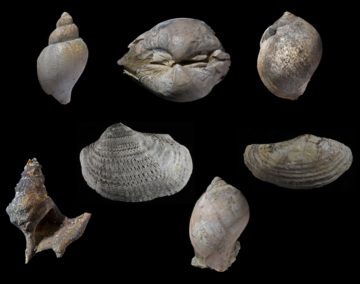
A new study shows how marine life around Antarctica returned after the extinction event that wiped out the dinosaurs. A team led by British Antarctic Survey studied just under 3000 […]
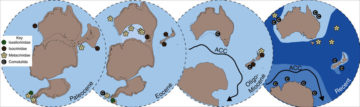
A new study of marine fossils from Antarctica, Australia, New Zealand and South America reveals that one of the greatest changes to the evolution of life in our oceans occurred […]
A study of more than 6,000 marine fossils from the Antarctic shows that the mass extinction event that killed the dinosaurs was sudden and just as deadly to life in the polar regions.