Heat and carbon regulation in the Southern Ocean
SO-CHIC is a European research project investigating how the Southern Ocean regulates global climate through heat and carbon exchanges.

Doctor Natasha Sarah Lucas is a researcher in the field of physical oceanography with recent research interests focusing on ocean mixing and the impact small-scale processes on the stability of the cryopshere around Antarctica and its subsequent impact on the climate, with a particular focus on submesoscale dynamics and the interaction of icebergs with upper ocean layers.
Previous to this role she developed techniques to aid design and operation of Tidal Energy Convertors (TEC) by characterisation of key aspects of turbulence, i.e. the scales, structure/coherency and stress, which are most likely to compromise TEC structural integrity. She was also a key researcher on the Ocean Surface Mixing – Ocean Sub-mesoscale Interaction Study (OSMOSIS), focusing on the role of Langmuir circulation and inertial shear spikes in driving mixing within and below the surface mixed layer of the ocean.
Her work utilises autonomous profiling platforms along with ship borne measurements and moorings. She has expertise in novel applications of instrumentation, with the development of Structure Functions using moored ADCPs and turbulence analysis using gliders. She works with full data timescales from acquisition to processing and analysis, with research interests pivoting around observational oceanography; ocean turbulence and mixing, ocean dynamics and fluxes.
Natasha currently sits on the SCOR working group Analysing Ocean Turbulence Observations to Quantify Mixing (ATOMIX). Through her career she has received awards from the Antarctic Science Bursary 2023, UKRI Instant Recognition Award 2023, BAS GEM Award 2021, Rank Prize Funds Laser Ablation award 2004 and the European Space Agency/Internation Astronautical Federation World Space Congress Award 2002. She is a Fellow of the Higher Education Academy and was the UK representative on the European strategy program called OPERA2015 (Optics and Photonics in the European Research Area).
Natasha has worked in Oceanography since 2012, but her previous work spans from laser ablation to teaching methodologies, with PhDs in space science and fluid dynamics. She has an active role in shaping young minds and outreach, including providing oceanographic roadshows at WOMAD and BLUEDOT festivals, the design and implementation of undergraduate curricula for the Institute of Physics, the teaching of physics, maths, ICT and outdoor education both paid and voluntary, science week demonstrations in schools, rocket science roadshows, engineering workshops (such as building a hovercraft), participation in the Princes Trust Volunteers Programme and volunteering at DASH Hulme.
All publications can be found through my ORCID id:
https://orcid.org/0000-0002-1691-913X
Brearley, J. Alexander ORCID record for Brearley, J. Alexander. Lucas, Natasha S. ORCID record for Lucas, Natasha S.. Hendry, Katharine R. ORCID record for Hendry, Katharine R.. (2025) Proximate measurements of a giant iceberg reveal the effects of meltwater on upper ocean properties [Research briefing].
Lucas, Natasha S. ORCID record for Lucas, Natasha S.. Brearley, J. Alexander ORCID record for Brearley, J. Alexander. Hendry, Katherine R. ORCID record for Hendry, Katherine R.. Spira, Theo. Braakmann-Folgmann, Anne. Abrahamsen, E. Povl ORCID record for Abrahamsen, E. Povl. Meredith, Michael P. ORCID record for Meredith, Michael P.. Tarling, Geraint A. ORCID record for Tarling, Geraint A.. (2025) Giant iceberg meltwater increases upper-ocean stratification and vertical mixing.
Brearley, J. Alexander ORCID record for Brearley, J. Alexander. Girton, James B. Lucas, Natasha S. ORCID record for Lucas, Natasha S.. Thurnherr, Andreas M. Abrahamsen, E. Povl ORCID record for Abrahamsen, E. Povl. Meredith, Michael P. ORCID record for Meredith, Michael P.. Meijers, Andrew S. ORCID record for Meijers, Andrew S.. Venables, Hugh J. ORCID record for Venables, Hugh J.. (2024) Mixing and Water Mass Transformation Over Discovery Bank, in the Weddell-Scotia Confluence of the Southern Ocean.
Tarling, Geraint A. ORCID record for Tarling, Geraint A.. Thorpe, Sally E. ORCID record for Thorpe, Sally E.. Henley, Sian F. Burson, Amanda ORCID record for Burson, Amanda. Liszka, Cecilia M. ORCID record for Liszka, Cecilia M.. Manno, Clara ORCID record for Manno, Clara. Lucas, Natasha S. ORCID record for Lucas, Natasha S.. Ward, Freyja. Hendry, Katharine R. ORCID record for Hendry, Katharine R.. Woodward, E. Malcolm S. Wootton, Marianne. Abrahamsen, E. Povl ORCID record for Abrahamsen, E. Povl. (2024) Collapse of a giant iceberg in a dynamic Southern Ocean marine ecosystem: in situ observations of A-68A at South Georgia.
The SO-CHIC Consortium,. Sallée, J.B. Abrahamsen, E.P. ORCID record for Abrahamsen, E.P.. Allaigre, C. Auger, M. Ayres, H. Badhe, R. Boutin, J. Brearley, J.A. ORCID record for Brearley, J.A.. de Lavergne, C. ten Doeschate, A.M.M. Droste, E.S. du Plessis, M.D. Ferreira, D. Giddy, I.S. Gülk, B. Gruber, N. Hague, M. Hoppema, M. Josey, S.A. ORCID record for Josey, S.A.. Kanzow, T. Kimmritz, M. Lindeman, M.R. Llanillo, P.J. Lucas, N.S. ORCID record for Lucas, N.S.. Madec, G. Marshall, D.P. Meijers, A.J.S ORCID record for Meijers, A.J.S. Meredith, M.P. ORCID record for Meredith, M.P.. Mohrmann, M. Monteiro, P.M.S. Mosneron Dupin, C. Naeck, K. Narayanan, A. Naveira Garabato, A.C. Nicholson, S.-A. Novellino, A. Ödalen, M. Østerhus, S. Park, W. Patmore, R.D. Piedagnel, E. Roquet, F. Rosenthal, H.S. Roy, T. Saurabh, R. Silvy, Y. Spira, T. Steiger, N. Styles, A.F. Swart, S. Vogt, L. Ward, B. Zhou, S. ORCID record for Zhou, S.. (2023) Southern ocean carbon and heat impact on climate.
Tarling, Geraint ORCID record for Tarling, Geraint. Abrahamsen, Povl ORCID record for Abrahamsen, Povl. Lucas, Natasha ORCID record for Lucas, Natasha. Brearley, Alexander ORCID record for Brearley, Alexander. Fleming, Andrew ORCID record for Fleming, Andrew. Shepherd, Andrew. Liszka, Cecilia ORCID record for Liszka, Cecilia. Manno, Clara ORCID record for Manno, Clara. Murphy, Eugene ORCID record for Murphy, Eugene. Meredith, Michael ORCID record for Meredith, Michael. Ratcliffe, Norman ORCID record for Ratcliffe, Norman. Braakmann-Folgmann, Anne. Gerrish, Laura ORCID record for Gerrish, Laura. (2022) The birth and death of ‘megaberg’ A68.
Lucas, Natasha S. ORCID record for Lucas, Natasha S.. Austin, Martin J. Rippeth, Tom P. Powell, Ben. Wakonigg, Pablo. (2022) Turbulence and coherent structure characterisation in a tidally energetic channel.
SO-CHIC is a European research project investigating how the Southern Ocean regulates global climate through heat and carbon exchanges.
I am currently participating in three projects:
ORCHESTRA (Ocean Regulation of Climate through Heat and Carbon Sequestration and Transports).
This large NERC cross-centre project is studying heat and carbon fluxes in the Southern Ocean. It combines sustained observations in the Orkney Passage, along the A23 section and across sections in the Drake Passage and the South Atlantic. My involvement is with the analysis of observational data collected around underwater seamounts, with a focus on Discovery Bank observing possible Taylor Column dynamics with CTD, ADCP, VMP and Glider data processing and analysis.
A68 Iceberg; autonomous glider deployments. https://www.bbc.co.uk/news/science-environment-56072220
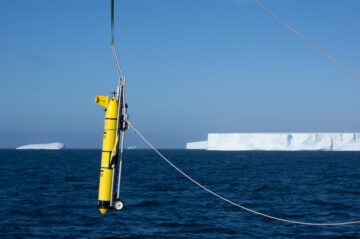
Iceberg A-68 calved from Larsen C Ice Shelf in July 2017. The iceberg remained in the sea ice of the western Weddell Sea for several years, but entered open water in early 2020, and moved rapidly toward South Georgia. Interest lies in the impact the iceberg will have on the physical environment and ecosystem of the region with freshwater fluxes affecting the surrounding water column via upwelling and downwelling at the iceberg edges under the prevailing winds. We have deployed two Slocum gliders to obtain observations and follow the movement, melting, and breakup, of the iceberg/s for around 3-4 months.
SO-CHIC (Southern Ocean Carbon and Heat Impact on Climate).
The overall objective of SO-CHIC is to understand and quantify variability of heat and carbon budgets in the Southern Ocean through an investigation of the key processes controlling exchanges between the atmosphere, ocean and sea ice using a combination of observational and modelling approaches, with the aim to unlock these key processes which represent the main limitation of the current generation of climate models. The project involves 16 partners across 10 countries over 4 years. I will be drawing understanding of ocean mixed-layer dynamics in the Weddell Sea using a variety of observational platforms, not least of which is a Slocum/Teledyne Turbulence glider.
Scientists have collected measurements close to a giant iceberg, giving an unprecedented window into the impact of meltwater on the surrounding Southern Ocean and ecosystem.