Air unit awarded prestigious aviation award
The British Antarctic Survey Air Unit have been awarded the Johnston Memorial Trophy for 2017 by The Honourable Company of Air Pilots. This is a considerable acknowledgement of the regard held […]

Head of Aircraft Engineering – British Antarctic Survey
(Twin Otter/Dash 7) 2010 – Present
Engineering Manager – TNT Airways
(Airbus A300/BAe146 Fleet) March 2009 – March 2010
Engineering Superintendent – TNT Airways
(Airbus A300/BAe146 Fleet) May 2008 – March 2009
Fleet Development Engineer – TNT Airways
(Airbus A300/BAe146 Fleet) June 2007 – June 2008 (1 year 1 month)
Boeing Fleet Engineer – SR Technics
(easyJet 737 Fleet/Gulf Air 767 Fleet/Private 747) 2005 – 2007 (2 years)
Technical Services Engineer – KLM uk engineering (ATR/Fokker/BAe146/Boeing 737) June 1990 – June 2005 (15 years 1 month)
Aircraft Mechanic – Airframe – Royal Air Force
(Sepecat Jaguar) August 1985 – June 1991 (5 years 11 months)
The British Antarctic Survey Air Unit have been awarded the Johnston Memorial Trophy for 2017 by The Honourable Company of Air Pilots. This is a considerable acknowledgement of the regard held […]
With its runway Rothera Research Station is the polar operations hub that supports British Antarctic Survey’s airborne capability
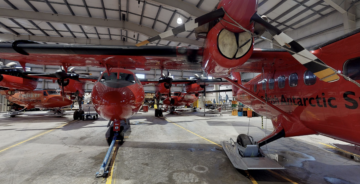
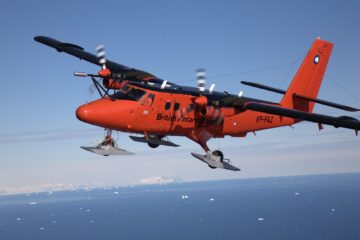
The Twin Otter is a high-wing, twin-engine, turbo-prop aircraft. They are used all over the world and are known for their rugged construction, reliability and short take-off and landing performance.

‘Airworthiness’ is the status of an aircraft, engine, propeller or aircraft part when it conforms to its approved design, is in a condition that ensures safe operation, and assures the ability of an aircraft or other airborne equipment or system to be operated in flight and on the ground without significant hazard to aircrew, ground crew, passengers or to third parties, it is a technical attribute of materiel throughout its lifecycle, and is a legal obligation of an aircraft operator to fulfil.
This role enables BAS to operate the fleet of five aircraft by ability for BAS to hold and maintain regulatory approved continued airworthiness management of its aircraft fleet. Controls and directs aircraft engineering activities including maintenance and modifications on the aircraft fleet. Liaises closely with airworthiness authority and maintenance organisations to maintain credibility of BAS as a safe and compliant entity and to provide safe and reliable scientific research and logistical platforms.
Holders of this position are required to be acceptable to the Regulator and formally approved as Continuing Airworthiness Management Organisation (CAMO) Technical Coordinator post holders, being usually former or current Licensed Aircraft Engineers additionally highly experienced and time-served in aviation engineering generally, and the CAMO function specifically.