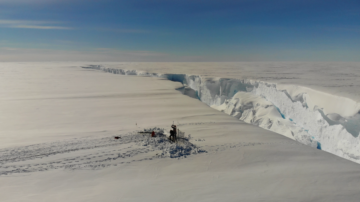
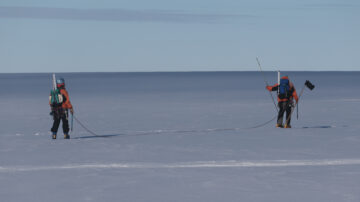
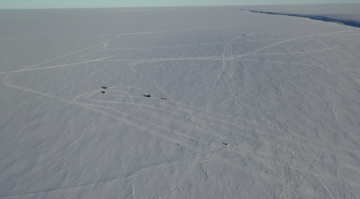
Ice Fracture Geophysicist as part of the RIFT-TIP project. Using multiple geophysical methods to constrain fracture properties on the Brunt Ice Shelf (including seismic, GPR, DAS, GPS, ApRES and Ice cores).
Research interests
Seismology (passive and active)
Internal structure of ice
Ice core fracture mechanics
Booth, A., Agnew, R., Pretorius, A., Pearce, E., Cameron, E., Hehlen, M., Karplus, M., May, D., Nakata, N., Seldon, Y., Summers, P., Tulaczyk, S., & Young, T. (2025). Passive- and active-source seismic data recorded with Distributed Acoustic Sensing on Eastwind Glacier, Antarctica, February 2024 (Version 1.0) [Data set]. NERC EDS UK Polar Data Centre. https://doi.org/10.5285/23dbd529-3a57-4933-bb9d-16ee1c85fda0
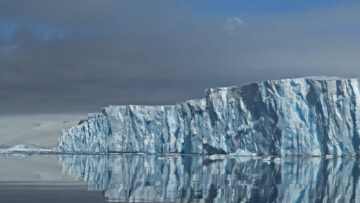
RIFT-TIP is investigating iceberg calving on the Brunt Ice Shelf. It uses field monitoring, lab testing, and modelling to predict when icebergs will form.
The International Thwaites Glacier Collaboration unites global scientists to study Antarctica’s most vulnerable glacier, predict sea-level rise, and inform climate action worldwide.
Understanding what is going on inside an ice shelf is important for many reasons. But mostly, it allows us to better understand their contribution to sea level rise, and to […]