
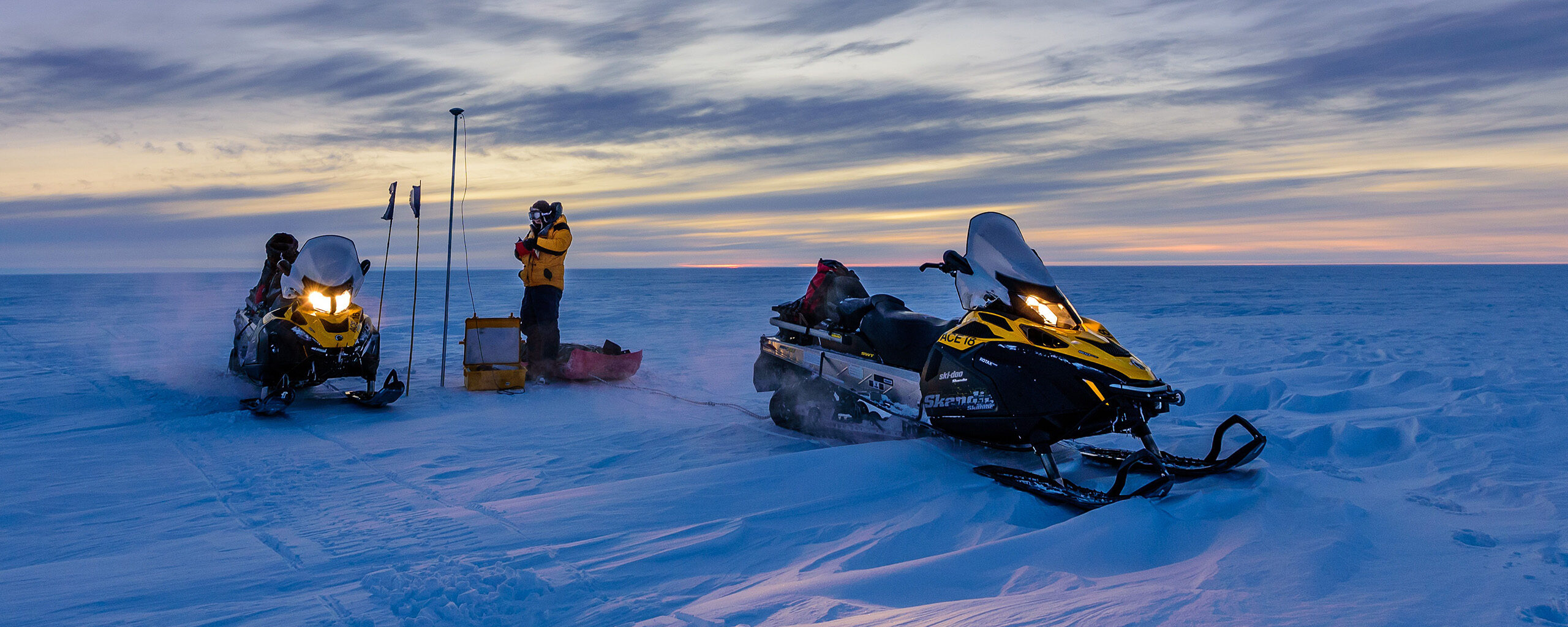
Life in a British Antarctic Survey research station can be relatively comfortable, with a chef, doctor and recreation facilities to hand. Whereas field work can be harsh.
What’s it like working in the deep field?
Field parties may camp outside the stations up to 100 days in an Antarctic summer.
The weather dictates how much work is accomplished. The most demanding conditions are high winds or whiteouts, where a blanket of fog is accompanied by rain or snow.
Our researchers and field guides are trained and equipped to camp on the ice where temperatures reach as low as -60°C and winds blow at up to 100 mph.
Field parties may work around the clock to compensate for time spent lying up in poor weather. We use pyramid tents specially designed to withstand high winds, a butyl ground sheet, inflatable airbed and a sheepskin to insulate them from the ground, and high-quality down sleeping bags.
Clothing
Polar clothing must:
- keep the body warm, especially fingers and toes
- allow perspiration to disperse
- allow free movement
- be comfortable
- protect the wearer from dangers such as crushing and cold injuries
Several lightweight layers are usually better than one or two thick, heavy ones. The number of layers can be adjusted according to temperature and the wearer’s activity.
We have a good understanding of how the human body responds to cold, and of the thermal properties of materials. We choose clothes made from a range of manufactured and natural fabrics. Our polar clothing continues to evolve as technology advances.
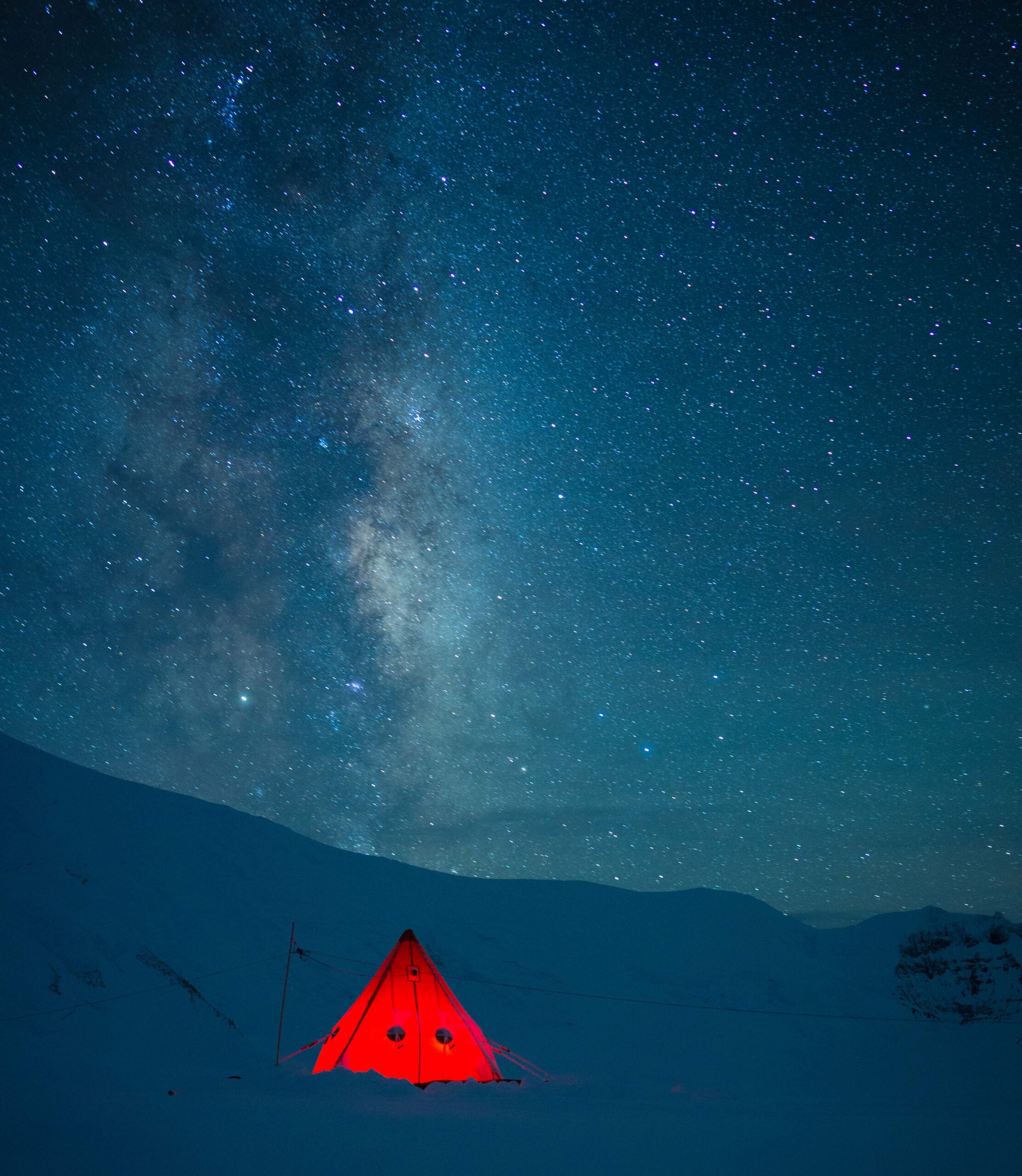
Pyramid tent under the Milky Way during a winter trip. Mount Bouvier Camp, Adelaide Island. (Credit: Neil Brown)
Food and water
The larger stations have professional chefs, but everyone is expected to help with the washing and clearing up. At smaller stations people take turns to cook.
Deliveries of fresh food are at best every few weeks over summer at Rothera. There are no opportunities to deliver fresh food in winter.
For remote field sites, rations are light and quick to prepare to save fuel. Standard ration boxes provide a balanced diet of around 3500 kilocalories a day for each person for 20 days. Rations can be stretched during lie-ups in bad weather, or when the temperature rises.
Water
Rothera has a desalination plant which removes salt from seawater making it safe to drink and use around station. Inland and smaller stations and remote field sites melt water from the surrounding snow.
Managing waste and biosecurity
We routinely remove hazardous materials and rubbish generated by our research and operations to prevent polluting the pristine Antarctic environment.
We also take biosecurity very seriously , ensuring no non-native species of plants and animals – even insects – are introduced to the Antarctic.
Read about our environmental strategy.
Health
Everyone who works at our stations undergoes a medical fitness assessment. The nearest hospitals are far away in the Falkland Islands and Chile. Stations are completely cut off in winter.
Larger stations have a fully equipped doctor’s and dentist’s surgery and operating theatre. People in the smaller stations or field sites are trained in first aid.
BAS’s medical assessment and care is supported by the British Antarctic Survey Medical Unit (BASMU) based at University Hospitals Plymouth NHS Trust. BASMU also employs the doctors for ships and stations.
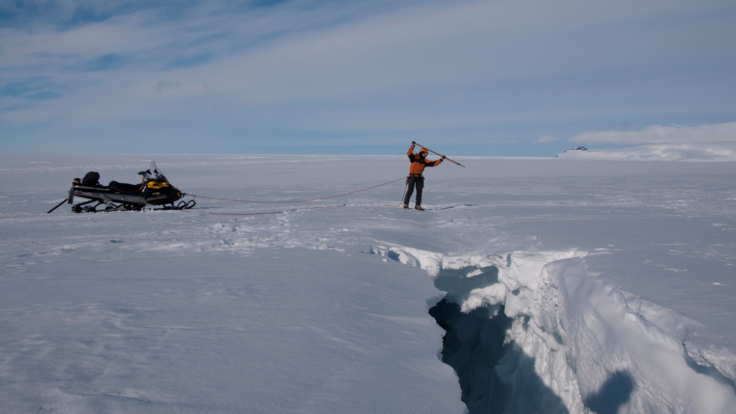
An ever-present hazard whilst working in the field, crevasses can be found anywhere in Antarctica. (Credit:: Iain Rudkin)
IT communications and networks
In Antarctica communications can be a matter of life and death. New satellite technology means all stations and ships now have high-speed connectivity to the outside world. Starlink provides reliable broadband internet and telephone access, with OneWeb also available at Rothera station, allowing staff in Antarctica and aboard RRS Sir David Attenborough to stay connected and use all the same technologies they have back at home.
Radios and portable satellite phones provide communication with field parties, ships and aircraft. But any system can be disrupted by the weather or atmospheric phenomena.
Leading polar expeditions
Being a field guide is one of the most highly skilled and varied jobs in Antarctica. Polar field guides Ed Luke and Matthew Shepherd talk about life on the ice and extreme camping in the Iceworld podcast.