
A new study concludes that warm ocean water was the primary driver of major West Antarctic Ice Sheet retreat since the end of the last ice age 18,000 years ago. This finding reinforces concern about ongoing and future ice loss driven by today’s changing climate.
The research, published this week (Monday 2 March) in the journal Nature Communications, provides the first detailed, long-term record of ocean bottom-water temperatures on the Amundsen Sea continental shelf. This is a critical region where warm deep water eats away at the base of the West Antarctic Ice Sheet.
The findings reveal that the ice sheet only retreated significantly when warm ocean water was present, and largely stabilised once ocean temperatures cooled, even as atmospheric temperatures over West Antarctica continued to rise for thousands of years after.
Dr James Smith is a sedimentologist at BAS and co-lead author on the paper. He said:
“What this record tells us is that when the ocean warms, the ice retreats and when it cools, the ice stabilises. The atmosphere might have contributed to retreat but played a secondary role. That’s a really important finding for understanding what’s happening today.”
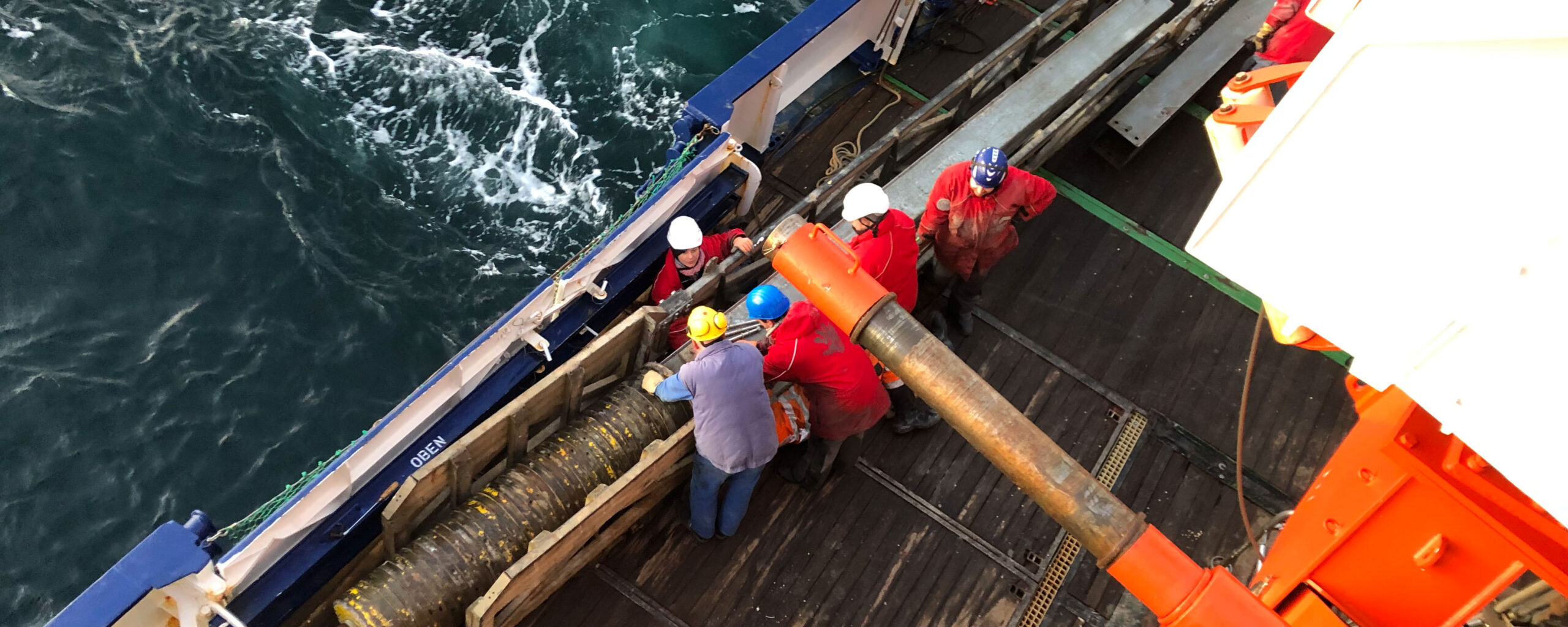
Researchers analysed the chemistry of tiny, fossilised shells called foraminifera (Trifarina angulosa) preserved in seafloor sediments, collected from some of the most challenging and remote waters on Earth. In doing so, they were able to reconstruct ocean temperatures going back 18,000 years to the end of the Last Glacial Maximum.
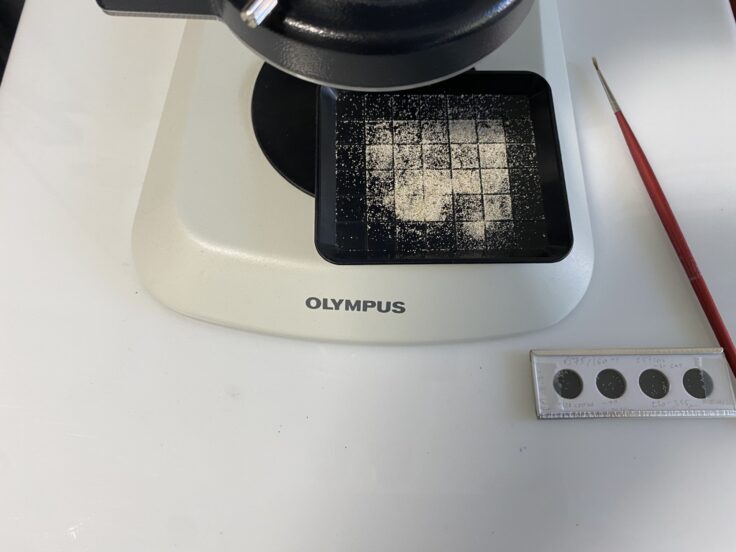
Their data show that warm Circumpolar Deep Water was present on the Amundsen Sea continental shelf 18,000 – 10,000 years ago. This period coincides precisely with the ice sheet’s rapid retreat from the outer shelf edge to close to its present-day position. Around 10,000 years ago, ocean temperatures cooled and the ice sheet largely stabilised. There was no evidence of significant further retreat, despite continued atmospheric warming that peaked in a mid-Holocene thermal maximum around 6,000 – 3,000 years ago.
Why this matters now
Since the middle of the last century, the West Antarctic Ice Sheet has been thinning at an accelerated rate. Some models suggest parts of it may already be in an irreversible retreat. Until now, this understanding has been built largely on observations from the last 30 years alone. This study provides an 18,000-year geological proof of concept, confirming that ocean-driven melting is not a short-term anomaly, and that it poses a serious threat to future Antarctic ice sheet stability and global sea levels.
The study also links past changes in ocean temperature to shifts in the Southern Hemisphere westerly winds, which control how much warm water reaches the ice sheet. Climate models consistently predict that these winds will move further south and intensify as the planet warms due to human activity. This means the delivery of warm water to the ice sheet is likely to increase, not decrease, over the coming century.
The scientific method
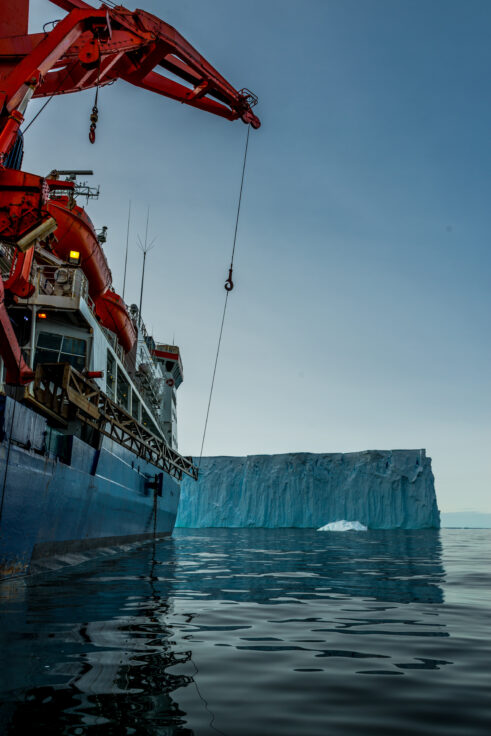
Generating this dataset was itself an extraordinary undertaking. The researchers used tiny calcareous shells and measured the ratios of magnesium to calcium within them using a mass spectrometer. Foraminifera incorporate more magnesium into their shells as water temperature rises. By measuring this ratio in the fossilised shells, scientists can reconstruct past ocean temperatures.
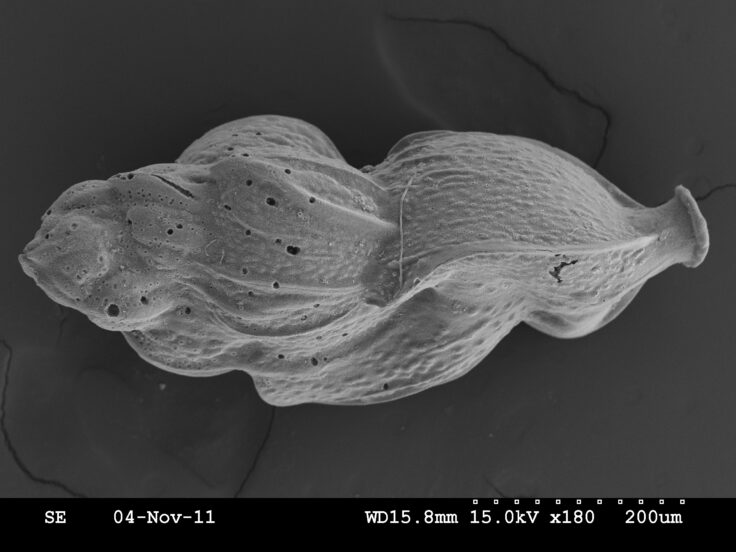
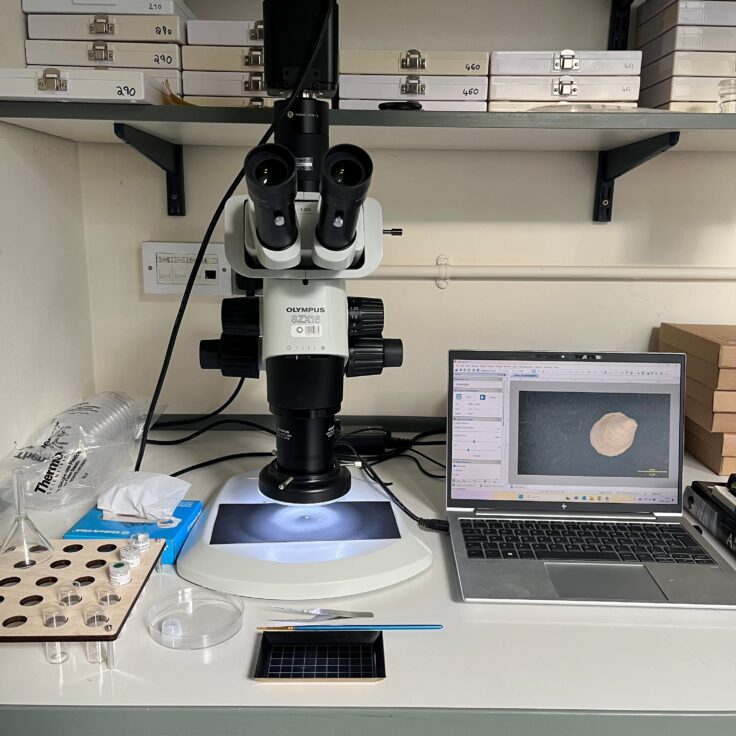
On the Antarctic continental shelf, these shells are exceptionally rare. The cold, carbon dioxide-rich bottom waters cause them to dissolve, and iceberg disturbance further damages sediment records. Dr Elaine Mawbey, the paper’s co-lead author, and was a geochemist at the British Antarctic Survey, spent several years looking at sediment core samples through a microscope to identify these tiny shells which are then crushed and chemically cleaned before they’re analysed.
Dr Mawbey said:
“We’ve literally recovered and analysed hundreds of sediment cores from the Amundsen Sea, and only a handful of them contained foraminifera. We collected cores from areas where the water was less than 800m deep because we knew these were more likely to contain the tiny fossils we needed.
From six cores, from five different sites, we picked-out over 3500 fossils. It was a painstaking process, but it allowed us to build a unique dataset – the first of its kind from this part of Antarctica.”
The Thwaites Glacier connection
The findings are particularly relevant to Thwaites Glacier – often referred to as the “Doomsday Glacier” which sits in the Amundsen Sea region and is one of the fastest-changing glaciers on Earth. Thwaites Glacier is already losing ice at an alarming rate, with warm ocean water melting it from below. Its eventual collapse could raise global sea levels by up to 65cms.
The new research suggests that the conditions driving Thwaites’ current retreat are not unprecedented, but mirror the ocean-driven dynamics that caused widespread ice loss across the region thousands of years ago. Importantly, those past changes were sustained over thousands of years, offering a worrying long-term context for what may lie ahead of ocean warming continues unchecked.
Ocean heat forced West Antarctic Ice Sheet retreat after the Last Glacial Maximum by Elaine Mawbey and James Smith et al is published today in Nature Communications.