
Understanding global climate change through new breakthroughs in Polar research
The latest findings from research on Antarctica’s rich marine life are presented this week at the American Association for the Advancement of Science (AAAS). Marine Biologist Huw Griffiths from British Antarctic Survey (BAS) is involved in a major international investigation into the distribution and abundance of Antarctica’s vast marine biodiversity — the Census of Antarctic Marine Life (CAML).
-
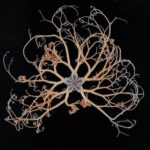
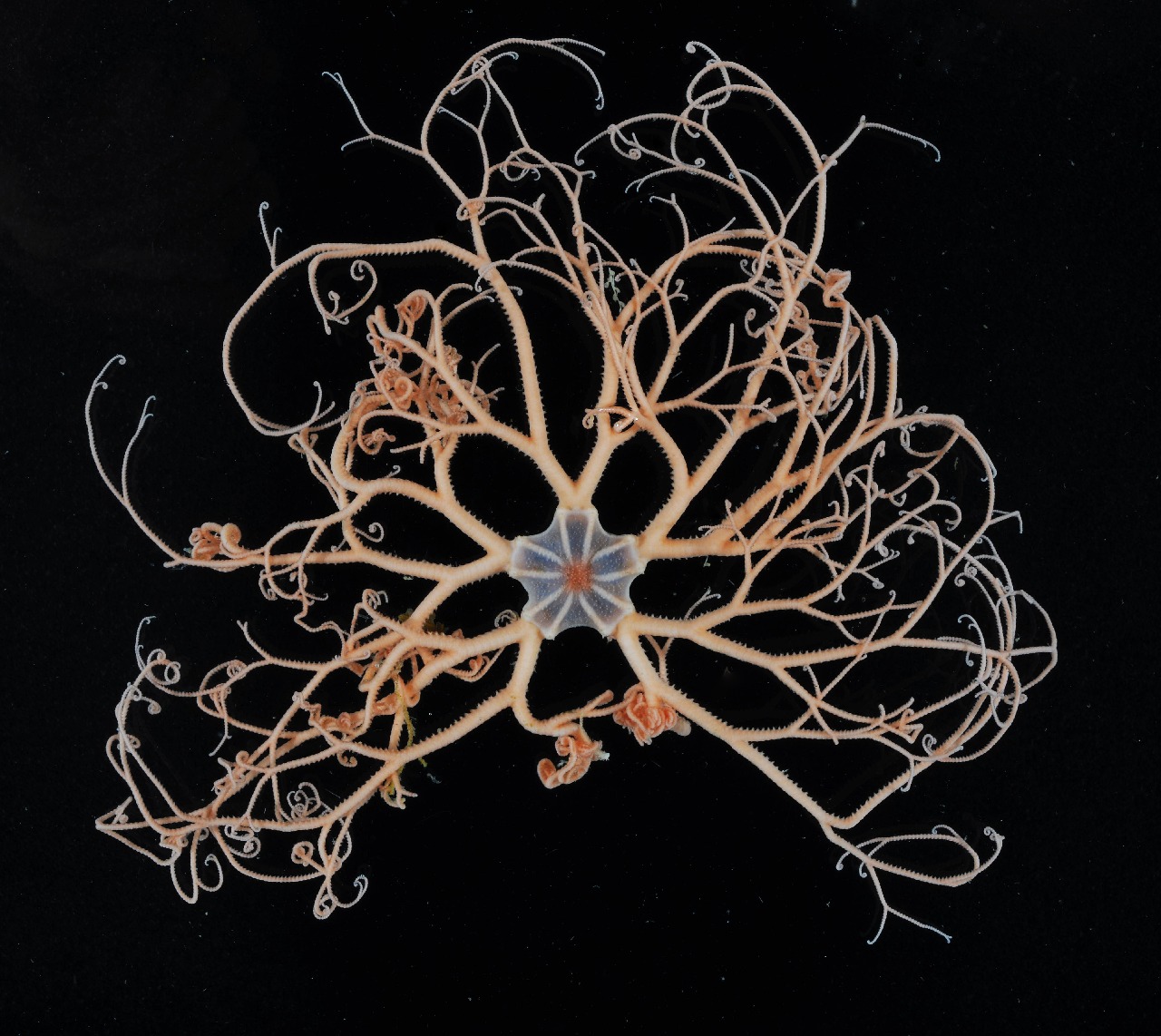
- Basket star Gorgonocephalus chilensis from 500 m depth on the Bellingshausen Sea continental shelf. This delicate multi-armed species was found attached to a fan coral. Images taken onboard RRS James Clark Ross cruise JR230 (benthic pelagic coupling cruise.
-
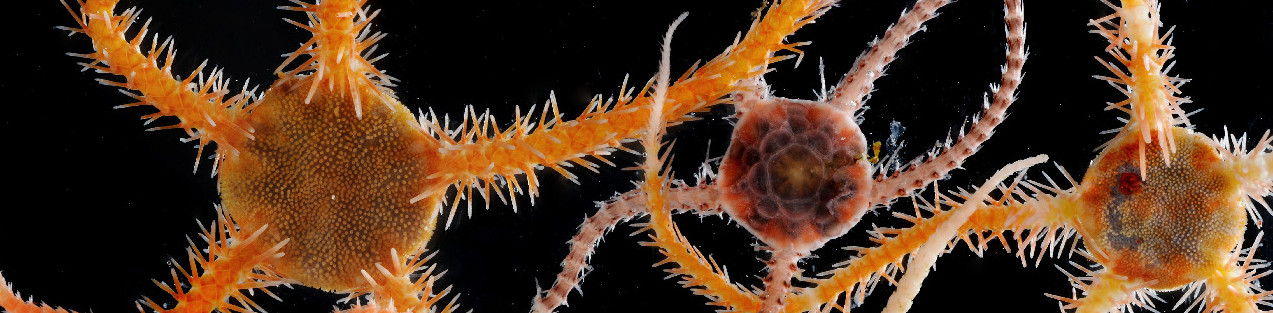
- The brittlestar Ophiacantha from 500 m depth on the Bellingshausen Sea continental shelf. Brittlestars are amongst the most mobile echinoderms with a novel catch-connective tissue arrangement in their arms. Brittlestars are very abundant on muddy seabeds from the shallows to the deep sea; video filmed by Remotely Operated submersible Vehicles (ROVs) or cameras mounted on trawls show brittlestars carpeting the seabed. Work on shallow brittlestars by SCUBA divers suggest they may be very sensitive to small rises in sea temperature. Images taken onboard RRS James Clark Ross cruise JR230 (benthic pelagic coupling cruise).
-

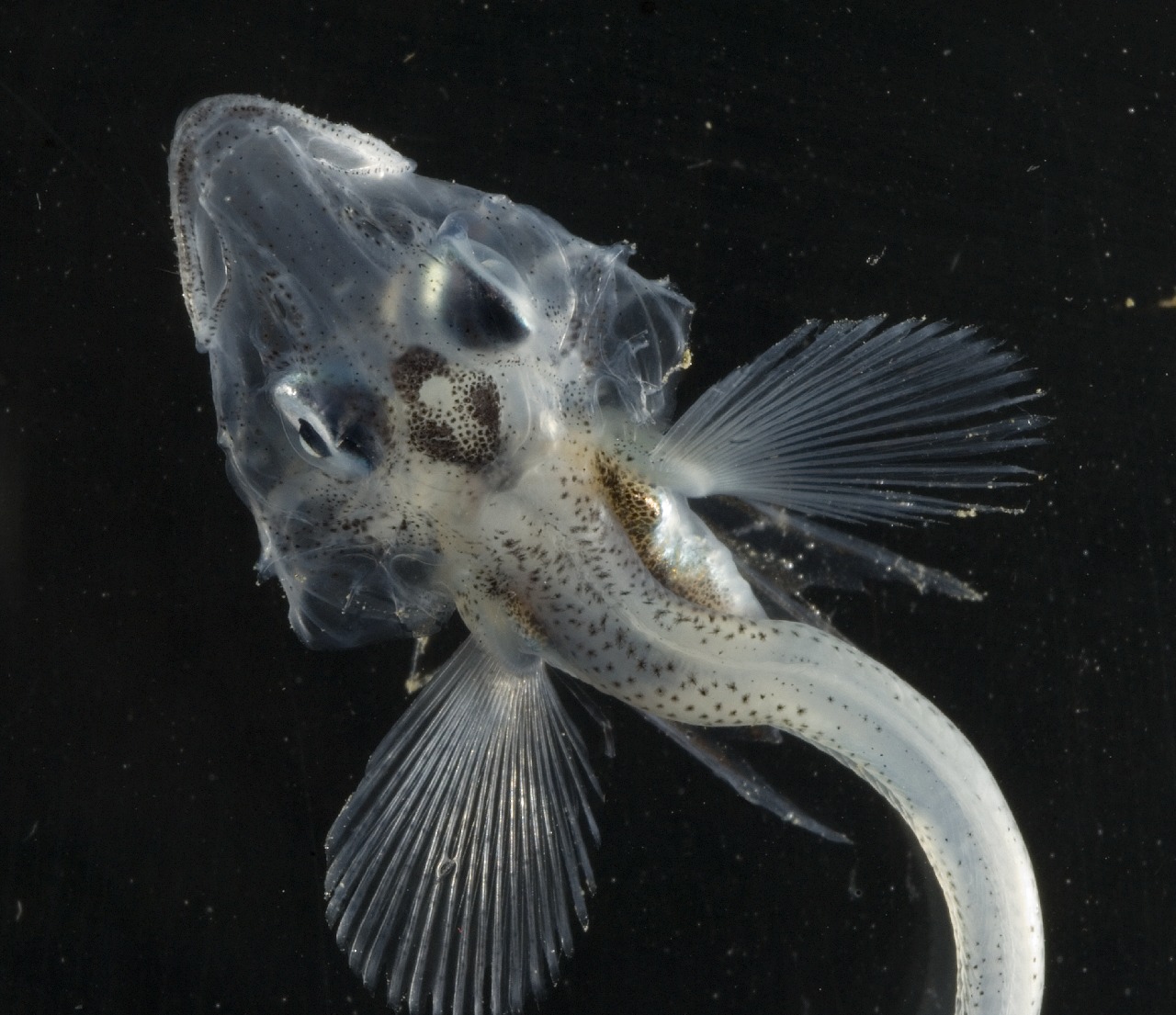
- Dorsal view of young icefish Chaenocephalus aceratus from 500 m depth on the Bellingshausen Sea continental shelf. These fish do not have any red blood cells and have glycerol (antifreeze) in their plasma. These species are occasionally seen in the shallows (40 m). Images taken onboard RRS James Clark Ross cruise JR230 (benthic pelagic coupling cruise).
-
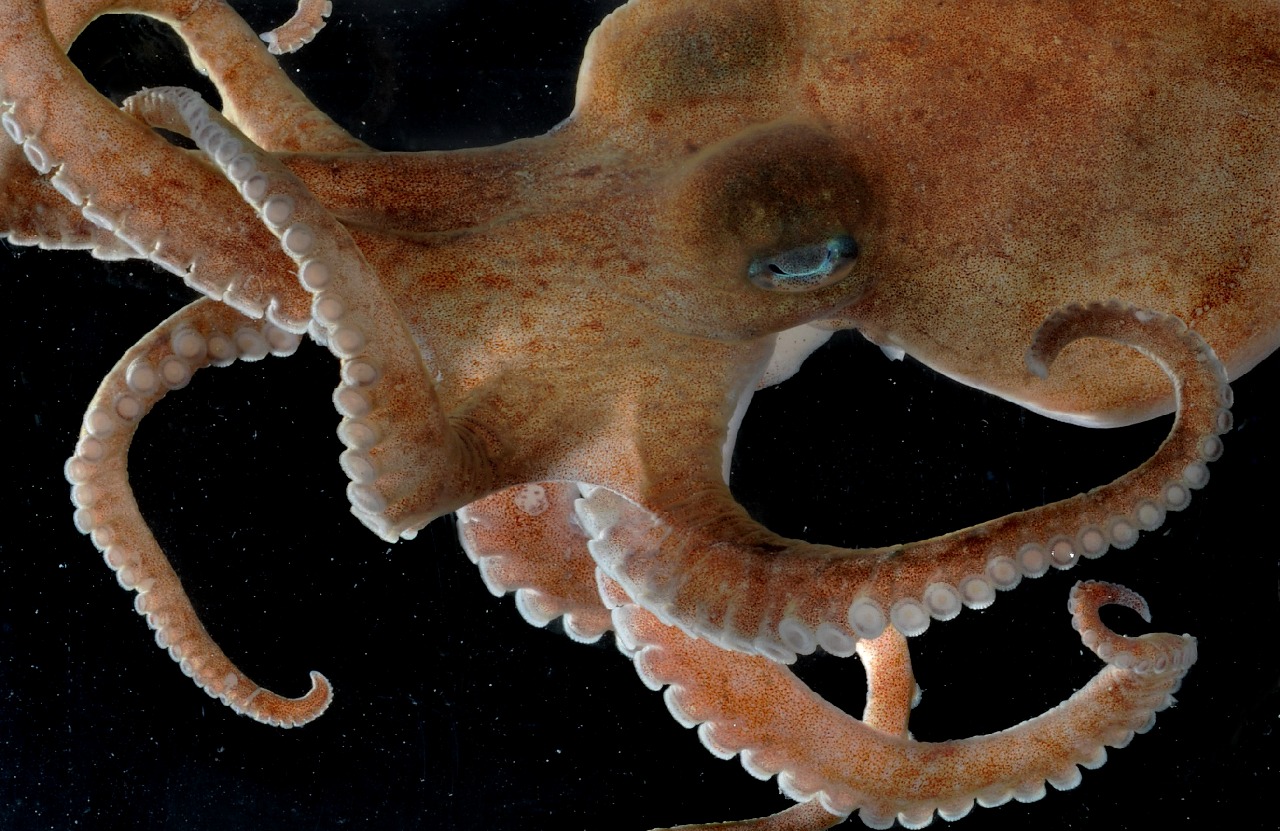
- Octopus, probably Pareledone species from 500 m depth on the Bellingshausen Sea continental shelf. Octopus are one of the more common megabanthic predators. Images taken onboard RRS James Clark Ross cruise JR230 (benthic pelagic coupling cruise).
-
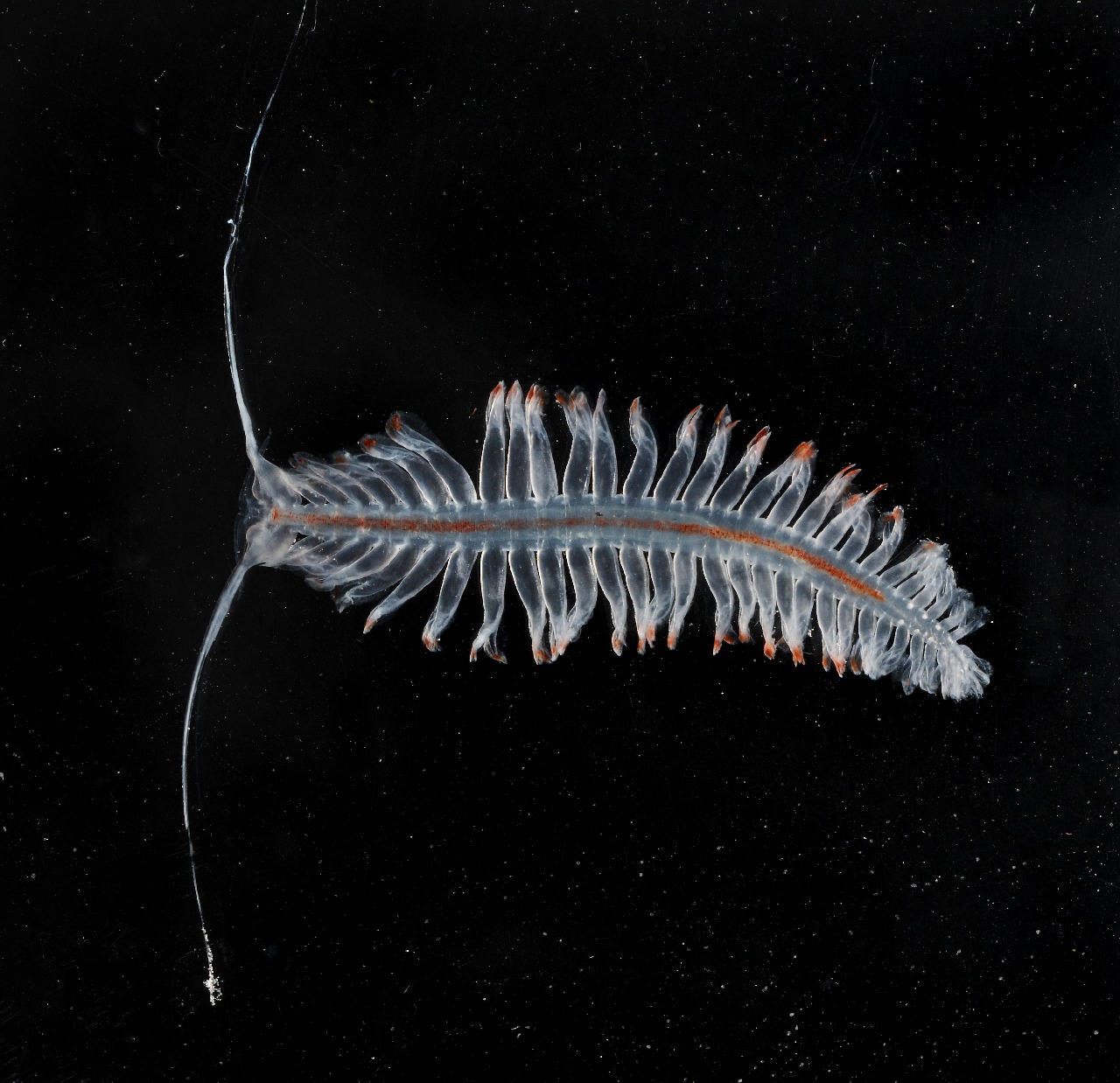
- A polychaete (Tomopteris sp) from the water column above the Bellingshausen Sea continental shelf. These worms swim with their wide fleshy parapodia (like paddles) and are widely found around Antarctica. Images taken onboard RRS James Clark Ross cruise JR230 (benthic pelagic coupling cruise).
Griffiths presents results from the census — which began in 2005 — and describes how the investigation provides the benchmark for future studies on how the extraordinary and diverse range of sea-floor creatures living in Antarctica’s chilly waters will respond to predicted environmental change.
More than 6,000 different species living on the sea-floor have been identified so far and more than half of these are unique to the icy continent. A combination of long-term monitoring studies, newly gathered information on the marine life distribution and global ocean warming models, enable the scientists to identify Antarctica’s marine ‘biodiversity hotspots’.
Griffiths describes how krill populations (the shrimp-like invertebrates eaten by penguins, whales and seals) are reducing as a result of a decrease in sea-ice cover. A much smaller crustacean (copepods) is dominating the area once occupied by them. This shifts the balance of the food web to favour predators, like jellyfish, that are not eaten by penguins and other Southern Ocean higher predators. Sea-ice reduction is also affecting penguins that breed on the ice.
Griffiths says,
“The Polar Regions are amongst the fastest warming places on Earth and predictions suggest that in the future we’ll see warming sea surface temperatures, rising ocean acidification and decreasing winter sea ice – all of which have a direct effect on marine life.
“Marine animals spent millions of years adapting to the freezing, stable conditions of the Antarctic waters and they are highly sensitive to change. This means that from the scientist’s perspective they are excellent indicators of environmental change. The polar oceans are rich in biodiversity. If species are unable to move or adapt to new conditions they could ultimately die out. The loss of any unique species is therefore a loss of global diversity.”
ENDS
Issued by the British Antarctic Survey Press Office:
Heather Martin, Tel: +44 (0)1223 221414; Mobile: 07740 822229; Email: hert@bas.ac.uk
Audrey Stevens, Tel: +44 (0)1223 221230; Email: auev@bas.ac.uk
Authors’ contact details:
Huw Griffiths, British Antarctic Survey, Tel: +44 (0)1223 221417; Email: hjg@bas.ac.uk
Notes for editors:
The Census of Antarctic Marine Life is a major International Polar Year (IPY) initiative and component of the Census of Marine Life.
An abstract of Huw Griffith’s presentation is available at ftp://ftp.nerc-bas.ac.uk/pub/photo/Huw-Griffiths-AAAS/
Stunning broadcast-quality footage and stills of Antarctic marine life are available from the BAS Press Office or at ftp://ftp.nerc-bas.ac.uk/pub/photo/Huw-Griffiths-AAAS/
British Antarctic Survey (BAS), a component of the Natural Environment Research Council, delivers world-leading interdisciplinary research in the Polar Regions. Its skilled science and support staff based in Cambridge, Antarctica and the Arctic, work together to deliver research that underpins a productive economy and contributes to a sustainable world. Its numerous national and international collaborations, leadership role in Antarctic affairs and excellent infrastructure help ensure that the UK maintains a world leading position. BAS has over 450 staff and operates five research stations, two Royal Research Ships and five aircraft in and around Antarctica.