
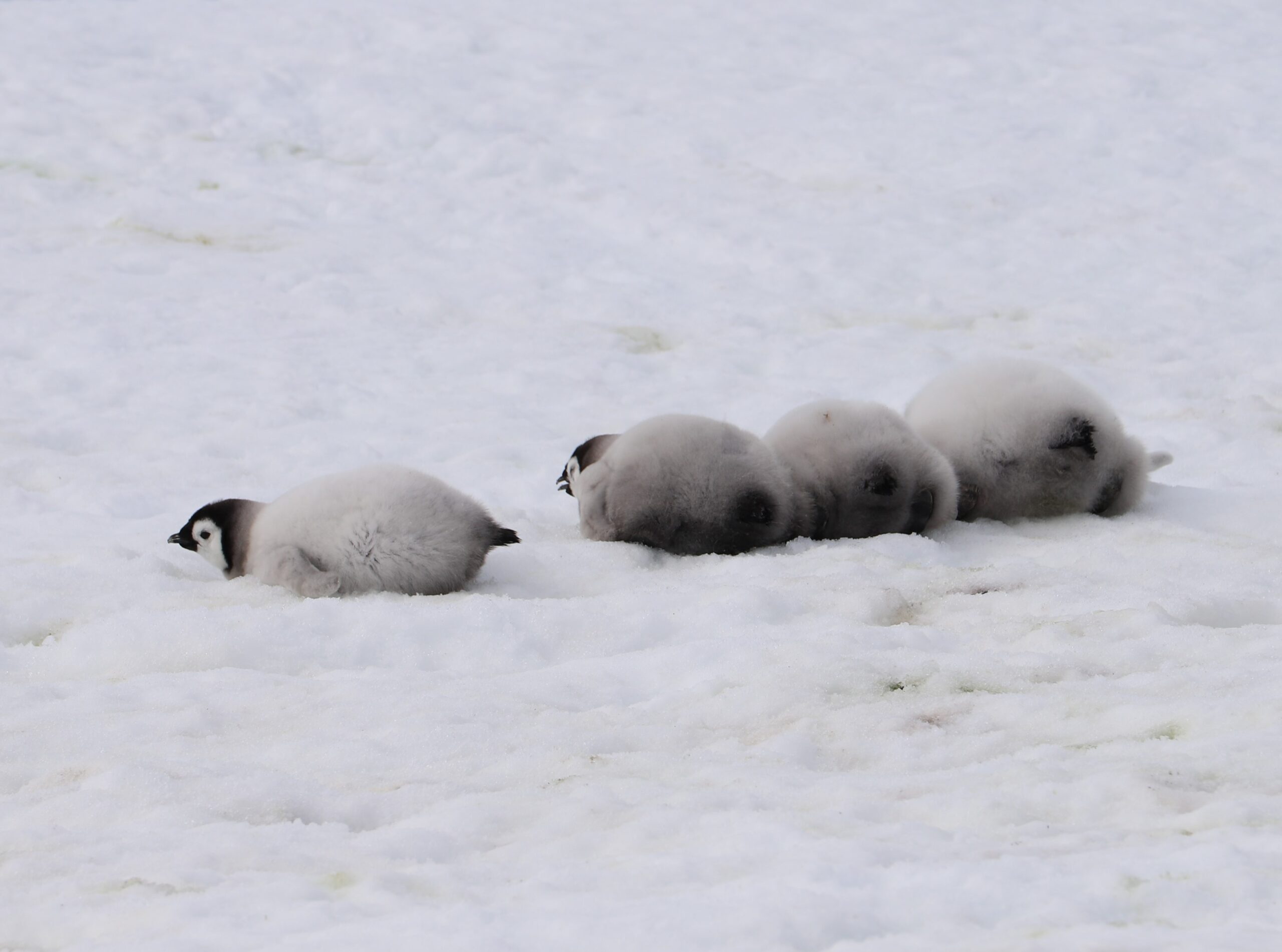
The emperor penguin and Antarctic fur seal are now both Endangered, according to The IUCN Red List of Threatened Species. Climate change in Antarctica is leading to changes in sea ice that are predicted to cause the emperor penguin population to halve by the 2080s, while reduced food availability has already driven a 50% reduction in the Antarctic fur seal population since 2000.
The emperor penguin (Aptenodytes forsteri) has moved from Near Threatened to Endangered on the IUCN Red List. Satellite images suggest that the population decline by 10% between 2009 and 2018 alone, equating to more than 20,000 adult penguins.
The primary driver is the early break-up and loss of sea ice. Between 2022 and 2024, Antarctic sea ice extent hit record lows and Antarctic fast ice also reduced dramatically. Emperor penguins require fast ice – sea ice that is attached to the coast – for breeding and during their annual moulting season. If the ice breaks up too early, the result can be deadly.
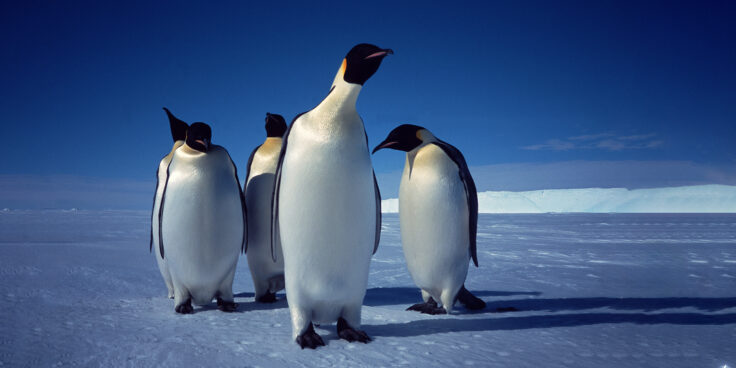
Emperor penguins also provide a window on the whole ecosystem. The sea ice supports not just penguins but seabirds and seals, and a myriad of life under the sea ice – from tiny krill to giant whales. Most of these aren’t studied on an annual basis, so emperors, which can be observed using satellite remote sensing, can be used as an indicator species, giving us a hint as to what might be happening across the ecosystem.
Dr Peter Fretwell, a mapping specialist who studies emperor penguins using satellite images at British Antarctic Survey said:
“It’s timely to see the IUCN upgrade the status of the emperor penguin, but obviously very sad that this magnificent creature is facing such a bleak future. Although most of them will never see a human, it is our actions that are driving them towards extinction.”
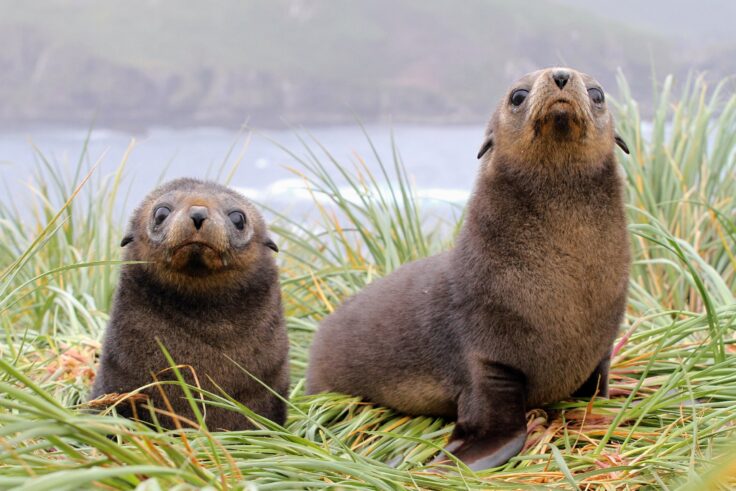
The Antarctic fur seal (Arctocephalus gazella) has moved from Least Concern to Endangered on the IUCN Red List, as its population has decreased by more than 50% from more than 2 million mature seals in 1999, to 944,000 in 2025. This ongoing decline is due to climate change, as rising ocean temperatures and shrinking sea ice are pushing krill to greater ocean depths in search of colder water, reducing availability of food for seals.
Dr Jaume Forcada has been studying fur seals at British Antarctic Survey for more than 20 years. He said:
“Antarctic fur seals have lost nearly half their population in just three generations – a dramatic decline driven by the warming and unpredictable oceans that are reducing their food supply. Unless we address the root causes of climate change, we risk losing even more.”
The southern elephant seal (Mirounga leonina) has also moved from Least Concern to Vulnerable, following significant declines caused by Highly Pathogenic Avian Influenza (HPAI). A study led by British Antarctic Survey in 2025 revealed a 47% decline in breeding female elephant seals at the sub-Antarctic island of South Georgia following an outbreak.
Southern elephant seals are one of the most iconic species in Antarctica, with adults capable of diving to depths of over 1,500 metres and travelling thousands of kilometres to feed, across the entire Southern Ocean. The remote islands of South Georgia have been home to a stable population for decades.
Read the original story on the IUCN website: Emperor penguin and Antarctic fur seal now Endangered due to climate change – IUCN Red List