
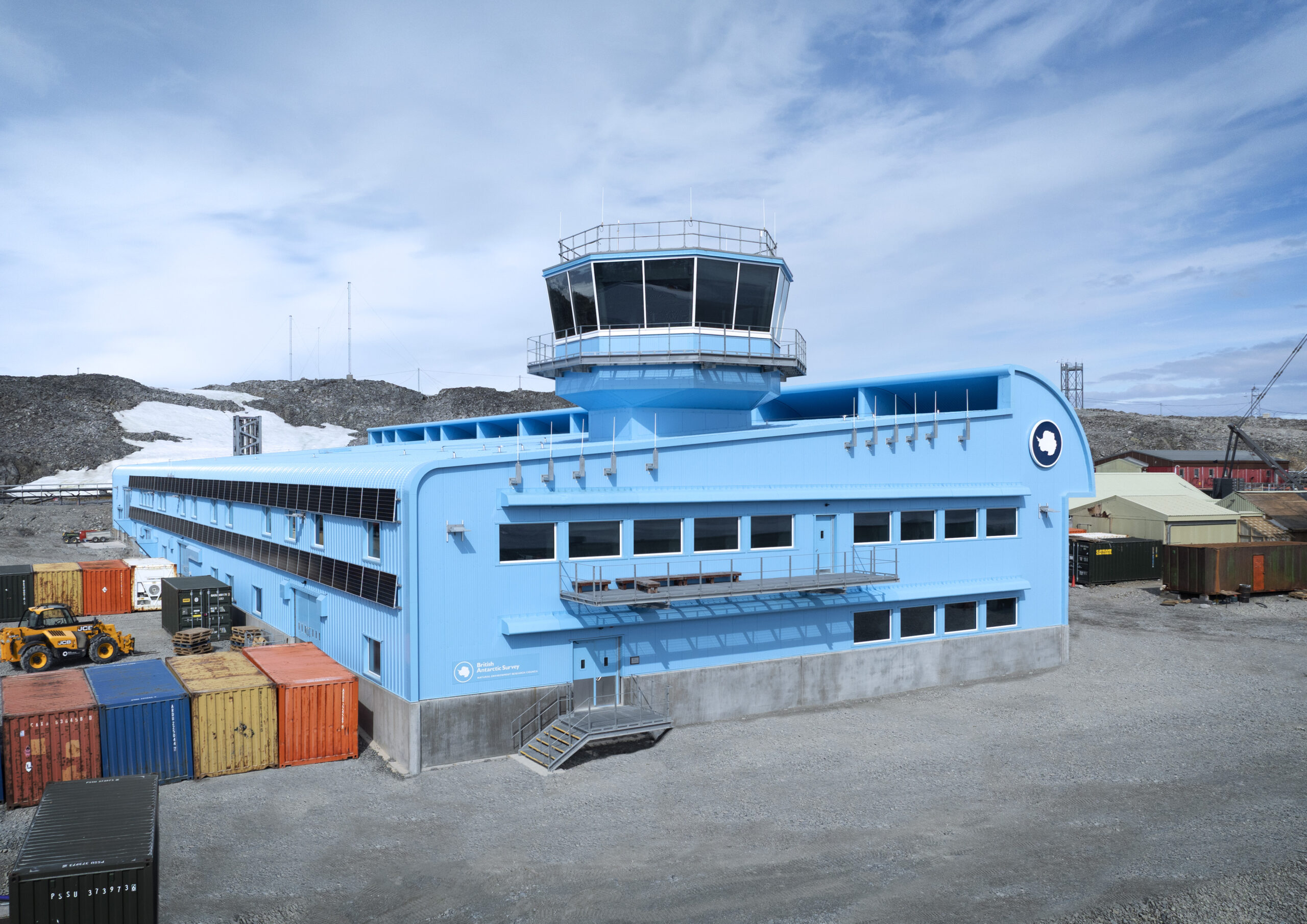
Welcome to our latest update on modernising Rothera!
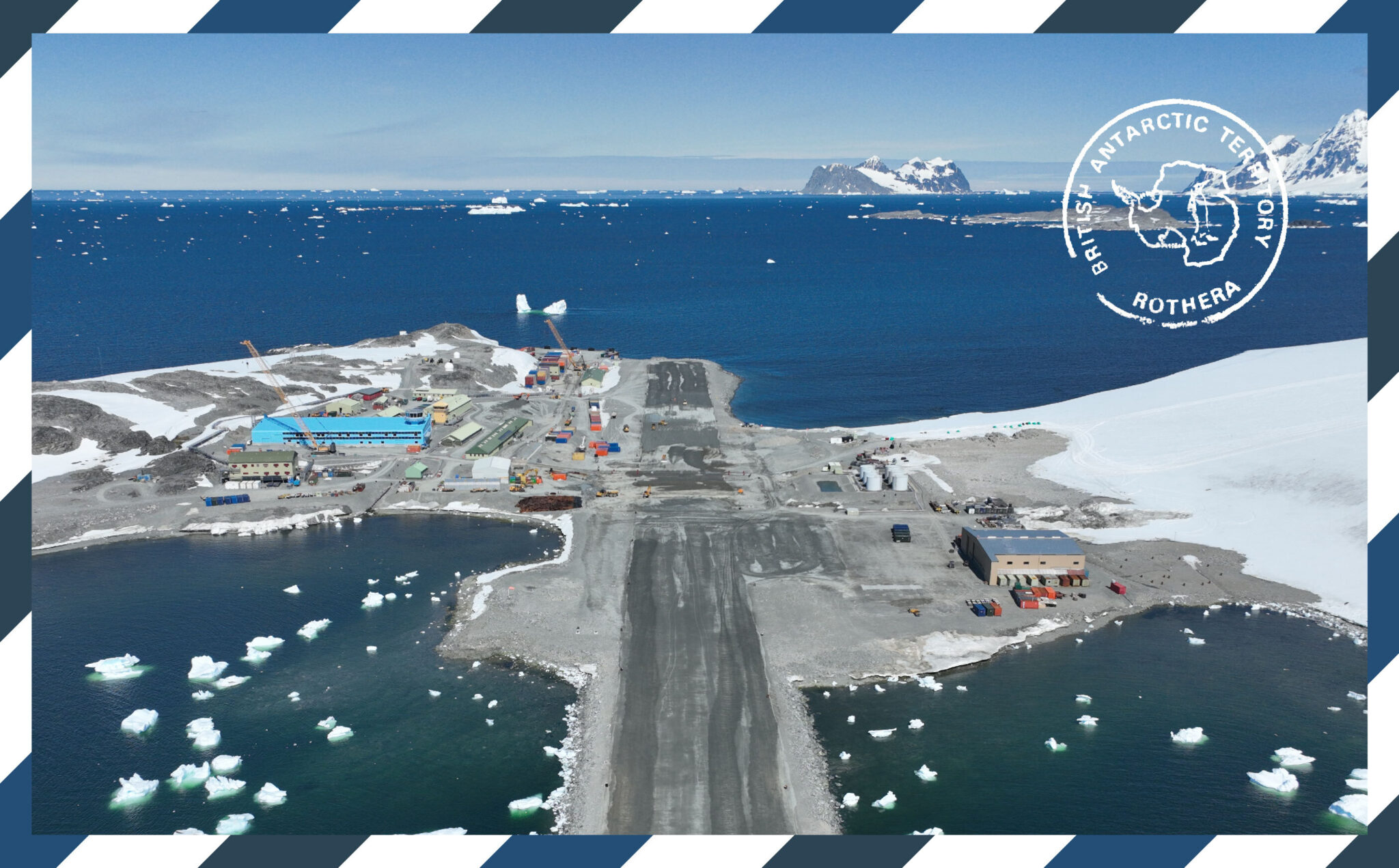
Work continues at pace at Rothera Research Station, Antarctica. More areas of the Discovery building, our new scientific support and operations facility, are now handed over to us as we remove some of the legacy buildings. We’ve got use of a multi-purpose area, showers and sauna, vehicles workshop mezzanine area and fabrication workshop. We’re soon to have the open plan office, power washroom and training platform. The training platform will help our field teams to prepare for working in the deep field.
Deconstruction progress
Excellent progress has been made on removing the remaining legacy building – the old vehicles garage. This is a milestone for this season’s work and achieved because of rigorous planning and hard work from our demo and logistics teams.
There are six older buildings down, including the old operations tower, Reverse Osmosis and plant rooms; and link corridor to the old vehicles garage. The appearance of the central area of the station has dramatically changed.
Did you know that most Antarctic stations have a Reverse Osmosis (RO) plant- a system that turns seawater into clean drinking water by pushing it through special filters.
The old generator shed has been removed, leaving only some generators, redundant cabling and the fuel tank. They will be safely loaded onto containers. The foundation slabs for the old generator shed and the vehicle garage will remain for future use.
Container consolidation
Speaking of containers… container consolidation is when we put multiple shipments in smaller packages into a larger container. This frees up empties for the deconstruction waste as we modernise our station.
Our construction team members have been busy preparing containers, ready to be taken away by cargo ship.
We’ve got approximately 200 containers inspected, logged and moved ready for loading. Many of the containers are now on or close to the wharf. We’ll load a total of 350 containers by the end of the month.
Modernising the station
The Bonner Laboratory at Rothera is a state-of-the-art research, aquarium, and dive facility that supports year round terrestrial and marine biological science. New services are installed to the new block foundations and the remaining redundant services have been removed. New foundation blocks have been completed on the South side.
The mechanical and electrical subcontractor team have done a fantastic job of completing jobs around the site wide network.
We’ve been working on the Combined Heat and Power (CHP) generator system with testing of the flow rate temperatures and heat recovery to ensure we have a stable operating system that can recover heat, enabling us to reach anticipated carbon emission reductions.
The CHP system generates electricity and captures the waste heat produced during that process so it can be efficiently reused to heat buildings or water.
Weather and weatherproofing
The weather has not been great lately – always a challenge in Antarctica! The weatherproofing team is making steady progress on the Discovery building’s roof and operations tower. Working in the polar regions, we aim to make progress in between the poor weather spells. We’re hoping to complete the weatherproofing on the operations tower and paint the previously weatherproofed sections of the roof.
The Discovery building
The Discovery building now has timber handrails on the science balcony, operations tower and on one of the entrances. We’ve also been busy painting and decorating more of the inside (mainly the staircase area by the operations tower) and plastering works in our central store.
The bright colours for the interior were specially chosen for living in the Antarctic environment. Read this interview with Hugh Broughton, the building’s architect, for more insight into colour theory.
The building’s internal doors needed remedial joinery work. This work has helped to smoothly handover the multipurpose area and sauna.
We’ve also competed the firestopping works (sealing gaps in walls, floors or ceilings so that fire or smoke cannot spread through) for the building’s ventilation.
Take a short video tour inside the Discovery Building.
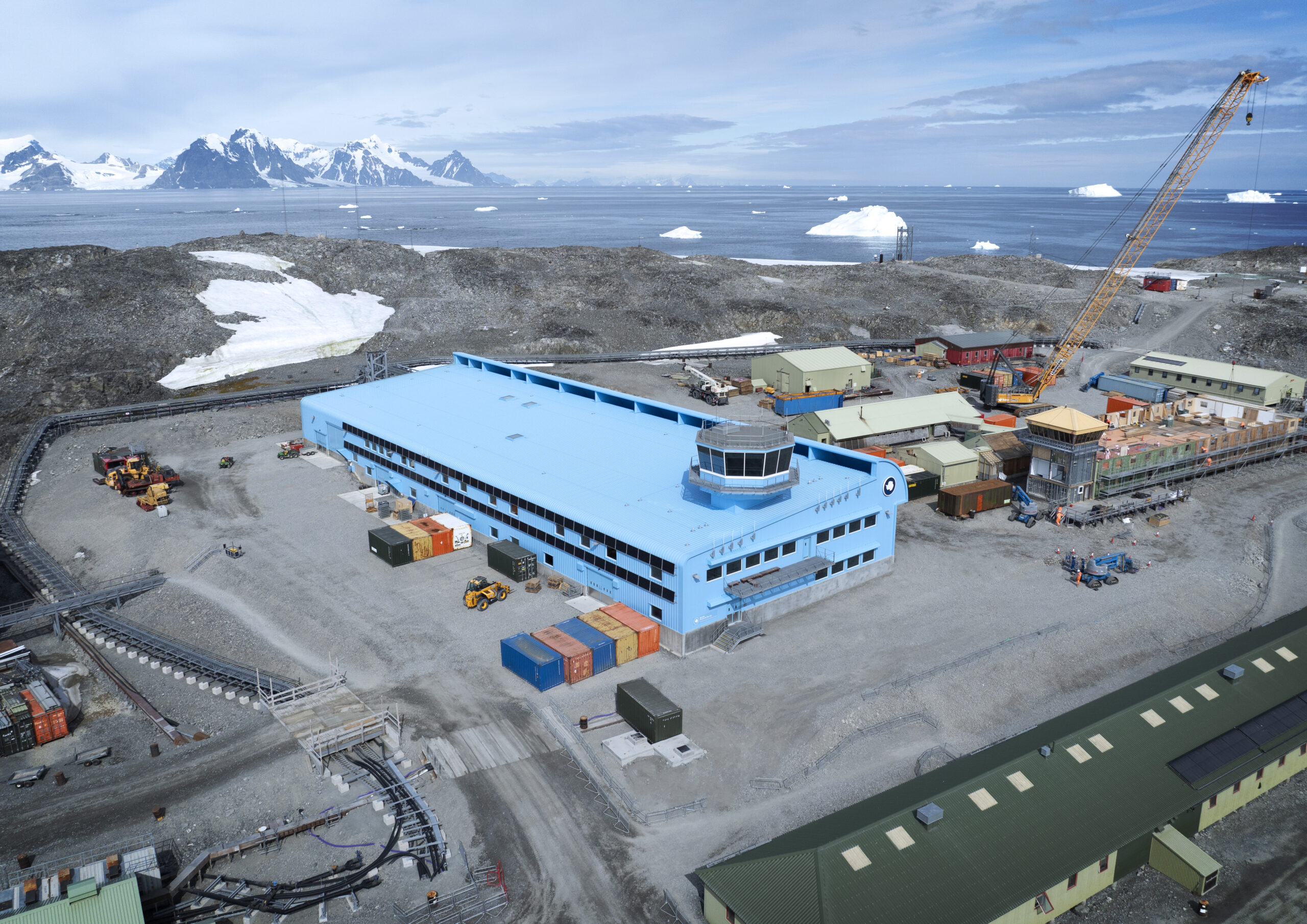
Science at Rothera Research Station
Rothera Research Station supports an extraordinary range of science that stretches from the deep ocean to the edge of space. We’ve been gathering long-term data on everything from upper atmospheric winds and ozone levels to cloud formation, snow and ice changes and space weather..
The Rothera Time Series (RaTS) is one of the most important and longest running ocean monitoring programmes in the Southern Ocean. Established in 1997, RaTS captures changes in the physical, chemical and biological state of the coastal ocean near Ryder Bay at Rothera.
The POLOMINTS project (POLar Ocean Mixing by INternal Tsunamis) is transforming our understanding of how underwater tsunamis (triggered by calving glaciers) mix the waters around Antarctica. Near Rothera, four fixed camera systems will be installed to monitor the Sheldon Glacier in real time, helping researchers rapidly capture data during unpredictable calving events. This work is essential for improving predictions of future ocean change and its global consequences. Over the last couple of months oceanographer Alex Brearley has been deploying a Slocum glider (underwater robot) around Sheldon Glacier to capture how the ice creates this underwater mixing.
Together, this helps our scientists understand how Antarctica is changing and how those changes affect the planet. Modernising Rothera Research Station ensures this vital science can continue with greater efficiency, resilience and year-round capability.
What’s next?
Our teams are ticking off the miscellaneous items on the to-do list for the Discovery building as more areas are handed over.
There’s still work to be done in loading the deconstruction waste into containers, particularly the concrete foundations from some of the older buildings.
Thinking ahead to the work being planned for the next summer season, it’s vital that we prepare for the Antarctic winter conditions. We’ll be installing insulation to form a weatherproof enclosure on our runway lighting at the end of the flying season (March).
We’re making good progress in modernising Rothera Research Station and would like to thank everyone involved, especially those living and working there.
The next modernisation progress update will be published on 27 March 2026.