
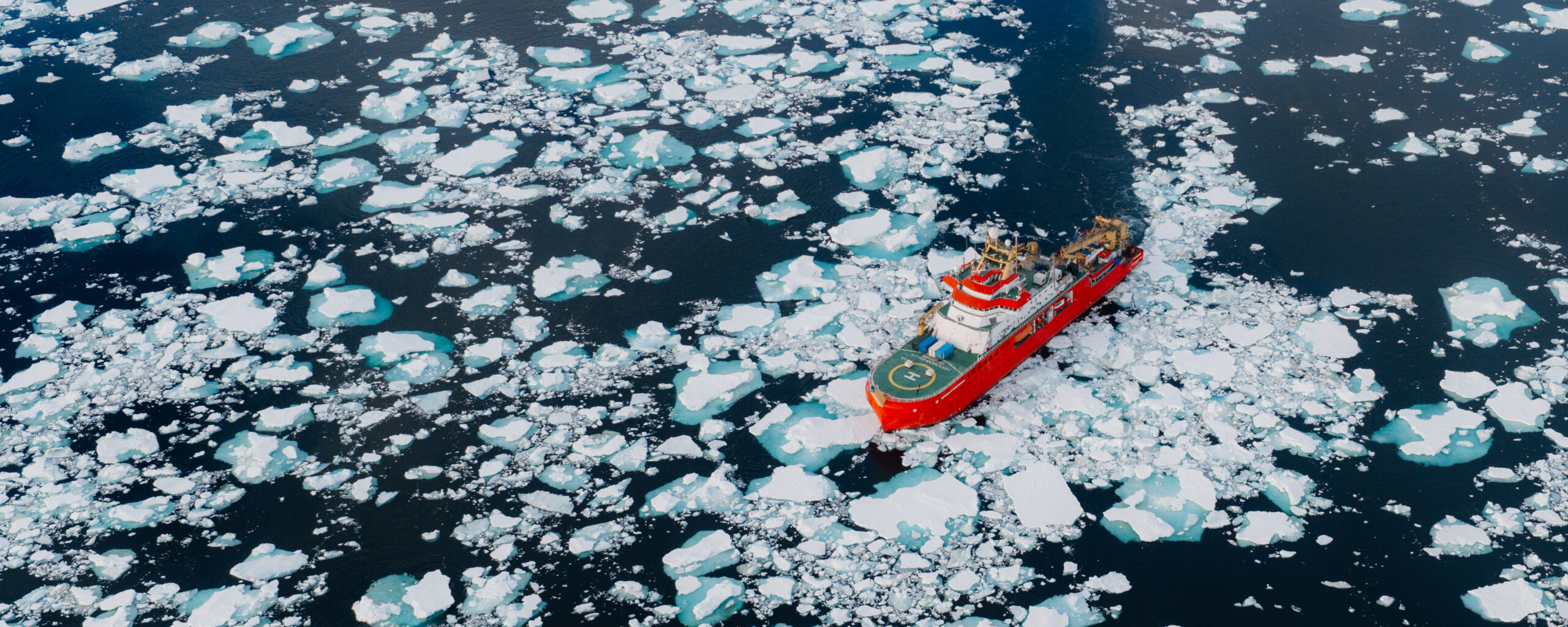
Specialist divers will be entering the icy waters of the Weddell Sea, Antarctica this festive season (22-29 December) as part of a groundbreaking mission to test RRS Sir David Attenborough’s (SDA) ability to navigate through challenging sea ice conditions.
Entering the water via a tethered cage lowered directly over the ship’s stern, the divers will deploy twice a day beneath the UK’s state-of-the-art polar research ship. They’ll be retrieving groundbreaking measurements of how the vessel’s propellers interact with sea ice – using instrumentation deployed in the Antarctic for only the second time.
The SDA made its maiden voyage to Antarctica in 2021 and has completed several important science expeditions since then. While it’s already shown its capability to break through sea ice, these trials will test the ship’s performance in specific ice conditions. Importantly, the results of this mission will mark a significant advancement in understanding how polar research vessels cope with sea ice and, importantly, make a significant contribution to maritime safety in polar environments.
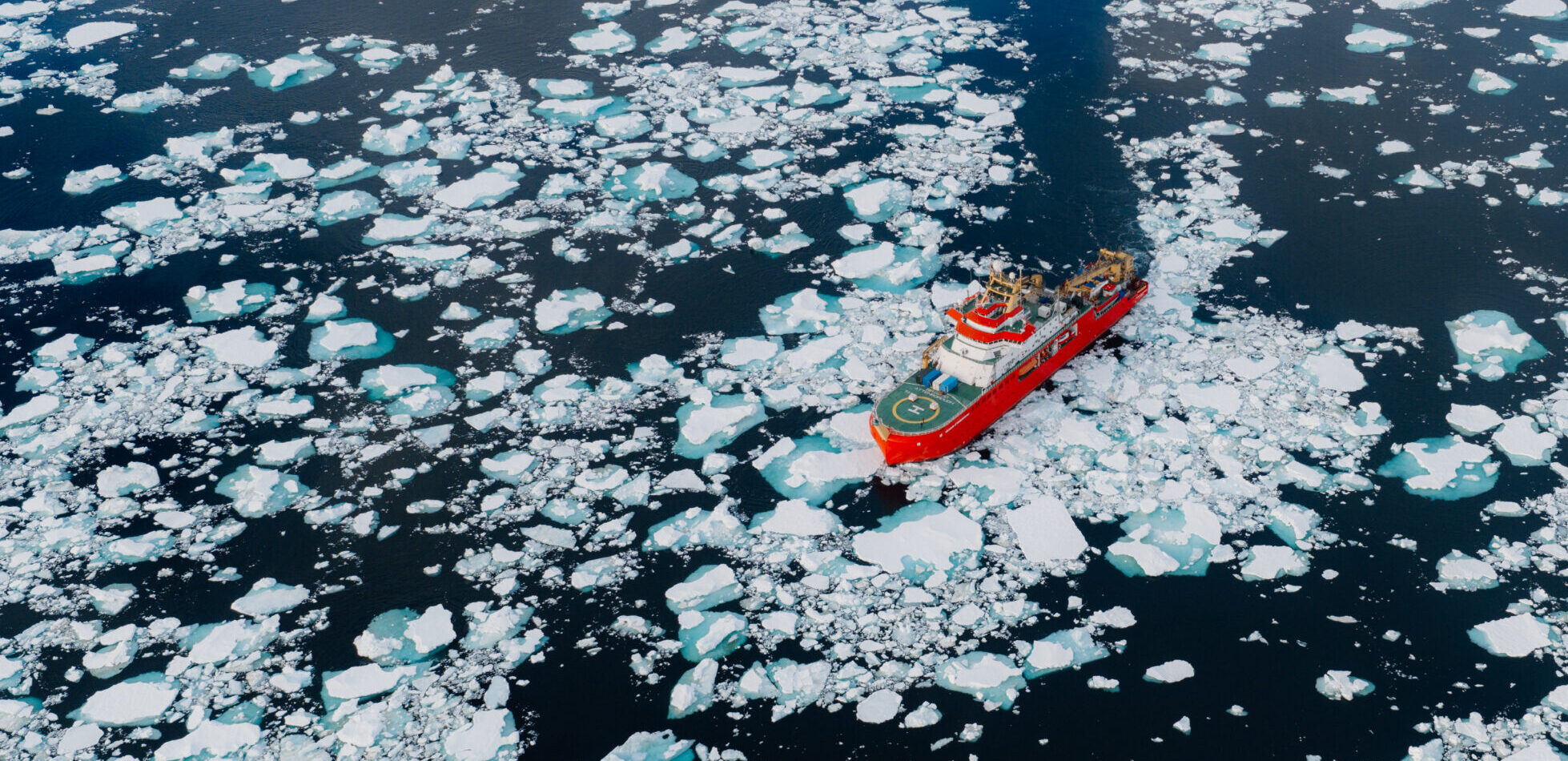
RRS Sir David Attenborough in sea ice (Credit: Joe Jackson)
The trials process
Central to the ice trials is an instrumented propeller blade that will record the forces and loads experienced by the propellers as the ice flows under the ship. The instruments have a limited battery life , requiring divers to deploy beneath the vessel twice daily – typically morning and evening – to download data and recharge the instruments.
The ship will be put through its paces in two distinct types of ice: level fast ice – ice that is attached to the coast and stationary – and large ice floes containing pressure ridges. These ridges form when the floes are pushed together by wind and ocean currents. Understanding how the vessel responds to these features is crucial for determining its operational limitations.
Each testing sequence follows a carefully choreographed pattern. For level fast ice, the ship will drive through the ice, recording data as it goes. Teams will then be lowered onto the ice to measure its properties – including thickness, salinity, temperature – and collect ice cores which can be tested for crushing strength. To test the ship’s performance in the ice ridges, the team will take ice measurements before the vessel breaks through. The ship will then move through the ice ridge, again collecting data on the how the propellers are affected.
The trials also include turning manoeuvres in pack ice and ‘glancing impact’ tests, where the ship drives at an angle into the edge of an ice floe whilst sensors record the pressure on the hull.
Data driven ice operations
The data collected by the instrumented propeller, combined with measurements from strain gauges on propeller shafts, borescopes (which will capture photos and video of the ice moving under the ship) and pressure sensors on the hull, will provide unprecedented insight into ship-ice interactions.
Dive operations also form a critical component of the testing programme. A diver will be deployed under the ship twice a day to download the data and to recharge the propellor instruments.
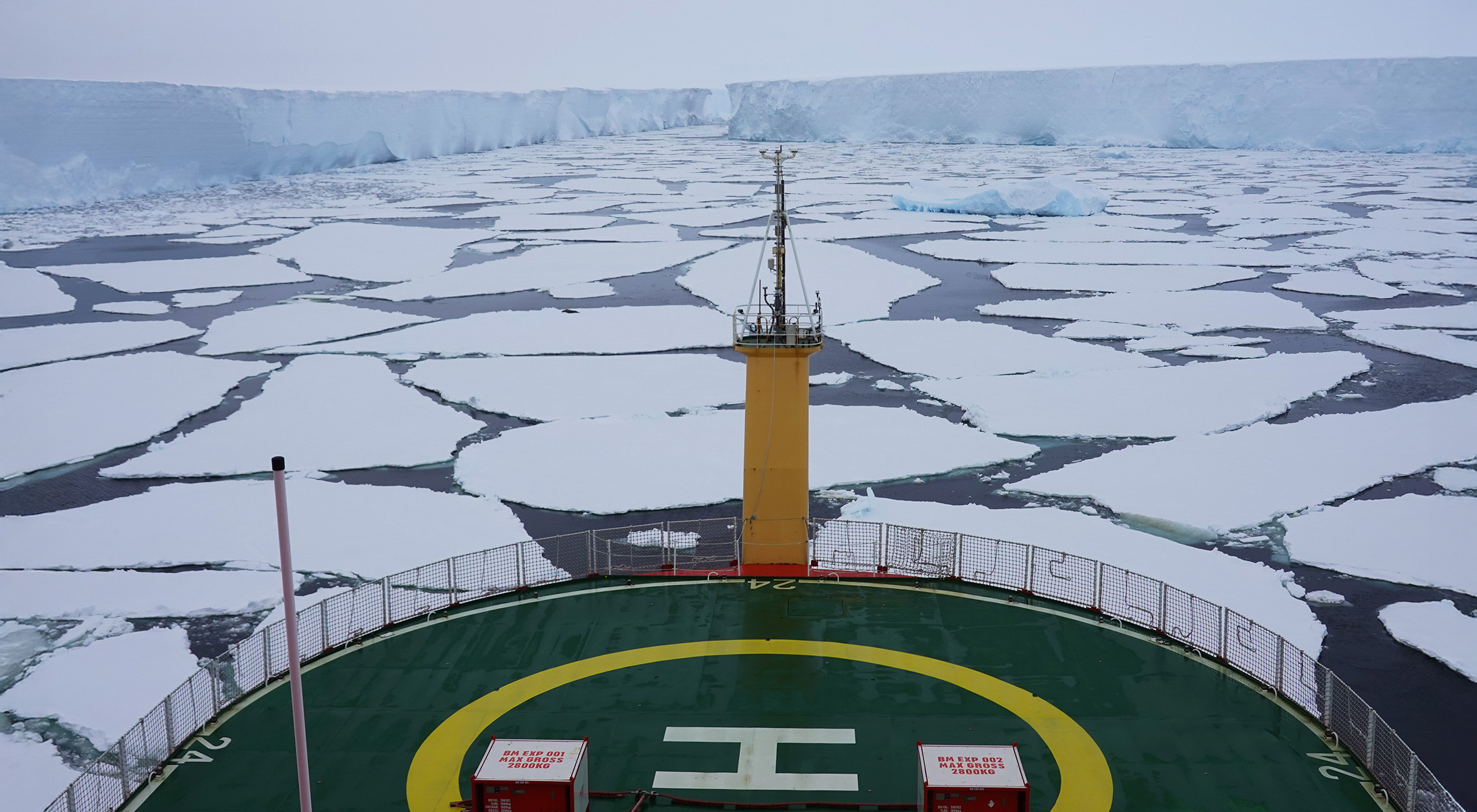
The RRS Sir David Attenborough entering the a creek at The English Coast, Antarctica (Credit: Pete Bucktrout)
Location, location, location
The trials will focus on areas around James Ross Island and the eastern Antarctic Peninsula.
Andrew Fleming, Head of Mapping and GIS at BAS, is leading the ice trials and will play a key role in selecting the locations for testing, using satellite and drone imagery. He said:
“The area we’ve selected to conduct the trials is where the Weddell Gyre – a circular ocean current – creates a conveyor belt of sea ice that moves northward along the coast. This area typically has sea ice year-round and should provide good conditions for testing.
The timing is crucial – we need fast ice, ideally first-year ice, and around one metre thick with approximately 20 centimetres of snow cover. The sea ice conditions are extremely variable, so we will be hunting the perfect ice conditions for our tests using a combination of satellite imagery and drones.”
A team effort
The project brings together international expertise in polar vessel design and performance. Aker Arctic Technology is leading the ice trials, drawing on extensive experience in polar ship design and full-scale ship-ice interaction measurements. Lloyd’s Register has installed strain gauges and borescopes, whilst Kongsberg Maritime has provided the instrumented propeller blade. American Bureau of Shipping Canada is contributing lidar, camera and thermal imaging systems to characterise ice conditions in real-time. Experts from British Antarctic Survey will coordinate operations, using satellite imagery and drone surveys to identify optimal ice conditions.
Rob Hindley is Head of Consultancy & Technology Development at Aker Arctic and is leading the Aker Arctic ice trials team. He said:
“These trials are truly one of a kind. Direct measurements of propeller ice loads are fundamental to advancing dimensioning practices for safe and sustainable polar shipping, yet their complexity has meant they are rarely undertaken.
What makes this programme genuinely groundbreaking is that, for the first time, propeller, shaft and hull ice loads will be measured simultaneously. This will deliver an unprecedented understanding of the strength levels required for ships like these, helping to shape the next generation of vessels capable of operating safely across a wide range of ice conditions.”
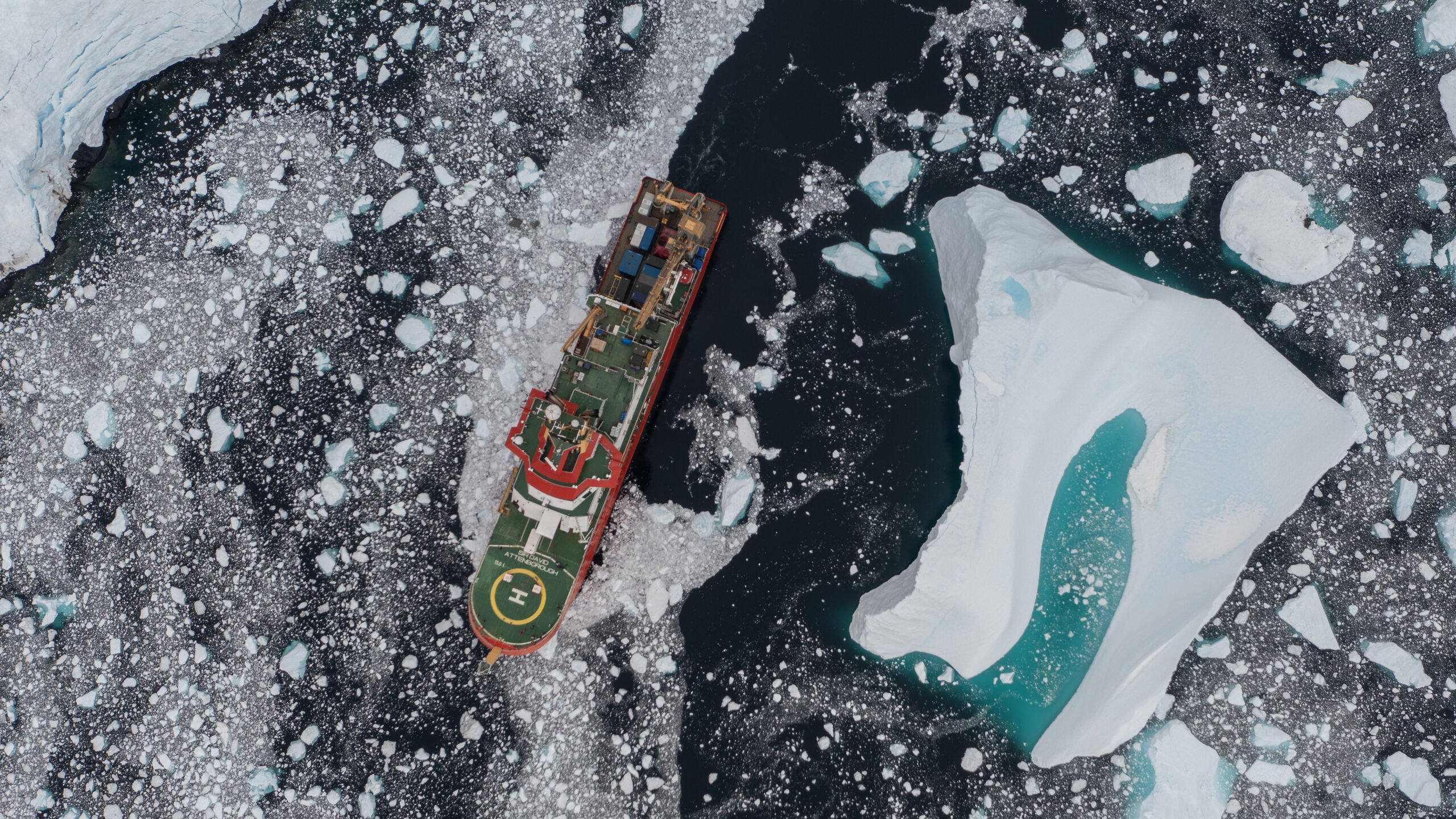
The RRS Sir David Attenborough sailing though icy water.
Chris Hall, Senior Hydrodynamicist, Kongsberg Maritime, added:
“At Kongsberg Maritime, we’ve spent decades refining ice-class propulsion systems, and this trial aboard the SDA is a unique opportunity to validate that expertise in some of the most demanding conditions on Earth.
By capturing real-world data on how propellers interact with sea ice, we can push the boundaries of vessel performance and safety in polar regions. The insights gained here could transform how ships operate in ice, improving efficiency and resilience for future generations of polar research and commercial vessels.”
The results could have implications for the ship’s scientific programme, potentially enabling operations in ice conditions previously considered too challenging. The data will also help optimise engine performance, with potential benefits for fuel efficiency and carbon emissions.
These new experiments will build on lessons learned from earlier sea ice trials, which took place in 2022. The vessel faced second-year fast ice with over one metre of snow coverage – conditions beyond the ship’s design specifications.
The research vessel, owned by NERC and operated by British Antarctic Survey, is the UK’s flagship polar research platform, enabling scientists to study climate change, biodiversity and ocean processes in the Earth’s polar regions.
Photos of dive operations will be available from 30 December 2025.