
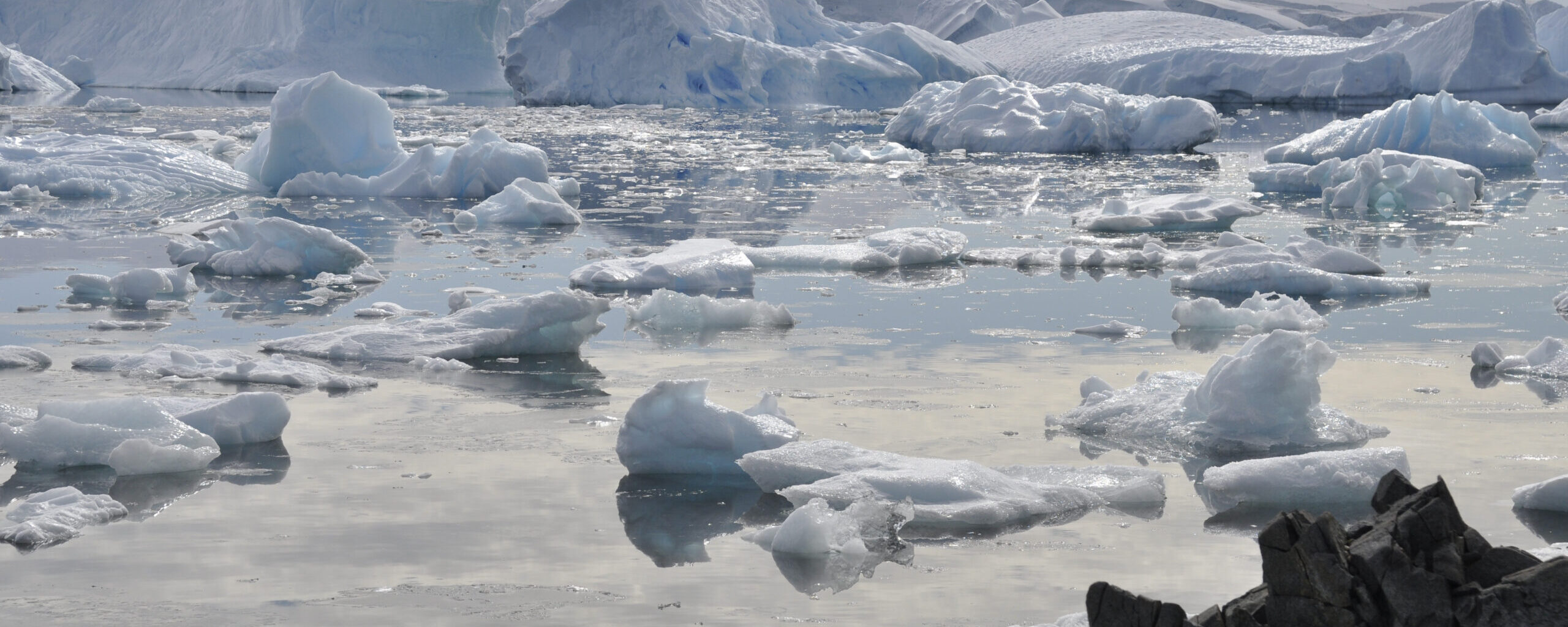
London, 29-30 September 2025 – Scientists meeting at The Royal Society in London this week are issuing a stark warning: dramatic and extreme changes in Antarctica are happening faster than expected, with consequences that will affect everyone on the planet. From collapsing ice shelves and record-low sea ice to powerful storms and threats to fragile ecosystems, researchers will describe how Antarctica, often seen as remote and untouched, is reaching dangerous tipping points that could accelerate global heating, raise sea levels, and disrupt weather patterns worldwide. Opening the two-day meeting, Professor Dame Jane Francis, Director of British Antarctic Survey (BAS) will remind the audience that: “What happens in Antarctica affects us all.”
Why Antarctica matters for all of us
- Extreme weather: The Southern Ocean surrounding Antarctica absorbs most of the excess heat caused by greenhouse gas emissions. This is already fuelling more powerful storms, heatwaves, and rainfall globally that disrupt lives far beyond the polar regions.
- Ecosystems loss: Crucial species such as krill – the hub of the Antarctic food chain – and deep-sea coral and sponge habitats are under threat. These ecosystems support fisheries, biodiversity, and even regulate the planet’s carbon balance.
- Rising seas: If Antarctic ice sheets pass key thresholds, sea levels could rise by more than 10 metres over the coming centuries, threatening coastal cities, communities, and infrastructure across the globe, including the UK.
- A glimpse into the future: Evidence from the past shows change originating in Antarctica may spread rapidly, sometimes within decades, with potentially devastating consequences globally.
A call for urgent action
The scientists stressed that the risks posed by Antarctica’s rapid changes are no longer distant or theoretical. Extreme events are already becoming more frequent and severe, and the possibility of crossing irreversible tipping points is growing. Professor Michael Meredith from the UK National Climate Science Partnership and an oceanographer at BAS, who will chair the first day of the meeting, says:
“Antarctica is changing faster than we ever imagined. These changes are already affecting communities and ecosystems worldwide. Urgent action to cut greenhouse gas emissions and strengthen resilience is essential if we are to avoid crossing dangerous thresholds.”
The meeting called “Global impacts of climate extremes in the polar regions: is Antarctica reaching a tipping point?” will discuss how stronger links are needed between Antarctic science and global policy, so governments can better prepare for the risks, protect future generations and help us all adapt to our changing world. BAS oceanographer Kate Hendry has been key in bringing everyone together for the meeting. She says:
“We urgently need to understand these unprecedented extreme events in Antarctica if we’re going to make robust predictions of future change. The processes behind these extreme events, and any tipping points, are not incorporated well into computer models at the moment, so our forecasting ability is not good enough.”
The Royal Society will publish a full summary of the discussions, highlighting the most pressing gaps in our current knowledge and the steps needed to respond to the challenges ahead.
Key scientific insights presented included:
- The Southern Ocean’s critical role in climate regulation Dr Karina von Schuckmann (Mercator Ocean, France) highlights that the Southern Ocean absorbs up to three-quarters of Earth’s excess heat from greenhouse gas emissions. This heat uptake is reshaping global circulation patterns, melting Antarctic ice, and amplifying extreme weather worldwide.
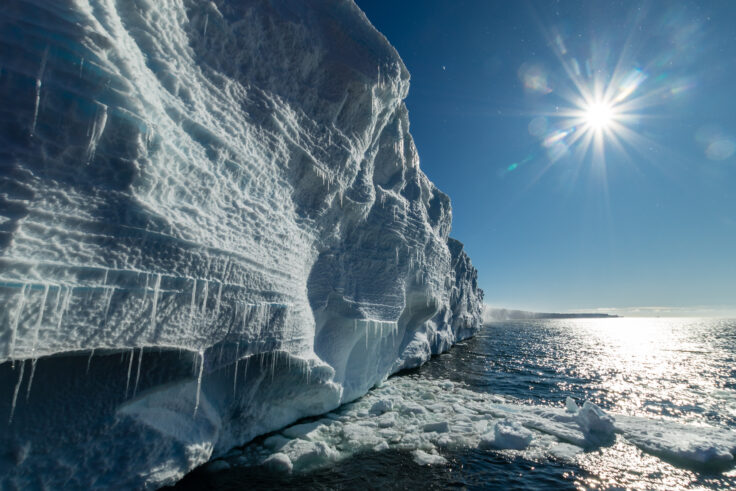
- Extreme events in the cryosphere Professor Michael Bentley (Durham University, UK) reviews recent collapses of Antarctic ice shelves, abrupt snowfall anomalies, and new evidence of cascading interactions between ice, ocean, and atmosphere.
- Abrupt sea ice decline Professor Alexander Haumann (Alfred Wegener Institute, Germany) presents evidence that the dramatic fall in Antarctic sea ice since 2016 marks a long-term state shift, driven by anthropogenic warming and complex ice–ocean processes.
- Atmospheric extremes with global implications Dr Kyle Clem (Victoria University of Wellington, New Zealand) explains how “atmospheric rivers” – narrow bands of warm, moisture-laden air – are increasingly driving record-breaking heatwaves, rainfall, and melt events across Antarctica.
- Ecosystem risks Dr Jennifer Freer (British Antarctic Survey, UK) and Dr Michelle Taylor (Ocean Census/University of Essex, UK) emphasises that extreme events threaten keystone species such as Antarctic krill and fragile deep-sea sponge and coral habitats, with profound consequences for fisheries, biodiversity, and carbon cycling.Lessons from the past Ice core and paleoceanographic studies presented by Professor Sarah Woodroffe (Durham University, UK), Dr Thomas Bauska (British Antarctic Survey, UK), and Dr James Rae (University of St Andrews, UK) reveals that past warm periods triggered rapid Antarctic ice loss and multi-metre sea level rise – often in just centuries or even decades.
- Policy and adaptation challenges Sessions led by Chandrika Nath (SCAR), Dr Rachel Cavanagh (British Antarctic Survey), and Professor Tamsin Edwards (King’s College London) underscore the urgent need for science-based advice to guide the Antarctic Treaty System, fisheries management, and national adaptation planning.Dr Matt Palmer (Met Office Hadley Centre, UK) warned that poorly understood Antarctic tipping points could drive more than 10 metres of sea-level rise by 2300, with major implications for UK coastal defences.
About the Royal Society The Royal Society is a self-governing Fellowship of many of the world’s most distinguished scientists drawn from all areas of science, engineering, and medicine. The Society’s fundamental purpose, as it has been since its foundation in 1660, is to recognise, promote, and support excellence in science and to encourage the development and use of science for the benefit of humanity. http://royalsociety.org/ About Royal Society Scientific Meetings The Royal Society hosts a programme of scientific meetings each year. Each meeting is organised by a small team of scientists with a shared research interest. These scientists are leaders in their fields. The focus on discussion throughout each meeting allows all attendees to contribute to the conversation and share their ideas and research with peers in the scientific community.