
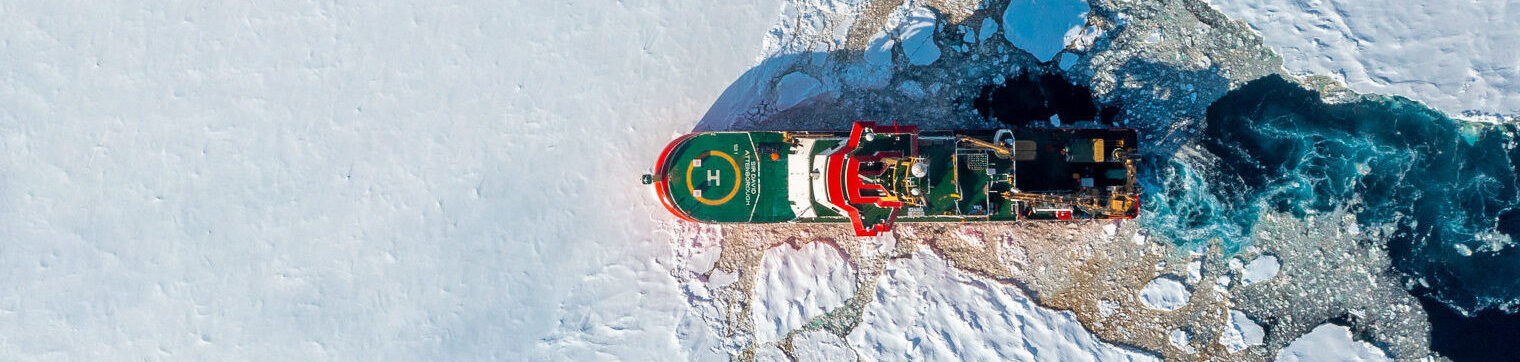
The science steering ships through sea ice
The polar regions are changing fast. Sea ice in the Arctic and Antarctic still covers millions of square kilometres – at its winter peak more than twice the size of Europe – yet it is thinning, shifting and breaking apart in new ways as the climate warms.
 Less ice doesn’t mean less danger. It means less predictability. Icebergs drift into open water, floes move more quickly and conditions can switch in minutes.
For two decades, ships have relied on the British Antarctic Survey’s Polar View service to navigate these shifting seas. It turns satellite data into near real-time maps that show exactly where the ice is and how it’s moving, giving crews the insight they need to avoid hazards.
Used both in the Arctic and Antarctic, it now supports more than 6,000 users every month – from the Royal Navy to research ships and polar cruise operators – helping ships plan safer routes, cut fuel use and reduce emissions.
For many operators, the benefits are significant: some users report up to £150,000 saved per season through safer, faster routing and reduced fuel consumption. On a typical Antarctic voyage, Polar View can cut around 33 tonnes of CO₂ a day while in sea ice – roughly the same as running BAS’s Signy research station for ten months.
BAS also works hand-in-hand with other national ice services through the International Ice Charting Working Group ensuring that sea-ice information is consistent, trusted and shared worldwide.
Alongside this, BAS helps to implement and refine the International Maritime Organization’s POLARIS risk tool, weaving it into Polar View and other trailblazing operation services, so crews can plan routes that meet Polar Code safety rules while protecting fragile polar ecosystems.
By reducing delays, fuel use and costly damage, BAS research directly lowers operating costs for shipping, tourism and logistics companies, strengthening the UK’s maritime economy.
This work showcases British innovation at its best: world-leading science and international collaboration turned into tools that protect people, trade and fragile ecosystems. And by exporting this expertise worldwide, Britain builds influence and value in a fast-growing global market for green maritime technology – clear proof that polar science powers growth, resilience and leadership on the world stage