
Why is everyone talking about geoengineering? | Beyond the Ice
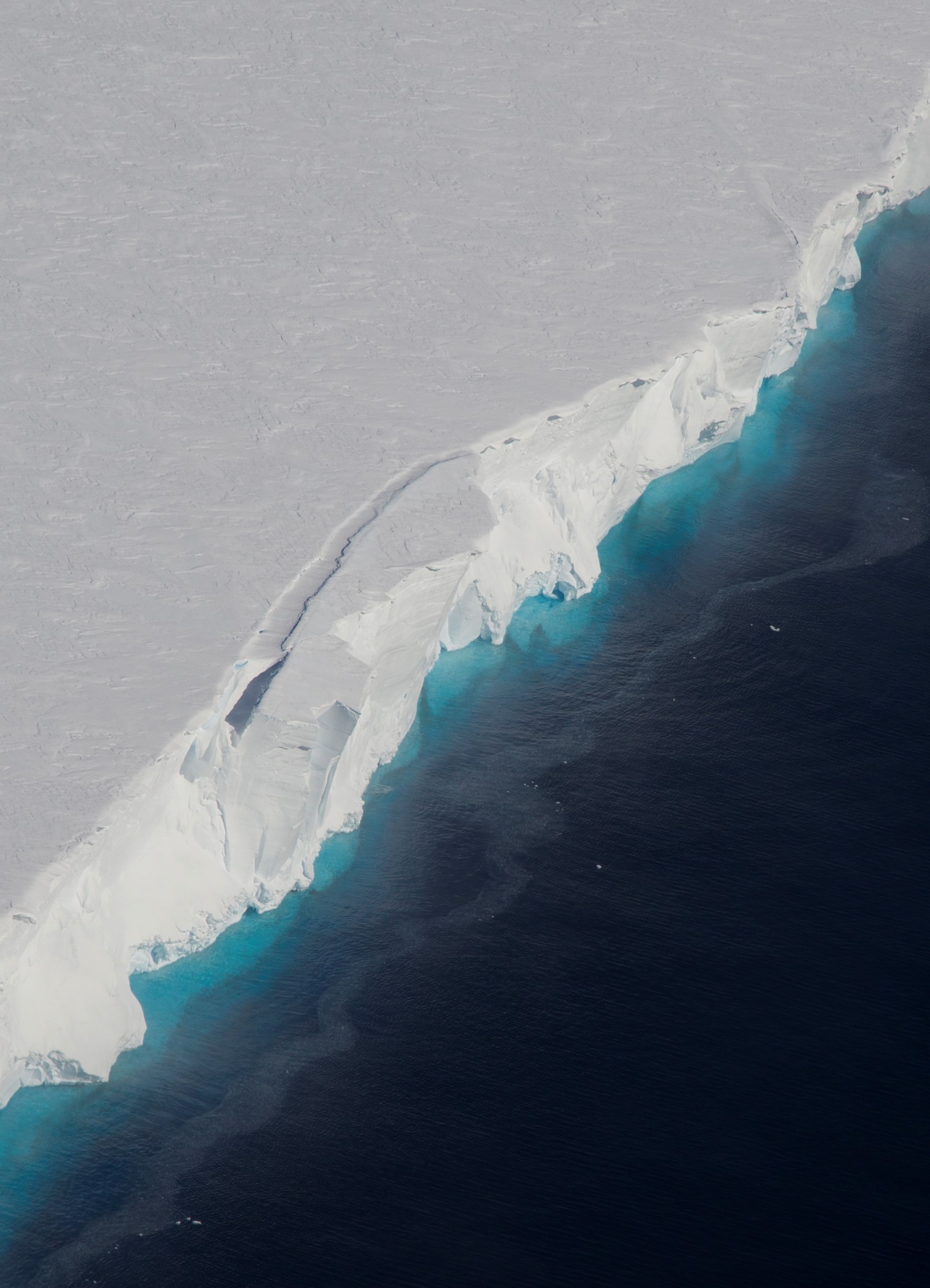
Geoengineering is the hot topic in climate science debate – drawing increasingly emotive and divisive responses, as investment in blue-sky engineering proposals grows and progress on decarbonisation stutters.
Geoengineering is the deliberate, large scale intervention in Earth’s environment and natural systems. As the impacts of climate change start to be felt, preliminary ideas like putting a huge underwater curtain around the unstable Thwaites Glacier are getting more and more media time. Could geoengineering ideas become necessary tools for climate adaption, or are they dangerous distractions?
In this edition of Beyond the Ice, Professor Dame Jane Francis, Director of British Antarctic Survey, delves into the reality of why geoengineering tools are in the spotlight, and the need for scientific engagement to ensure the potential impacts of these technologies are fully assessed.
This article is a quick summary of the full discussion on the Beyond the Ice podcast. Listen to the whole episode here:
Why even consider geoengineering?
Our planet’s climate is changing at unprecedented rates, and we are experiencing more extreme weather events, warmer temperatures and rising sea levels. The cause of this is our continued burning of fossil fuels, increasing the concentrations of greenhouse gases such as carbon dioxide in our atmosphere. Jane explains:
“And although we have waxing and waning of ice sheets in the past, carbon dioxide levels have never risen much, about 300 parts per million. And if you measure CO₂ today, you will see that it’s over 420 parts per million.”
“And if you want to know what a world looks like at 400 parts per million, I can tell you as a geologist, we have to go back into the rock record. We’re looking 2 to 3 million years ago, and we can see that global sea levels were high, that, you know, there was probably about 10 to 20m of global sea level rise, much, much smaller ice caps. Generally the Earth was probably about 2 or 3 degrees warmer.”
“The warmth affects the very complex systems of the of the Earth’s climate, warming the ocean that changes differential temperatures between ocean, land, atmosphere, and that causes storms, winds, fires and other effects.”
Policymakers, scientists, and everyday people are concerned about the impact climate change is having and will continue to have on humans and the planet we live on. The need to curb our emissions is significant, and many are looking to alternatives such as geoengineering to buy more time and ease the worst impacts.
Mainstream geoengineering?
Although geoengineering is having a zeitgeist moment, other geoengineering ideas have been developed over the years. The best known examples within the wider definition are to remove carbon dioxide from the atmosphere – techniques like carbon capture storage.
Carbon capture research was first invested in over 20 years ago, and these techniques are now part of UK government medium-term transitionary strategy for a low carbon economy, and an approach supported by the IPCC. Jane reflects:
“We absolutely need to go back to those normal carbon dioxide levels and take carbon dioxide out of the atmosphere. And the way to do that is to bury it. So, there are quite a lot of experiments going on around the world for some years now, to take carbon dioxide out, pump it back into voids in the rock. The issue is scale. I mean, we need to put a huge amount of carbon dioxide back into the rock and seal it there.”
However, as the impacts of climate change begin to be felt worldwide, increased energy is now going into projects that address ways the Earth’s systems are changing, rather than the root cause.
A necessary tool, or soothing the symptoms?
Many scientists are skeptical of geoengineering, with concerns that this is drawing vital time, money, and resources away from the actions that we know would be effective and necessary: reducing carbon emissions. Jane summarises:
“The problem is it’s not attacking the causes at all. They’re trying to change the environment to make more clouds or stop warm water flowing around certain places. But there is still increasing CO₂. So, it’s often described as trying to attack the symptoms rather than the cause of warming.”
A consortium of scientists, including a number from British Antarctic Survey, recently published a paper critiquing six current polar geoengineering ideas: Safeguarding the Polar Regions from Dangerous Geoengineering: A Critical Assessment of Current Projects and Future Prospects. Presenter Em Newton summarised the critiques from the paper:
“They’ve said these are unproven, untested methods. They could have unintended effects on the planet and ecosystems. They would entail massive costs to create and maintain. And definitely there’s logistics issues unlike any overcome before. There’s a lack of geopolitical governance – in terms of what’s currently in place, and what would be needed. And it diverts resources from necessary net zero transition.”
With her wider insight from representing polar affairs on the international stage, Jane gave her perspective on the motivations of those behind these projects:
“A lot of the people that are funding geoengineering are private funders, who are really concerned about climate change. But they just want progress to go a lot faster. I’ve talked to some of these people and they genuinely do not think it’s a whole solution, but they think this is an immediate action that we can take that may slow down climate warming.”
Without the science, we could be headed into the unknown
A key factor Jane emphasises is the need for scientists to be actively engaged in this work and to deploy their expertise:
“Scientists have a role to play in geoengineering. They need not to just discount it completely. They need to use the models and use the data that they have, and the understanding of the complexity of the systems that they have.
You know, it may be that they can see from their modelling and from their understanding of the impacts, that this is absolutely not the right thing to do. It could have disastrous consequences. But I think the science must be done.”
One such example of this is the Advanced Research + Invention Agency (ARIA) funded project Eco-ICE (Ecological Impact Assessment of Earth Cooling Experiments in the Arctic). A group of scientists from British Antarctic Survey will carry out an independent impact assessment and expert modelling for a project that’s exploring ice thickening and whitening in the Arctic. Jane outlines the commitment:
“They aren’t helping develop the technology, but they are pointing out where what is being proposed will have consequences, based on the science picture we have of that environment and ecosystem.
“So they are working alongside that project as kind of external and independent assessors. And hopefully this will become a template for the sort of independent assessment we should be seeing of geoengineering projects before they are deployed. It’s the kind of link between the geoengineers and the modelling and the scientists that I think we need.”