
Are world leaders downplaying the evidence of climate change? Three scientists issue a stark warning to those in power. Dr James Kirkham from British Antarctic Survey, Professor Chris Stokes from Durham University and Dr Florence Colleoni from the National Institute of Oceanography and Applied Geophysics (OGS) argue that politicians are overlooking some of the clearest and most alarming evidence of climate change.
“We cannot negotiate with the melting point of ice.” That’s the message from more than 50 leading scientists who study the Earth’s frozen regions, published in the latest annual State of the Cryosphere report.
In the past year alone, the vast polar ice sheets in Greenland and Antarctica are likely to have shed around 370 billion tonnes of ice, with a further 270 billion tonnes from the 270,000 mountain glaciers around the world, some of which are disappearing altogether.
 In February 2025, global sea ice extent reached a new all-time minimum in the 47-year satellite record. Elsewhere, perennially frozen ground (called permafrost) continues to thaw, releasing additional greenhouse gas emissions each year that are roughly equivalent to the world’s eighth-highest-emitting country.
The warning lights from the cryosphere have been flashing red for several years, and governments ignore this at their peril.
Melting ice is driving an acceleration in the rate of sea-level rise, which has doubled to 4.5mm per year over the last three decades. If this acceleration continues, sea-level rise will reach around 1cm per year by the end of this century – a rate so high that many island and coastal communities will be forced to move.
The loss of mountain glaciers will affect billions of people who rely on their meltwater for agriculture, hydropower and other human activities; and the damage caused to infrastructure by Arctic permafrost thaw has been estimated to cost US$182 billion (£137 billion) by 2050 under our current emissions trajectory.
In February 2025, global sea ice extent reached a new all-time minimum in the 47-year satellite record. Elsewhere, perennially frozen ground (called permafrost) continues to thaw, releasing additional greenhouse gas emissions each year that are roughly equivalent to the world’s eighth-highest-emitting country.
The warning lights from the cryosphere have been flashing red for several years, and governments ignore this at their peril.
Melting ice is driving an acceleration in the rate of sea-level rise, which has doubled to 4.5mm per year over the last three decades. If this acceleration continues, sea-level rise will reach around 1cm per year by the end of this century – a rate so high that many island and coastal communities will be forced to move.
The loss of mountain glaciers will affect billions of people who rely on their meltwater for agriculture, hydropower and other human activities; and the damage caused to infrastructure by Arctic permafrost thaw has been estimated to cost US$182 billion (£137 billion) by 2050 under our current emissions trajectory.
 At Cop30, climate negotiators from several countries expressed disappointment and concern that the role of the IPCC as the best available science was not highlighted alongside some of the more alarming scientific findings, with an intervention from the UK capturing this frustration.
While the final overarching summary text from Cop30 – the Mutirão decision – references the IPCC as the source of the best available science, and contains some strong language around the need to limit warming to 1.5°C, rather than 2°C, these look like empty words when the same document fails to even mention “fossil fuels”. Emissions from fossil fuels will result in 2.6°C of warming by 2100, without urgent action.
Indeed, the final text from Cop30 is the first to explicitly reference a temperature “overshoot”, reiterating the need “to limit both the magnitude and the duration of any temperature overshoot”. Most scientists agree that overshoot is now inevitable, but that 1.5°C increase remains the legal and ethical imperative for a long-term global temperature target.
However, some scientists – including ourselves – would argue that even this is too high, committing us to losing around half of the world’s mountain glaciers and several metres of sea-level rise from the polar ice sheets.
At Cop30, climate negotiators from several countries expressed disappointment and concern that the role of the IPCC as the best available science was not highlighted alongside some of the more alarming scientific findings, with an intervention from the UK capturing this frustration.
While the final overarching summary text from Cop30 – the Mutirão decision – references the IPCC as the source of the best available science, and contains some strong language around the need to limit warming to 1.5°C, rather than 2°C, these look like empty words when the same document fails to even mention “fossil fuels”. Emissions from fossil fuels will result in 2.6°C of warming by 2100, without urgent action.
Indeed, the final text from Cop30 is the first to explicitly reference a temperature “overshoot”, reiterating the need “to limit both the magnitude and the duration of any temperature overshoot”. Most scientists agree that overshoot is now inevitable, but that 1.5°C increase remains the legal and ethical imperative for a long-term global temperature target.
However, some scientists – including ourselves – would argue that even this is too high, committing us to losing around half of the world’s mountain glaciers and several metres of sea-level rise from the polar ice sheets.
 Among the dire warnings, a recent study offers hope that it is still possible to curtail warming in the next 15 to 20 years, peaking at an increase of around 1.7°C in the 2040s before declining to an increase of 1.5°C and then 1.2°C by the end of the century. But that requires rapid and deep cuts in emissions from now on.
Climate negotiations may move at a glacial pace, but the irony is that the pace of glacier change is rapidly overtaking our ability to adapt to it and protect the most vulnerable people. The science is clear. But the perils of ignoring it are even clearer.
This article is republished from The Conversation under a Creative Commons license. Read the original article.
Among the dire warnings, a recent study offers hope that it is still possible to curtail warming in the next 15 to 20 years, peaking at an increase of around 1.7°C in the 2040s before declining to an increase of 1.5°C and then 1.2°C by the end of the century. But that requires rapid and deep cuts in emissions from now on.
Climate negotiations may move at a glacial pace, but the irony is that the pace of glacier change is rapidly overtaking our ability to adapt to it and protect the most vulnerable people. The science is clear. But the perils of ignoring it are even clearer.
This article is republished from The Conversation under a Creative Commons license. Read the original article.
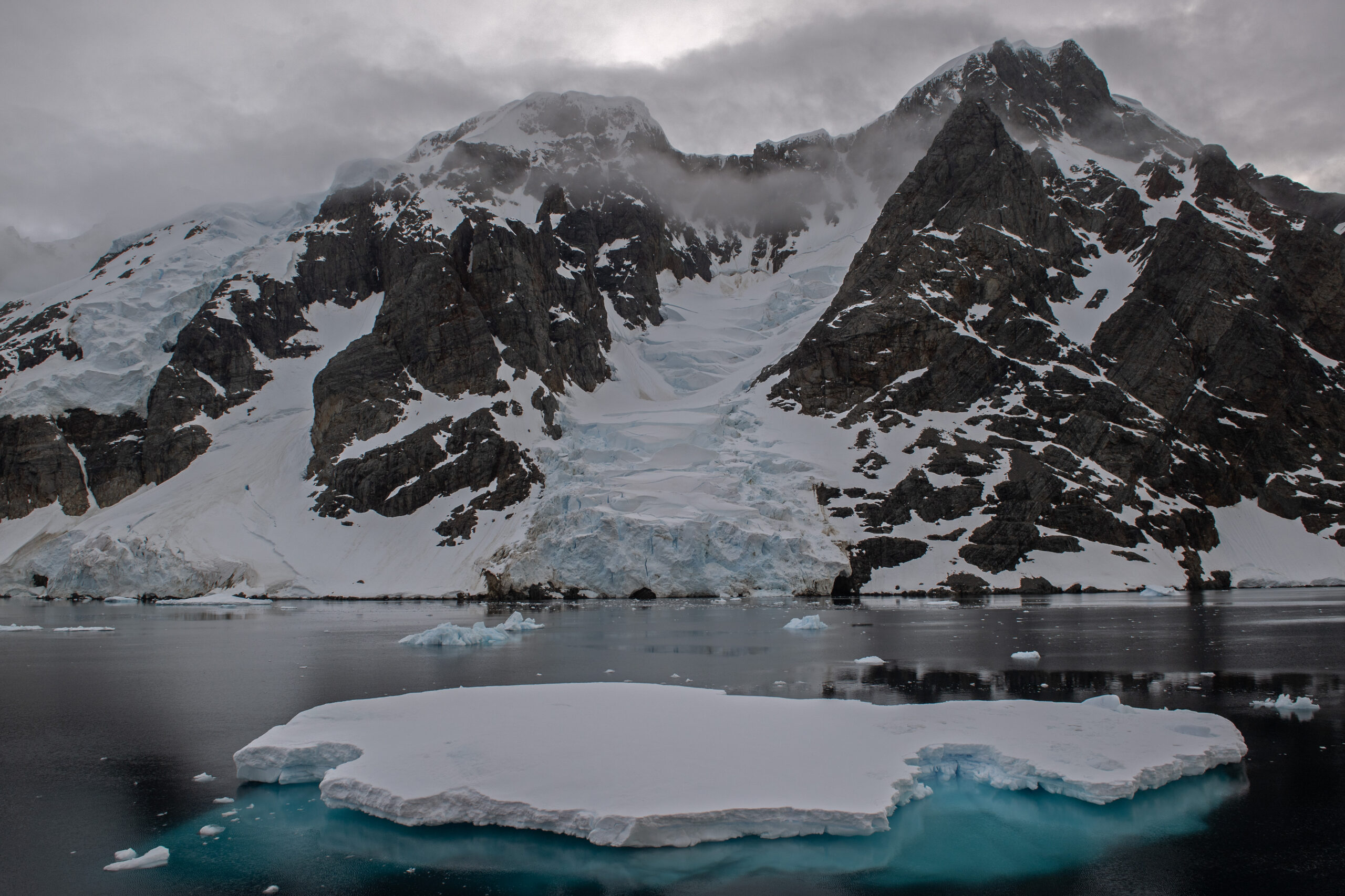
Antarctic glacier. Credit: Jamie Oliver
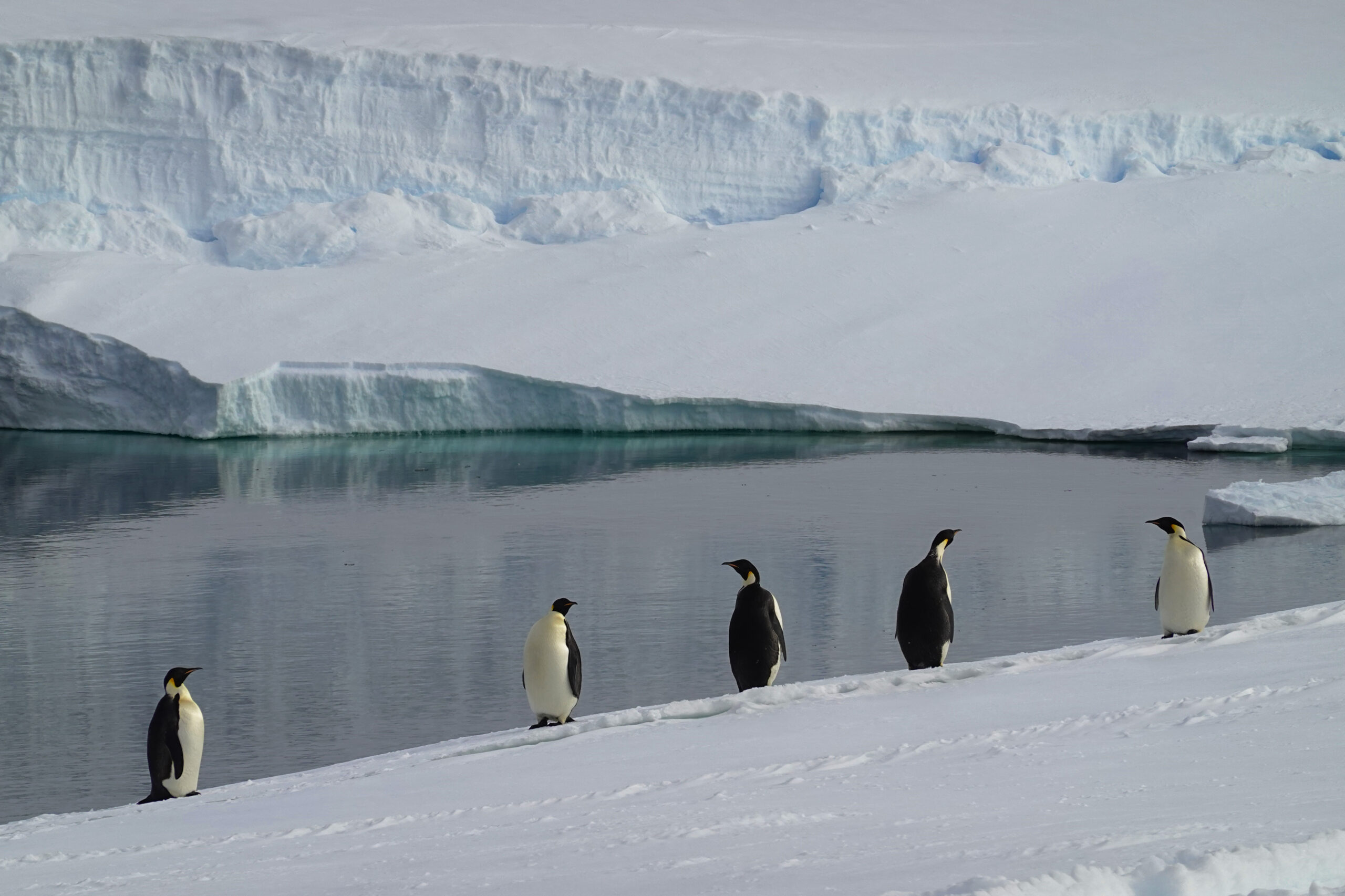
Emperor penguins. Credit: Jamie Oliver
Negotiations based on ‘best available’ science
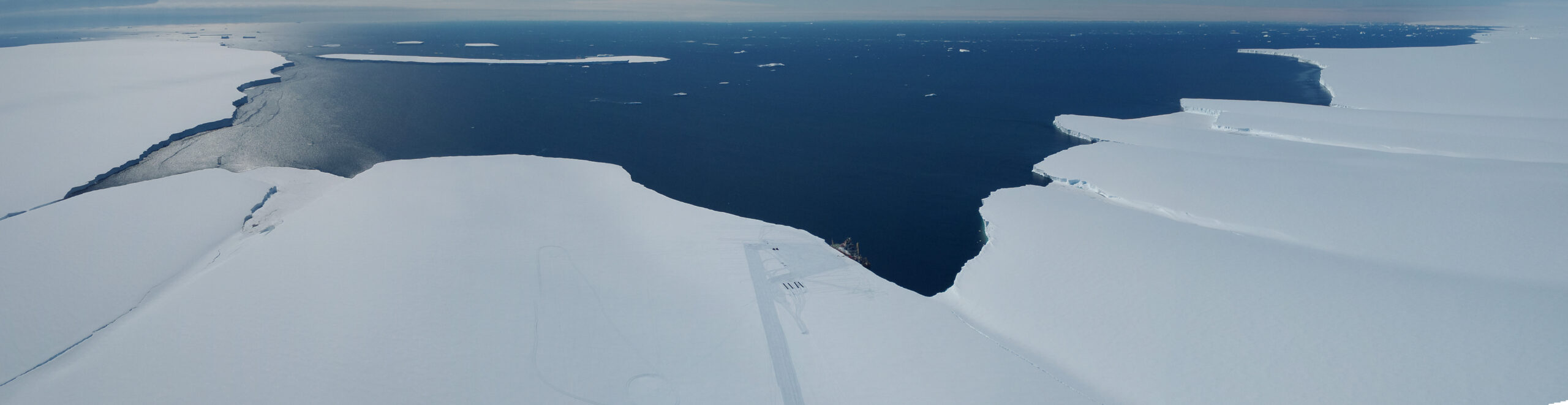
In an effort to reduce the risks and effects of climate change, including those from the cryosphere described above, the Paris climate agreement was adopted by 195 countries at the annual UN climate summit in 2015, with the aim of limiting “the increase in global average temperature to well below 2°C above pre-industrial levels” and pursue efforts “to limit the temperature increase to 1.5°C”. Its implementation should be based on and guided by the “best available science”. That includes evidence provided by the Intergovernmental Panel on Climate Change (IPCC), a group created by the UN to provide governments with regular assessments of the scientific basis of climate change, its impacts and options for adaptation and mitigation. This guiding principle was strengthened by the International Court of Justice in July 2025, which reaffirmed 1.5°C as the primary legally binding target for climate policies under the Paris climate agreement. Yet recent climate negotiations, including at the UN climate summit in Brazil in November 2025 (Cop30), have seen some countries – largely fossil fuel producers – push back on previously standard language endorsing the IPCC as a source of the “best available science”. As cryosphere scientists who regularly attend the UN’s climate summits, we have noticed recent efforts to downplay, confuse and dilute some of the latest scientific findings, especially from the cryosphere. We find this alarming. At Cop30, observations about the complete loss of glaciers in two countries (Slovenia and Venezuela) were removed from the final draft text. Other shocking scientific findings about “irreversible changes to the cryosphere” were diluted to a rather vague “need to enhance observations and address gaps in the monitoring of the hydrosphere and the cryosphere”. This tactic to obfuscate the science is not new, but has been increasingly used over recent years, during which the indicators of climate change and its consequences on the cryosphere have become increasingly obvious to scientists.Antarctic creek. Credit: Jamie Oliver
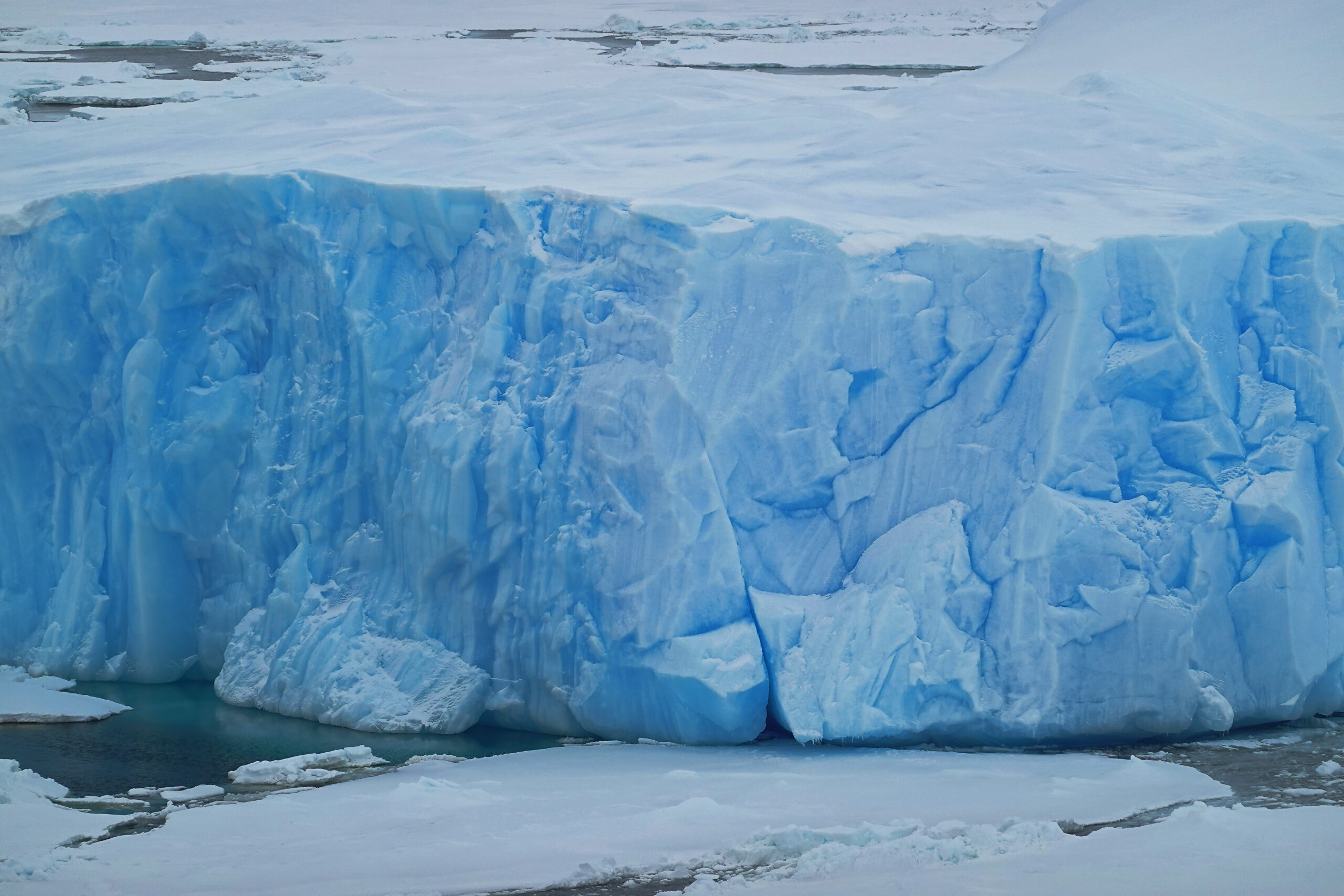
Iceberg. Credit: Jamie Oliver