
Antarctic factsheet & geographical statistics
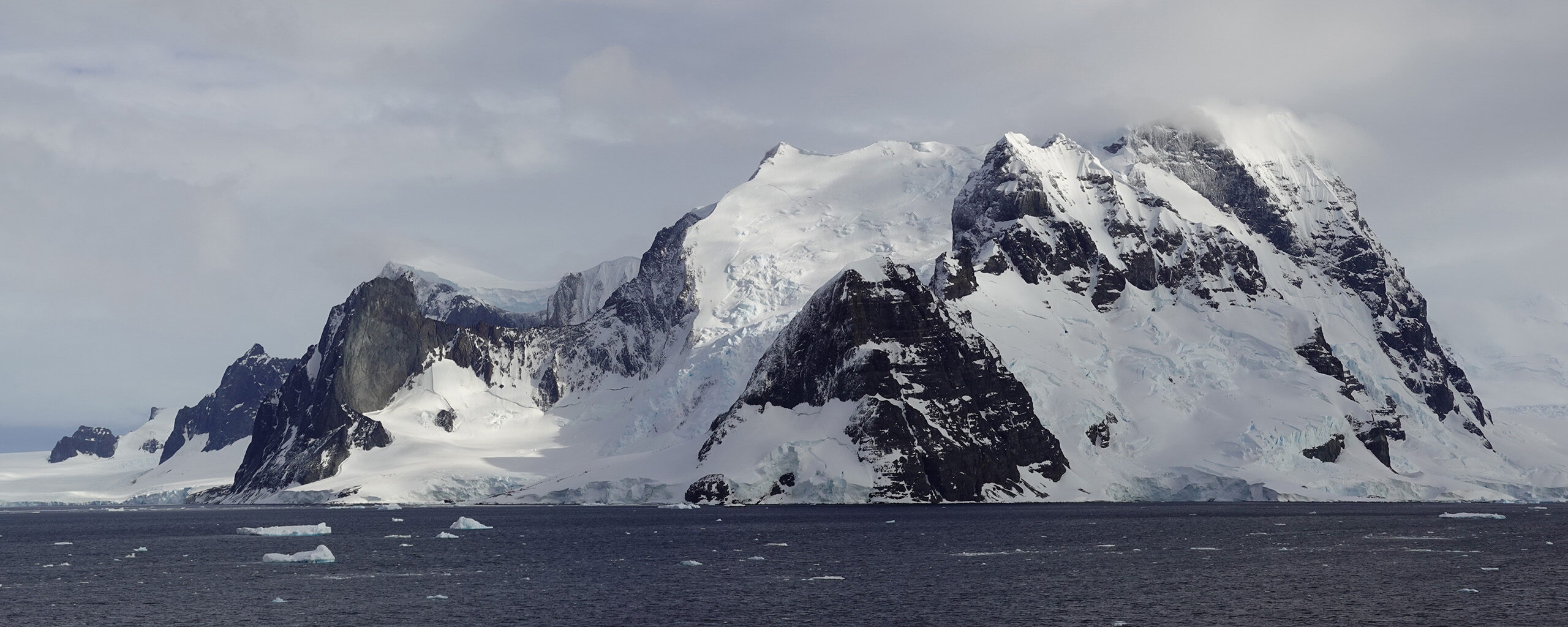
Antarctica is a place of extremes. It is the coldest, highest, driest and windiest continent on Earth.
Our school’s factsheet has many fascinating details about Antarctica – its area, length, height, ice thickness, extremes of temperature, and many others.
Here’s a taster of what you can find in the factsheet.
Chill facts
Antarctica is a rocky continent capped by an ice sheet up to 4.8km thick. (By contrast, the Arctic is an ocean covered by thick sea-ice and surrounded by rocky continents.)
Only about 0.4% of the surface of Antarctica is free of snow and ice.
The thickness of the ice means Antarctica has the highest average altitude of all continents. Yet the sheet is so heavy that it has pushed the land below sea level in places.
The ice sheet contains approximately 90% of the world’s total surface fresh water.
The Southern Ocean is a continuous belt of sea surrounding Antarctica.
In winter, over half of the Southern Ocean freezes.
This seawater ice is only about a metre thick. But it has a significant effect on ocean and atmospheric circulation.
Nearly all the sea-ice melts in summer.
Continental dimensions
Antarctica covers nearly 14,000km2 – that’s 1.4 times bigger than the USA.
The South Pole is on the polar plateau, 2800m above sea level, and 1235km from the closest coastline.
The peaks of Antarctica’s mountains poke through the ice. The highest is Mount Vinson, 4900m above sea level.
Much of Antarctica remained uncharted until satellite mapping was possible.
Extreme weather
Antarctica is a desert. Snowfall is equivalent to only 150mm of annual rain. (By comparison, Britain is 6 to 7 times wetter with about 1050mm annual rainfall.)
Antarctic snow compacts slowly into ice, which flows towards the coast as huge glaciers
Glaciers move about 1km a year.
Glaciers often extend out over the sea as massive ice shelves. For example, the Brunt Ice Shelf on which the Halley Research Station sits.
At the South Pole the temperature may drop to -75°C.
But the world record for lowest temperature, -89°C, was recorded at Vostok Antarctic station.
Penguins and people
Antarctica has no native population of humans. But it is home to about 5 million penguins.
Up to 10,000 scientists from 18 countries live in Antarctica during the summer. And about 40,000 tourists visit each year.
Only about 1000 scientists stay for winter.
Sweet treaties
Antarctica is governed by the Antarctic Treaty System, dating back to 1959.
The Treaty forbids all military and industrial activities, reserving the continent for peaceful scientific purposes.
British Antarctic Survey scientists discovered the Antarctic ozone hole in 1985.
This led to the Montreal Protocol banning the use of ozone-depleting chemicals in 1987.
Scientists expect the ozone hole to disappear in about 100 years if everyone sticks to the Montreal Protocol.
Britain and Antarctica
Britain played a major role in the exploration and study of Antarctica.
Captain James Cook was first to sail around the continent in the 1770s.
Scott and Shackleton undertook purely scientific expeditions in the early 20th century – a tradition which continues to the present.