
Britain in Antarctica
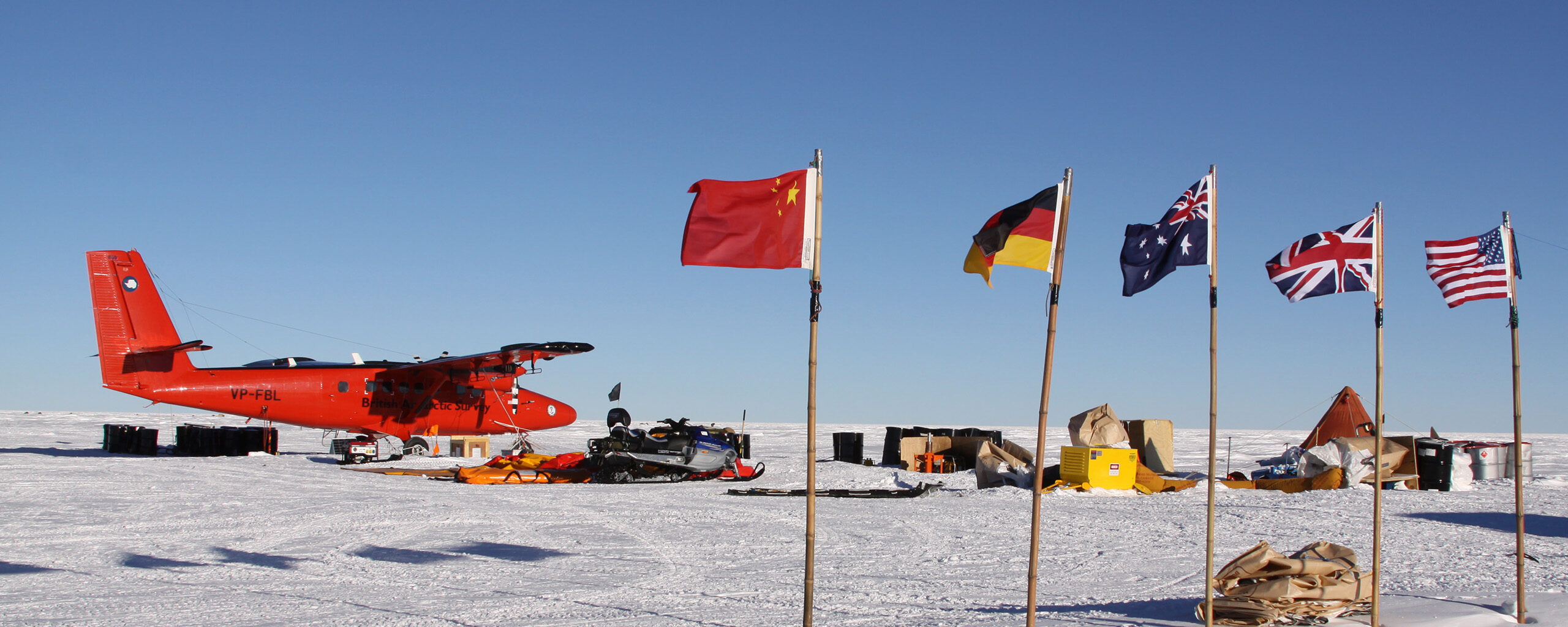
Antarctica’s importance as a continent for international scientific collaboration was first recognised during the International Geophysical Year (1957).
Britain was one of the original 12 nations to sign the Antarctic Treaty that came into force in 1961 and now has 50 signatories. The UK continues to be a leader in the Antarctic Treaty System (ATS). The UK Antarctic Acts of 1994 and 2013 emphasise Britain’s long term commitment to the ATS.
UK polar governance
British Antarctic Territory (BAT) is the oldest territorial claim to a part of the continent. It includes all the lands and islands in a wedge extending from the South Pole to 60°S latitude between longitudes 20°W and 80°W. BAT includes a range of landscapes, from the spectacular mountains and islands of the Antarctic Peninsula, to the smooth plains of ice shelves and ice caps.
BAT is a UK Overseas Territory, administered in London by staff in the Polar Regions Department of the Foreign, Commonwealth and Development Office (FCDO). The government of the Territory has its own legislative framework and makes a range of legal and administrative appointments.
BAT receives annual revenue from income tax on over-wintering scientists, stamp and coin sales and interest from its capital reserves. This income means that it is financially self-sufficient.
BAT has no indigenous population and presence in the Territory is provided by the British Antarctic Survey (BAS). We operate three scientific stations and the United Kingdom Antarctic Heritage Trust (UKAHT), which manages the historical base at Port Lockroy.
The Royal Navy maintains an ice patrol vessel in the area during the austral summer.
BAT aims to promote UK Sovereignty and efficient financial and legal governance of the Territory.
Although the UK claims sovereignty over this region, there are overlapping claims by Argentina and Chile. Under the terms of the Antarctic Treaty, all territorial claims remain frozen and the whole of Antarctica is to be used for peaceful and scientific purposes only.
Strategic objectives:
- To promote the British Antarctic Territory and UK in Antarctica, including increasing awareness through education and outreach with partners;
- To protect the Territory’s environment, on the basis of thorough science and research;
- To preserve British heritage for future generations;
- To effectively administer the Territory, ensuring there is an effective and proportionate legislative and administrative framework;
- To effectively manage the Territory’s finances in accordance with the best financial practice.
The full BAS strategy 2019-2029 can be found here: British-Antarctic-Territory-Strategy-2019-2029-Updated-Aug-2021.pdf