
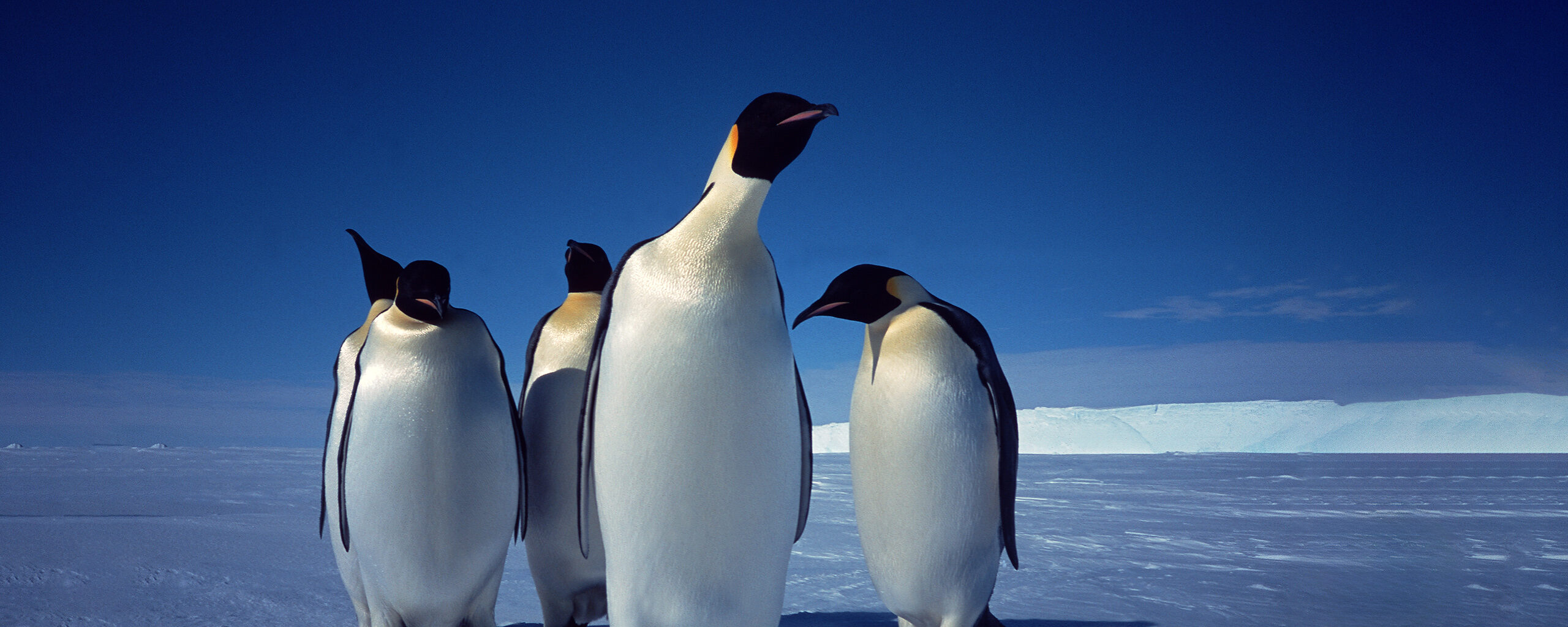
Earth’s frozen continent
Antarctica is Earth’s largest and most pristine wilderness. It might seem remote – but Antarctica plays an essential part in the climate, weather and natural cycles of our planet.
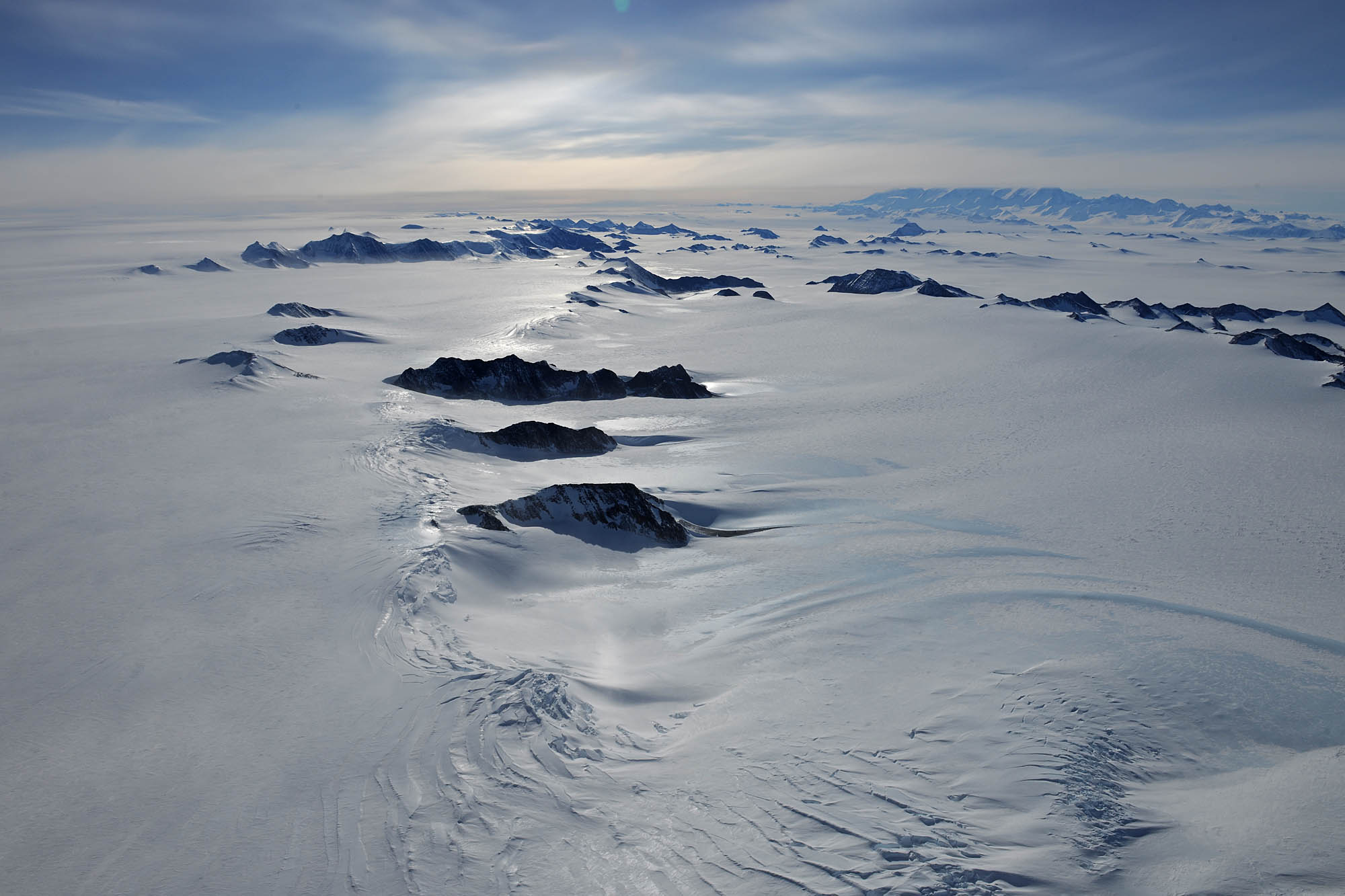
The Ellsworth Mountains, Antarctica
Unlike the Arctic, Antarctica is a continent surrounded by ocean. This vast, southerly land mass is covered by a huge ice sheet, which is on average 2km thick. In winter, the size of the continent appears to almost double, when the surrounding ocean freezes as sea ice.
The Antarctic Ice Sheet
The Antarctic Ice Sheet is the largest single mass of ice on Earth: a continental glacier that covers nearly 14 million km² and contains 60% of the world’s fresh water.
This immense ice sheet is formed by the accumulation and compression of snow and frost over thousands of years. This process traps air bubbles, which allow scientists to directly measure Earth’s atmospheric climate conditions over 100,000 years ago.
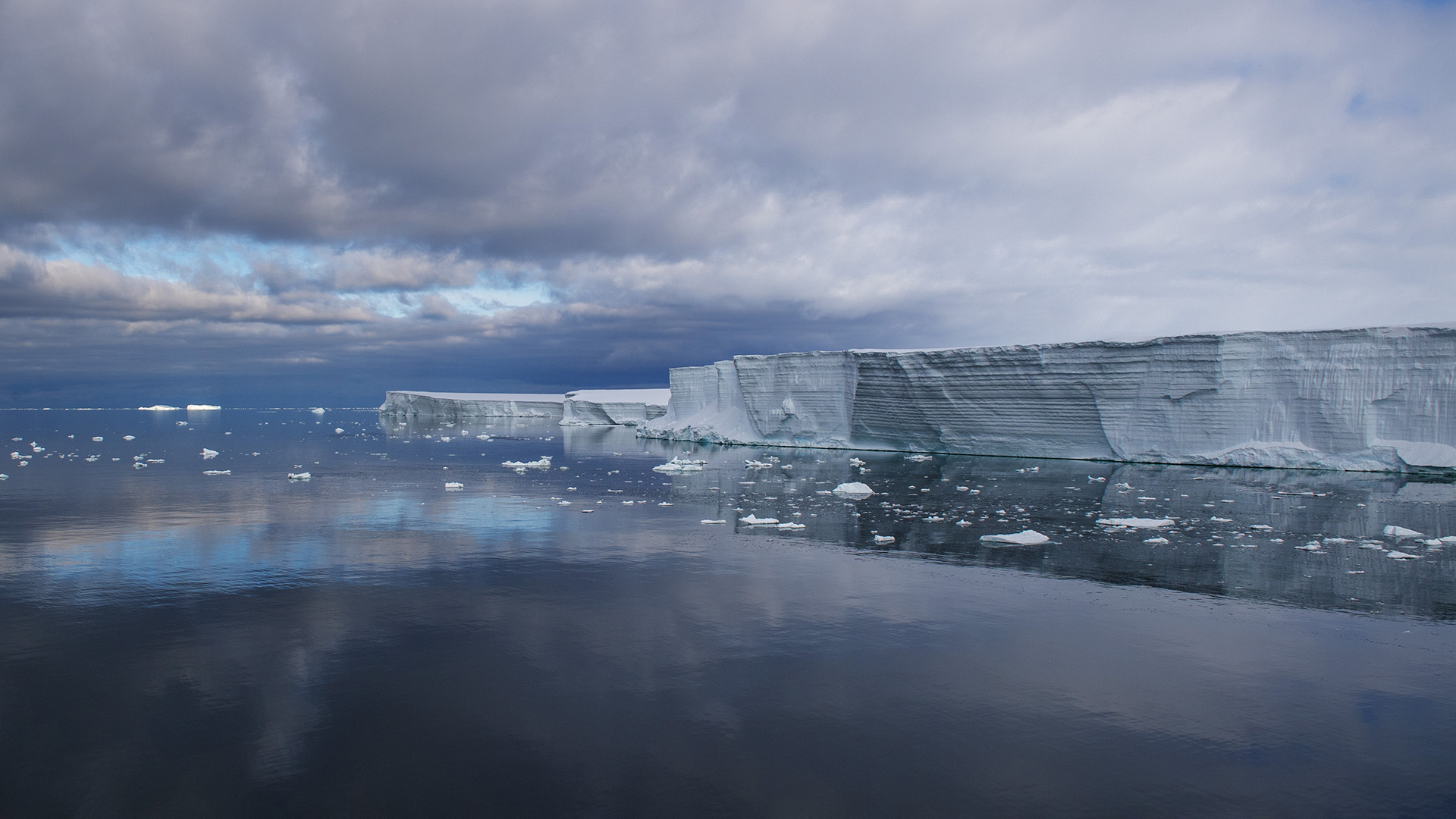
An ice shelf edge in Antarctica
Rapidly moving ice streams, such as Thwaites Glacier, make up around 10% of the ice sheet. The majority of the ice leaving the continent flows through these areas, some of which reach speeds of over 1,000m per year.
Much of Antarctica is fringed by ice shelves that eventually break off as icebergs—a natural part of the glacier lifecycle. Where ice shelves meet warm seawater, melting produces Antarctic Bottom Water, a cold, dense water mass essential for regulating global ocean circulation.
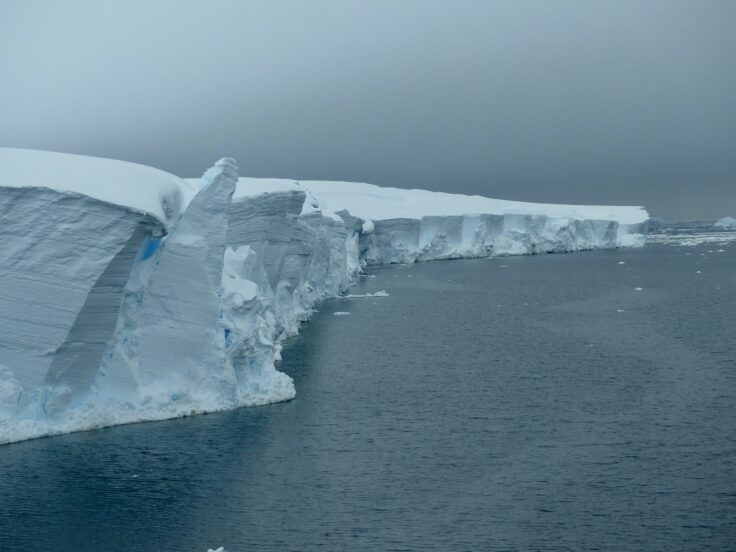
Thwaites Glacier, West Antarctic Ice Sheet.
Southern Ocean
Antarctica is unconnected to any other continent, so it is circled by a strong current (the Antarctic Circumpolar Current) that helps to isolate it from warm waters and weather.
The Southern Ocean also links all of the world’s oceans together, transporting nutrients and carbon across the globe. The temperature differences between the poles and other regions keep these vast ocean and atmospheric currents moving.
Geology
The Transantarctic Mountains run across the continent, dividing the two major regions of East and West Antarctica.
In East Antarctica, the ice sheet is thicker and rests on bedrock that is above sea level in most places, whereas in the west the ice is not as thick and much of the underlying bedrock is below sea level.
This makes West Antarctica significantly more vulnerable to warming ocean waters as a result of climate change.
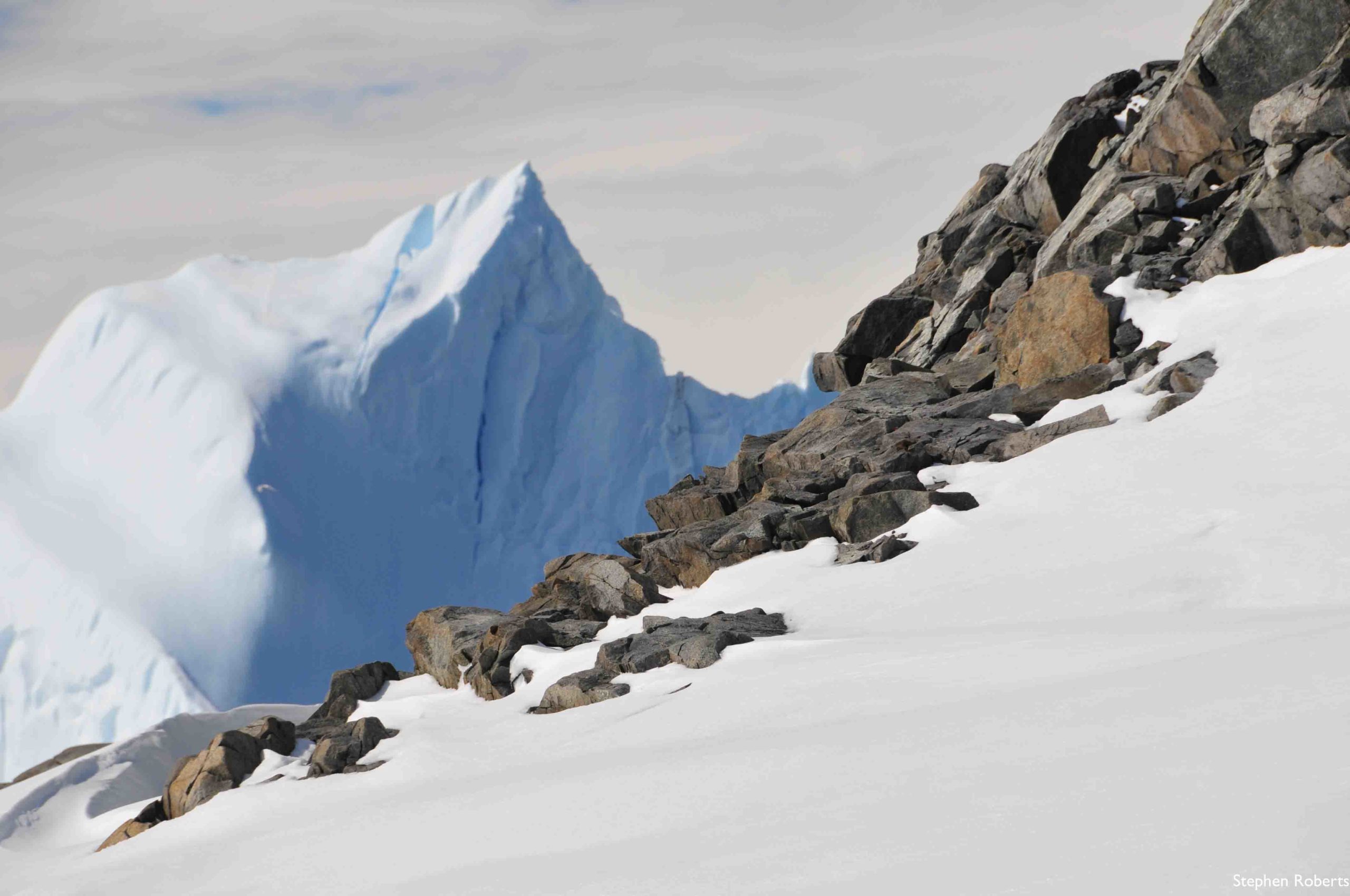
Ice and rocks
Despite less than one percent being ice-free, Antarctica contains spectacular geological features: towering mountain ranges, nunataks (rocky outcrops emerging from ice), ice-free dry valleys with ancient rocks and fossils, and active volcanoes.
Wildlife
The Southern Ocean surrounding Antarctica teems with life. Whales cruise through its icy waters, while seals haul themselves onto ice floes to rest and above the waves, seabirds wheel. Meanwhile penguins, Antarctica’s most iconic residents, waddle across the ice before plunging in to hunt.
Supporting this entire ecosystem are tiny shrimp-like creatures called krill, which gather in swarms so vast they can be seen from space.
On land, it’s a different story. Less than one percent of Antarctica is free of ice, leaving precious little room for plant life. The few hardy species that survive here—mosses, lichens, and liverworts—endure months of darkness and sub zero temperatures.
Temperatures
- Coastal summer: Near freezing
- Coastal winter: -10°C to -30°C monthly averages
- Interior summer: Rarely exceeds -20°C
- Interior winter: Below -60°C
- Record low: -89.2°C at Vostok station, the record for the Earth’s lowest recorded temperature
Ozone hole
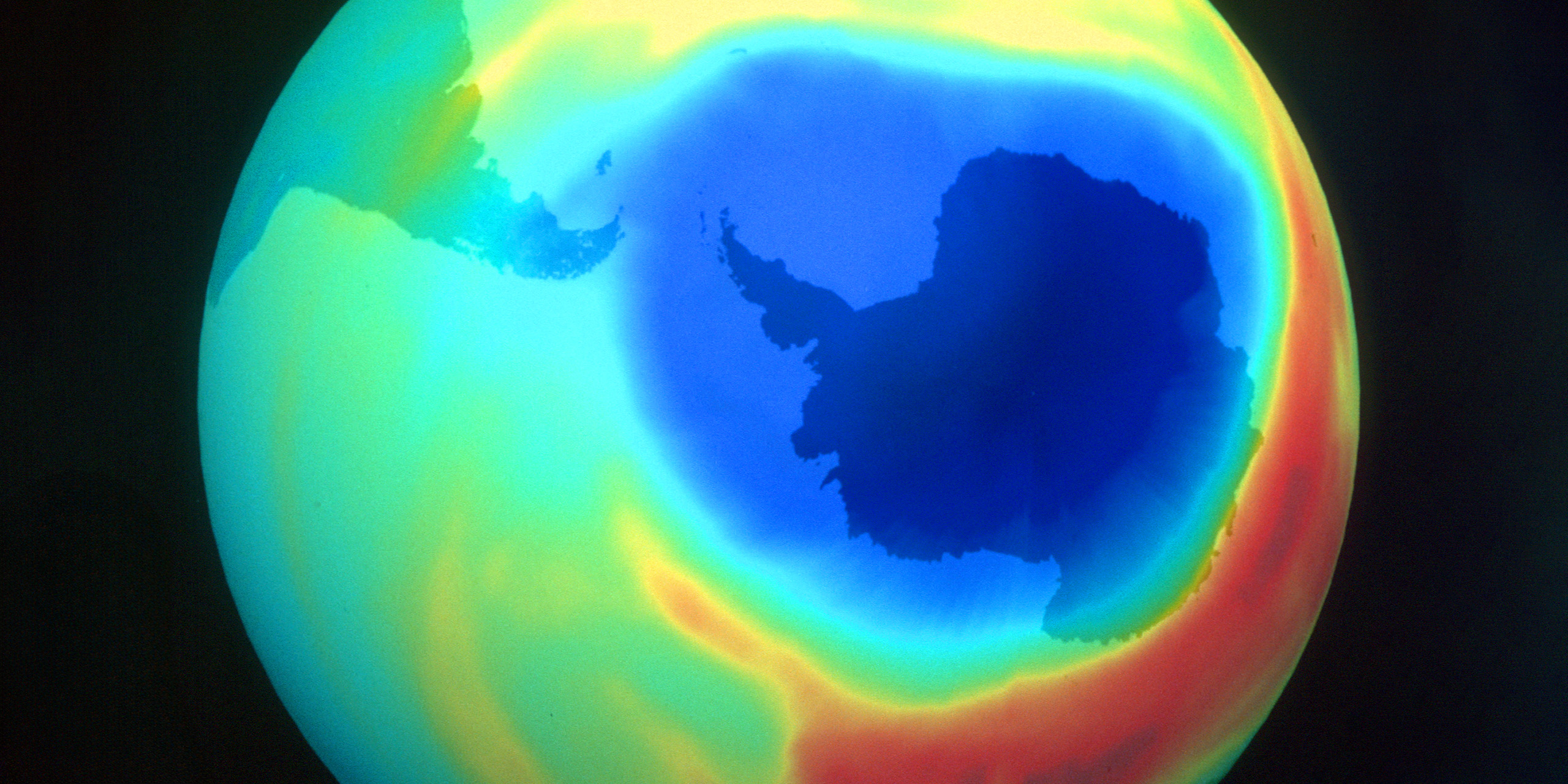
British Antarctic Survey (BAS) scientists discovered the Antarctic ozone hole—a seasonal thinning of the protective ozone layer caused by CFCs (chlorofluorocarbons) and halons. Their discovery led to the 1987 Montreal Protocol. While a slow recovery is underway, the ozone hole, peaking in early October, is not expected to fully repair until around 2070.
Weather phenomena
Antarctic weather is characterised by rapid changes and unique atmospheric phenomena. The atmosphere is a key research area for BAS, with scientists at Halley and Rothera Research Stations using spectrometers, lasers, radars, balloons, and rockets to study its various layers: the troposphere (weather layer), stratosphere (ozone layer), mesosphere, and ionosphere.
Clouds in Antarctica often contain both water droplets and ice crystals, with deep convective clouds like thunderstorms being rare due to the cold environment. Specific cloud types include lenticular clouds (over mountains), nacreous clouds (in the ozone layer, contributing to the ozone hole), and noctilucent clouds (high-altitude, silvery, rarely seen in the southern hemisphere).
Antarctica’s extreme environment gives rise to unusual weather phenomena. These include:
- brilliant halo displays
- frequent mirages
- the Brockenspectre (enlarged shadows on fog)
- diamond dust (tiny ice crystals creating dazzling halos)
- fogbows (colourless rainbows in fog) and rare moonbows
- and glory (a bright glow around shadows on clouds).
- a vivid green flash at sunset.
Wind and snow
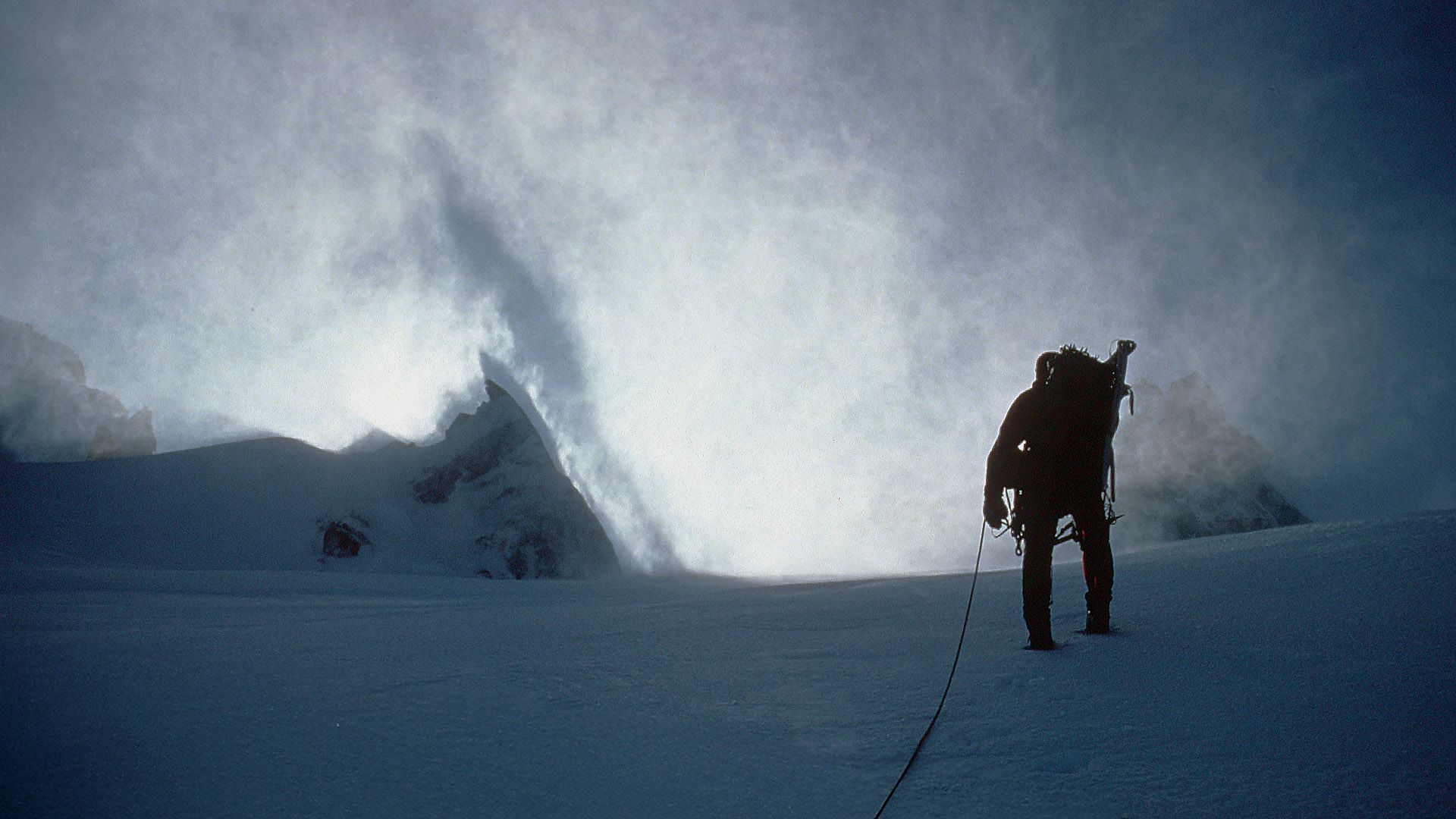
Coastal areas experience frequent gales from katabatic winds flowing downward from high plateaus. Snowfall varies dramatically: several meters annually near coasts, but only centimeters in the interior—classifying much of Antarctica as a desert.
Aurora
The southern lights create spectacular displays when charged particles from solar disturbances interact with Earth’s magnetosphere, ionizing atmospheric gases into vibrant, glowing curtains frequently visible from Halley Research Station.
Antarctic place names
Antarctica has no native population, so naming is managed by international committees. Names are suggested by countries which are signatories of the Antarctic Treaty.
Names often commemorate:
-
people who discovered parts of Antarctica
-
ships, for example Endurance Glacier is named after Sir Ernest Shackleton’s ship, Endurance
-
descriptive features, for example Fishhook Ridge, named for its shape
-
events, for example, Mount Despair, named by an expedition after they were forced to turn back due to bad weather.
The UK Antarctic Place-names Committee (APC) considers proposals and makes recommendations for place names within the British Antarctic Territory.
The Scientific Committee on Antarctic Research (SCAR) gazetteer is a compilation of place names submitted by international naming authorities across the continent.