
The Antarctic Treaty System (ATS) is a framework of agreements that preserves Antarctica as a continent dedicated to peaceful scientific inquiry.
The Treaty System is a testament to international collaboration, prioritising the preservation of the unique and vulnerable environment of the Antarctic for the benefit of everyone.
Antarctic Treaty (1959)
The foundational Antarctic Treaty of 1959 arose from a period of heightened geopolitical tension, particularly during the Cold War, when territorial claims and potential military activity threatened the region. It applies to the area south of 60°S latitude. It was initially signed by 12 nations, including Britain. Since 1959, 46 other countries have acceded to the Treaty.
The core tenets of the 1959 Treaty include:
- designating Antarctica as a demilitarised zone, prohibiting military activities, weapons testing, and the disposal of radioactive waste
- freezing territorial claims, effectively setting aside disputes among claimant nations
- promoting international scientific cooperation and the free exchange of research findings
- ensuring freedom of scientific investigation.
Antarctic Treaty System (ATS)
The ATS framework of agreements operates on the principle of consensus, requiring agreement among consultative parties for decision-making. It is a dynamic system, with discussions and negotiations to adapt to changing circumstances. For example, the system has evolved over time to address emerging challenges, such as tourism and climate change.
The ATS extends the original treaty with related conventions. The two most important are:
The Convention on the Conservation of Antarctic Marine Living Resources (CCAMLR) addresses the critical need to protect the fragile marine ecosystems of the Southern Ocean. It emphasises sustainable management of marine resources, particularly krill, a vital component of the Antarctic food web. CCAMLR aims to balance conservation with rational use, ensuring that any fishing activities do not harm the overall ecosystem.
The Protocol on Environmental Protection to the Antarctic Treaty (also known as The Madrid Protocol) strengthens environmental protection measures, by:
- including a ban on mining activities, except for scientific research
- mandating environmental impact assessments for all activities in Antarctica
- establishing regulations for waste management, pollution prevention, and the protection of flora and fauna.
The ATS has two levels of membership, consultative, and non-consultative. Consultative members hold voting rights, and is obtained by nations that demonstrate substantial scientific activity within Antarctica.
The UK is a consultative member.
Consultative meetings
British Antarctic Survey helps represents the UK at the Antarctic Treaty System meetings, which happen every June.
As the UK’s national Antarctic operator, BAS provides scientific expertise and helps the Foreign Commonwealth & Development Office ensure the UK has a strong voice in decisions about Antarctica’s future.
This allows the UK to maintain its leadership role in Antarctic affairs and work with other nations on shared scientific projects and environmental challenges.
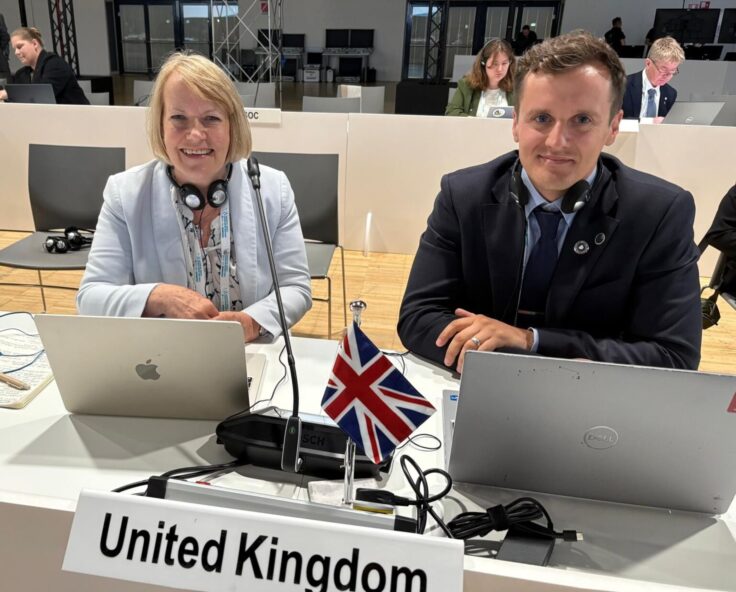
Professor Dame Jane Francis, Director of BAS and Ollie Darke, Director of Polar Operations, Engineering and Infrastructure at BAS at the ATCM, Milan, 2025. Photo credit: BAS