
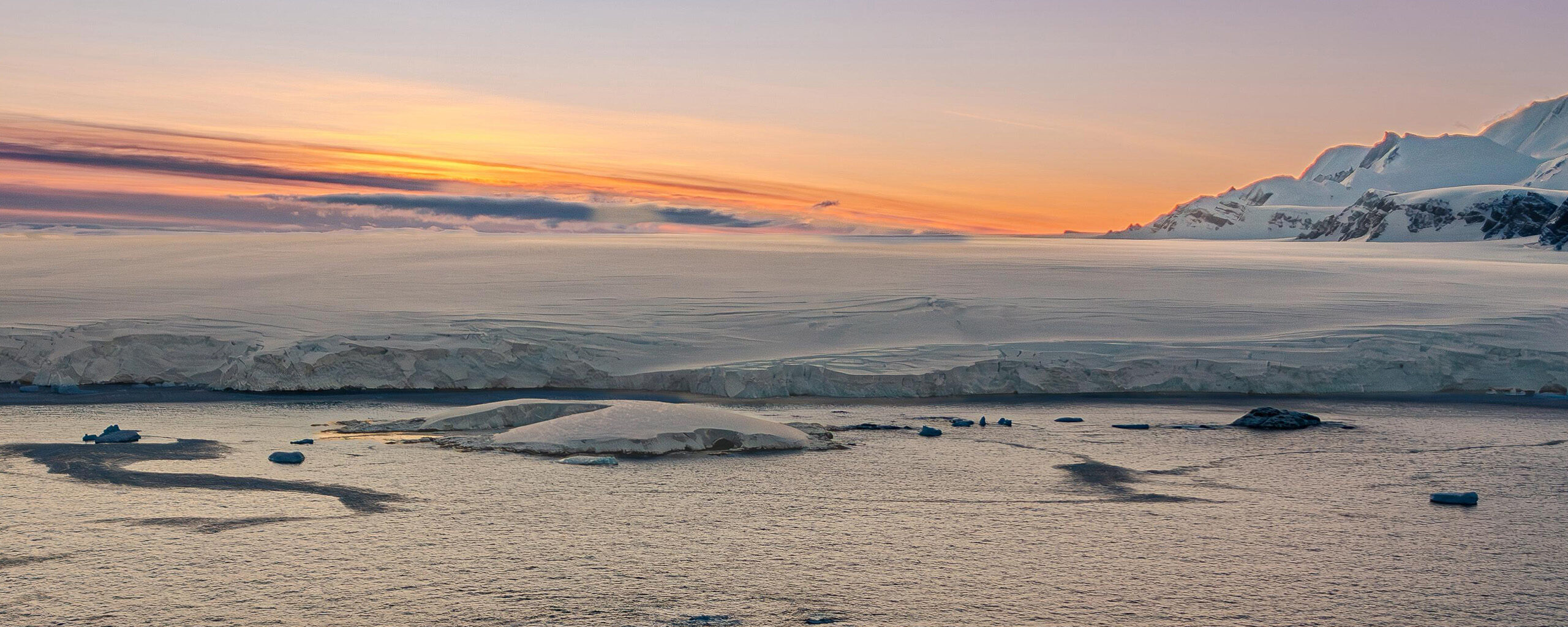
Sustainability is meeting our needs today without stopping future generations from meeting theirs.
Sustainability at British Antarctic Survey
British Antarctic Survey (BAS) is a world-leading polar science institute, tackling global challenges and helping society adapt to a changing world.
Conducting polar science has its own environmental impact. We’re working to reduce this impact while maintaining the quality of our work.
We’re developing a Sustainability Strategy. This will bring together our Environmental Strategy and Net Zero Carbon Strategy, guiding our work toward a more sustainable future. This aligns with UK Research and Innovation’s commitment to embed sustainability in everything we do.
Our science and sustainability
We tackle some of the biggest sustainability challenges facing our planet, from climate change to biodiversity loss. By understanding polar regions, we help the world make better decisions about our shared planet.
Our research supports environmental, social, and economic sustainability. We study climate systems that affect people worldwide. This helps predict sea level rise, understand extreme weather, and protect the most vulnerable communities. Our work informs policy and helps protect ecosystems for future generations.
We also play a leadership role in the Antarctic Treaty System, setting standards for responsible science in some of Earth’s most fragile environments.
How we work sustainably
We’re working to reduce our environmental impact everywhere, from our Antarctic stations to our Cambridge headquarters. We’re modernising our infrastructure and cutting carbon to reach net zero by 2050.
Making our science more sustainable
We’re finding new ways to reduce the environmental impact of conducting research:
- AI to optimise fuel on RSS Sir David Attenborough
- using lower carbon emitting Unmanned Aerial Vehicles (UAVs, also known as drones) for airborne science where possible.
- low-carbon energy systems for field science
Our operations
We complete Environmental Impact Assessments for all our Antarctic work. These help us protect wildlife and prevent introducing non-native species.
We send zero waste to landfill and recycle 85% of our waste.
Our people
We put staff safety and wellbeing first, promote equality and inclusion, and support our people to reach their potential.
Our resources
We work with our suppliers to ensure our procurement supports sustainability goals. For example, we work with other Antarctic operators to resupply our research stations more efficiently.
Modernising our infrastructure
We’re delivering a long-term programme to update the UK’s polar research capabilities – the Antarctic Infrastructure Modernisation Programme (AIMP).
At Rothera Research Station, new solar panels and a combined heat and power plant will cut carbon emissions by 25%. In 2026, we’ll install more solar panels with battery storage. At Bird Island Research Station, solar panels have already cut emissions by 50%.
In the UK
At our Cambridge HQ, we’ve added solar panels and heat pumps to reduce our carbon emissions.
Our Polar Distribution Hub has BREEAM Excellent certification – a leading sustainability standard.
We’re developing a roadmap to guide further improvements across our UK estate.
Net zero by 2050
We aim to reduce our carbon emissions as much as possible by 2050. This includes our buildings, science, operations, business travel, and supply chain.
Every year we publish our carbon footprint data. This transparent reporting helps us stay accountable and share what we’re learning with others.
Towards Net Zero Carbon
Our strategy and work streams to meet Net Zero goals
Challenges
Sustainability isn’t simple. We’re not perfect, nor do we claim to be. We’re constantly balancing different priorities, like:
- cutting carbon from our science without reducing its quality
- keeping costs down while ensuring projects are sustainable
- working with suppliers to help them meet sustainability targets
We work in one of the last wildernesses on Earth. We have a responsibility to both understand it and protect it.