
The most famous British expeditions to Antarctica took place at the beginning of the 20th century – the so-called ‘heroic age’ of polar exploration.
Today, British Antarctic Survey is a world leader in polar science, maintaining the UK’s long history of Antarctic discovery and scientific endeavour.
Meanwhile, there are a range of charitable organisations that promote Antarctic heritage and conservation in the polar regions.
UK polar heritage
Many UK Antarctic heritage organisations are members of Antarctica 100, a forum for coordinating plans to celebrate the centenaries of the Heroic Age of Antarctic Exploration. These include the expeditions of:
- Captain Robert Scott in 1901-04 and 1910-13
- Dr William Speirs Bruce in 1902-04
- Sir Ernest Shackleton in 1907-09 and 1914-16.
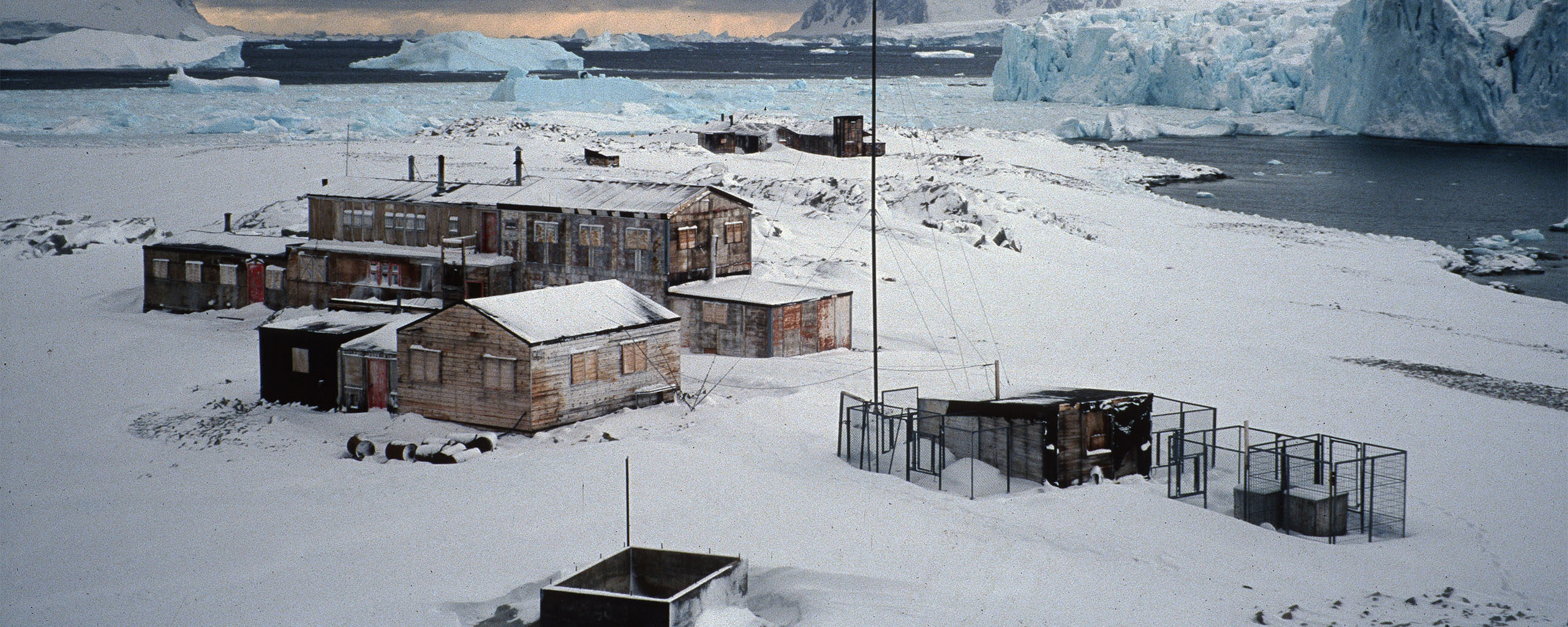
The United Kingdom Antarctic Heritage Trust (UKAHT) supports the conservation of historic buildings in the UK sector of the Antarctic. In particular the restored Port Lockroy station in the Antarctic Peninsula.
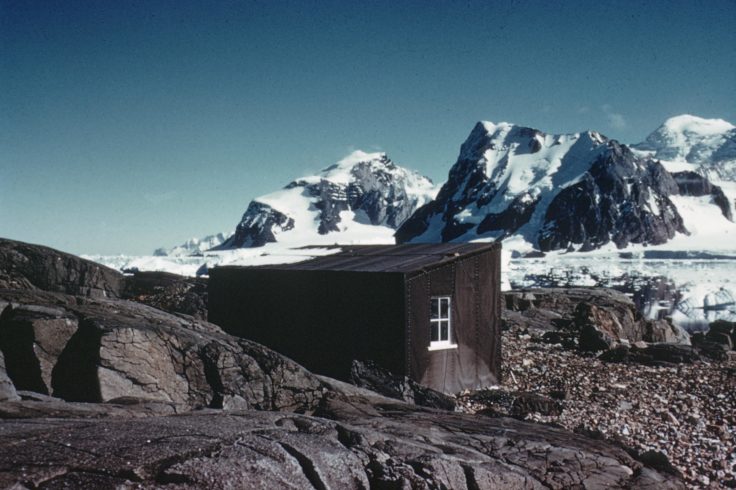
Refuge hut on Blaiklock Island, 1957. (Photographer: George Lamour; Archives ref: AD6/19/3/C/Y11)
A number of museums contain artifacts and memorabilia of polar exploration. Notable are the National Maritime Museum at Greenwich and the Scott Polar Research Institute, Cambridge.
RRS Discovery (Captain Scott’s first Antarctic ship) is moored beside a Visitor Interpretation Centre on the waterfront at Dundee. The James Caird ship used by Ernest Shackleton to cross from Elephant Island to South Georgia is preserved at Dulwich College, London by the James Caird Society.
Falklands and South Georgia
Falklands Conservation is active in the Falkland Islands with the involvement of BAS. There are offices in Stanley and London.
The South Georgia Association was formed to give a voice to those who care about South Georgia. South Georgia has an interesting heritage, is environmentally vulnerable, very precious, and very worth defending and preserving.
International
The International Polar Heritage Committee is a scientific committee of the International Council of Monuments and Sites that is the principal advisor to UNESCO on matters concerning the conservation and protection of monuments and sites.
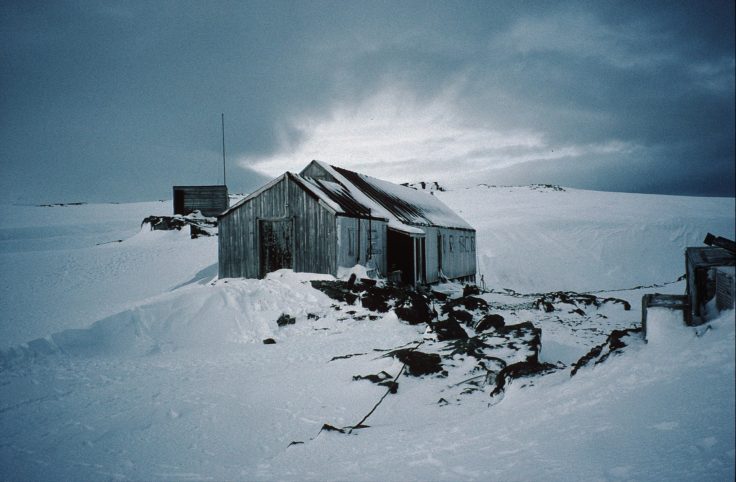
Detaille Island Station, 1997. (Photographer: David Burkitt; Archives ref: AD9/1/1996/14/27)
Heritage Antarctica is a coalition of national Antarctic heritage trusts which have come together to: “promote the restoration, preservation and protection of the structures, artefacts and records which reflect the history of human endeavour in Antarctica, as a means to increase understanding of the importance of the Antarctic environment and as an inspiration for future generations”.
The Trans-Antarctic Association provides financial support for expeditions to the Antarctic. Nationals from Australia, New Zealand, South Africa and the UK can apply for grants towards costs of equipment, publications and travel.