
Our discovery of the ‘ozone hole’ shocked the world. It showed, for the first time, how human activity could damage the planet’s life-support systems — and how quickly.
A discovery that changed the world
In May 1985, scientists working for the British Antarctic Survey made a discovery that transformed our planet.
Joe Farman, Brian Gardiner and Jonathan Shanklin revealed that the protective ozone layer above Antarctica was disappearing each spring.
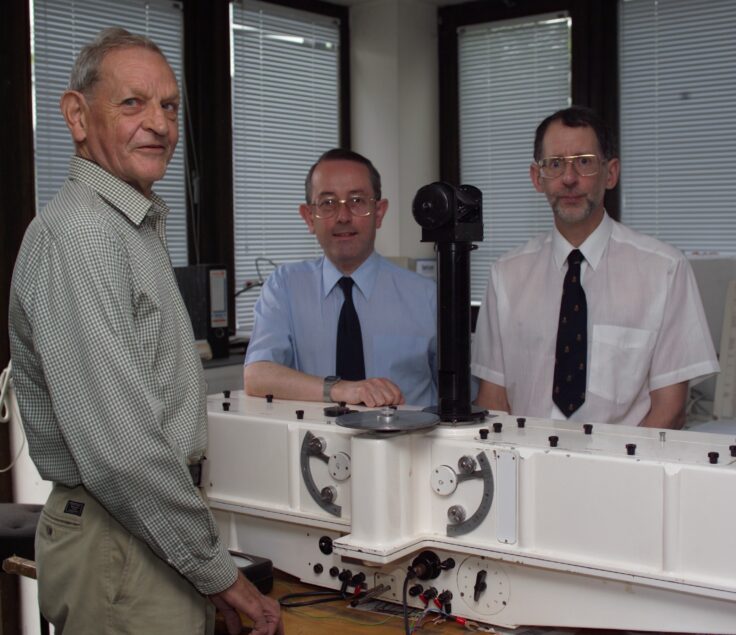
Joe Farman, Brian Gardiner and Jon Shanklin made the discovery of a hole in the ozone layer in 1985. (Credit: Chris Gilbert)
Why the ozone hole matters
The ozone layer is Earth’s sunscreen. It shields us, our families, food crops and ecosystems from harmful ultraviolet-B (UV-B) rays. Without it, our risks of skin cancer, cataracts and severe ecological damage would rise dramatically.
BAS’s discovery proved that man-made chemicals such as chlorofluorocarbons (CFCs) were destroying ozone high in the atmosphere. If our scientists hadn’t uncovered this when they did, global UV levels could already be dangerously high. We would be living in a far more environmentally hostile world.
From Antarctic science to global action
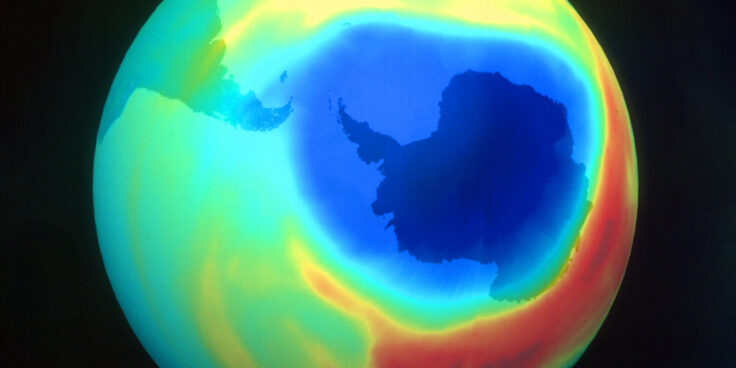
NASA satellites confirmed our data — the hole spanned the entire Antarctic continent. The world acted fast. Just two years later, governments signed the Montreal Protocol (1987), banning CFCs and other ozone-depleting substances.
This treaty is the only one ratified by every country on Earth. It stands as the most successful environmental agreement in history. By removing CFCs, humanity began repairing the ozone layer. We also slowed climate change, since these chemicals are powerful greenhouse gases.
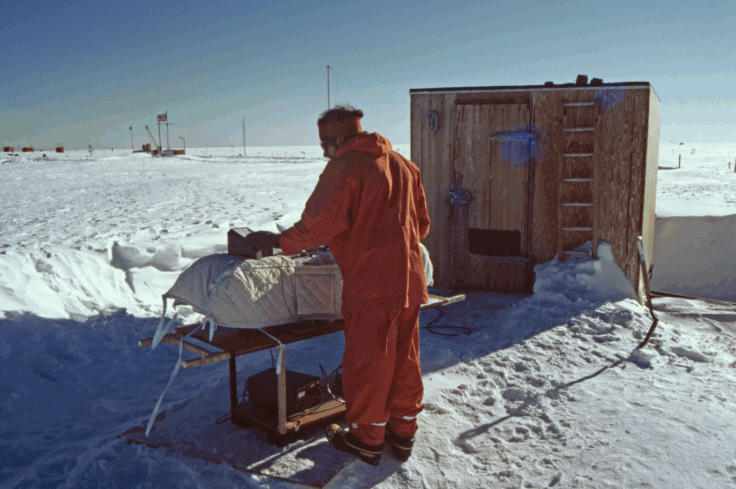
Jon Shanklin in outdoor clothing, using Dobson spectrophotometer outside, Halley Research Station, 22 Jan 1982.
Forty years on
The ozone hole still forms each Antarctic spring, but it is shrinking. Scientists expect a full return to pre-1980 levels by the middle of this century. The recovery is fragile, yet hopeful.
For us, the message is clear: human activity can harm the planet rapidly — but with science, cooperation and determination, we can reverse the damage.
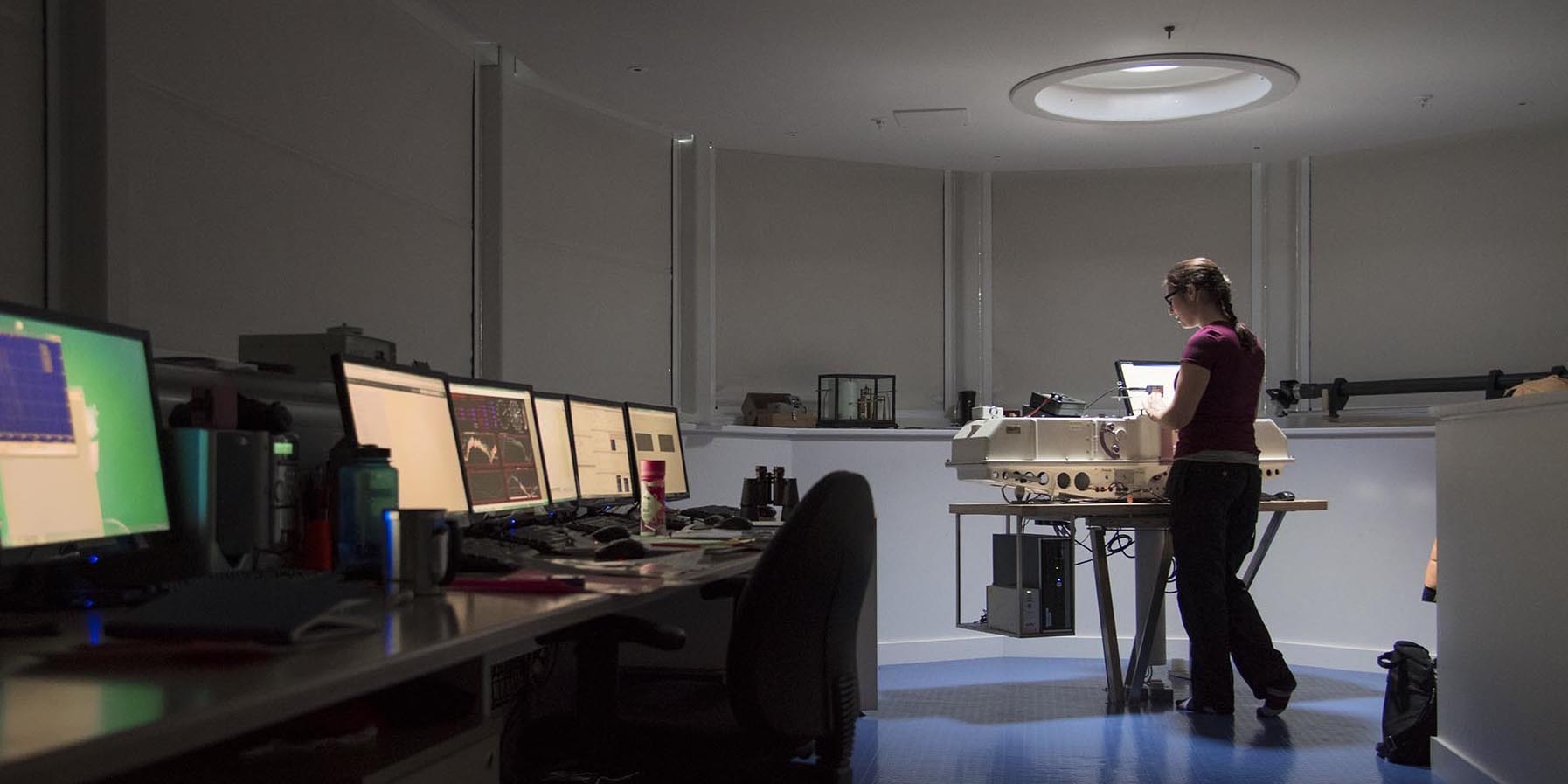
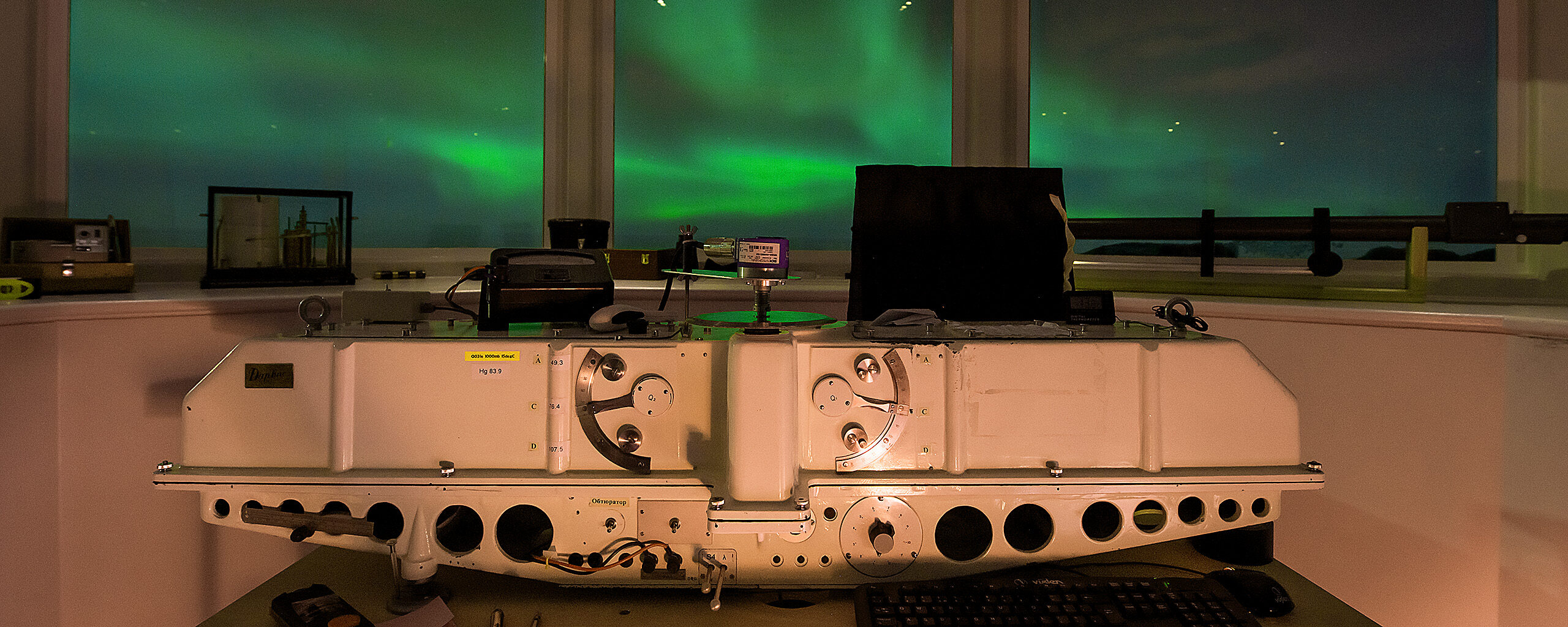
Dobson Spectrophotometer in use at Halley VI Research Station
A turning point for humanity
The discovery of the ozone hole was more than a scientific breakthrough. It was a wake-up call. BAS research proved that bold science could reveal invisible threats, and bold action can protect every life on Earth.
Watch the 2025 Royal Geographical Society discussion ‘The hole in the ozone layer’.