
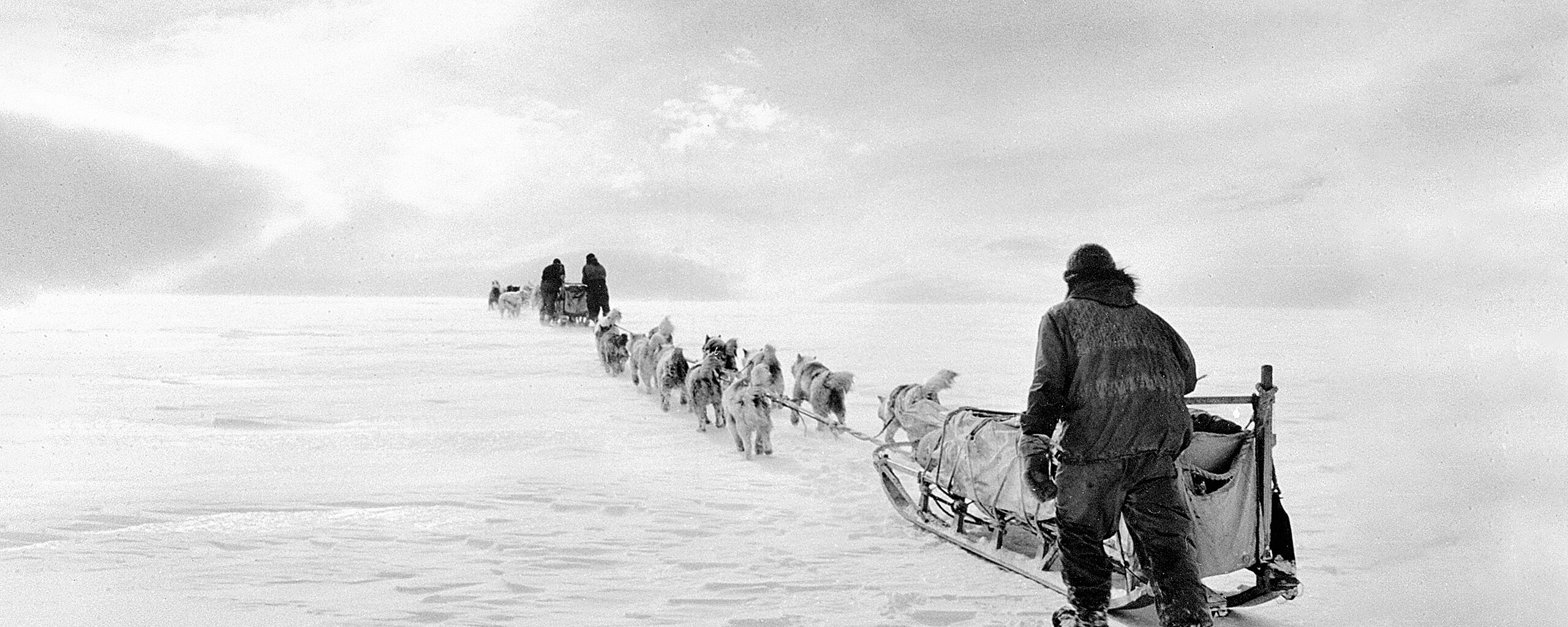
For over 80 years, the icy continent of Antarctica has been a crucial site for British scientific research, largely undertaken by BAS and its predecessors thanks to the enduring legacy of the British Antarctic Survey (BAS).
What began as a clandestine wartime operation has developed into a world-leading research institution, revealing vital insights into our planet’s climate and ecosystems.
World War II
The story of BAS begins in 1943 with Operation Tabarin, a top-secret British mission during World War II. It had 3 aims:
· to prevent enemy ships from using Antarctic harbours
· gather critical weather data for Allied shipping
· solidify Britain’s territorial claims.
Despite immense challenges Operation Tabarin successfully established Britain’s first permanently occupied research stations on the continent: Deception Island, Port Lockroy, and Hope Bay.
Beyond its military objectives, the expedition laid the groundwork for serious scientific research, conducting vital meteorological, geological, and biological studies as well as topographical survey work
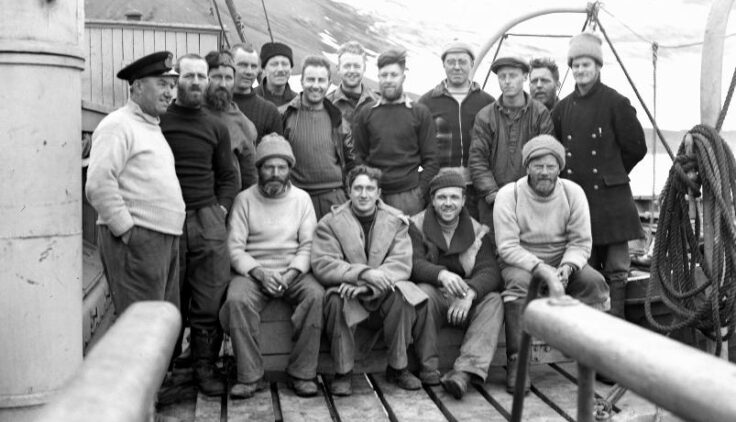
Members of Operation Tabarin on board S.S. Eagle, Deception Island, Feb 1945. (Photographer: IM Lamb (E. Mackenzie). Archives ref: AD6/19/1/B160)
Birth of British Antarctic Survey
At the end of the war Operation Tabarin’s scientific and survey work was put on a long-term footing with the establishment of the Falkland Islands Dependencies Survey (FIDS). In 1962, FIDS was officially renamed British Antarctic Survey (BAS).
A pivotal moment in this journey was the signing of the Antarctic Treaty in 1959, which came into force in 1961. This landmark agreement ensured peaceful exploration, banned nuclear activities, and fostered international scientific cooperation across the continent, shaping the very nature of Antarctic research.
BAS’s presence in Antarctica relied heavily on its network of research stations. Since the initial three stations, the number of British stations and refuges grew significantly, peaking in the late 1950s.
Today, BAS operates four year-round stations, with another open during the Antarctic summer. These stations enable cutting-edge research in fields from glaciology to genomics.
Royal Research Ships
Ships and their experienced crews have been the lifeblood of BAS operations since 1943, providing essential transport, resupply, and access to remote field sites. Early vessels like the MV John Biscoe earned the prestigious Royal Research Ship (RRS) status.
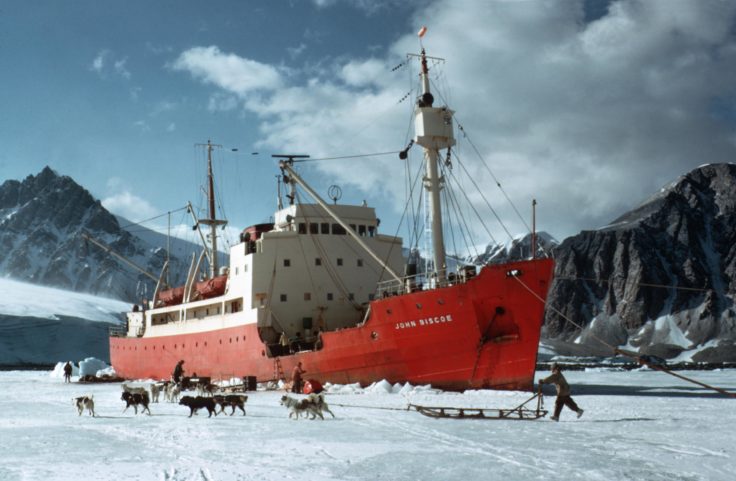
RRS John Biscoe unloading onto ice at Stonington Island (Base E), 1969-70. (Photographer: Martin White; Archives ref: AD6/19/3/B41)
Over the decades BAS has operated a number of ships, like the RRS Shackleton and RRS Bransfield. A major milestone arrived in 1991 with the RRS James Clark Ross, the first BAS vessel purpose-built as a science platform, followed in 1999 by the RRS Ernest Shackleton primarily providing logistical support.
Both were replaced in 2021 by the state-of-the-art polar research vessel, the RRS Sir David Attenborough, continuing a proud tradition of maritime support for science. The Royal Navy’s ice patrol vessels have also provided invaluable assistance since the mid-1950s.
Preserving Antarctic heritage
Beyond scientific discoveries, BAS and its partners are committed to preserving Antarctica’s rich heritage.
The BAS Archives holds a unique source of scientific polar data and information about undertaking world-class research in a remote and hostile environment, covering the work of BAS and its predecessors.
The UK Antarctic Heritage Trust (UKAHT) protects and preserves historic sites on the Antarctic Peninsula such as Port Lockroy station
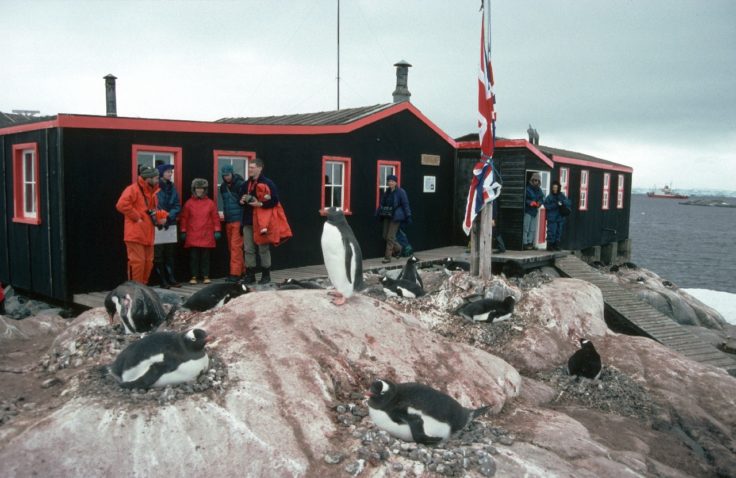
Visitors to the historic site of Port Lockroy – the only surviving base from Operation Tabarin and one of the most visited tourist sites in Antarctica.
The British Antarctic Oral History Project
The British Antarctic Oral History Project is a collaboration to capture reminiscences and preserve the memories of those involved in BAS and its predecessors, and the span the entire history from Operation Tabarin onwards.
Through these efforts, the stories from the past 80 years of polar science and exploration are preserved and the legacy of British exploration and science in Antarctica continues to inspire future generations and underscore the importance of this unique polar environment.
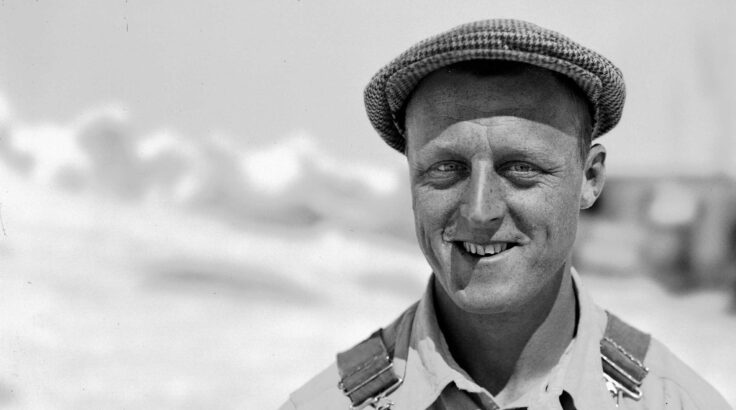
Gwion Davies, Port Lockroy, Nov 1944. One of the voices captured in the oral history project. (Photographer: E. Mackenzie (I.M. Lamb). Archives ref: AD6/19/1/A57)
The archive has a particular focus on those who worked for, or closely with, Operation Tabarin, 1943–45, Falkland Islands Dependencies Survey, 1945–61, and British Antarctic Survey, 1962–present.
Rothera Research Station is the largest of the UK’s Antarctic stations. But how did it come to be founded? Hear from those involved in their own words. Made up from extracts of the British Antarctic Oral History Project, this is the story of the early years of this important Antarctic research station and the people who worked to found it in extreme conditions.