
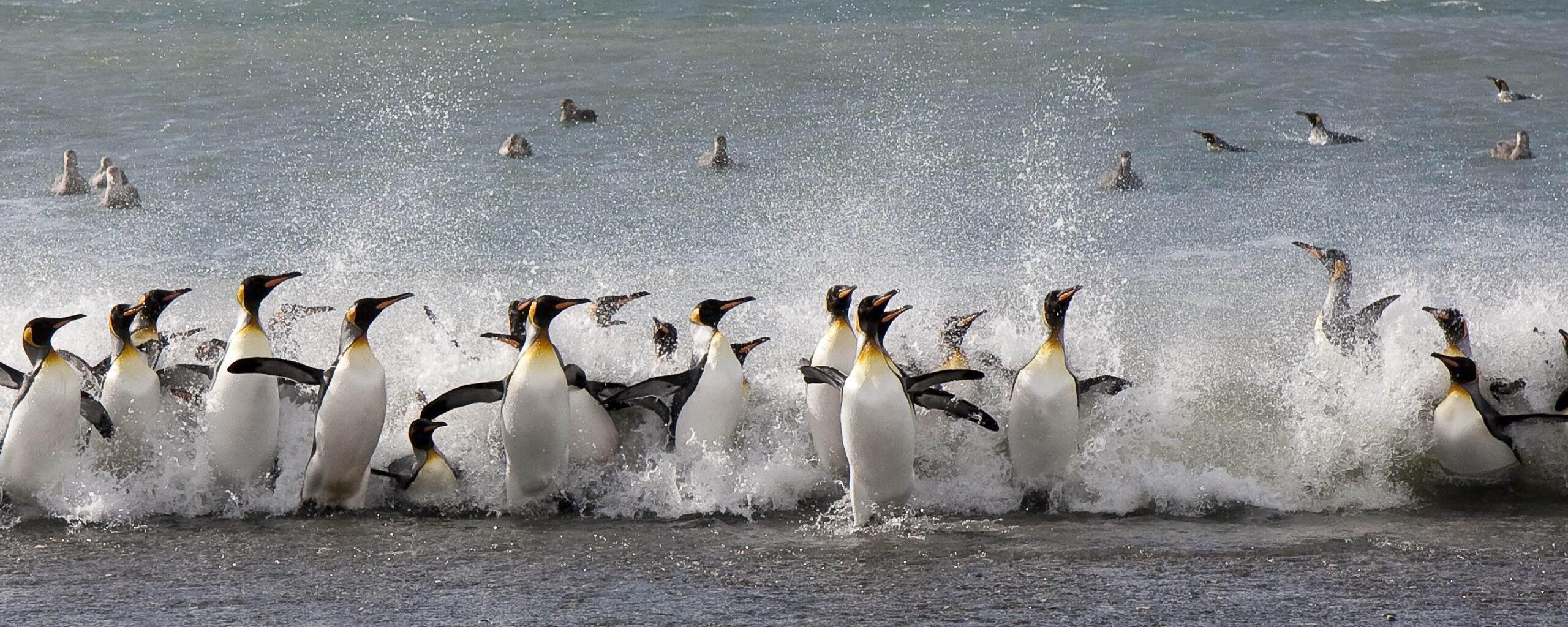
Antarctica’s wildlife is uniquely adapted to its extreme environment. Most of the animal population is found in or around its icy waters not on land.
The Southern Ocean is a rich marine ecosystem, supporting a vast array of life that forms a relatively simple food web.
Penguins
Penguins are the iconic creatures of Antarctica. There are 6 major species, but only two – the Emperor and Adélie – are truly native to the continent itself.
Emperor penguins are the largest. They breed during the coldest, darkest winter months. They lay a single egg, which the male incubates for 9 weeks without eating, relying on a thick fat reserve for survival.
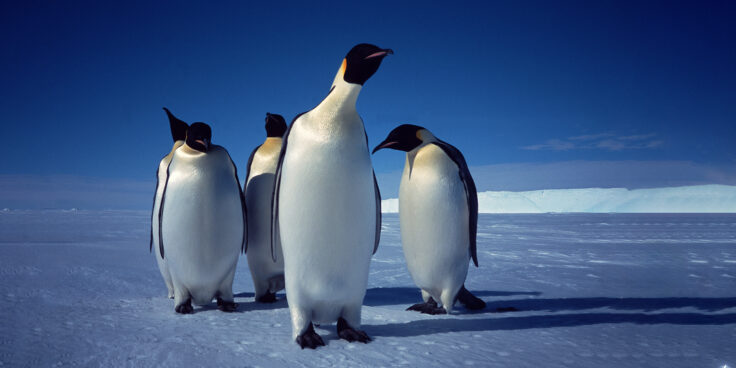
Emperor penguins on the sea ice in front of the Brunt Ice Shelf, Antarctica
Adélie penguins are smaller and spend their winters in the pack ice, migrating to the coast in the summer for a brief, intense breeding season.
Other penguin species – Macaroni, Chinstrap, Gentoo, and King – inhabit the warmer sub-Antarctic islands.
Other birds
Wandering and sooty Albatross are large seabirds with wingspans of up to 3 metres. The wandering species is known for long-distance migrations, but is threatened by commercial fishing.
Petrels, prions and fulmars are numerous. Rarer species include the pure white snow petrel, pintail duck, and the south polar skua. Rarer still is the South Georgia pipit, the only sub-Antarctic songbird which feeds on insects.
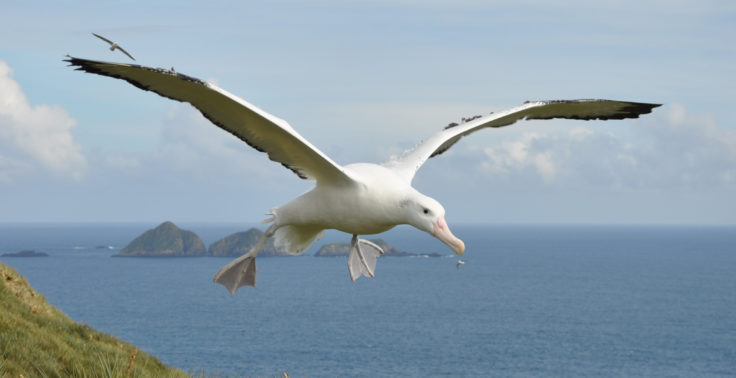
Wandering albatross in flight
Marine life
The Southern Ocean is home to a diverse population of marine mammals, including whales and seals. These were once heavily hunted but are now largely protected.
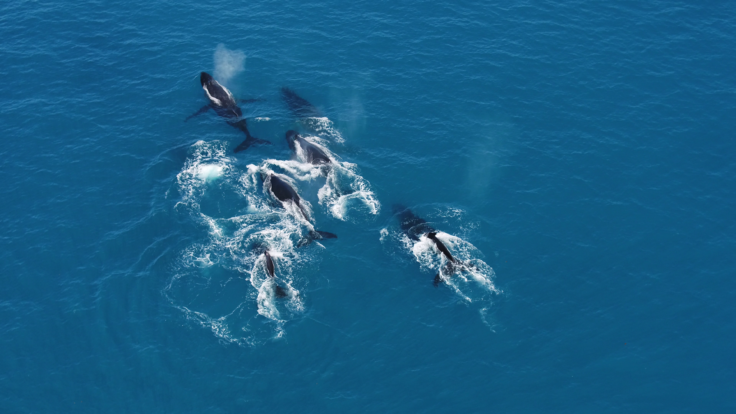
A large group of humpback whales (Credit: Fredrik Christiansen)
Whales are divided into two main groups:
- toothed, such as orcas (killer whales) which eat fish, squid, penguins and seals
- baleen, such as blue whales and humpbacks, which eat krill, filtering them from seawater using a bony mesh (baleen).
Seals are a significant part of the ecosystem. Species include the solitary leopard seal, social Weddell seal, and large elephant seals.
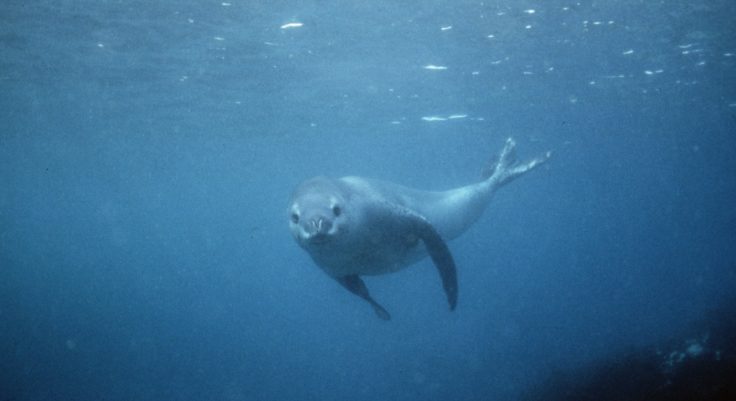
A leopard seal swimming underwater. (Credit: Doug Allan)
Below the surface, the waters teem with fish and squid. Antarctic fish have made startling adaptations to the cold temperatures. For example, natural ‘antifreeze’ – glycoproteins in their blood that prevent them from freezing.
The icefish is a remarkable case of adaptation. It lacks red blood cells and transports oxygen through its blood plasma.
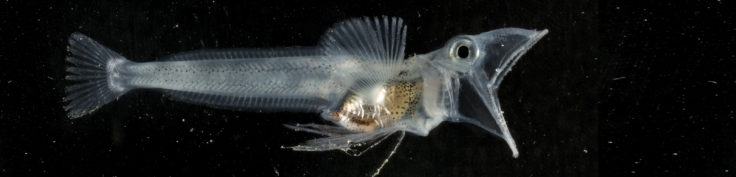
Side view of young icefish. Around 500 m deep in the Bellingshausen Sea
Krill
At the base of this web is Antarctic krill, a small shrimp-like crustacean that is a food source for most of the larger animals in the region.
Krill live in dense swarms and are key to the ecosystem. This has led to international conservation efforts to manage modern fisheries for the krill.
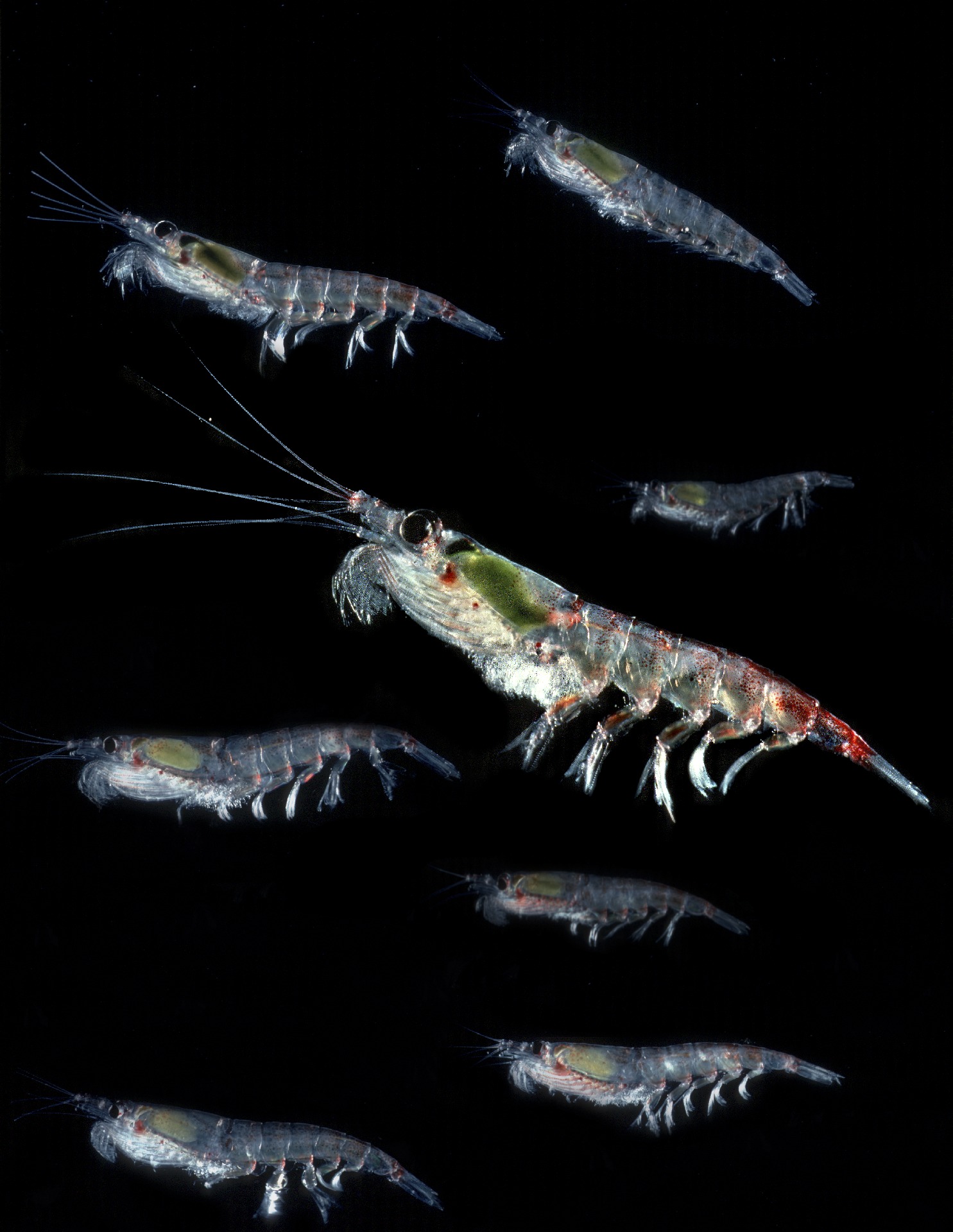
Antarctic Krill (Euphausia superba), Photo by Chris Gilbert.
Life on land
On the rock and ice of the Antarctic continent itself, life is sparse. There are no naturally occurring terrestrial mammals, reptiles, or amphibians. But there are earthworms, molluscs, and some insects.
One fascinating creature is the flea-like Antarctic springtail, which is only 1 or 2mm long but has also developed its own natural antifreeze.
In the most extreme cold deserts, a few species of nematode – tiny thread-like creatures – are among the few life forms.
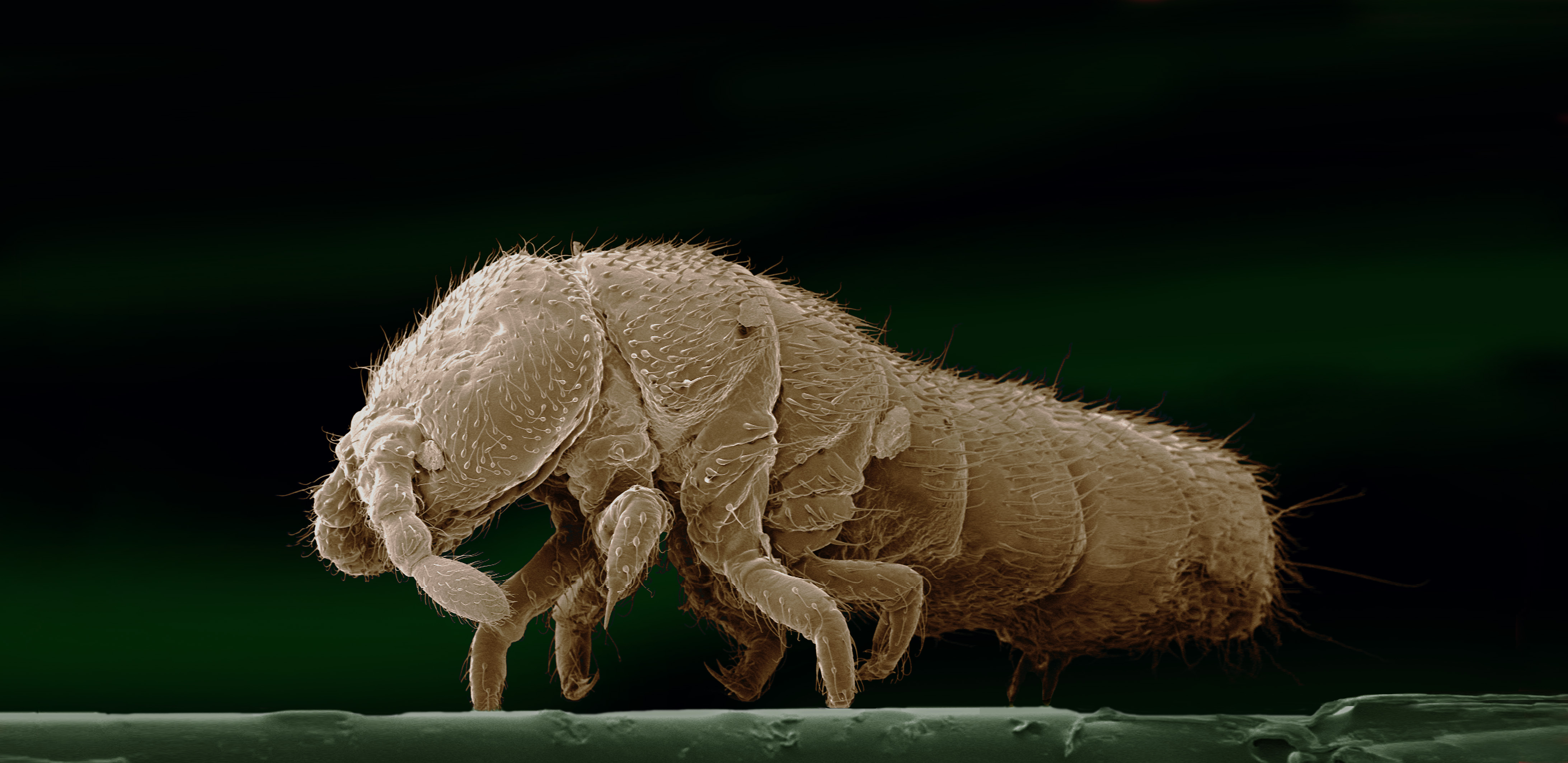
Cryptopygus antarcticus, Springtail (False colour, scanning electron-micrograph) is one of the most successful terrestrial arthropods to have colonised the Antarctic continent. Although only 1-2 mm long and weighing only a few micro-grams, it is one of the largest animals to complete its lifecycle on the Antarctic continent (Credit:Pete Bucktrout)
Plants
Antarctica’s plant life is similarly constrained. Less than 1% of the continent is ice-free. This small area supports two species of flowering plant:
- Antarctic hair grass
- Antarctic pearlwort.
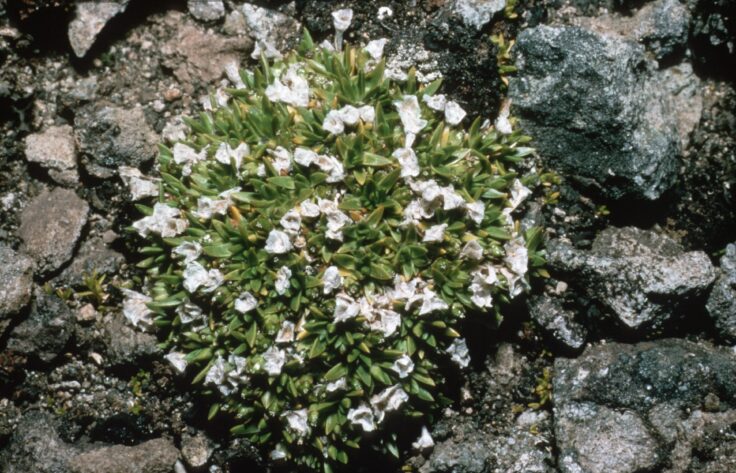
Antarctic pearlwort showing flowers (white) killed by frost/ice. (Credit: Bert Jonkers)
The majority of flora (plants) consists of groups like mosses, liverworts, and lichens, which are well-adapted to survive in the dry cold.
The sub-Antarctic islands are milder. They have a richer variety of plants, including tussock grass and a greater number of flowering species.