BAS Antarctic Mapping Datasets
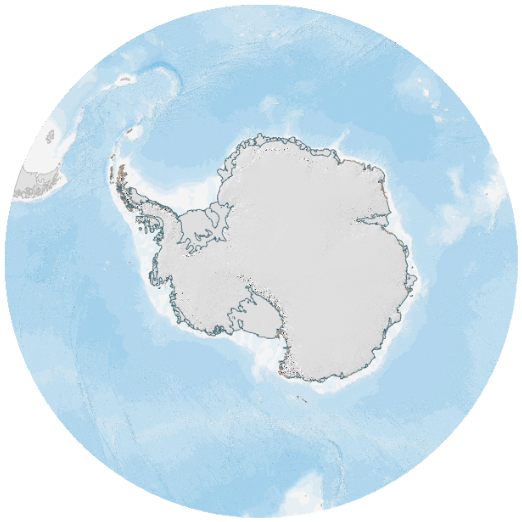
A collection of geospatial datasets and basemaps of Antarctica published by the British Antarctic Survey’s Mapping and Geographic Information Centre (MAGIC).

25 to 36 of 18427 results
A collection of geospatial datasets and basemaps of Antarctica published by the British Antarctic Survey’s Mapping and Geographic Information Centre (MAGIC).
From investigations using cutting-edge technologies, to building on decades of data collection – this season’s science will help us understand how this frozen landscape is changing.
Background Notothenioids are a well characterised species flock endemic to the Antarctic and an important model group for studying genome adaptation to extreme cold. A new reference assembly and clade-wide […]

Shallow, mixed-phase clouds associated with cold-air outbreak (CAO) events are natural laboratories for studying mixed-phase cloud processes which are important for estimating cloud-phase feedback in the warming climate. Recent studies […]
Antarctica’s vegetation underpins its terrestrial ecosystems yet it is threatened by climate change, human activity and the introduction and spread of non-native species. Protecting these vegetation communities is critical to […]
QuakeMigrate is a modular, open-source Python package providing a framework to efficiently and automatically detect and locate microseismicity. From raw seismic waveforms and a modest number of physically meaningful inputs […]
Ozone depletion associated with tropospheric bromine explosion in the Arctic substantially modify the oxidative capacity of the atmospheric boundary layer and promote the oxidation and deposition of gaseous elemental mercury […]
Bathymetry (ocean-bottom topography) beneath ice shelves is challenging to observe yet is vitally important for modelling how ice sheets will evolve into the future. An alternative to direct observation of […]
Accurately representing polar stratospheric clouds (PSCs) in global Chemistry-Climate Models and Earth System Models is important as they play a key role in springtime ozone depletion in polar regions by […]
Brachiopods appeared early in the Cambrian radiation and represent an important clade for understanding the origin of animal body plans and the evolution of biomineralized structures. A robust phylogenetic framework […]
We present the first multi-model study of the Antarctic sea ice response to enhanced meltwater due to dynamic mass loss from the Antarctic ice sheet. This meltwater flux (and its […]